The End of the Trail

Well, once again we’re at the end of the trail. We spent the night at the Hilton Hotel at Munich Airport and had hoped to get downtown to see the cathedrals but it was late and downtown Munich is 40 km from the airport which meant taking the train and we just weren’t up for it. But the airport/hotel complex is beautiful and there’s lots to see and do right there so we still had a fun evening.

Overall our house exchange was a big success although certainly very different from staying in a hotel. There definitely are pros and cons. A couple of things were such a challenge every day, that eventually they became funny.

o Our exchange car was a Volvo station wagon, a nice car in the U.S. but challenging on those narrow streets and in the parking garages in France.

o Speaking of parking garages, Aix has 9 parking garages with 5,700 parking spaces and they’re pretty much the only place available to park. They seem reasonably high-tech: a sign outside says how many parking places are currently available and when you go in and have floor choices, a sign tells you how many spaces are currently available on the floor you’re considering, red and green lights tell which spaces are taken and which are available, and yellow lights identify handicapped spaces. You pay for your parking in machines located in a couple locations within or just outside the garage so when you exit you just put in your paid ticket and the arm goes up. Usually. Very seldom do I ever remember having a problem with this system in the U.S. However, here we had a problem ALMOST EVERY TIME! Sometimes when we went in, the machine didn’t dispense a ticket but the arm went up and let us in. Sometimes we got a ticket on the way in and we paid for it, but before we could put it in the machine on the way out, the arm went right up and the car behind us started honking. There are small items taped to the windshield of the car and one of them had a bar code on it so I thought maybe it was a transponder. So at one point early on I took a photo of it with my cell phone and we found the garage office and asked the woman behind the desk if it was a transponder and she said “yes.” (Hmmm…) So perhaps that explained it except it didn’t happen every time, just random times. Then we went on our mini-bus tour and the bus had a transponder and it didn’t look anything like what I had taken a photo of. And he had never heard of the word “transponder” so clearly they call them something else.

o The toll roads were a similar situation. Any time we left Aix, we had to drive on at least one toll road, two if you count taking it there and then taking it home again. They too were totally automatic, each time dispensing a ticket upon entrance to the toll road and then displaying the toll amount and collecting the fare when you exited the toll road. But in this case, when we entered the toll road, a ticket would come partially out, then reverse and go back in. The arm went up and we drove on. Must be that transponder. But on the toll roads, we also had some cases where we didn’t get a ticket on the way in, but then the arm didn’t automatically go up when we tried to go out. So Chuck would press the button and the conversation went something like:

  • Her: “Bonjour.”
  • Him: “Bonjour. English, please?”
  • Her: “Yes sir.(heavy French accent)
  • Him: “I didn’t get a ticket.”
  • Her: “Where is your ticket?”
  • Him: “I didn’t get a ticket.”
  • Her: “Where is your ticket, sir?”
  • Him: “It didn’t give me one. The ticket went back in.”
  • Her: “What happened to your ticket?”
  • Him: “I didn’t get one.’
  • Her: “Where is your ticket?”
  • Him: “I…don’t…have…a…ticket!”
  • Her: “Why don’t you have a ticket, sir?”
  • Him: “I didn’t get one.”
  • Her: “Where did you come from, sir? Don’t say England.” (Why does everybody think we’re from England?)
  • Him: “We came from Aix-en-Provence.”
  • Her: “That will be 4 Euros 15.”
  • Him: “Thank you.”
  • Her: “Sir? Sir? Listen to me. The next time you come through the toll booth, take a ticket.”

Sometimes we didn’t have the whole conversation. Sometimes we just said “we didn’t get a ticket,” and she would come back with an amount, “7 Euros 65.” And sometimes the arm just went up without us paying.

I just hope our exchange family doesn’t get a big bill in the mail from the transit folks.
Our Exchange Home

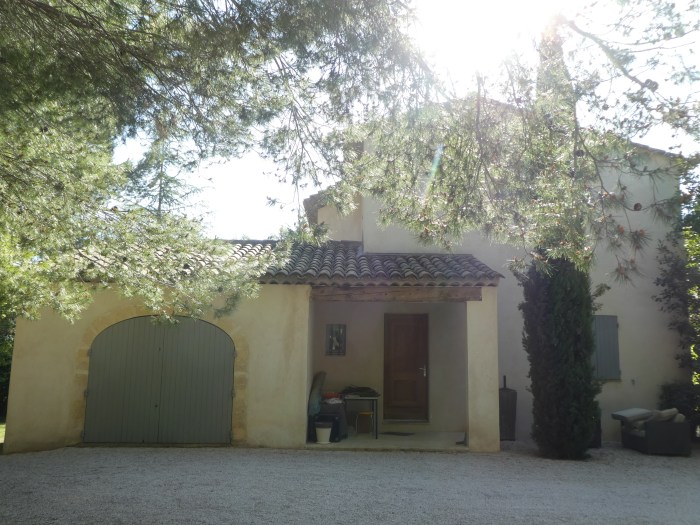
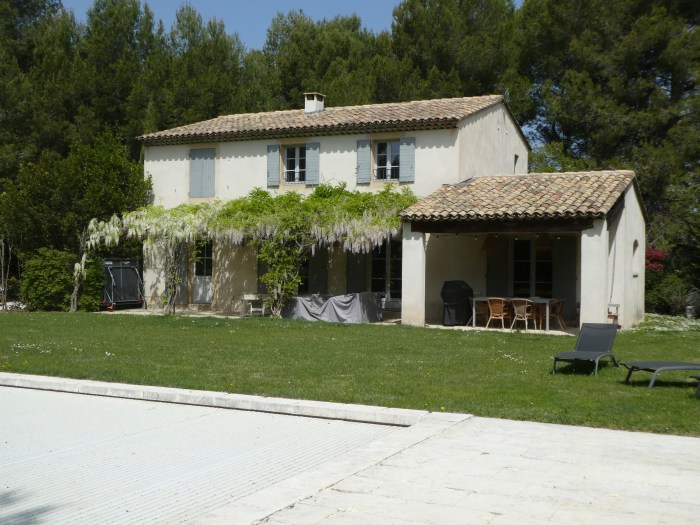
We enjoyed 2 weeks in a beautiful French farm house. The style of house is called Bastide and they’re fairly common because they’ve been popular for centuries. We had guessed that the one we were staying in was built in the 1800’s, maybe even earlier. But it looked like some remodeling had been done to modernize the kitchen and bathrooms. The walls were about 18 inches thick, the floor and roof tiles showed years of loving use, and the house was quite austere looking, like the houses in those days did. Then we found out the house is only 15 years old. We were blown away.

It’s what they call a 4-bedroom, 4-bathroom house. There are 3 bedrooms upstairs and another room downstairs with a pull-out sofa and the only full bath. I think it could be a garage. It has its own outside entrance through a large rounded door that looks like a garage door. They use it for a game room. Actually there are only 3 toilets but there are 4 bathrooms each with a sink and a tub and/or shower plus 1 powder room by the front door. The master bathroom has a sink and shower but no toilet.

Our exchange couple said they bought the house from the couple who built the house, the pool and the “garden,” which we would call fabulous landscaping. Then 3 years ago the couple divorced so they bought the house from them. The lot is very large and the landscaping is gorgeous and looks like it’s been here forever. It perfectly surrounds the house and behind the landscaping is a fence, so although there are other houses around, this house is totally secluded. And it’s got a locked gate. One odd thing we noticed: the landscaping all seems to have lighting but the lights were never lit and we couldn’t figure out how to turn them on. Normally they would be on timers. When we came home at night, it was pitch black.

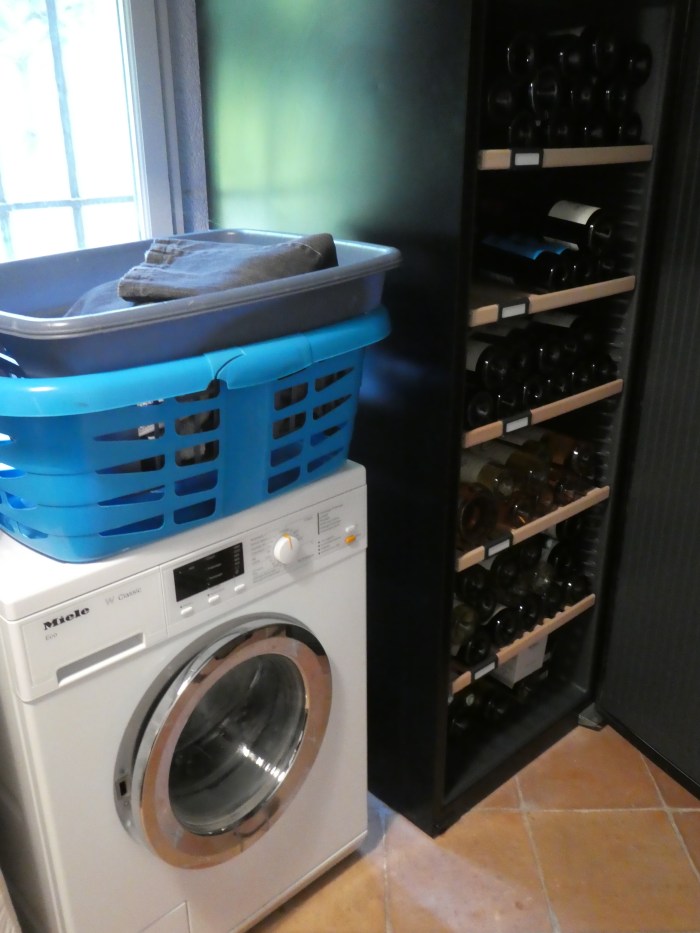
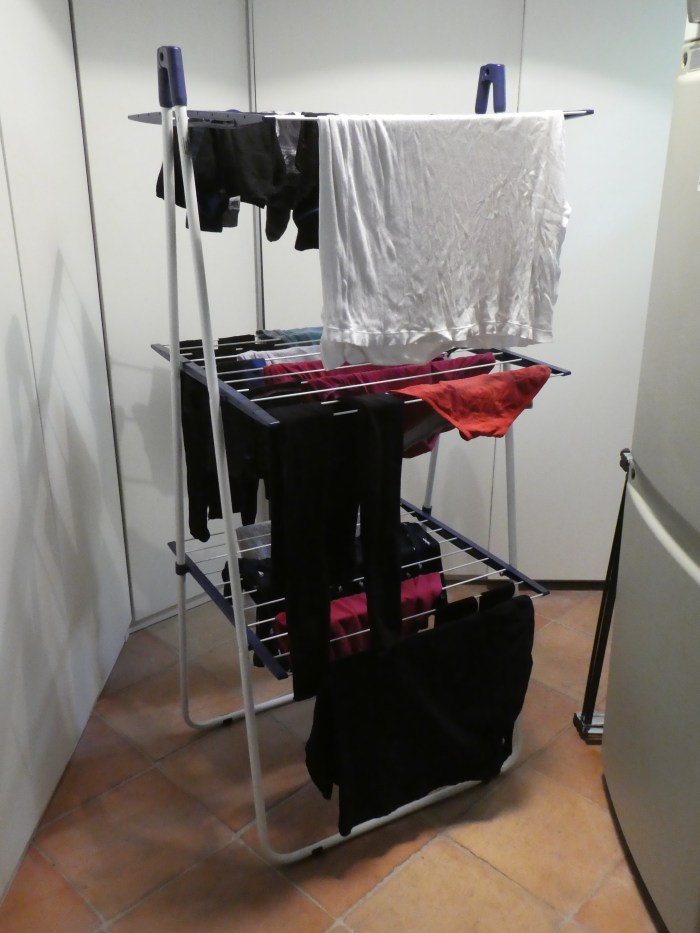
Another strange thing is that while they had a clothes washer, they didn’t have a clothes dryer. And so, since they have to hang their clothes on a rack to dry, they are not at all soft. But probably the strangest thing of all is that the house doesn’t have heat. Fortunately the beautiful fireplace is a great help since it got down to 40 degrees some of the nights we were here (and this is April!)

So let’s take a look.

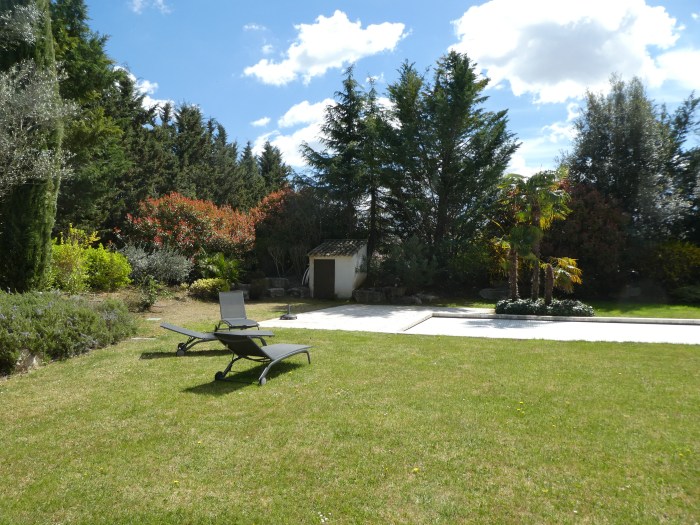
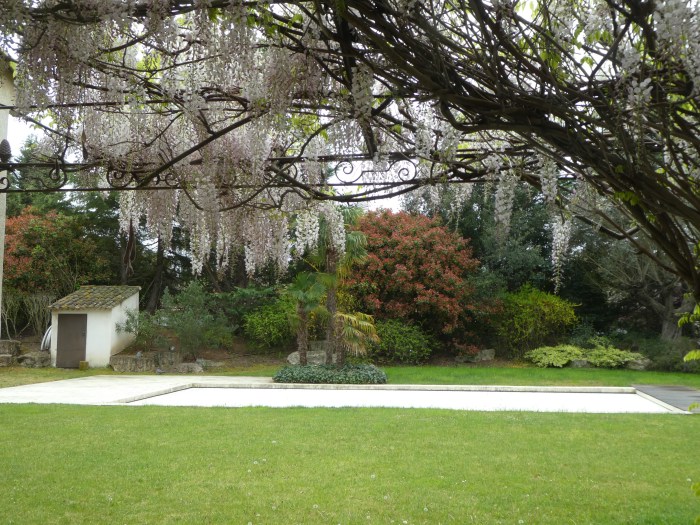
Looking at the house from the swimming pool. The patio furniture and the pool are still covered since it’s not quite pool or patio weather just yet.
This is the front entrance off the driveway. To the left you can see the door on the guest room that looks like it could be a garage door.
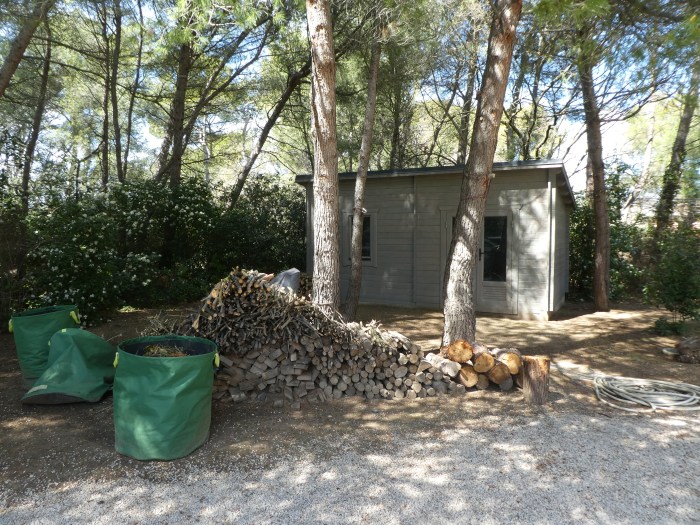
The shed off the driveway where they store tools, bikes and patio furniture.
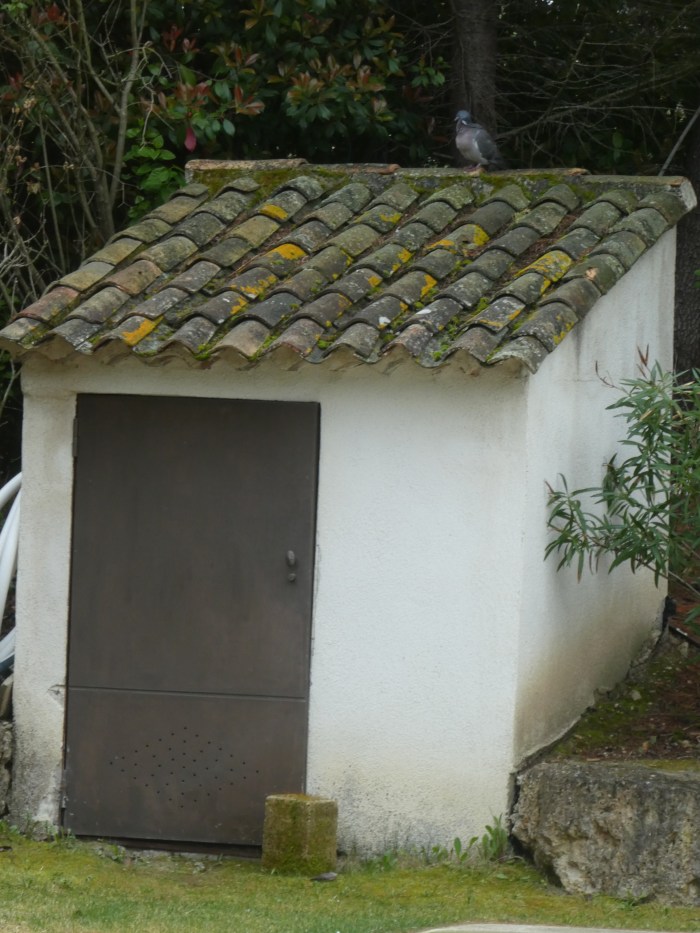
The little pool house where they keep the pool equipment. And see how old the tile looks! On top is one of 3 resident pigeons who hung around the pool drinking water from the corners.
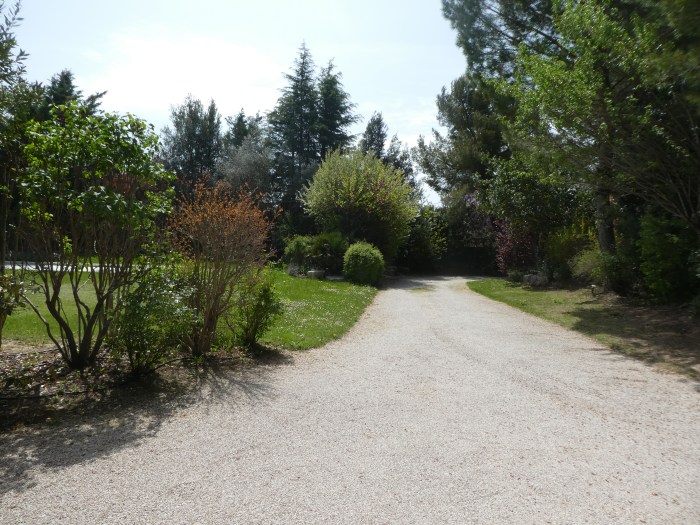
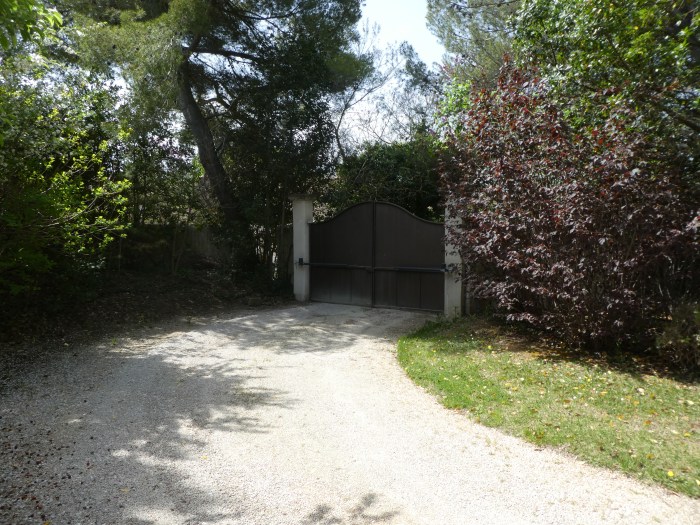
Looking down the lane. Around the curve is the gate.
The inside of the front gate at the end of the driveway.
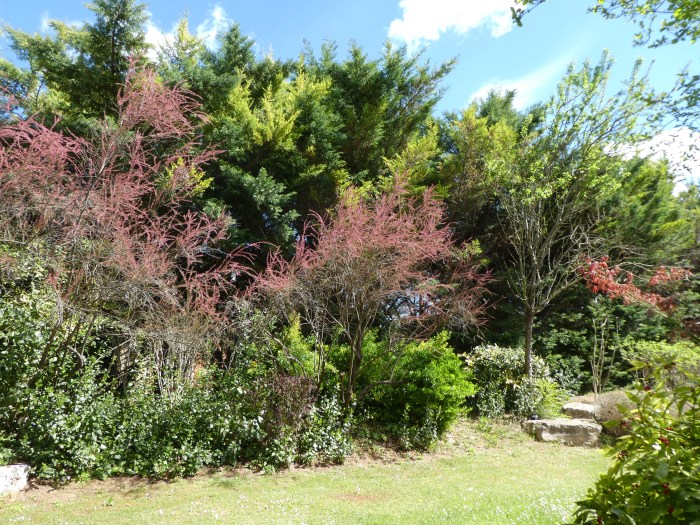
Landscaping behind the pool.
More landscaping. They had a lot of these huge stones that looked so natural. This would be gorgeous at night all lit up.
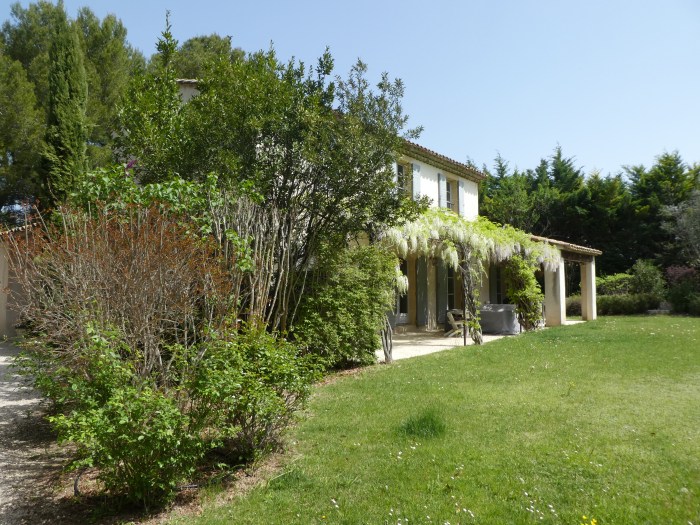
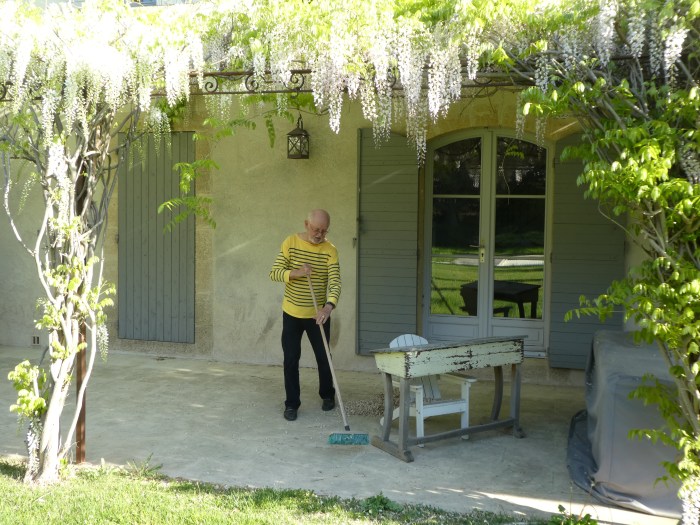
The wisteria over the patio was at its prime.
Looking outside through the wisteria.
Good houseguests help clean up the wisteria petals.
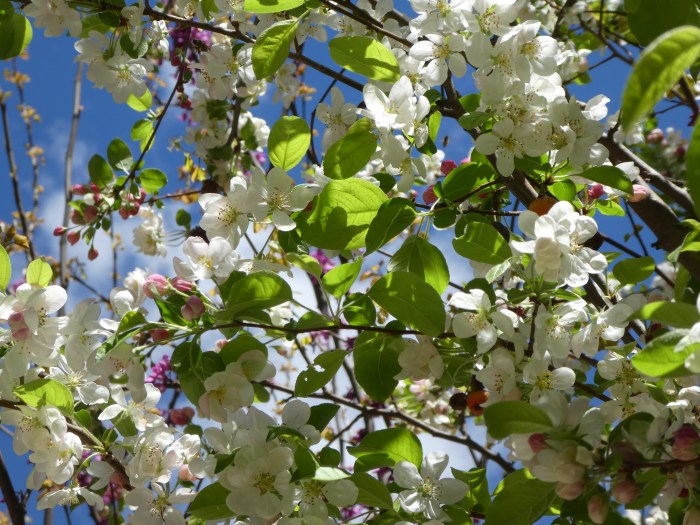
There were several fruit trees blooming next to the driveway.
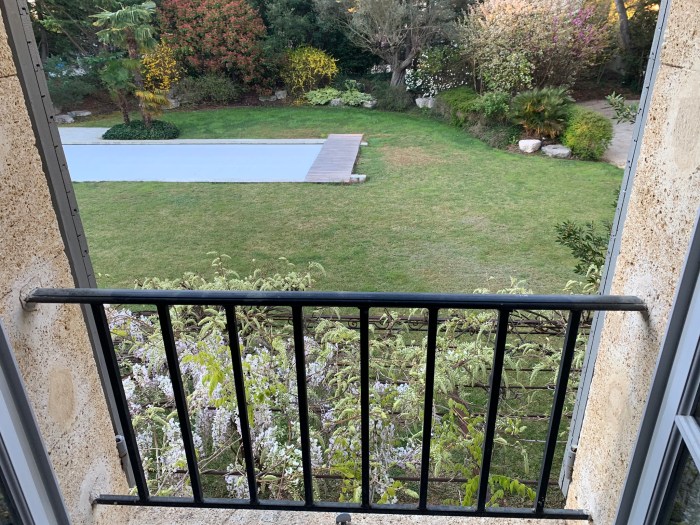
The view of the pool from the master bedroom window. When the sun came up in the morning, the pool cover almost seemed to glow as if lighted from within. It was eerie.
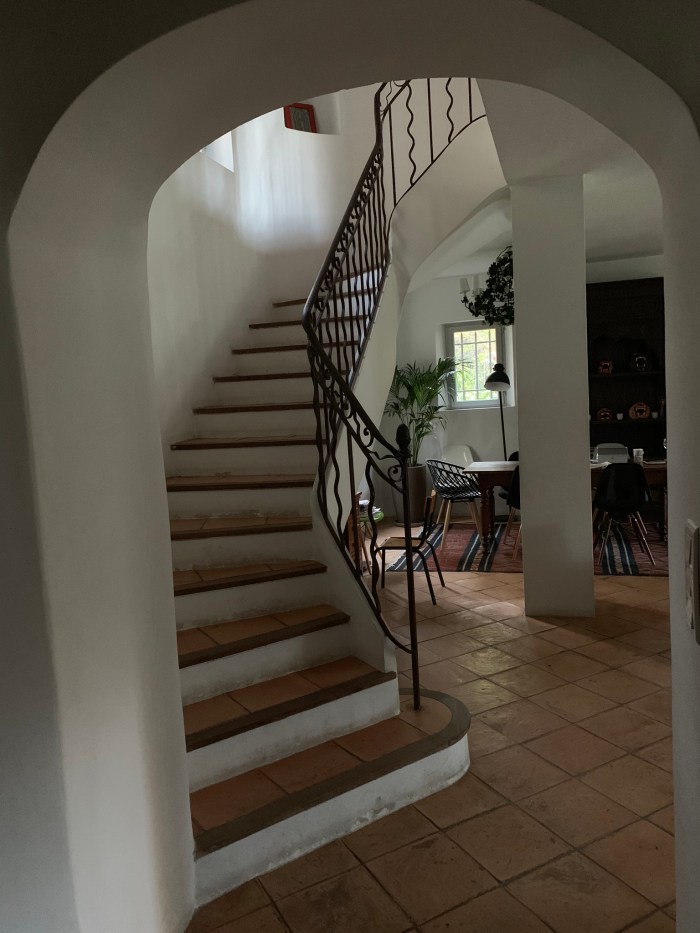
Staircase going upstairs. This was really pretty. Behind it you can see the dining area.
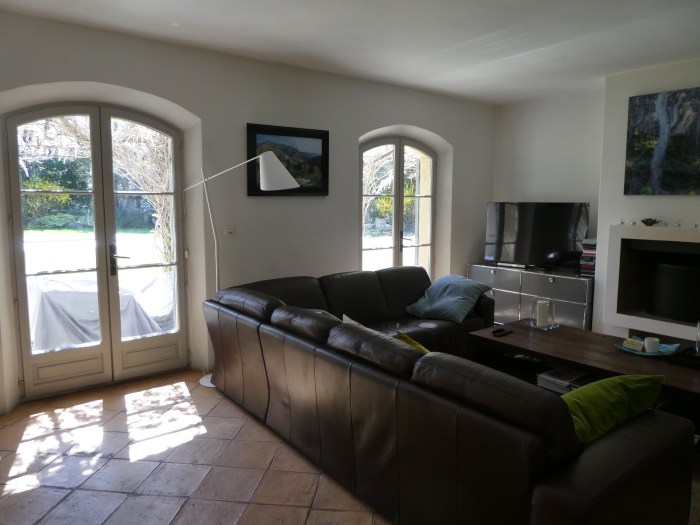
The living room.
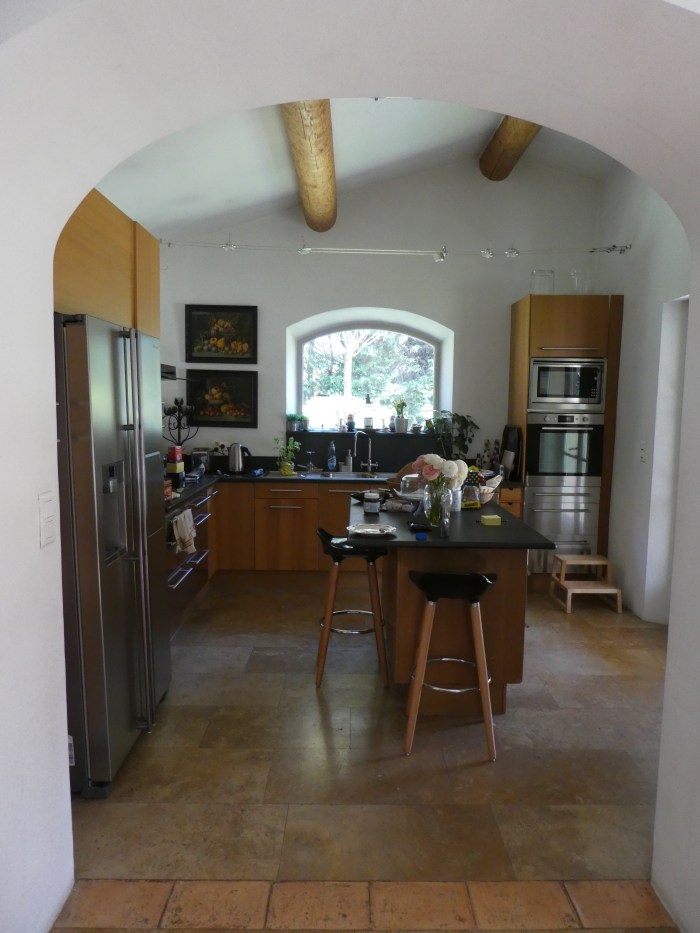
Looking into the kitchen. She had a totally different oven, although it was a Whirlpool, and it was great. It was a regular oven, a convenction, it defrosted, it made bread rise, it baked bread, it baked pizza, and it had a grill, all on different easy to use settings. I’ve never seen an oven like that and I really learned to like it while we were here. They also had a induction stove top which was really nice.
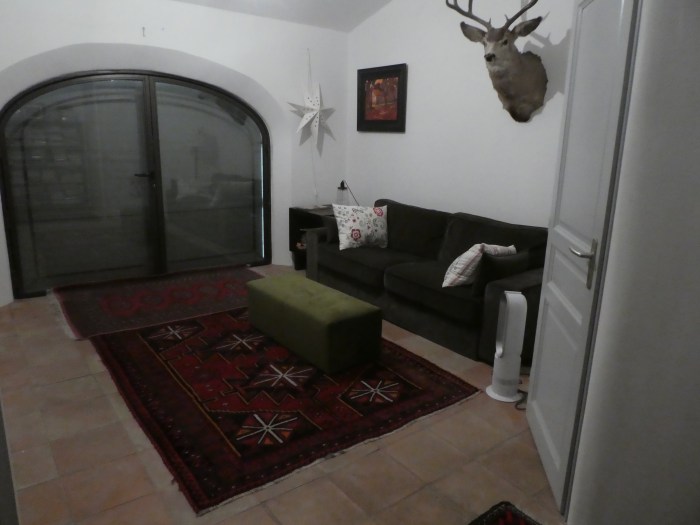
This is that extra bedroom that they use for a game room. It has the only full bath in the house in that door on the right. There’s a window the same shape as the door but we couldn’t get the shutters open so it was really dark in here.
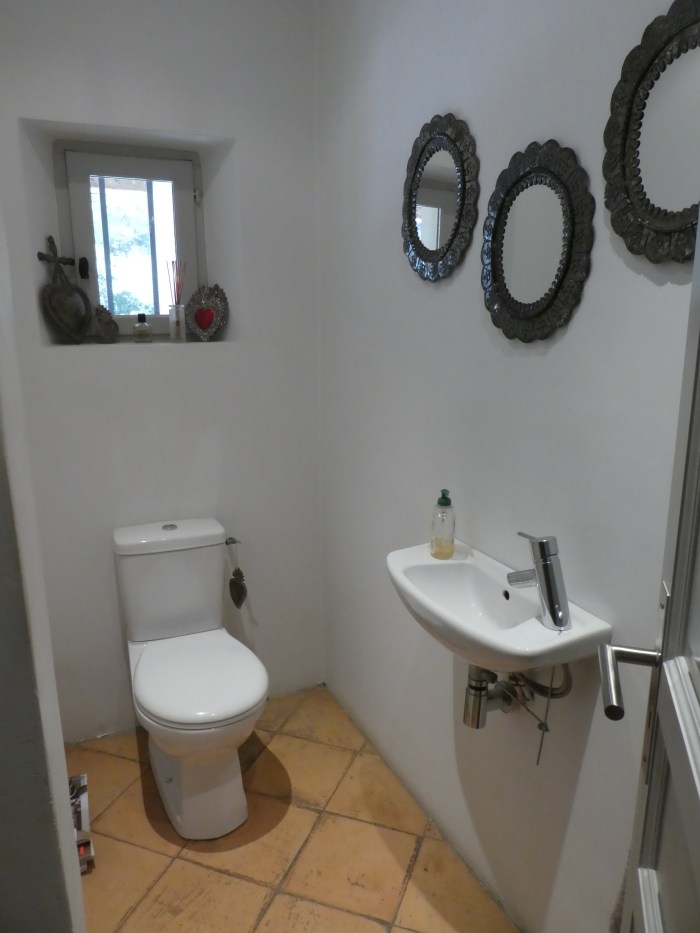
Cute little powder room. TIniest sink I’ve ever seen.
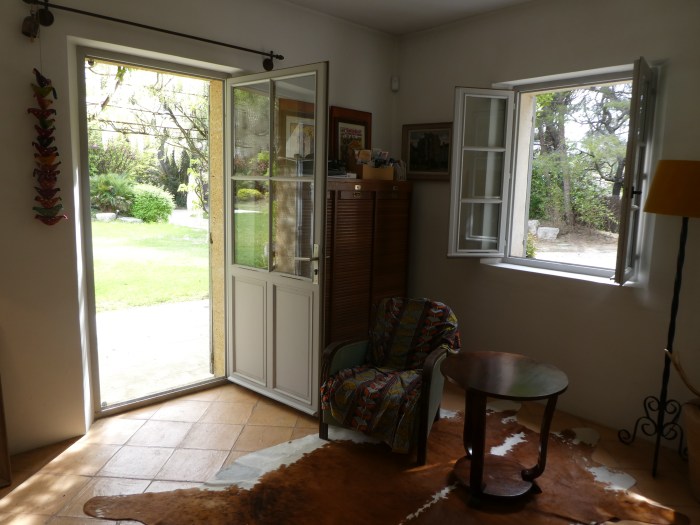
They use this room as the music room. I love being able to open all the doors and windows but hard to get used to the fact that nobody here has any screens.
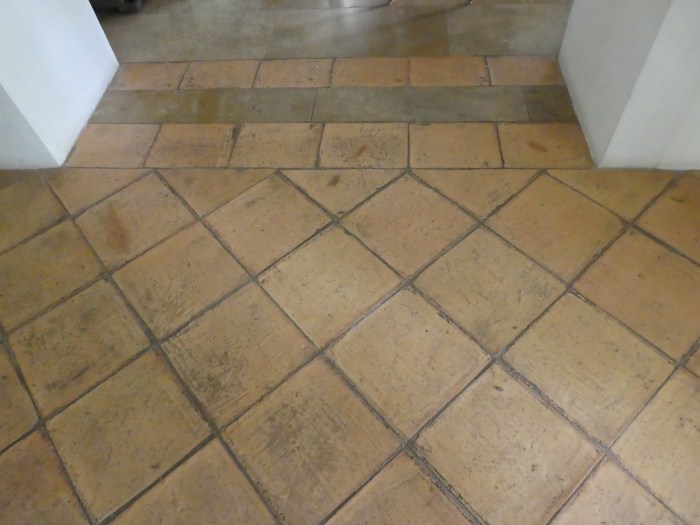
The entire house has this tile on the floor, except for the kitchen which I think was concrete.. Doesn’t it look old?

I want to do just a couple more posts after we get home so hang in there.

Downtown Aix – one last time

We went back down to the Saturday markets this morning. We got there a little later than last Saturday and it was already very crowded. We wanted to check out the Museum of Granet but never could find it, even with GPS. Later we realized that we were asking for directions by car when we meant to be asking for directions for walking – those are 2 totally different things, especially in a place like this filled with pedestrian alleys and 1-way streets.

We’re leaving in the morning. I may do another post if we manage to see anything in Munich tomorrow. And I may do another one with some photos of the house we stayed in if anybody is interested. Otherwise I’m just about ready to wrap things up.

By the way, our guide says the local literature is wrong. There aren’t really 1,000 fountains in Aix, but actually only 111. What a disappointment.

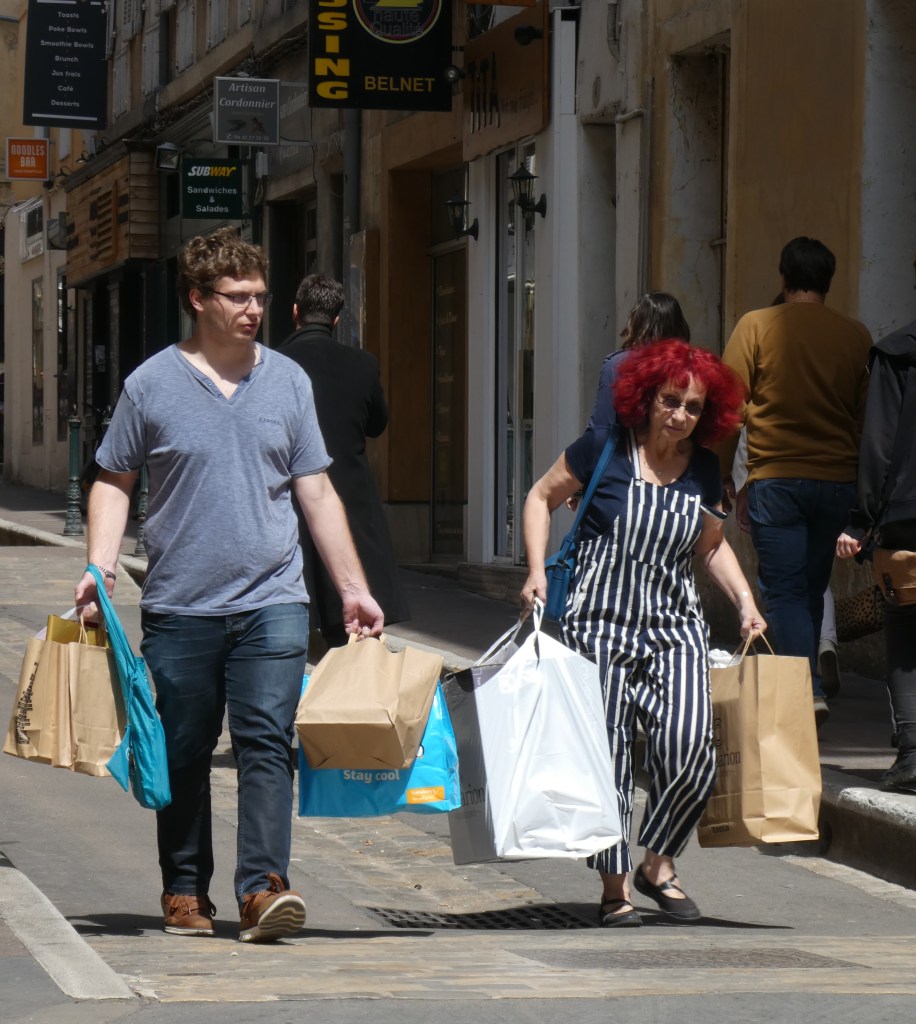
Sometimes we over-shop at the markets.
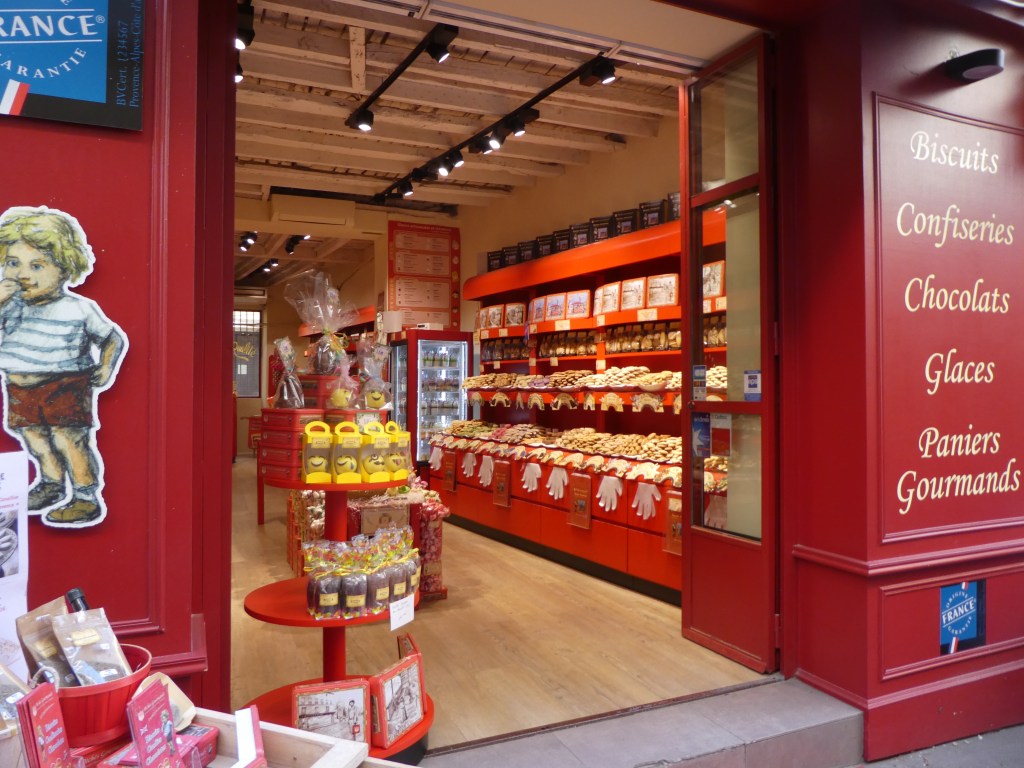
We went by many patisseries today. And going by a patisserie is very difficult because they always smell absolutely divine. This one had a huge selection of French cookies.
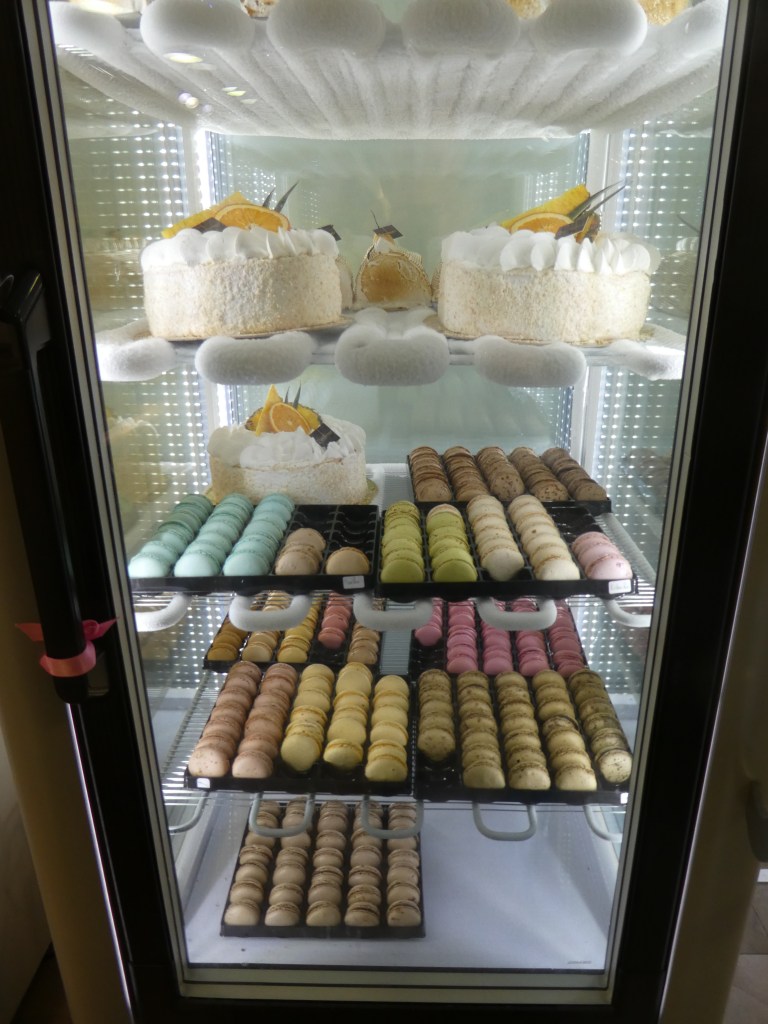
Macaroons. Yum! And those cakes look pretty good too.
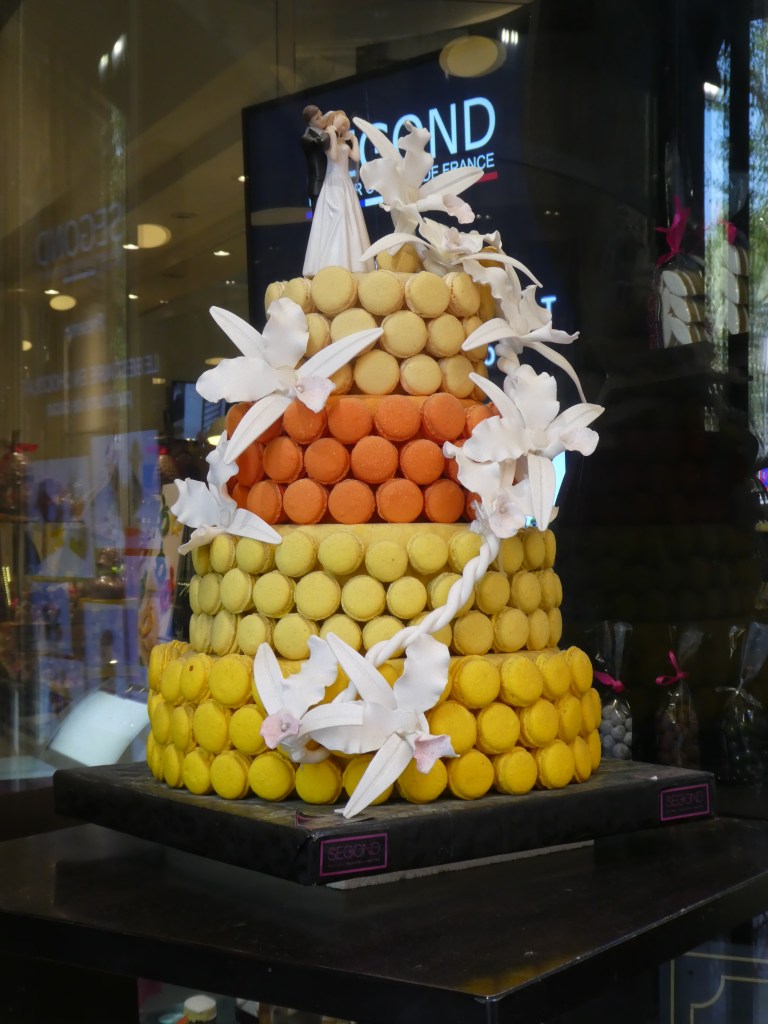
A wedding cake made out of macaroons.
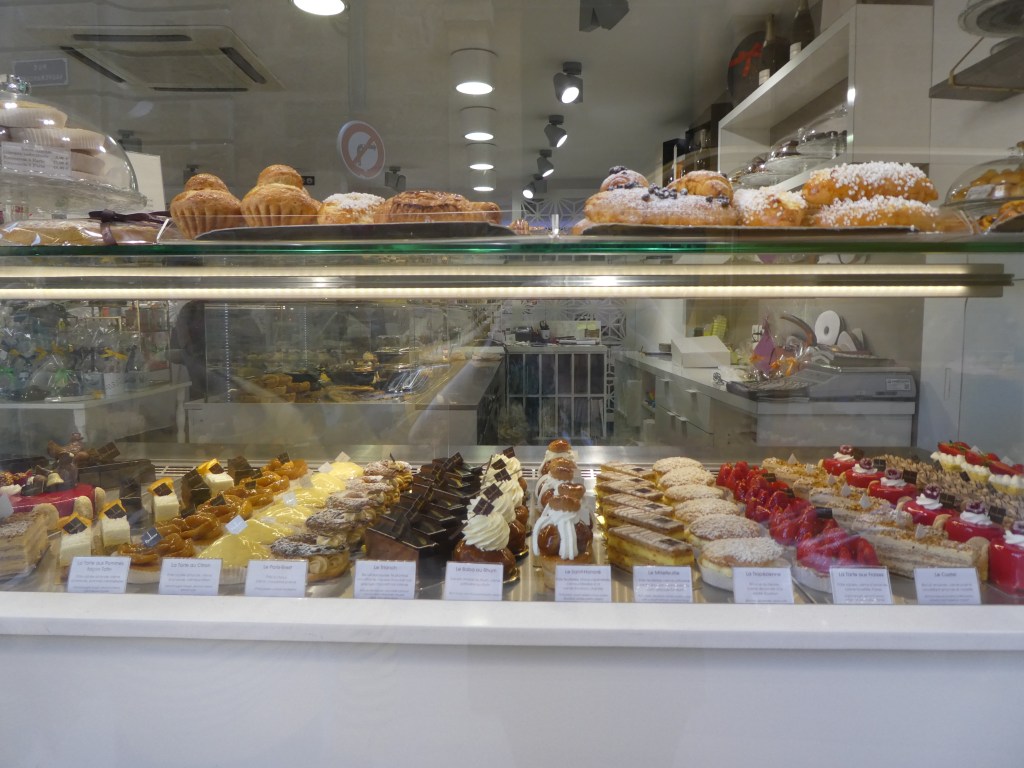
These pastries look amazing.
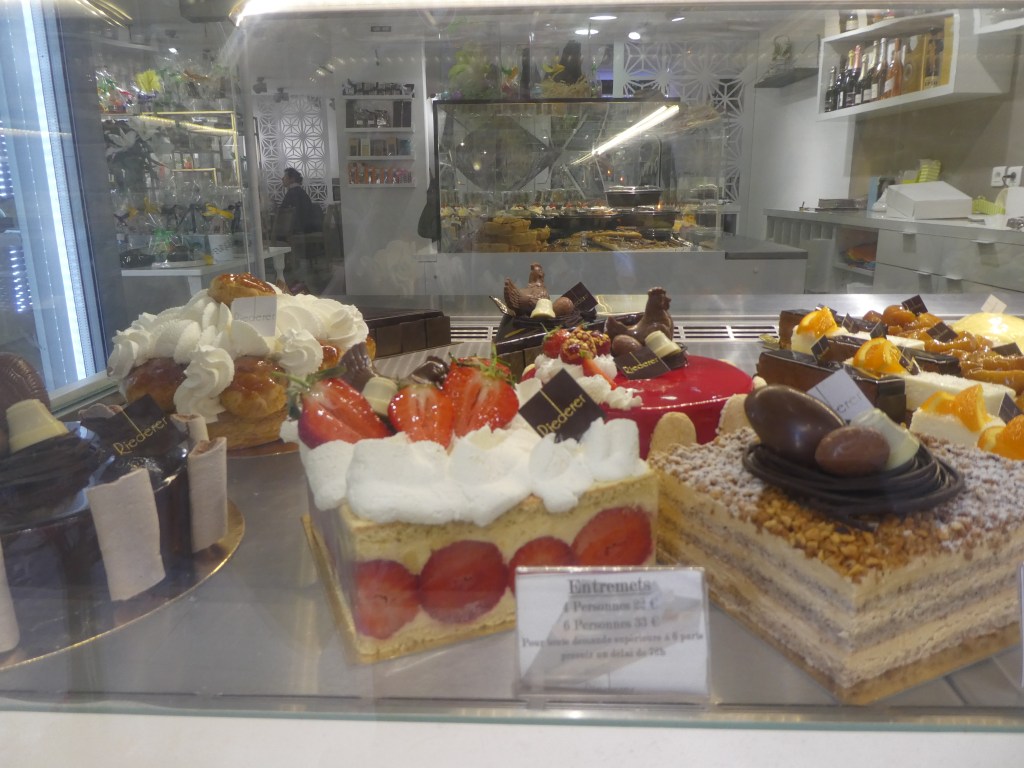
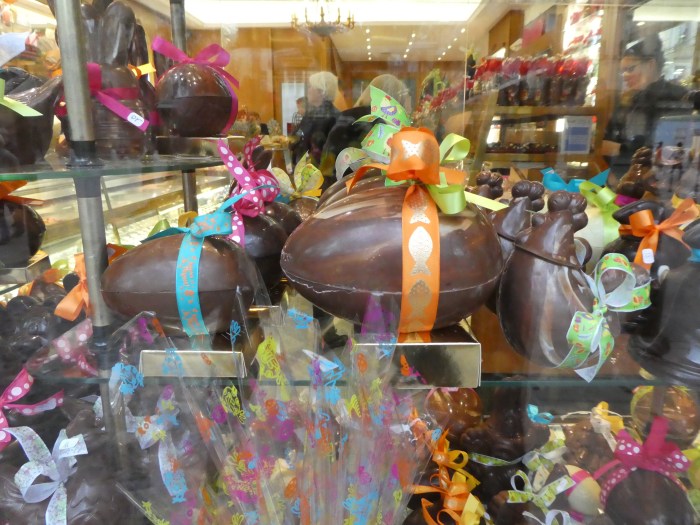
And these are small cakes, just in time for Easter weekend.
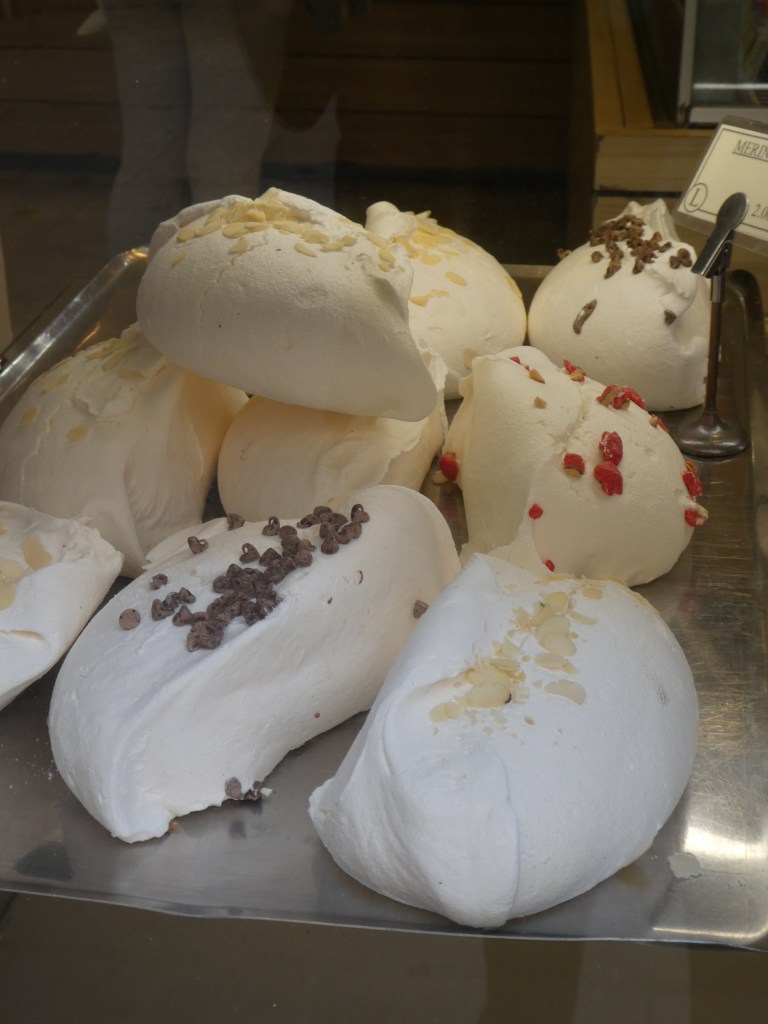
Amazing meringues. These guys are 6-8 inches long. They’re HUGE!
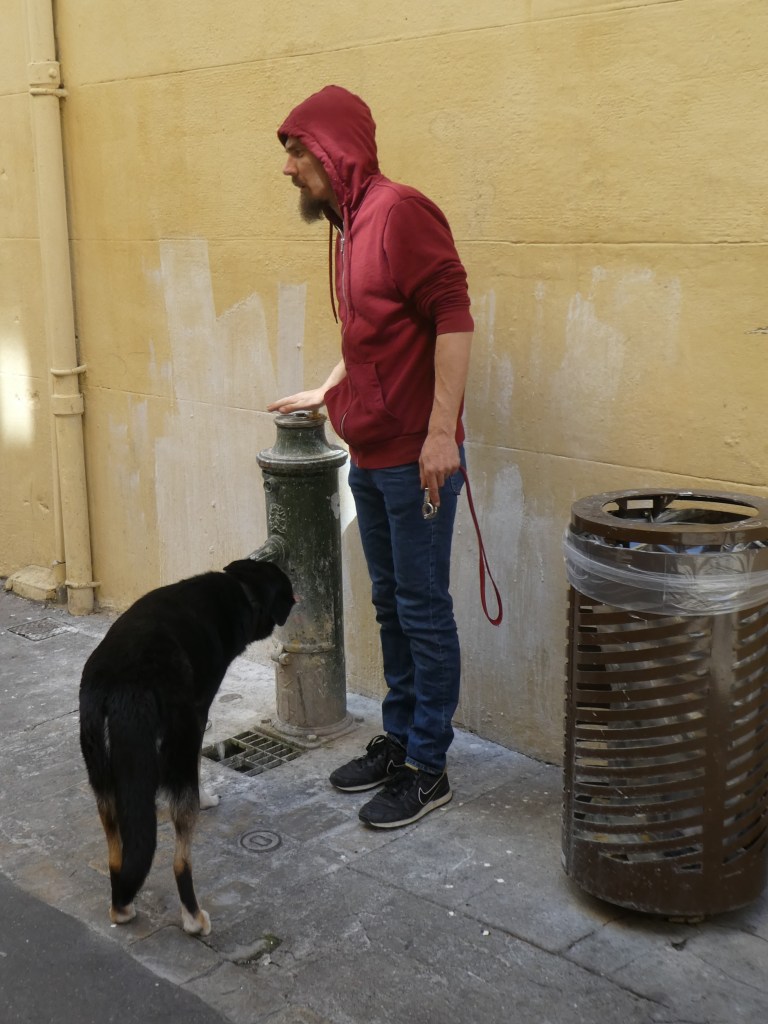
The guy pushed on the top of this post and water came out below for his dog. When he saw me about to take a picture, he got very agitated and waved me away. He didn’t realize I had already taken this one. This place doesn’t really look like a dog watering station – maybe that was the problem?
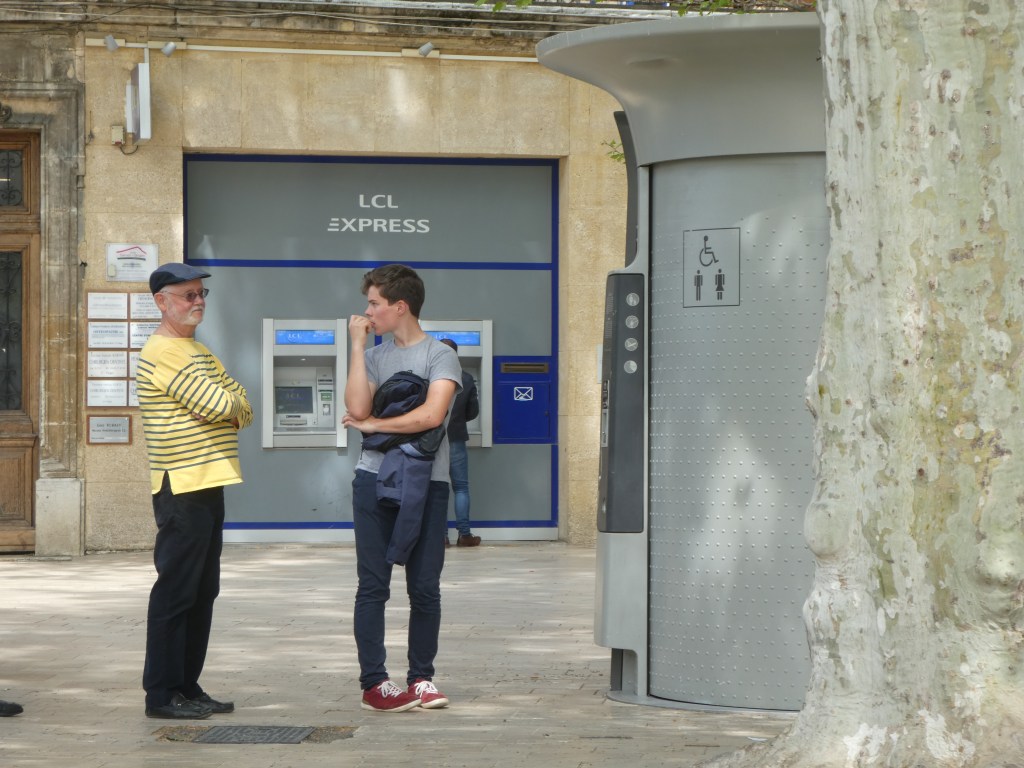
Like everywhere else, public toilets are few and far between here. This is one of those that takes extra time to automatically clean between users, making the line even longer.
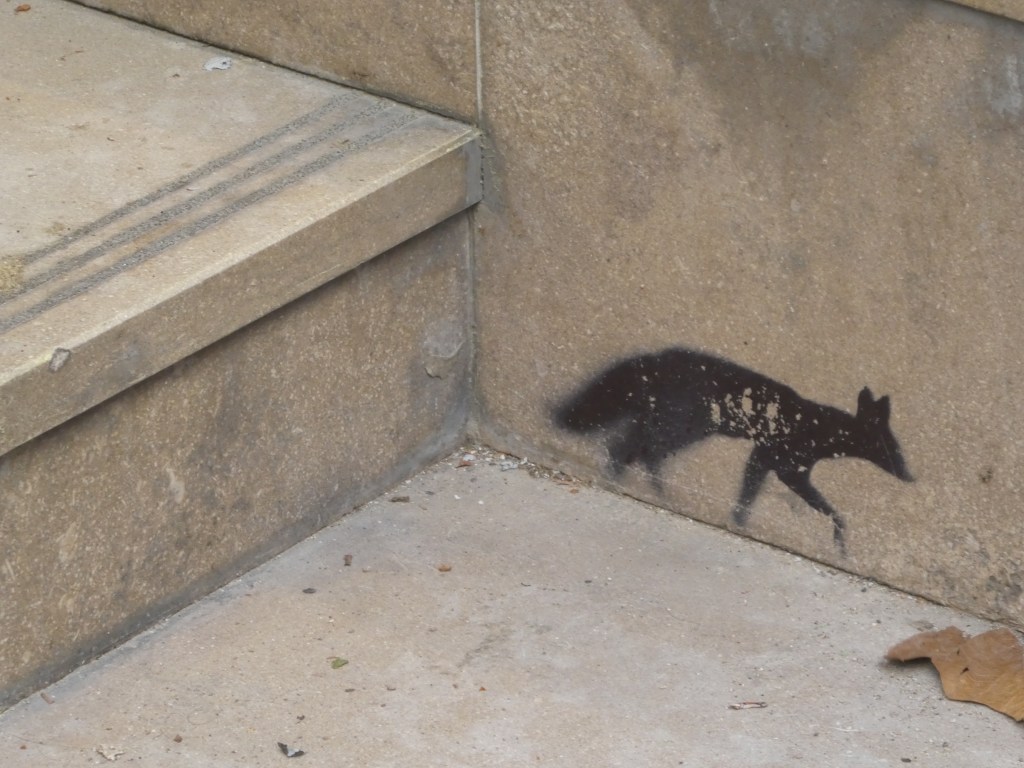
This looks like a drawing of a fox (or maybe a rat with a wide tail?). Why would this be on the side of a step up into a shop?
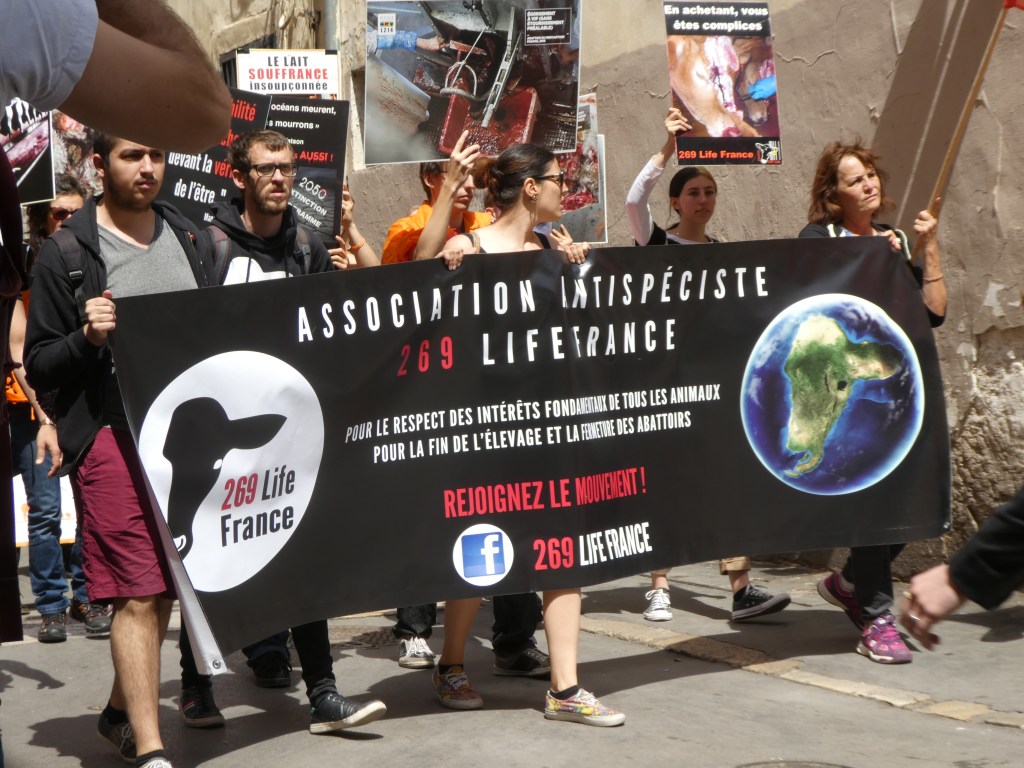
Also while we were eating lunch, a group of demonstrators came through protesting the killing of animals. These people were very organized and carried very disturbingly-graphic professional signs.
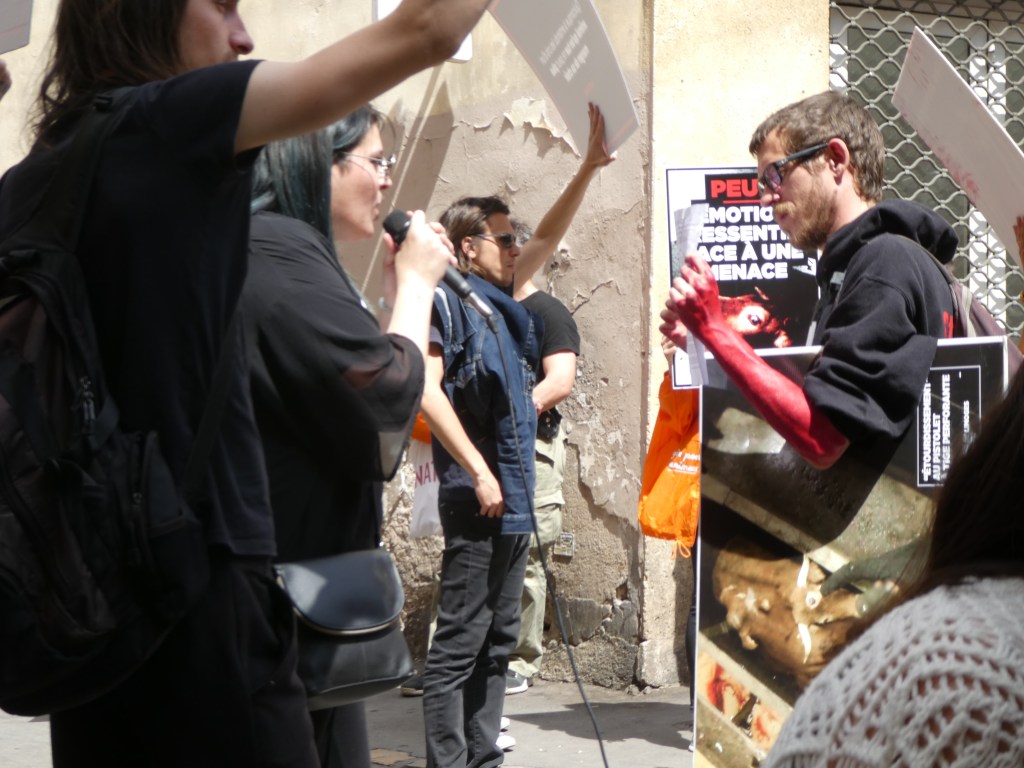
The woman with the microphone read from a sheet held by the man with the “blood” on his arms. Several of the group’s members stood around the patio tables and glared at people who were eating their lunch. It was very uncomfortable and very effective. Yesterday we saw a small group of yellow jackets at a rural roundabout on the way home from our tour but we passed by them so quickly that we couldn’t tell what they were doing,
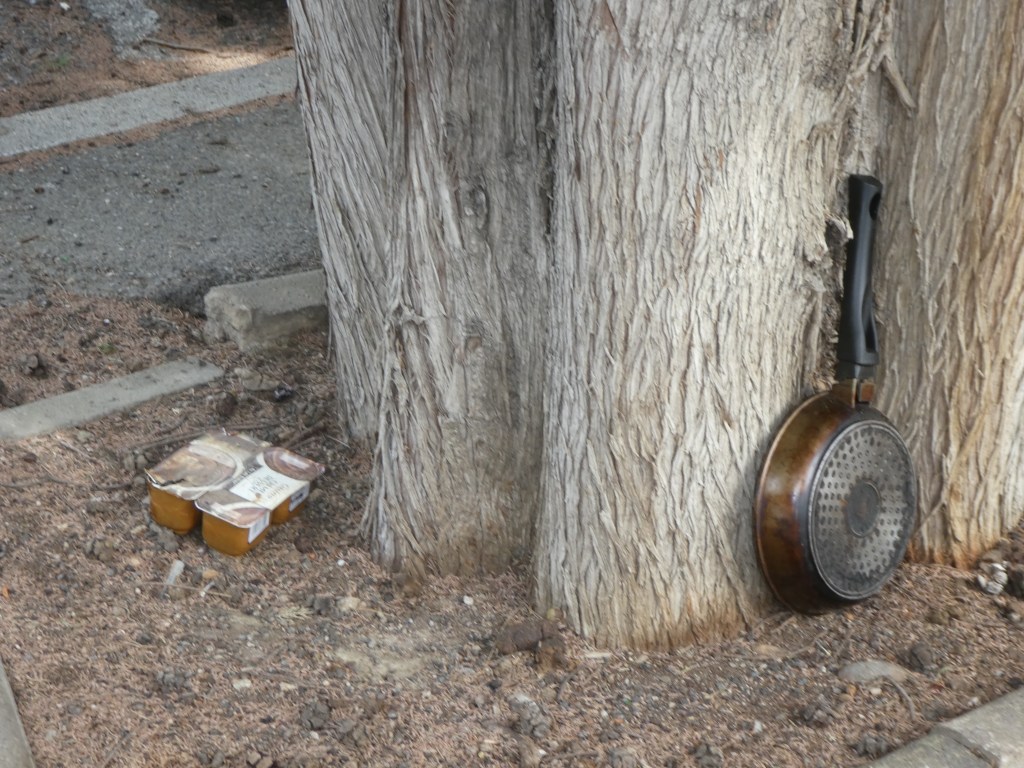
We were walking through a very nice, clean residential neighborhood and we saw this fry pan and package of 4 puddings leaning against a tree. Hmmmm…….

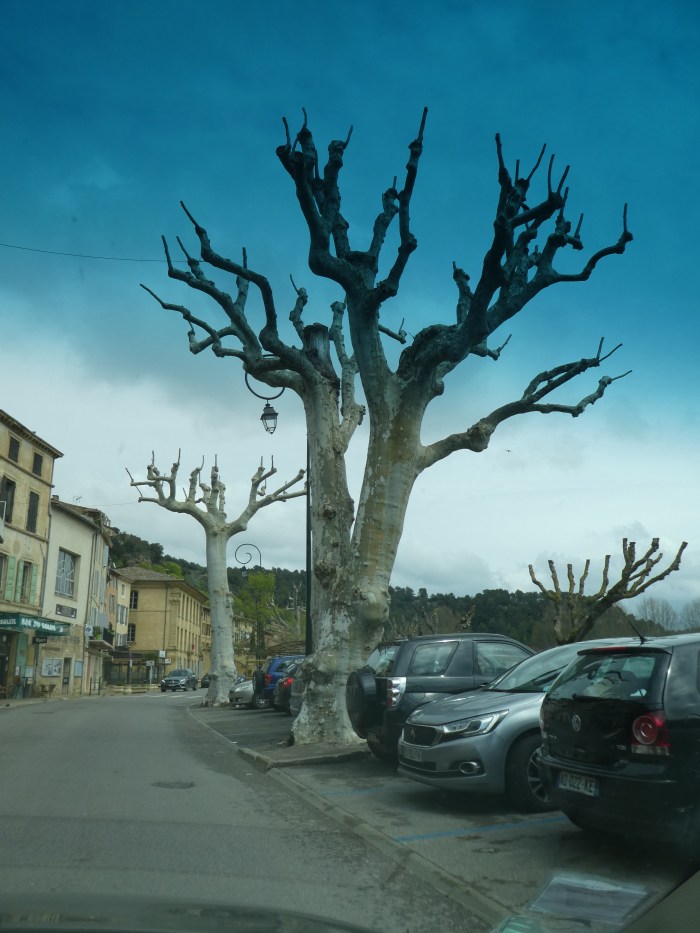
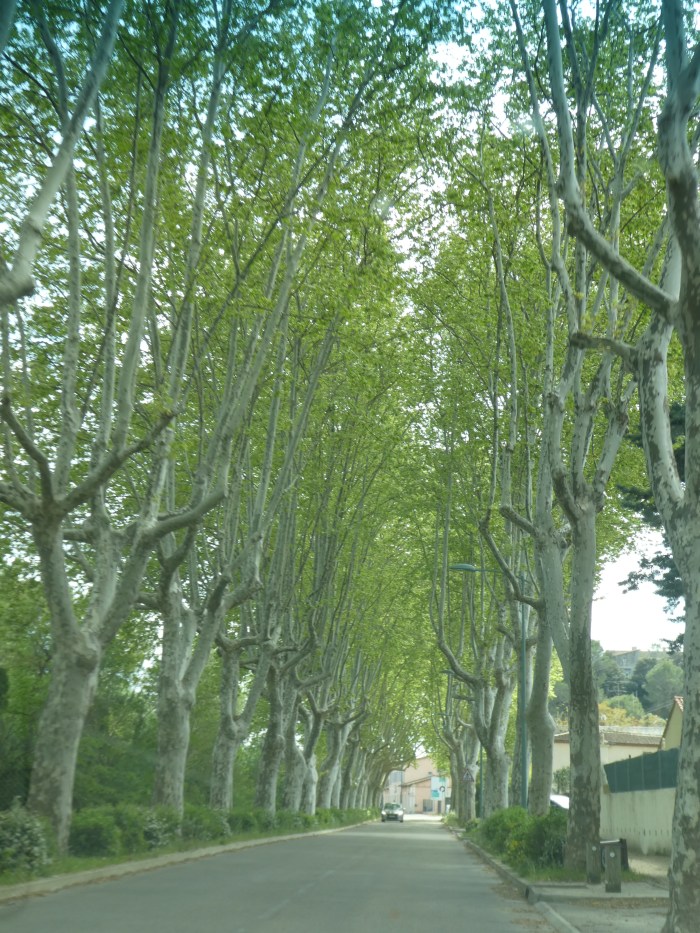
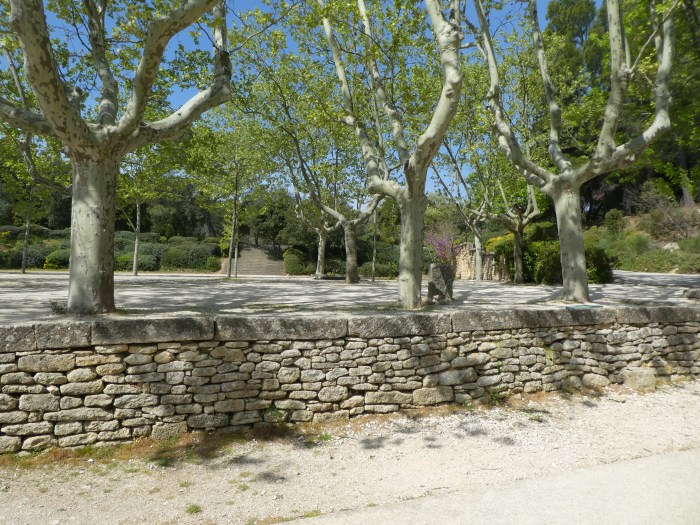
Trees, trees, trees!

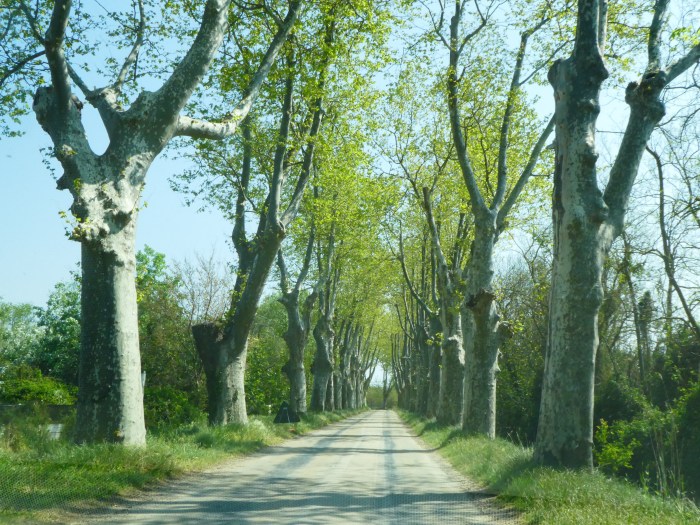
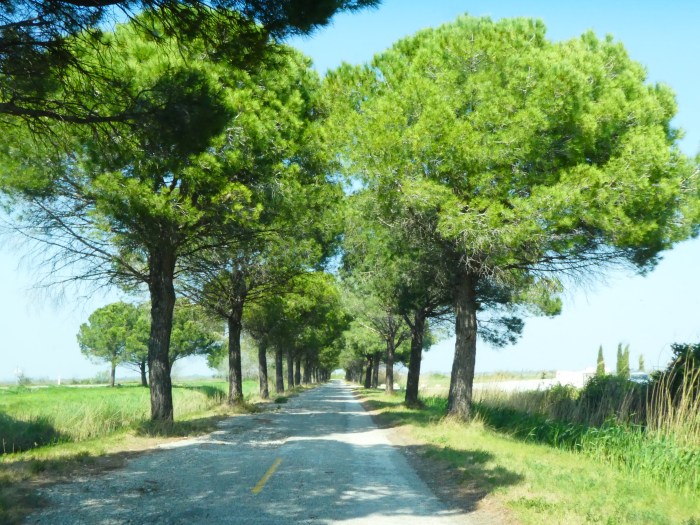
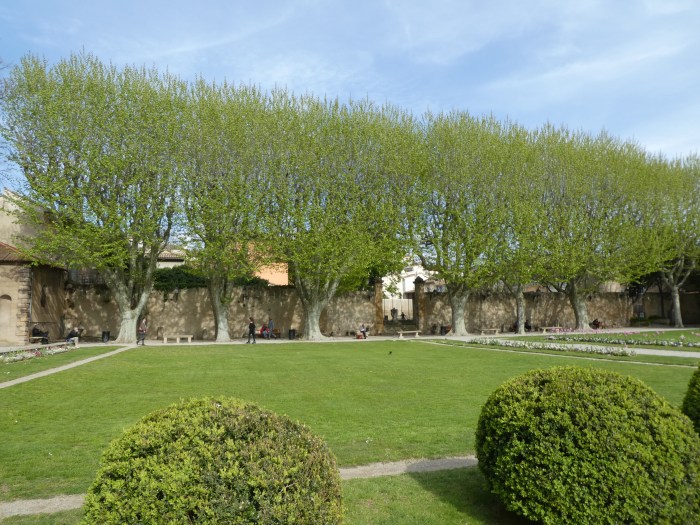
I LOVE trees. One of the things I really appreciate about France is the way they obviously love and respect trees too. Today’s post showcases some of the many beautiful trees we’ve seen since we’ve been here.

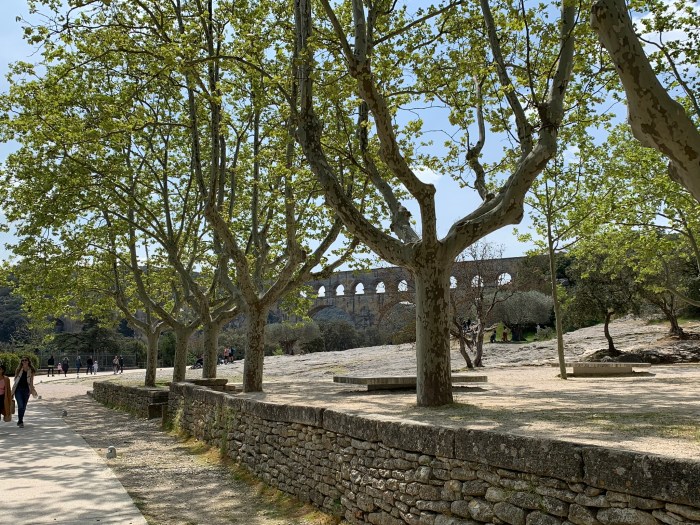
Everybody prunes their plane trees but this little village did not and it’s especially noticeable because they tend to be late budders. Or maybe they’re dead.
And they work around them when they build as if to say, “you are of the highest importance here.”
Sometimes all you need is one little glowing tree to brighten up the whole garden.
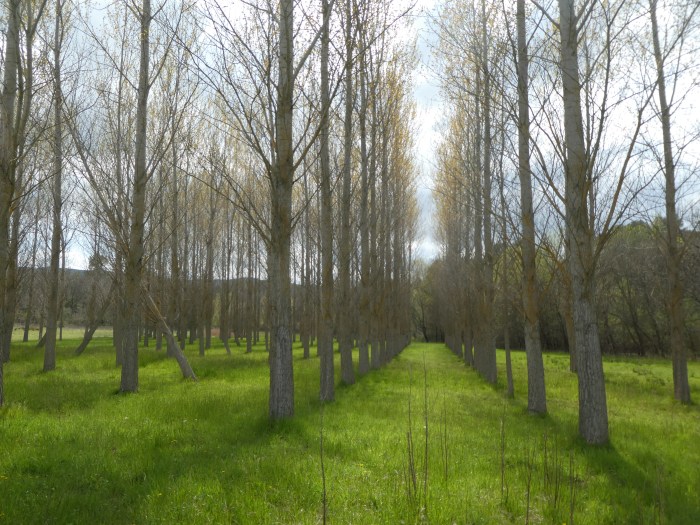
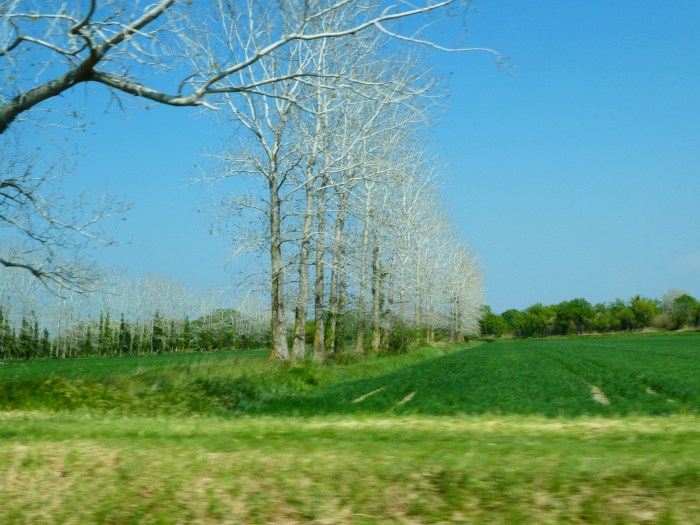
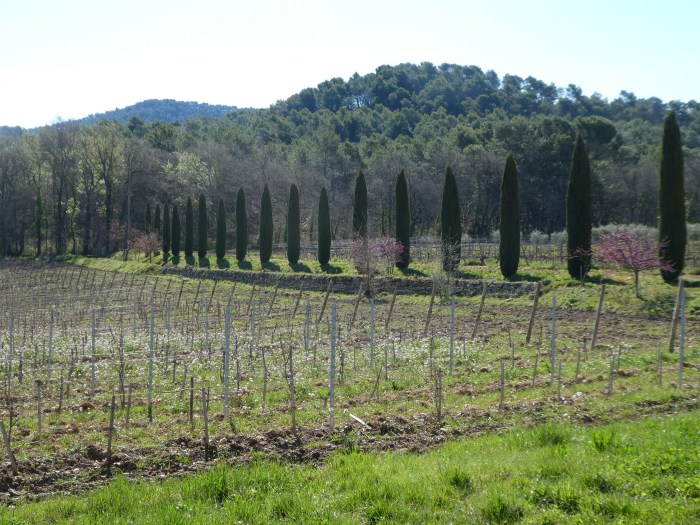
Lines of trees are planted between crops to help protect them from the strong Mistral winds.
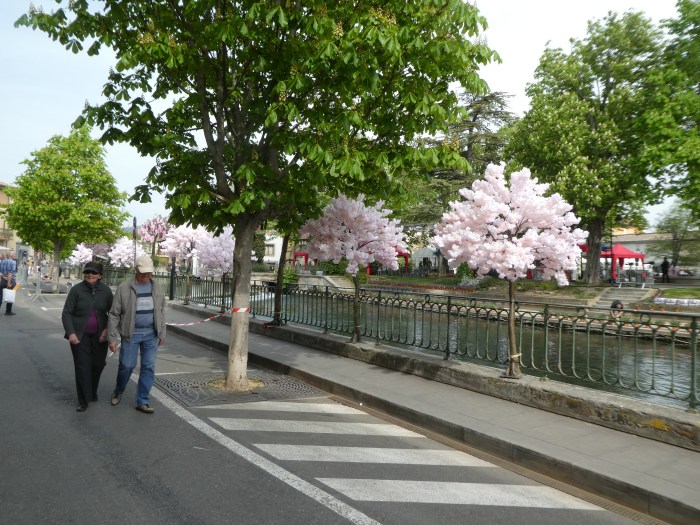
This is just wrong! So many beautiful trees everywhere and somebody has planted these artificial ones right next to the canal.
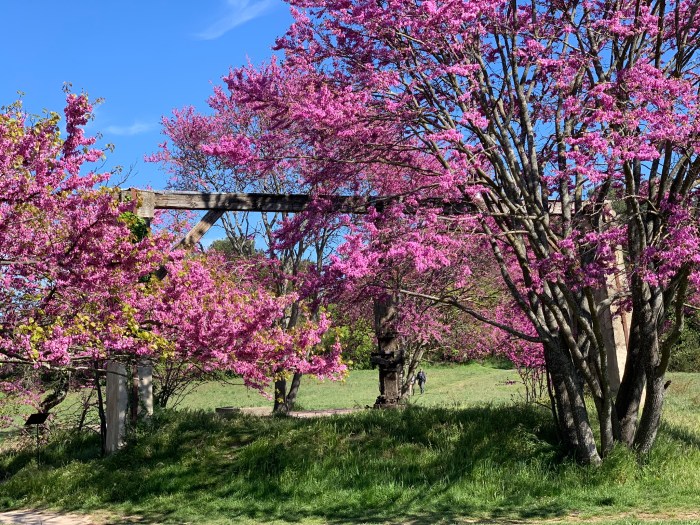
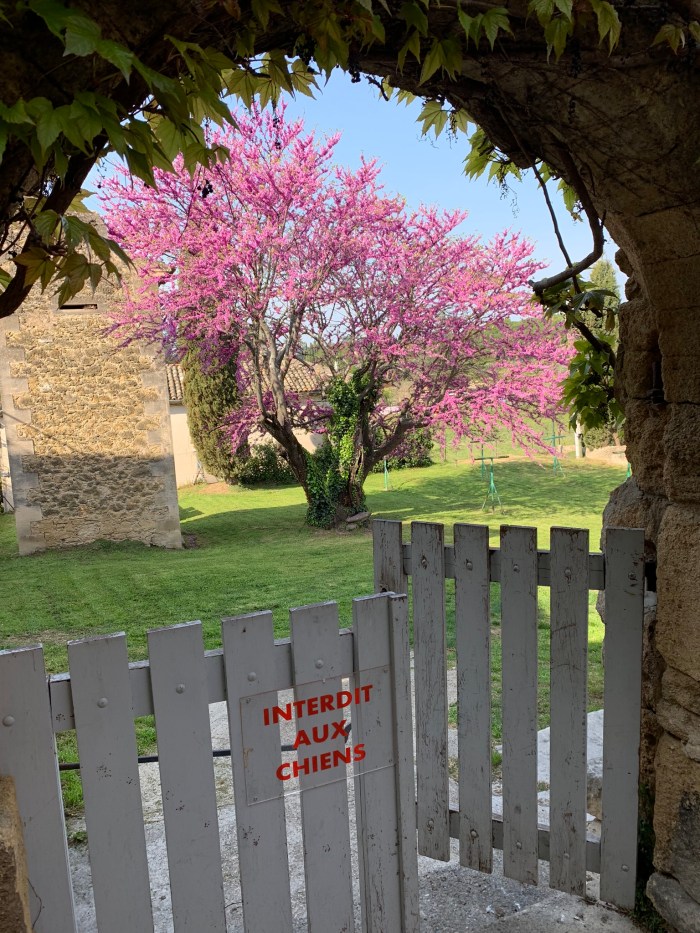
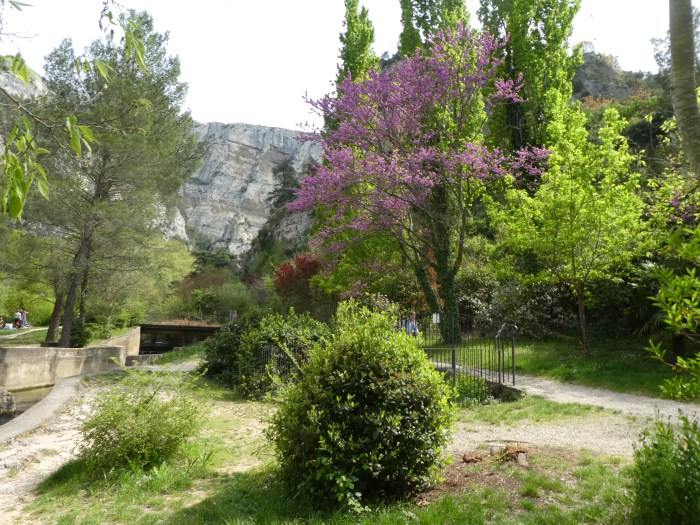
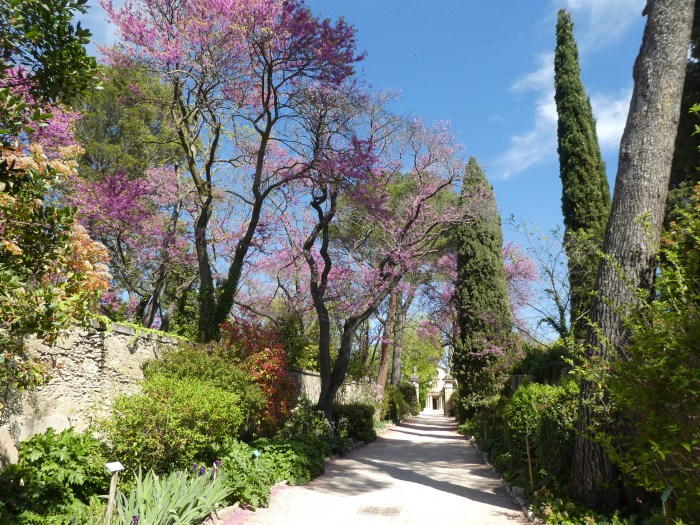
We think these are redbud trees and when you get a group of them together like this in front of a clear blue sky, it just takes your breath away.
I think it’s interesting how all of these plane trees seems to get pruned in the same way, i.e., the center branches are cut out of them so they look like an upside down umbrella.
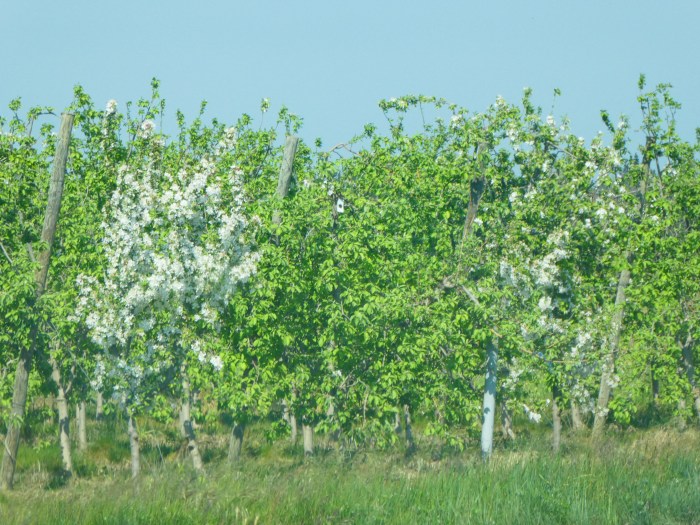
According to our guide, these are apple trees. I’ve never seem them grown this way, between wooden posts and wires like grape vines.

“No dogs allowed.” (Maybe somebody should close the gate. What if the dogs can’t read?)
Now pruning like this takes talent!
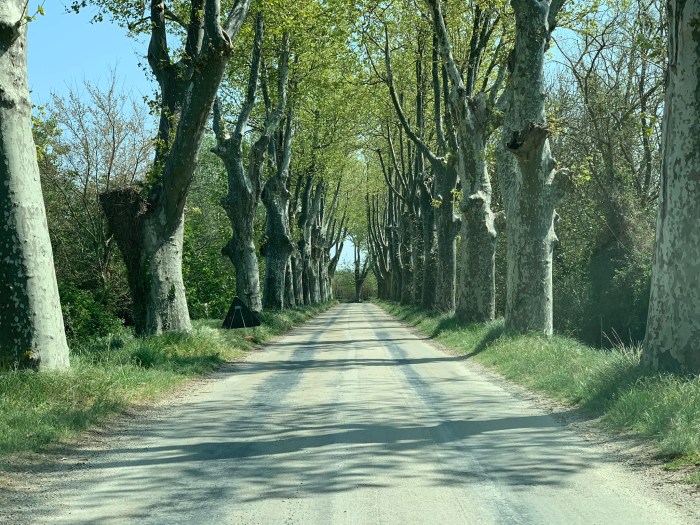
Wonderful trees but road could use a little work!
Still my favorite trees.

Hill Towns of the Luberon

Luberon is the beautiful area of Provence where Peter Mayle lived and wrote his famous “A Year in Provence.” This beautiful area, protected as a regional national park, has hill towns, expansive valleys, endless manicured vineyards, and countless cherry groves, lavender fields, and cypress trees. Luberon is France’s answer to Italy’s Tuscany.

We took an all-day mini-bus tour to 6 of the villages in the Luberon. There were only 4 of us on the bus and it was the perfect way to go. Chuck didn’t have to drive on those narrow roads, I didn’t have to navigate and keep getting us lost, and best of all we didn’t have to spend hours looking for a place to park. Our driver was so nice and knowledgeable. When we were driving, he gave us tons of interesting information. Then he dropped us off in the little villages with clear instructions (and frequently maps too) on where to go and what to see and where the public toilets are located. So although we walked our legs off, it was very efficient and we were thrilled with what we saw. Below are just a few photos from each of the towns we visited.

Lourmarin

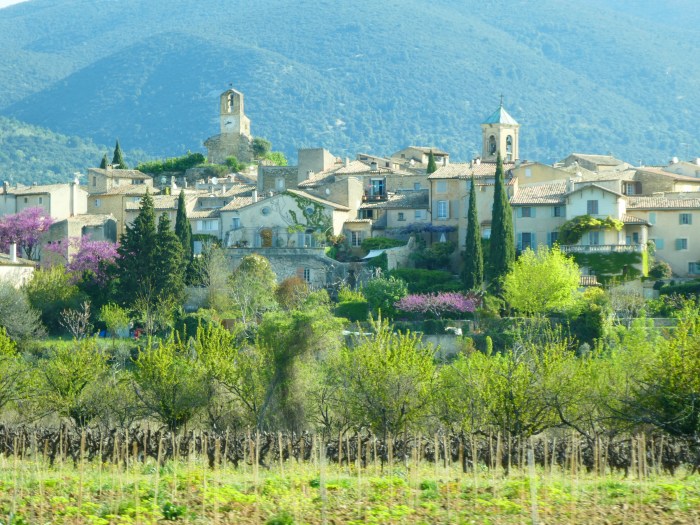
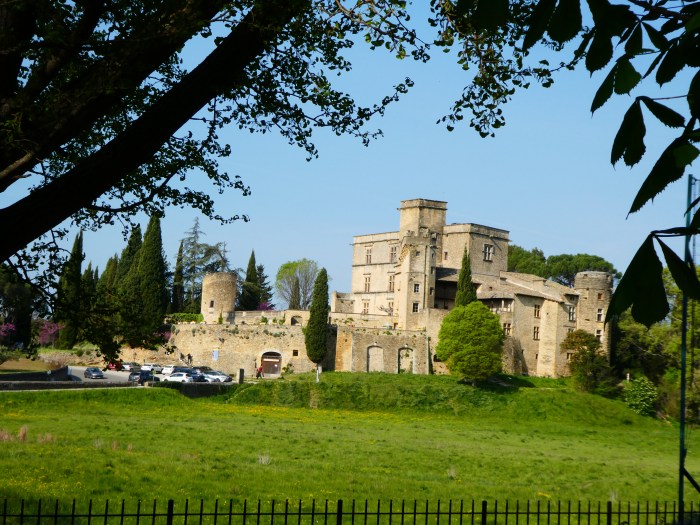
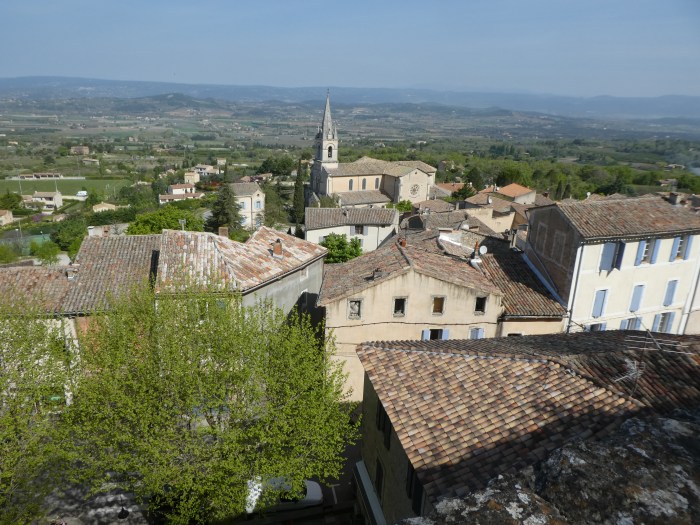
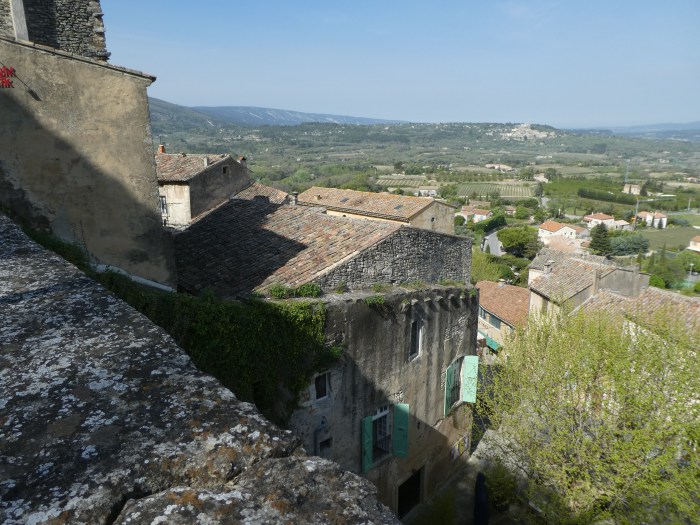
The beautiful village of Lourmarin. This is where Peter Mayle actually lived.
The Renaissance chateau on the edge of Lourmarin.
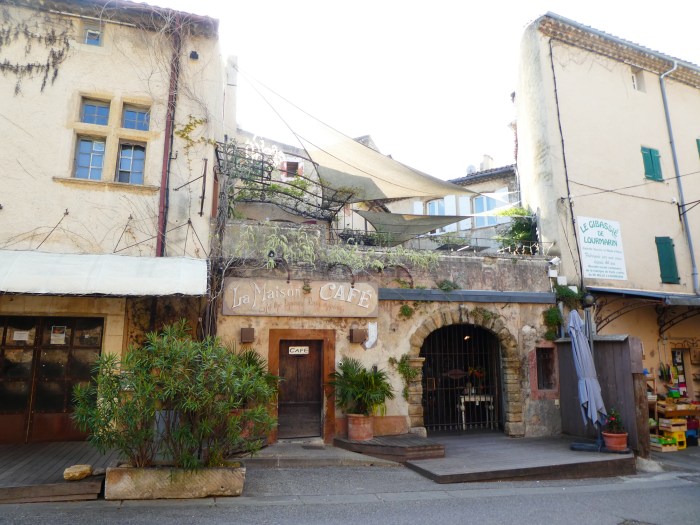
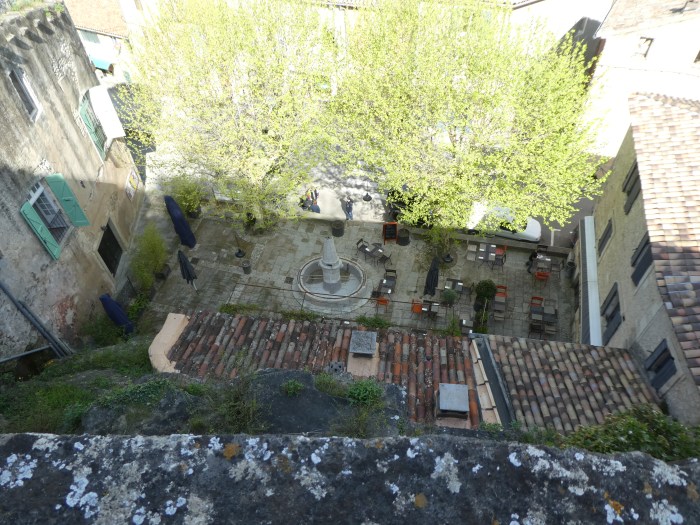
Interesting patio on top of this restaurant.
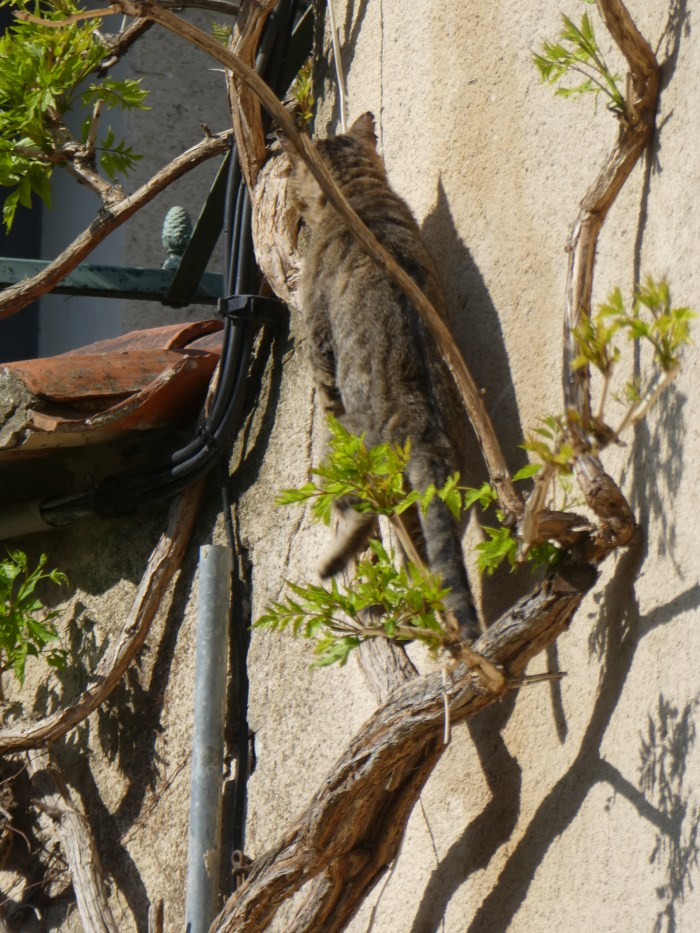
This cat knew exactly where he was going: up the wisteria, over the roof, and out of sight.
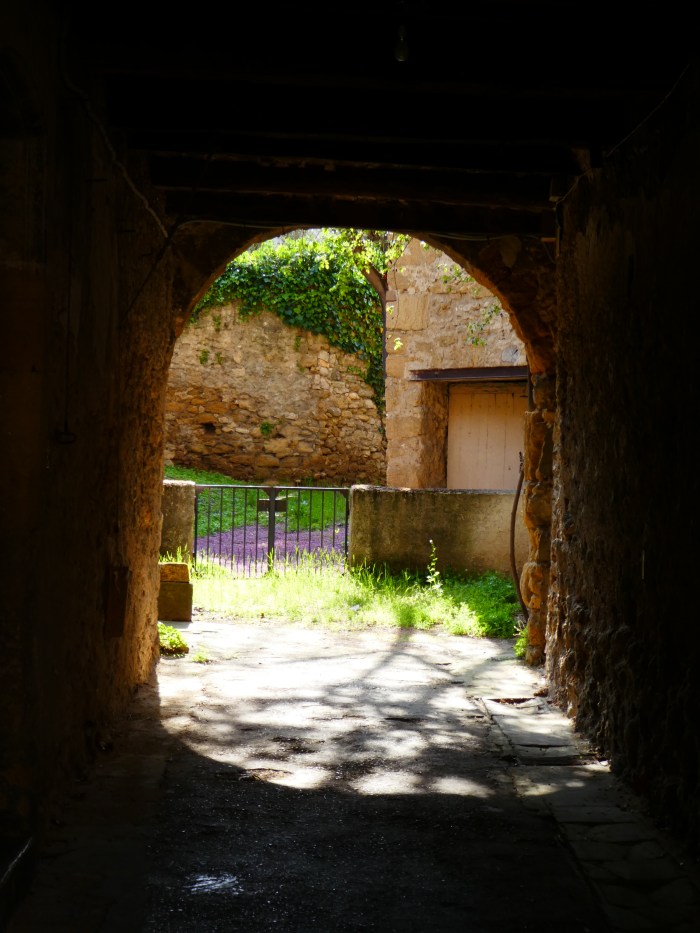
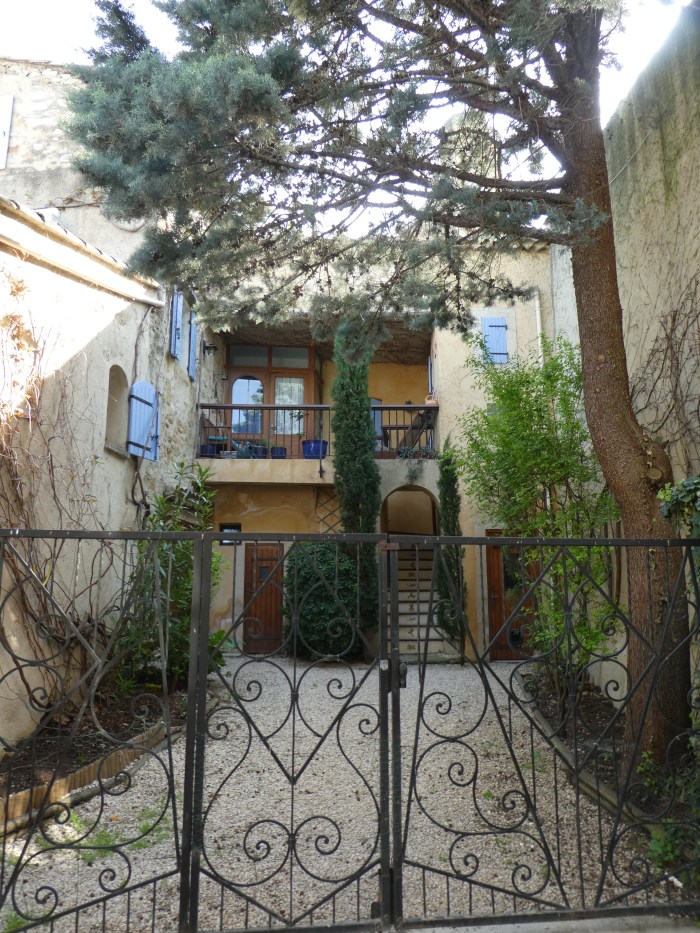
This private residence in the crowded village area had one of the nicest entrances we’ve seen.
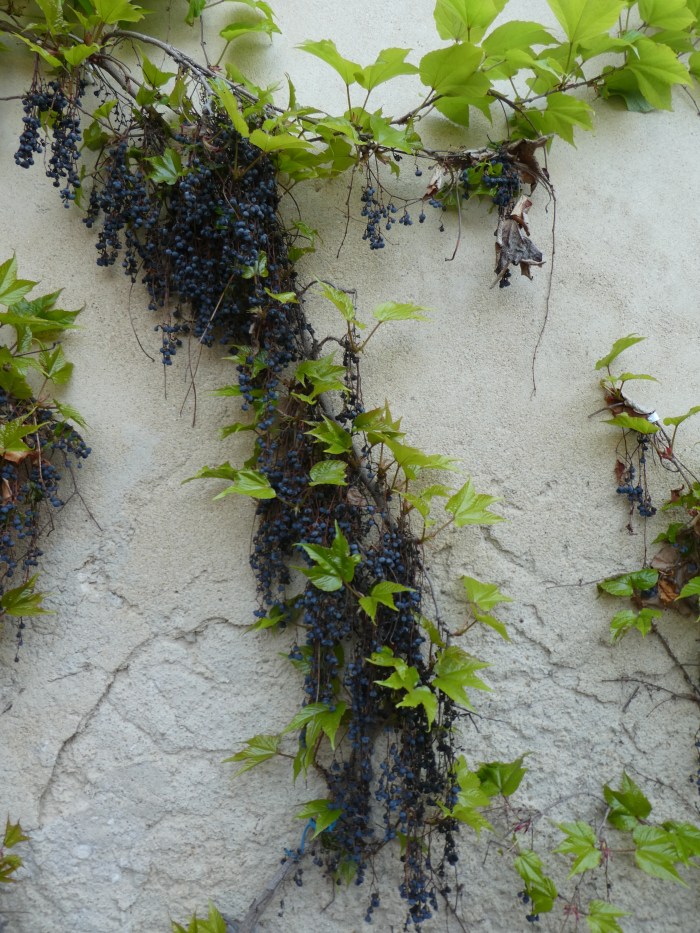
One whole wall had grape vines on it and it was obviously for display because the grapes were tiny and dried up from age.

Bonnieux

Bonnieux has spectacular views and great markets. It dates back to Roman times.

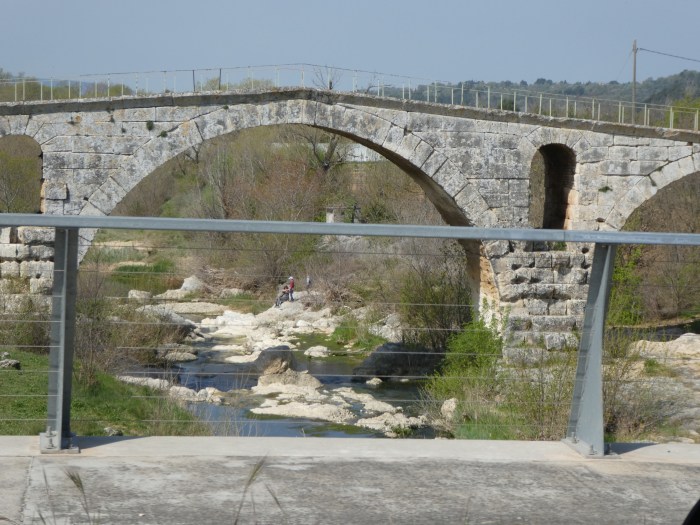
Just outside of Bonnieux is Pont Julien, a Roman stone arch bridge over the Calavon River that was built in 3 BC.

Roussillon

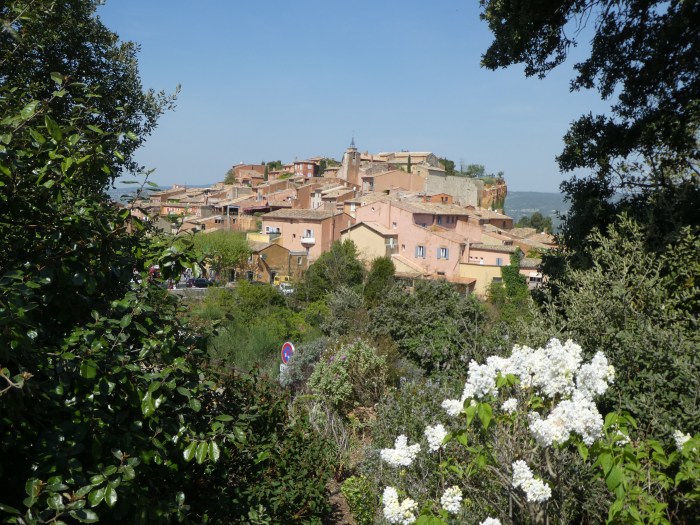
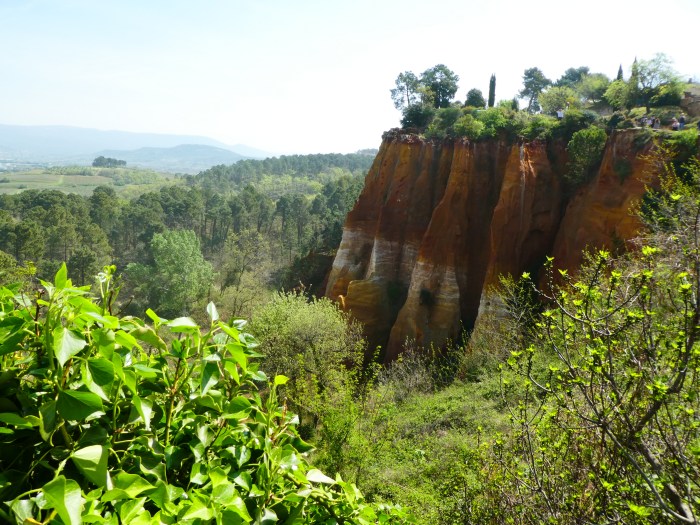
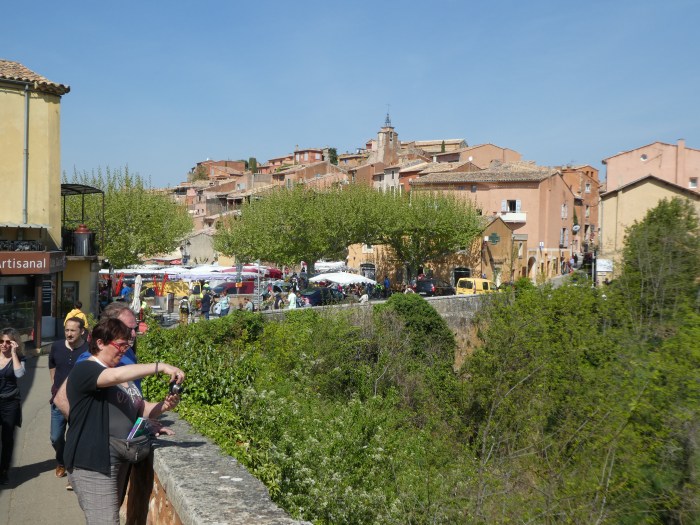
Roussillon has been a protected village since 1943 and as such benefited from a complete absence of modern development. It’s the location of a huge deposit of ochre which gives the earth and its buildings that distinctive red color.

The beautiful hilltown on Roussillon.
The cliffs of striking red ochre that give the village its color.
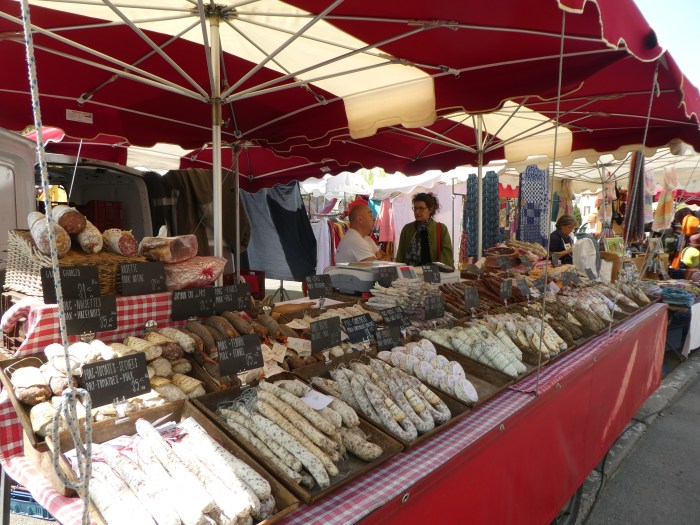
Great markets just like the other hill towns.
Interesting mix and quality of goods at the market.
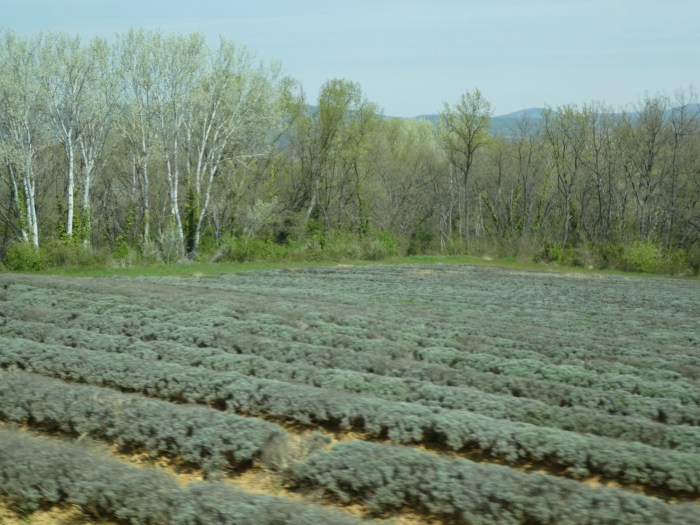
Outside of the village we saw lavendar fields like this one from last year.

Gordes

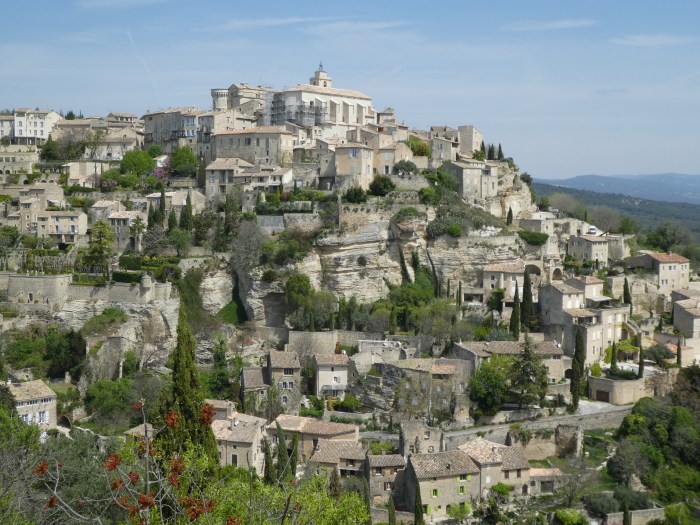
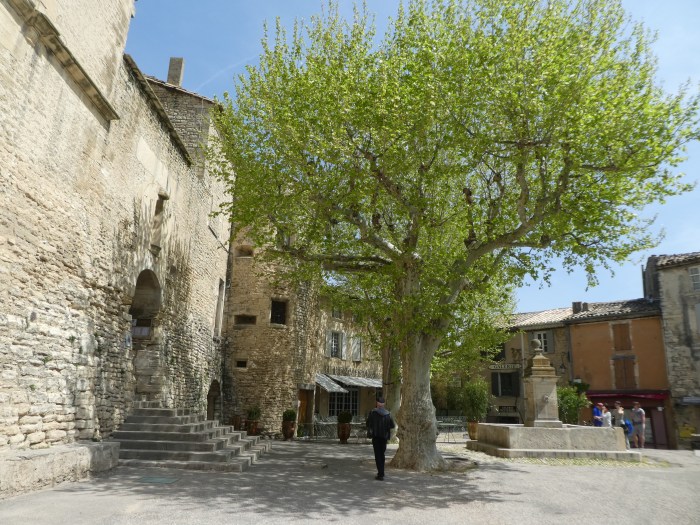
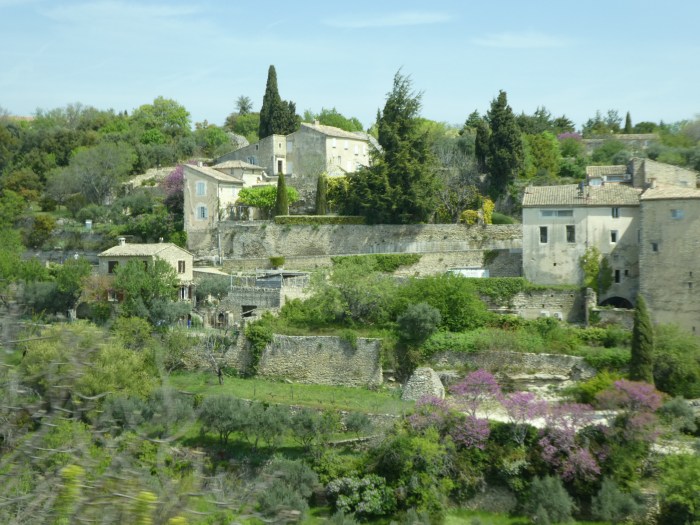
In the 1960’s, Gordes was a ghost town of derelict buildings. But then the theater festival in Avignon brought directors who wanted to recreate perfect Provencal villages on film and Gordes was renovated from top to bottom to help fill that need. It’s a beautiful hill town.

Perched high on a hilltop to protect it from invasion in days gone by, Gordes is magical.
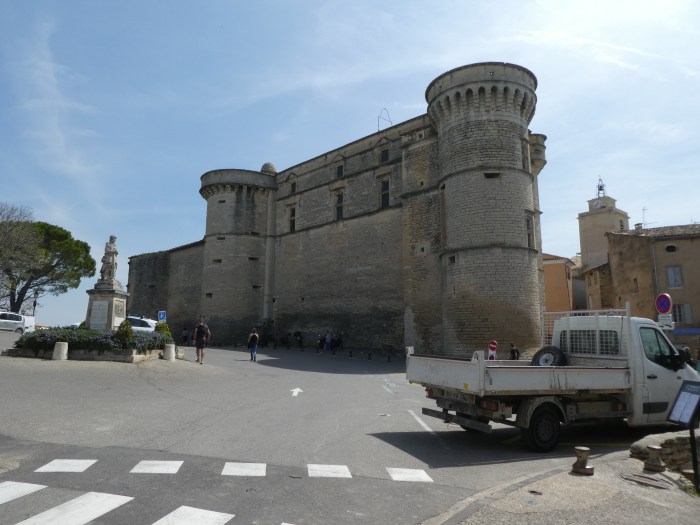
Gordes’ castle.

Fontaine de Vaucluse

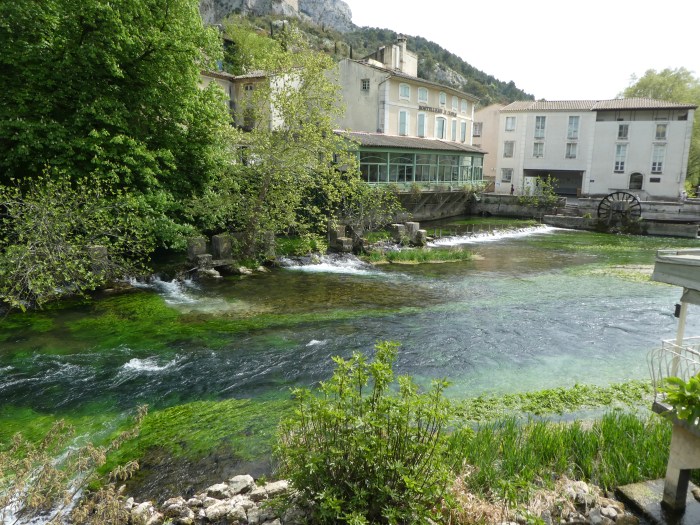
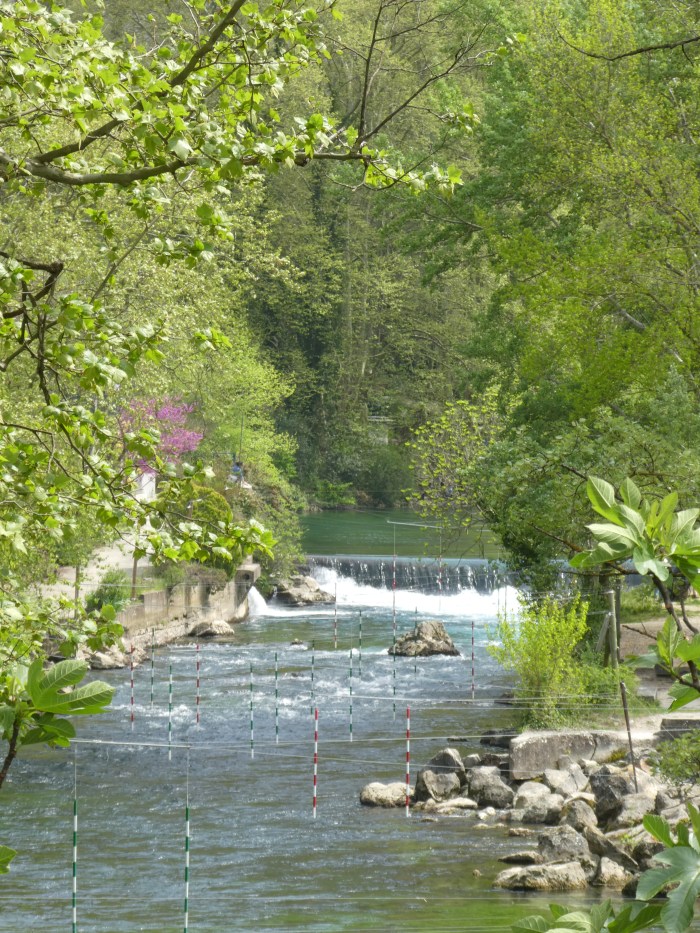
Fontaine de Vaucluse is all about water. It is named for and was built around a spring in the valley at the foot of the Vaucluse Mountains. The spring is the source of the River Sorgue. The river winds through the village and provides a series of small waterfalls and lovely views from the village’s many restaurants.

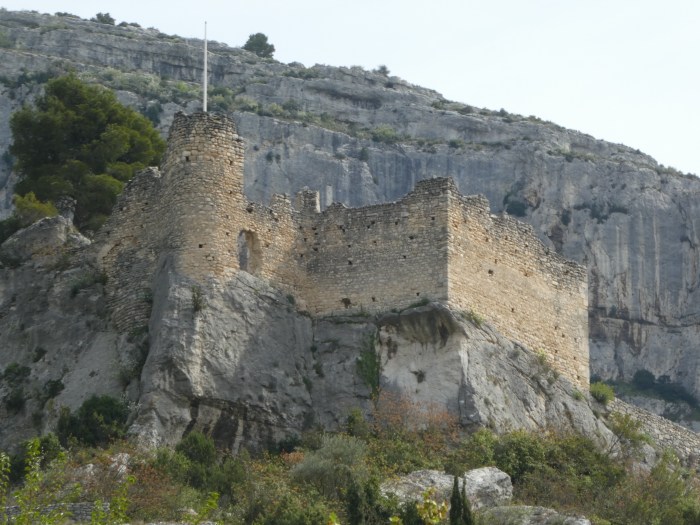
A historic fortress on the hills above the village. May have been a church.
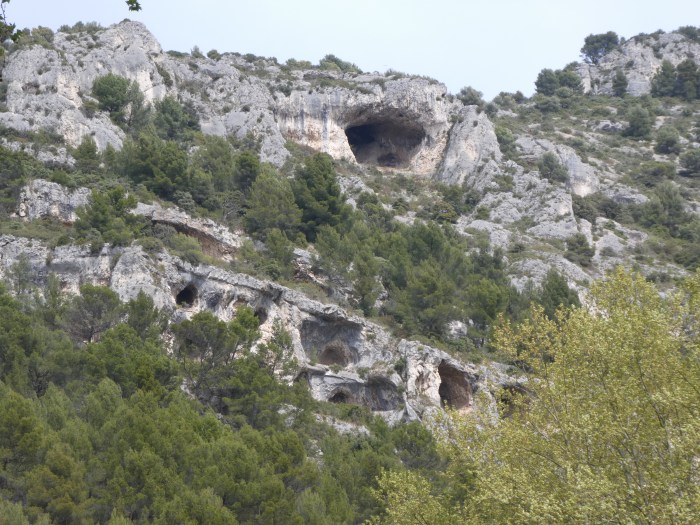
Also in the hills high above the village, these caves were home to ancient people who lived in the area.

Isle-sur-la-Sorgue

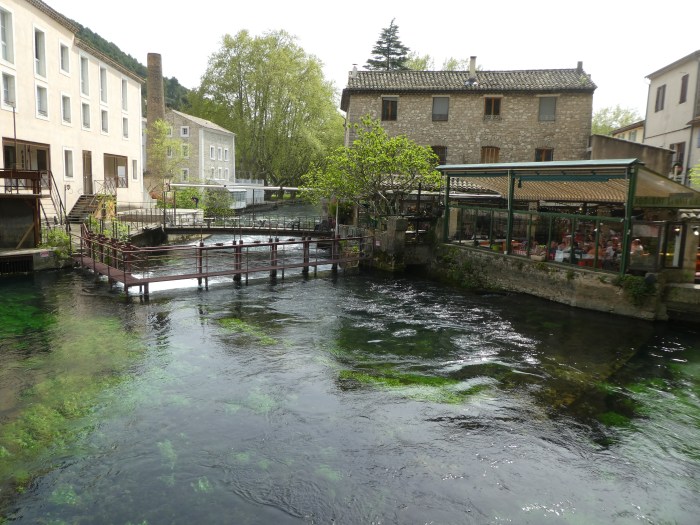
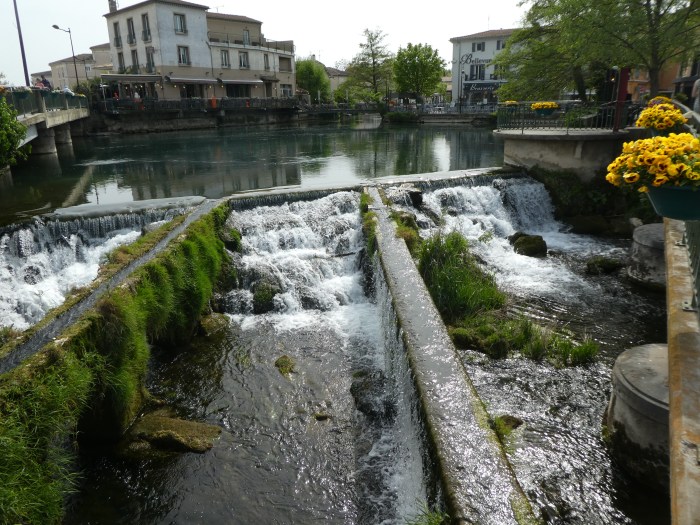
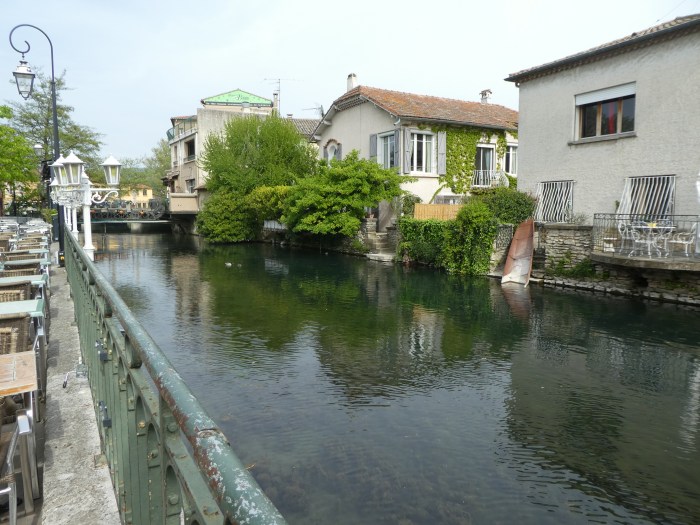
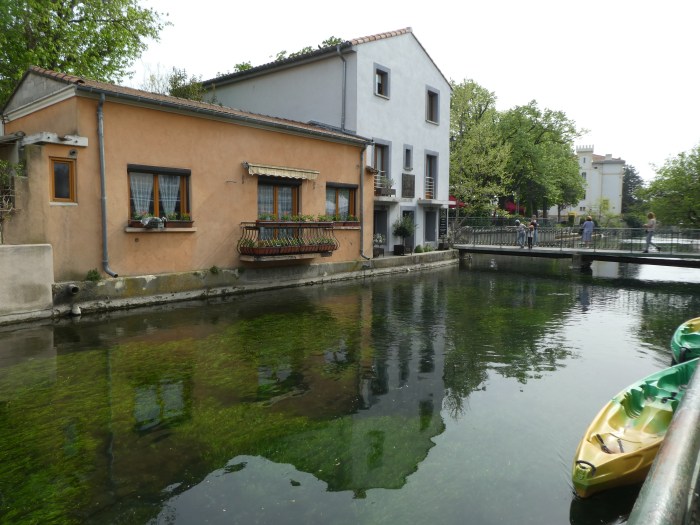
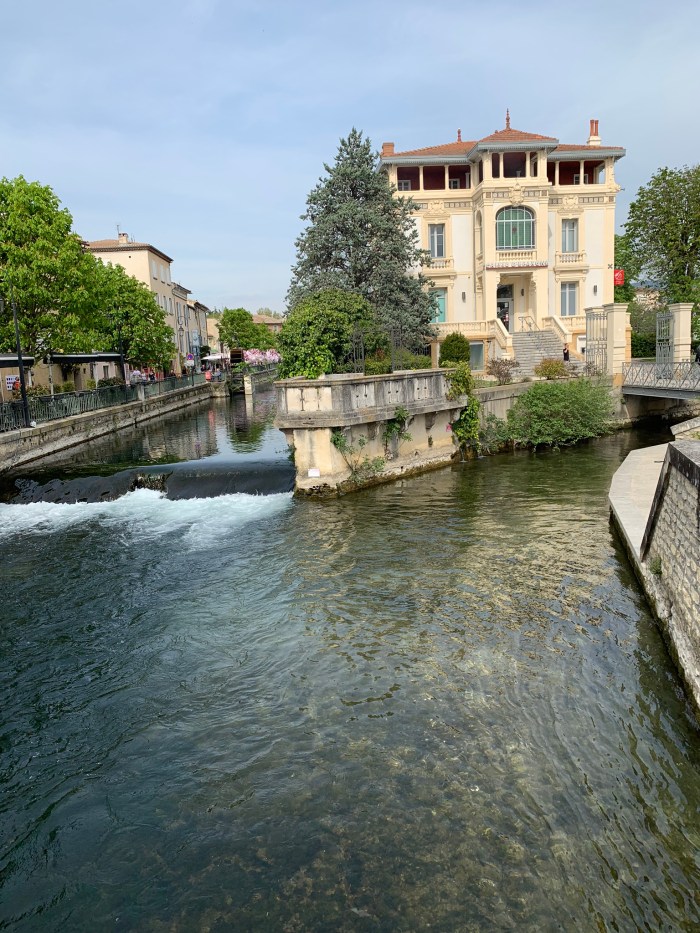
This “Island on the Sorgue River” sits within a split in the Sorgue River at the foot of the Luberon. There appears to be water at every turn and and the village is often called “Venice of Provence.” The Sorgue River’s extraordinarily clear and shallow flow makes them seem more like canals than rivers. The town’s economy today is powered by a large number of antique stores and indeed there was a large antique/flea market on the day we visited.

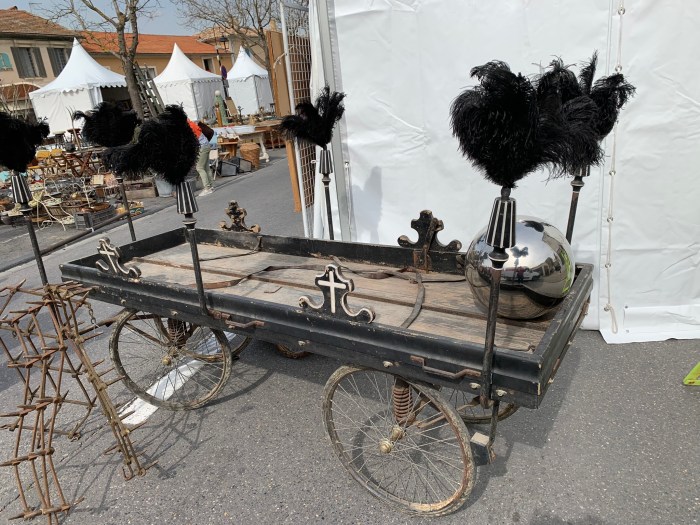
A funeral carriage at the antiques/flea market.

Around Aix

We went down to the City Centre of Aix late this afternoon and checked out some of the streets we hadn’t visited in our previous journeys downtown. It’s fun to just wander around, venturing up and down streets and alleys that call to you, all the while knowing if you get lost you’ve always got your trusty GPS to bring you back to reality and your car.

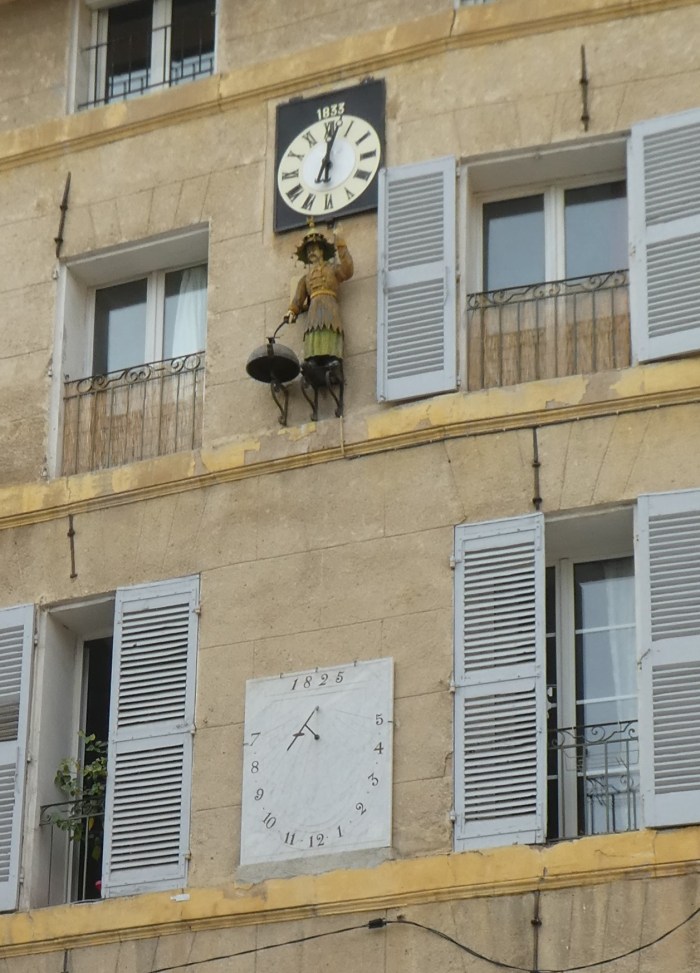
There are 2 clocks on this building. The one on the 4th floor is dated 1833 and has an Asian man with a gong in one hand while pointing at the clock with his other. The one on the floor below is dated 1825 and looks like a sun dial.
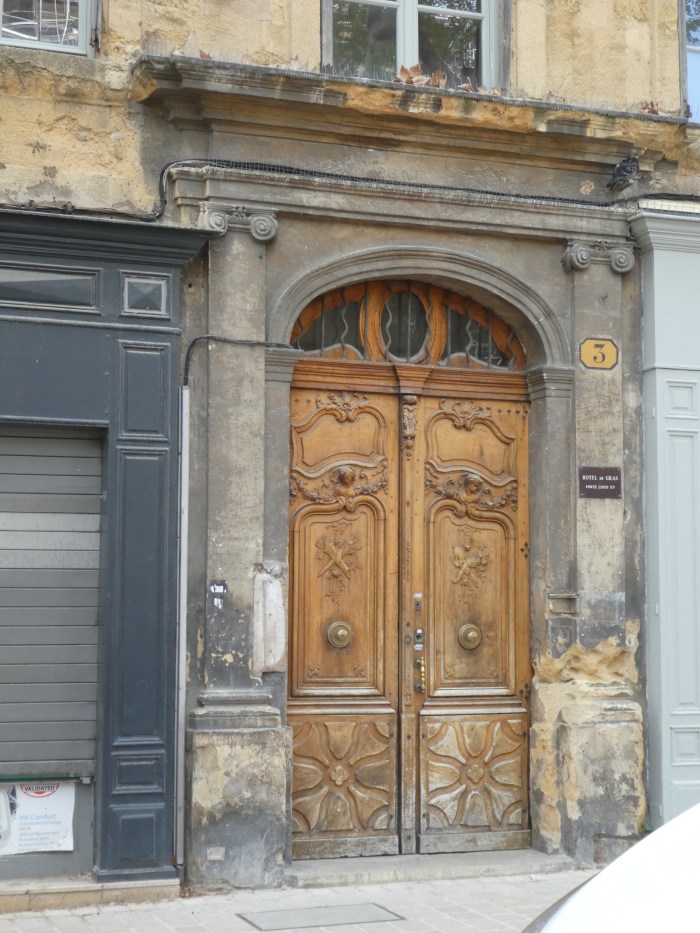
Another nice door.
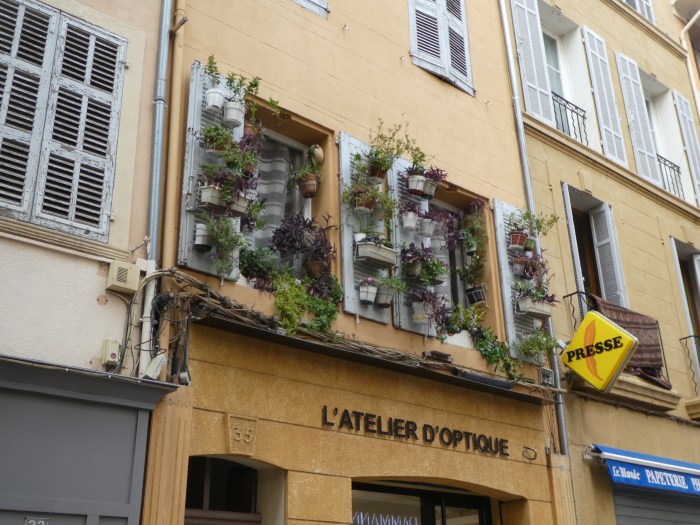
This is how somebody who lives in a 2nd floor apartment is able to have many plants. But they’re not herbs and most of the plants are duplicates. Isn’t there a 12-step program for this?
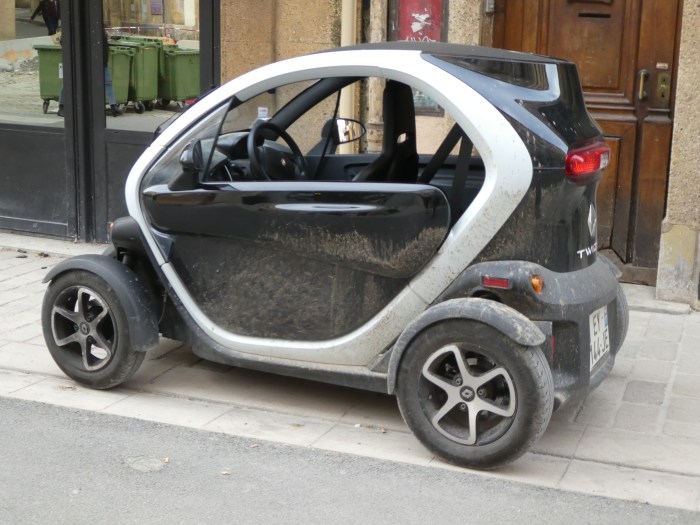
This is a 1.5-passenger car. There’s one seat in the front and kind of a seat in the back. I don’t know what it’s called but it start with Tw….. And it seriously needs to find a car wash.
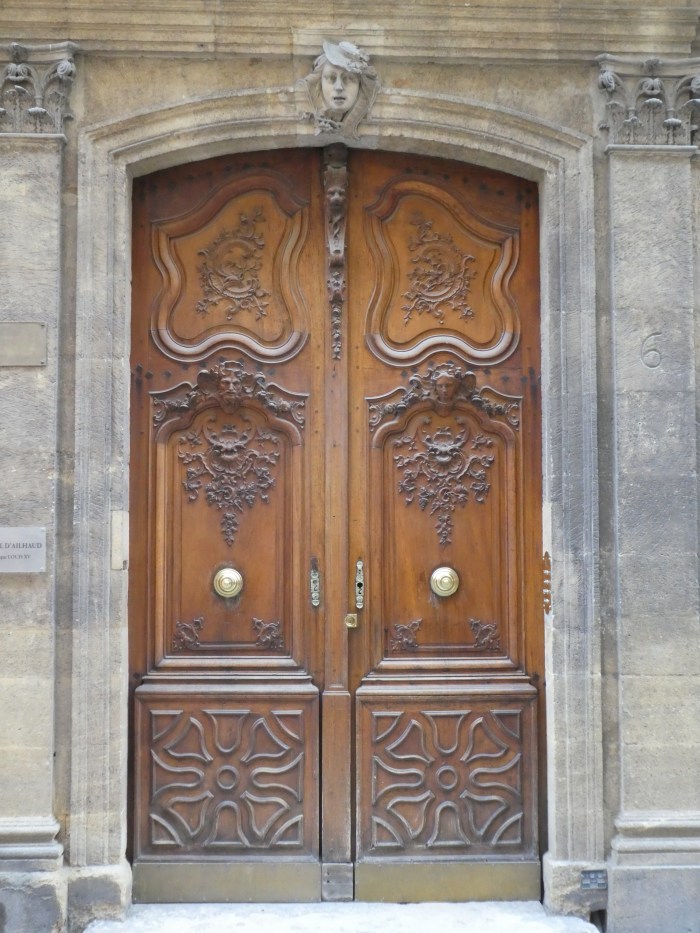
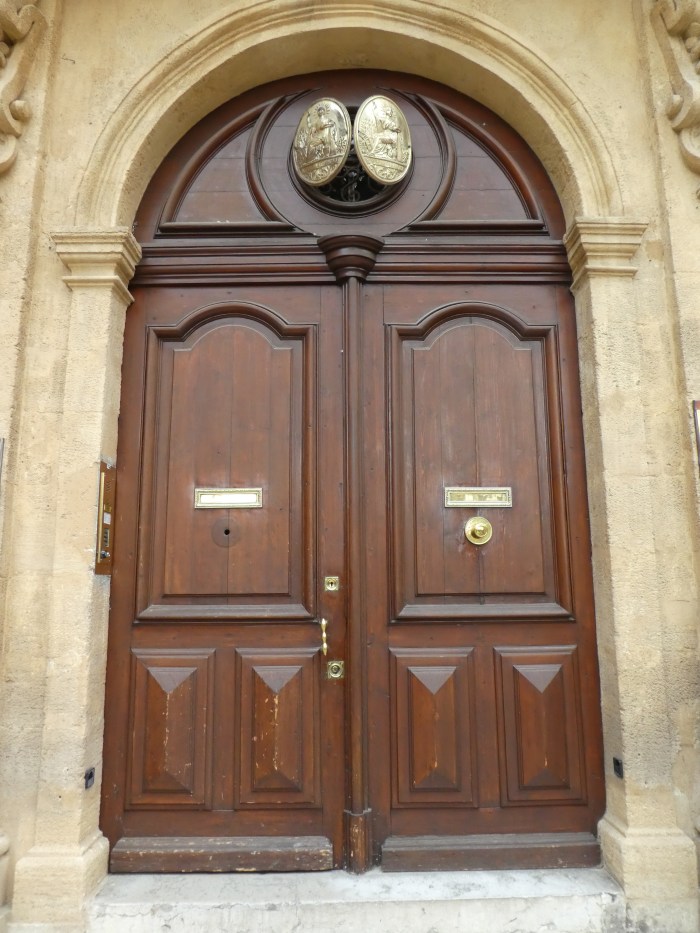
This, on the other hand, is a beautiful door.
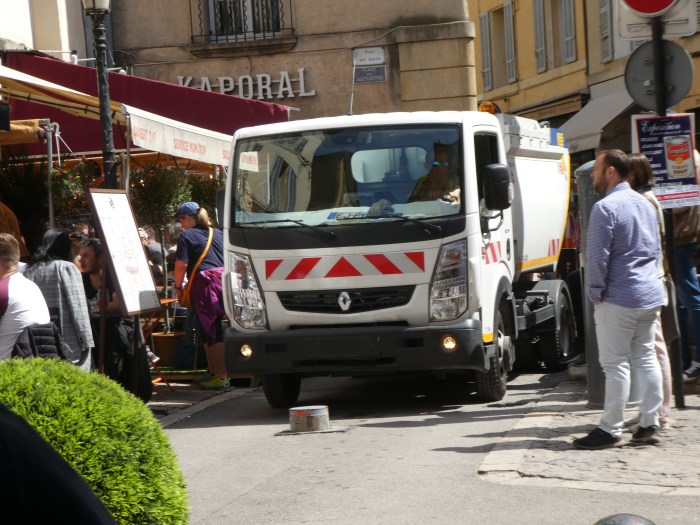
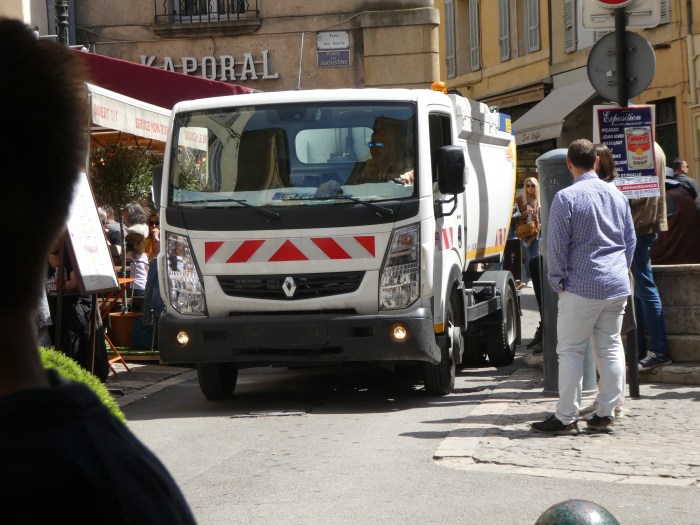
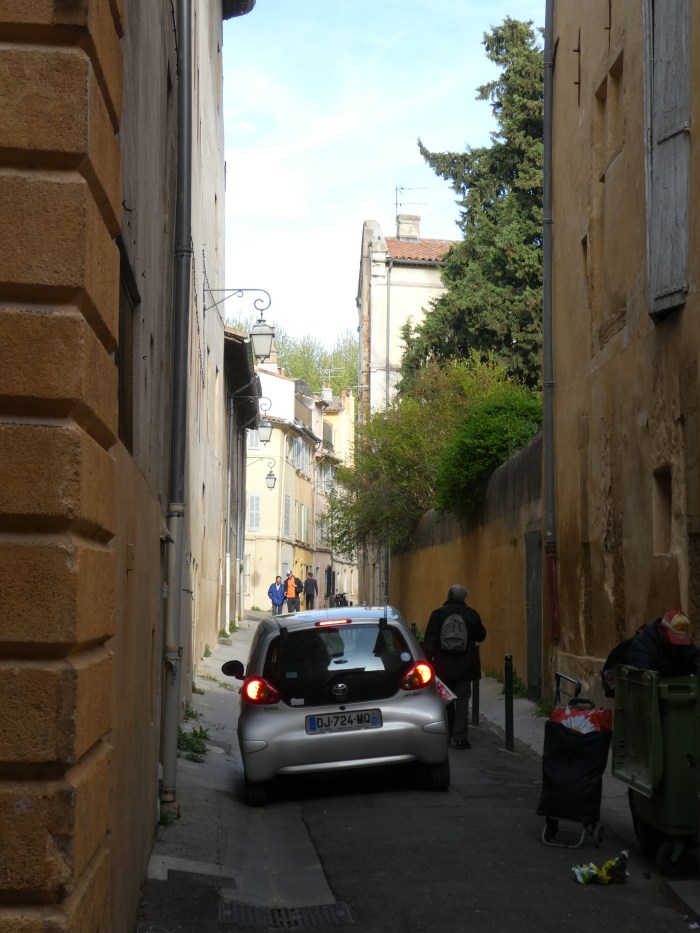
This alley was already crowded with people and motorcycles and then this car turned the corner . . .
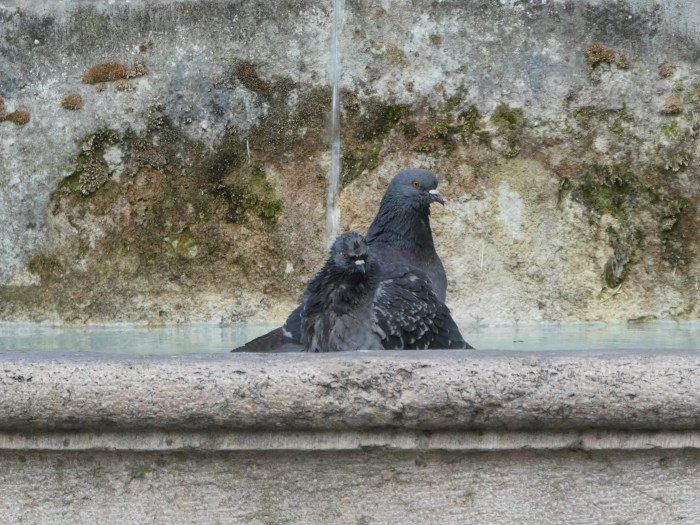
“Hey, how about some privacy here! Can’t you see we’re taking a bath!”
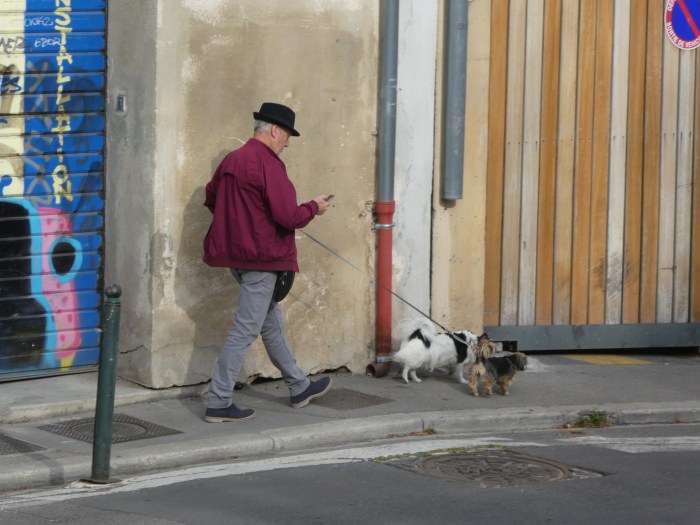
And what you can’t see is that this man looking at his cell phone with the 2 dogs has another dog under his left arm. Talk about multi-tasking!
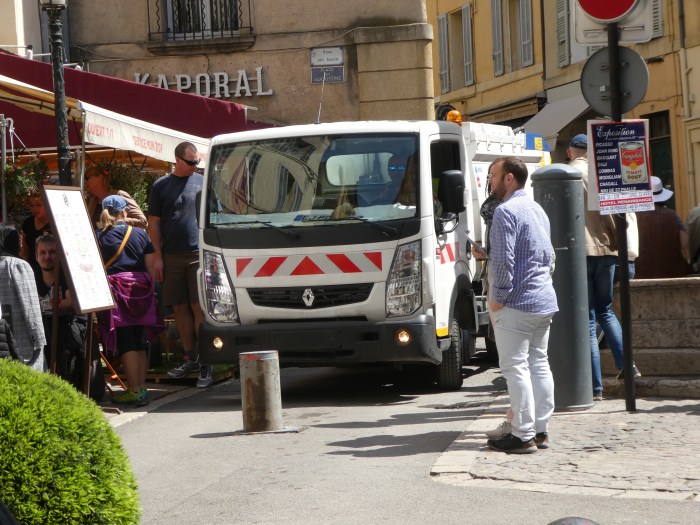
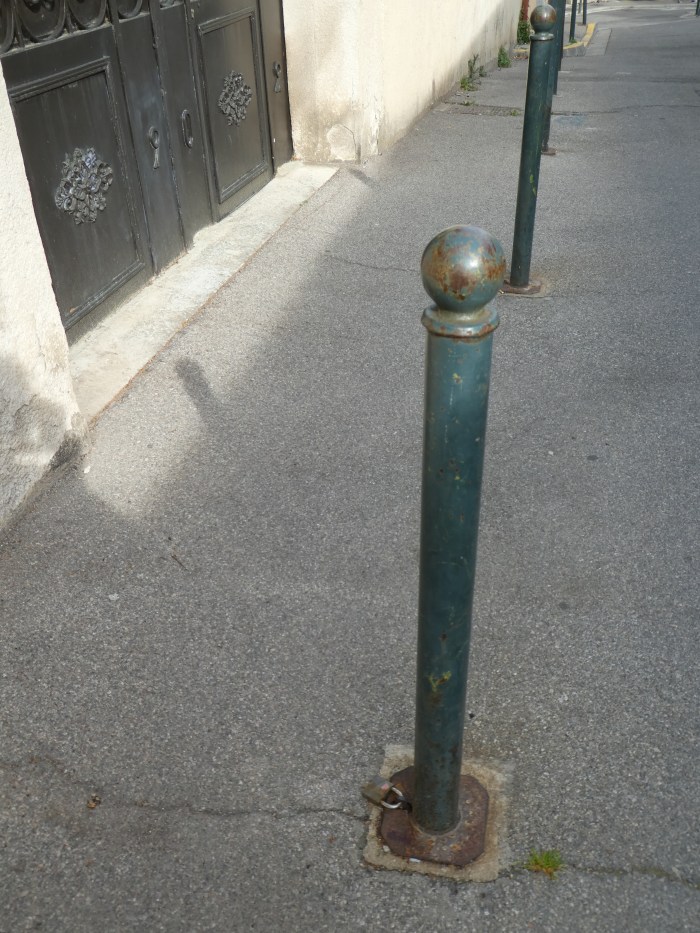
These posts keep people from parking in front of somebody’s garage or house. Then when the occupant wants to get in his garage or park in front of his house, he just unlocks the padlock at the bottom and moves them.
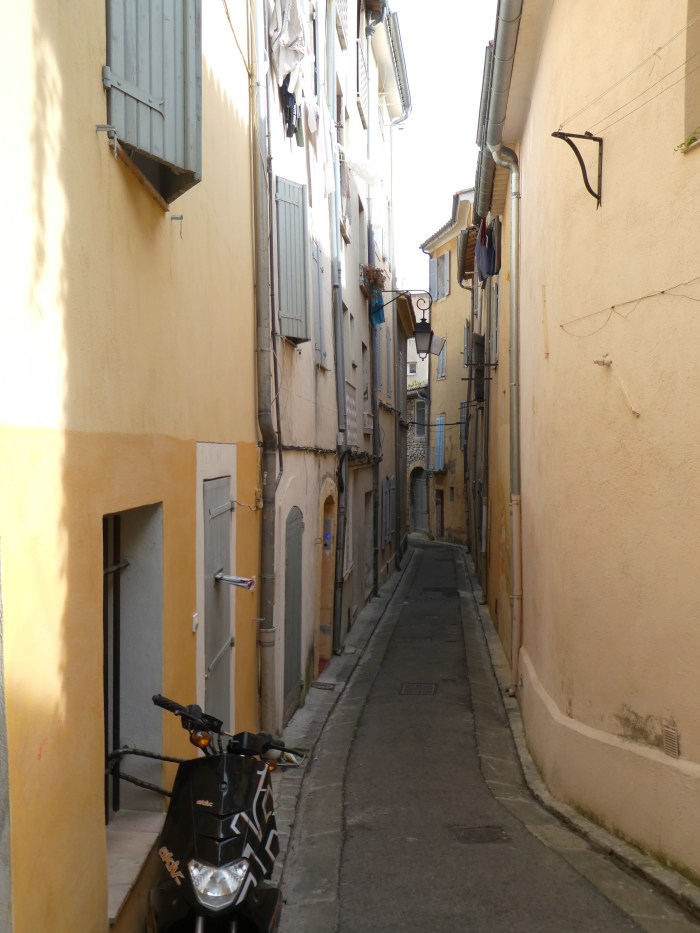
Man, is this street narrow or what!
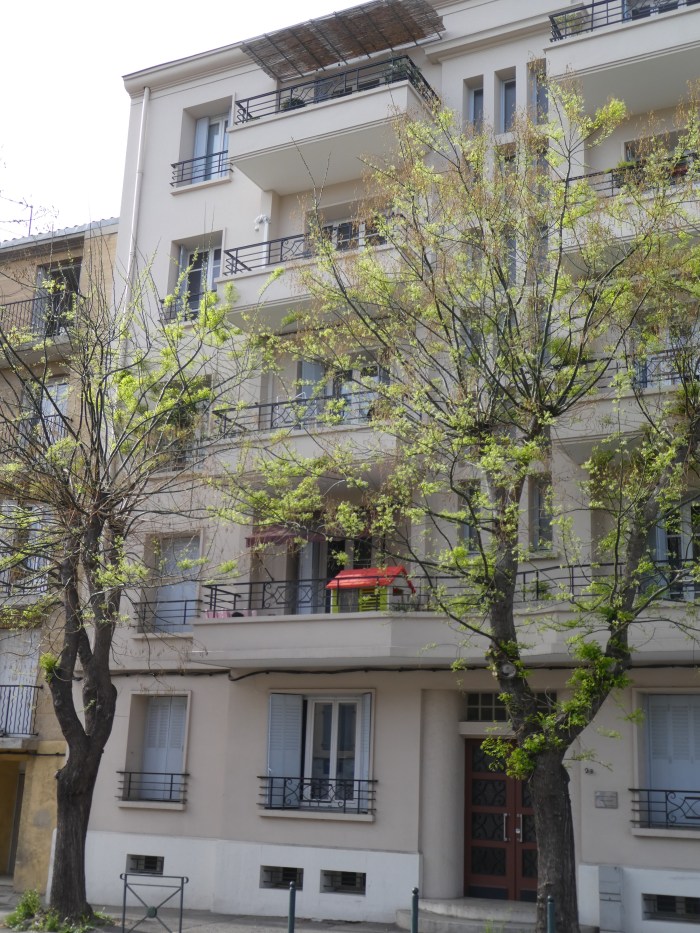
Just because you live in an apartment and don’t have a backyard doesn’t mean you can’t have a playhouse.
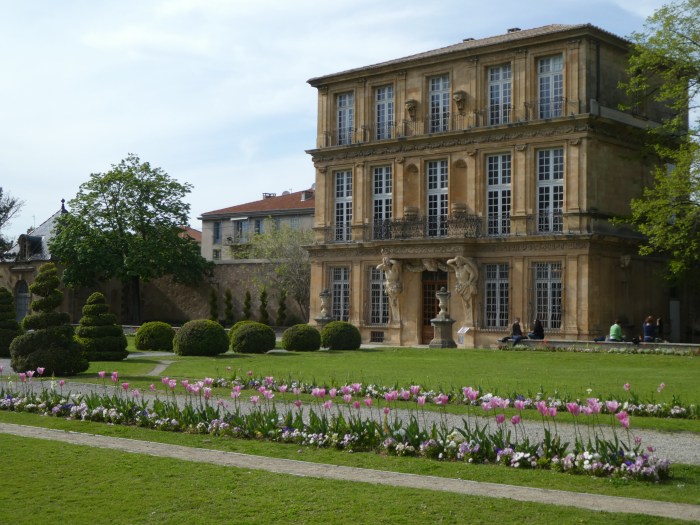
Isn’t this museum a stunning building in a beautiful setting? It was built in 1652 and has been owned by various prominent people over the years but was donated to the City in the 19th century.
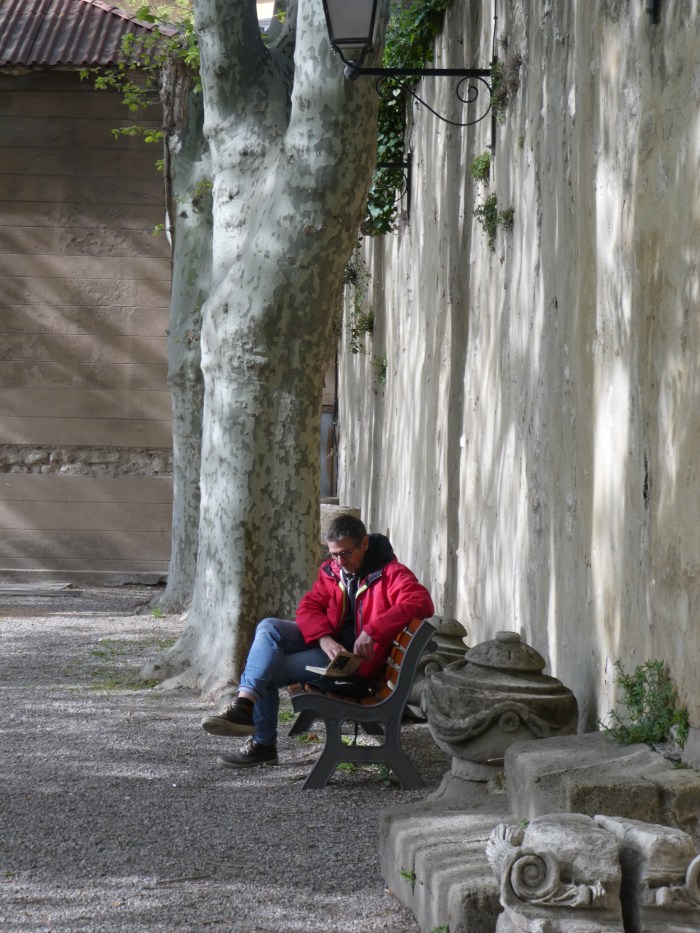
One of the things I love about France is seeing people in the parks reading. Real books.
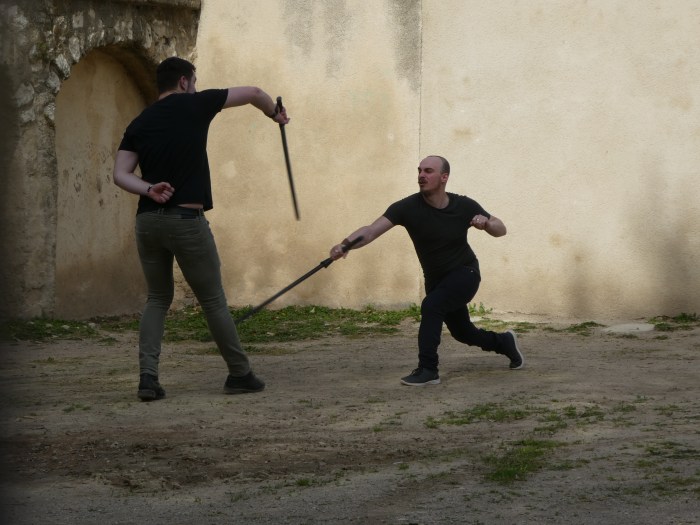
These 2 guys were practicing dueling. Their swords were made of rubber.
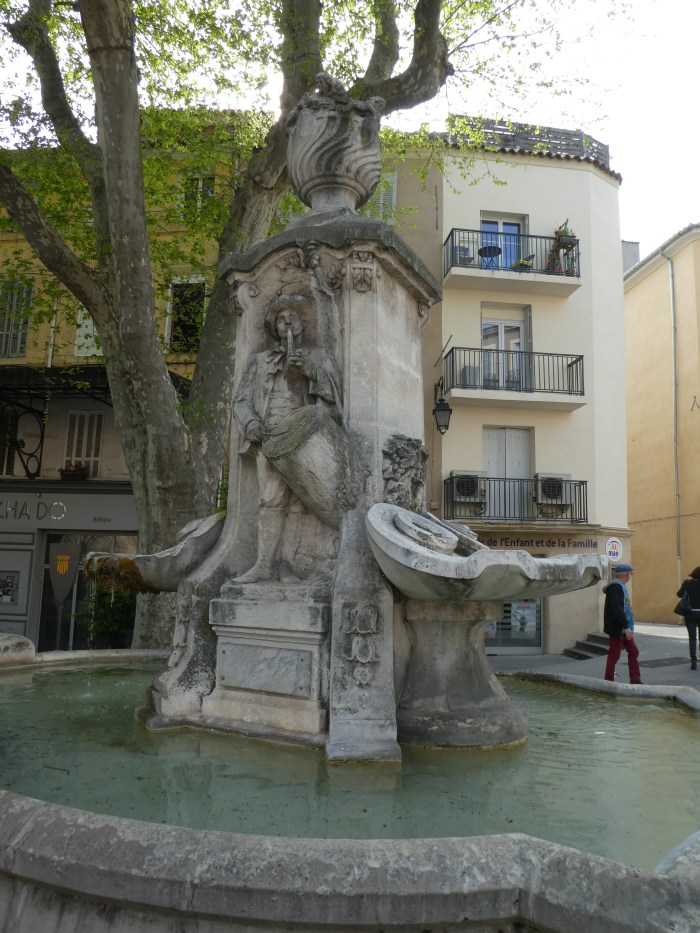
One of the bigger, more elaborate fountains we’ve seen.
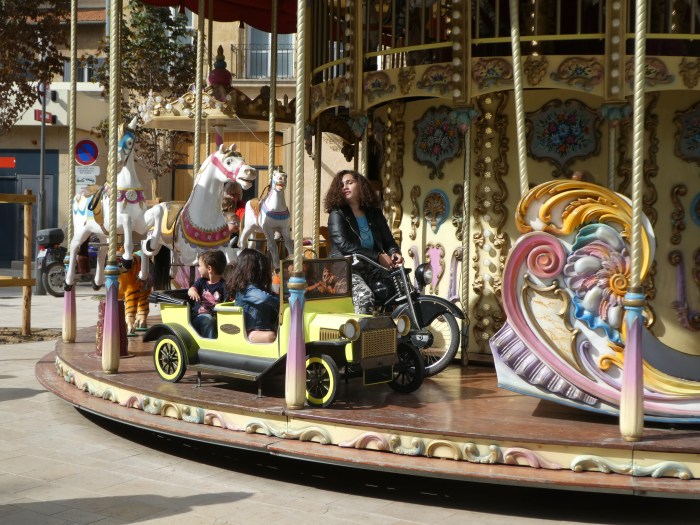
Yet another Merry-Go-Round. This one has a motorcycle that looks perfect with this woman riding it next to her kids.
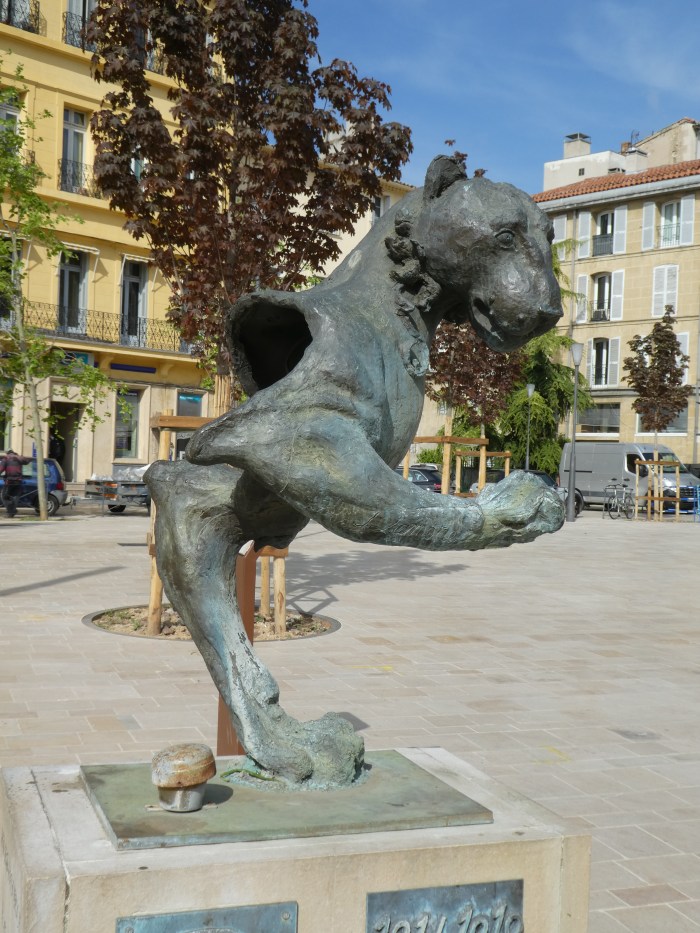
A fountain in search of a body. And a water source.
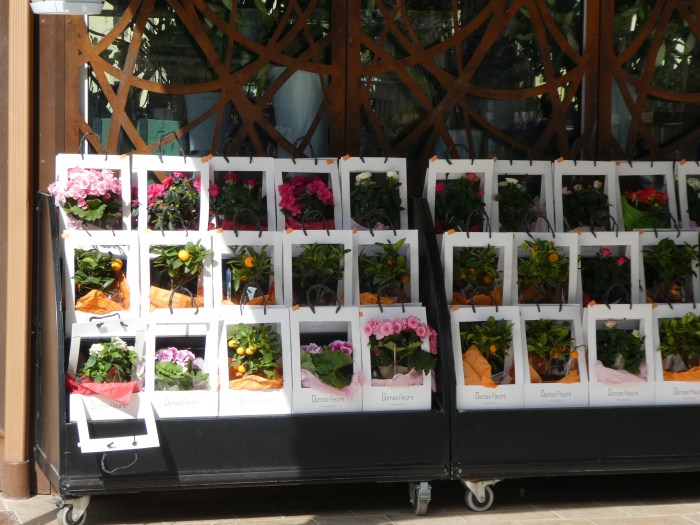
Plants to go. These plants are in paper cartons with handles attached to make them easy to take home.
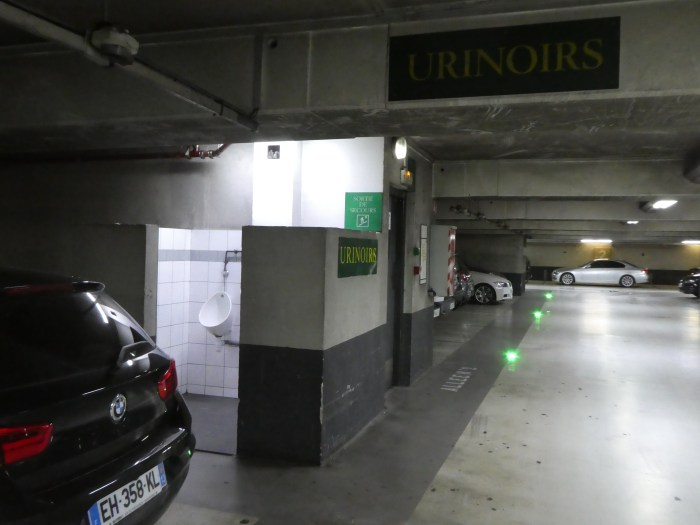
Urinoirs means “urinal.” And there it is. Does this feel like discrimination to anybody else?.

Chateau Revelette

When we went on our Chateaux journey a couple of years ago, we wanted to go to the Chateau Revelette because that’s the original French spelling of our name and Chuck knew there was a family connection. We also knew it was currently the site of a highly respected winery. But when we found its location, we ended up not going because it was too far out of the area we were gong to visit on that trip. But when we checked on its location again this time, it turned out to be just 20 miles from Aix. So we journeyed out to Jouques, the nearest village, to check it out. The property is no longer in the family, having changed hands several times over the years. But about 30 years ago it was purchased by a German man who studied at UC Davis before moving back to France to find a winery to purchase. (That was after he discovered that being a cowboy, his first career choice, was not really a good option.) The winery has 75 acres of vineyards containing 17 plots of vines and 11 grape varieties. And it’s in the gorgeous hills of Provence!

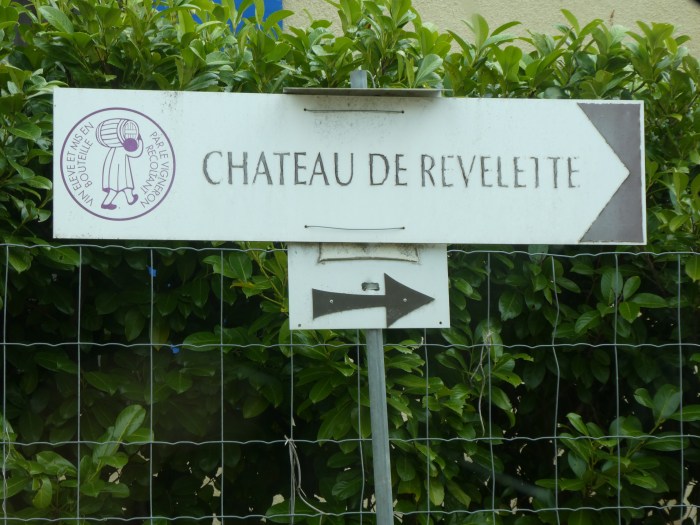
Our first Revelette Chateau sign sighting.
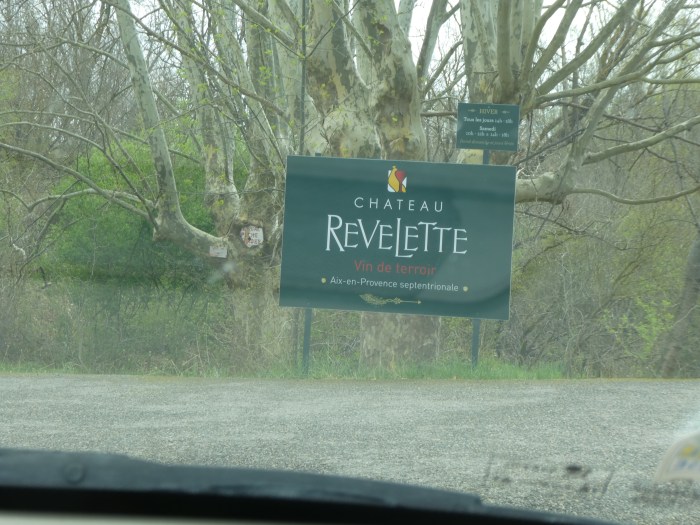
This is the real official sign.
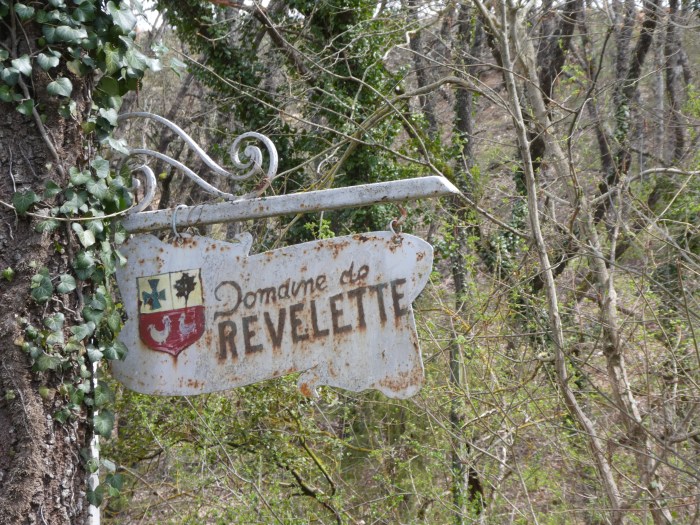
Isn’t this cute! I wonder if they would notice if it was missing? This would look great at our house.
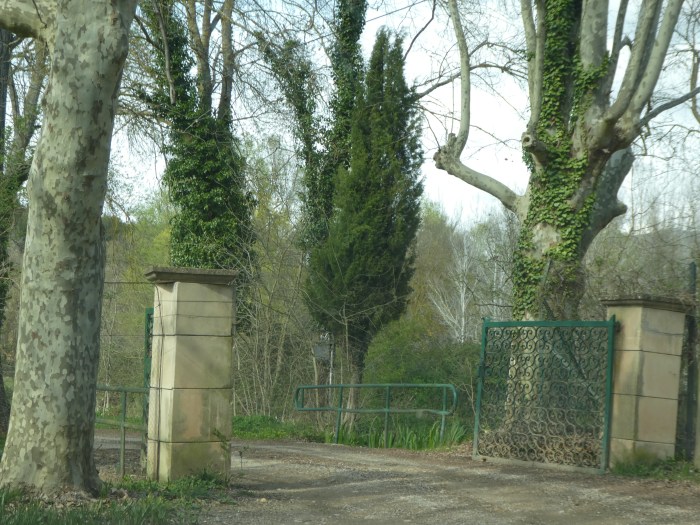
Every chateau must have a gate, even if it’s only ornamental.
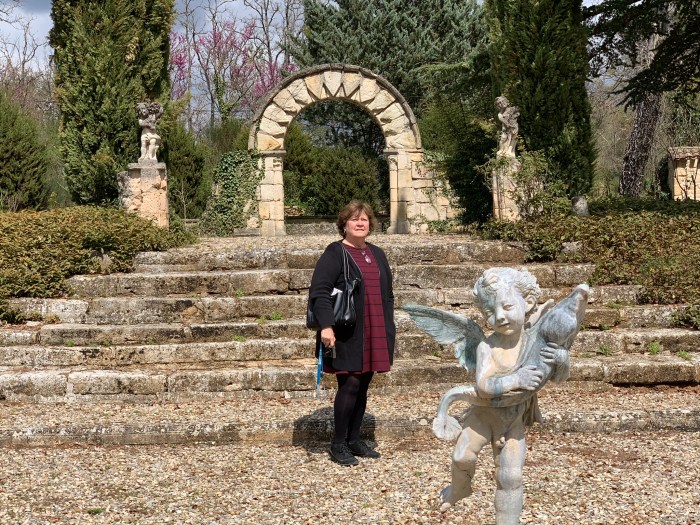
A beautiful garden area just before you reach the chateau.
Through the archway is the swimming pool.
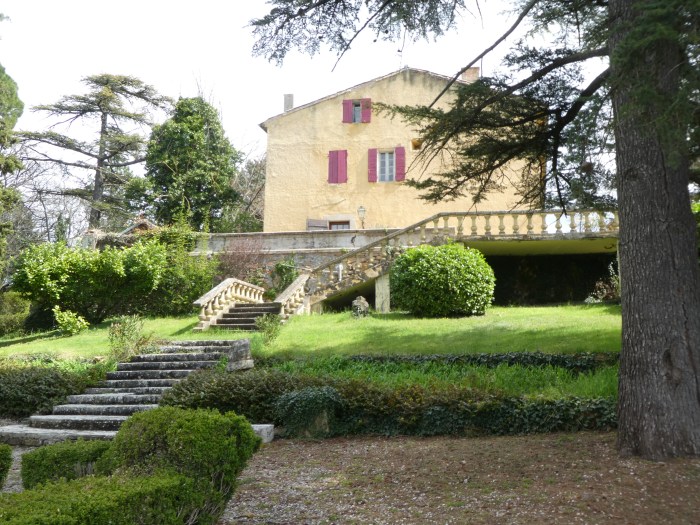
This is the side of the main house. It is impossible to get a photo of the long side of the house because of the way it’s configured (and it’s private).
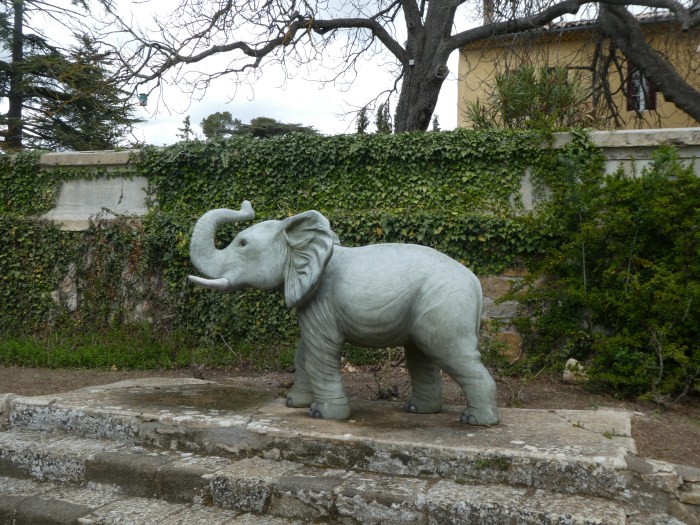
An elephant?? Is it a French elephant?
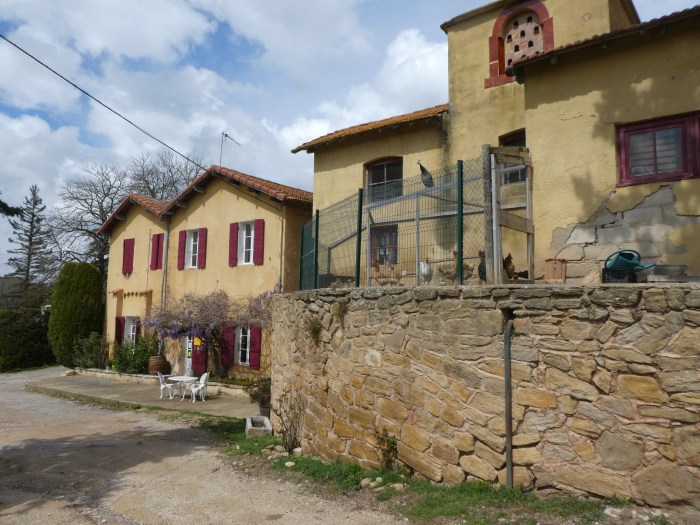
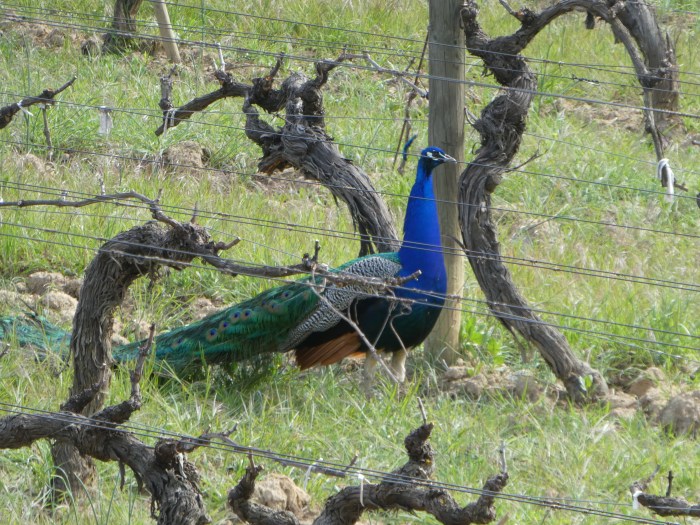
This is one side of the complex of buildings. To the left, the building with the wisteria is the little tasting room. To the right of that is a building that appears to be connected with the winemaking and there’s a chicken run in front. Notice a female peacock on top of the fence.
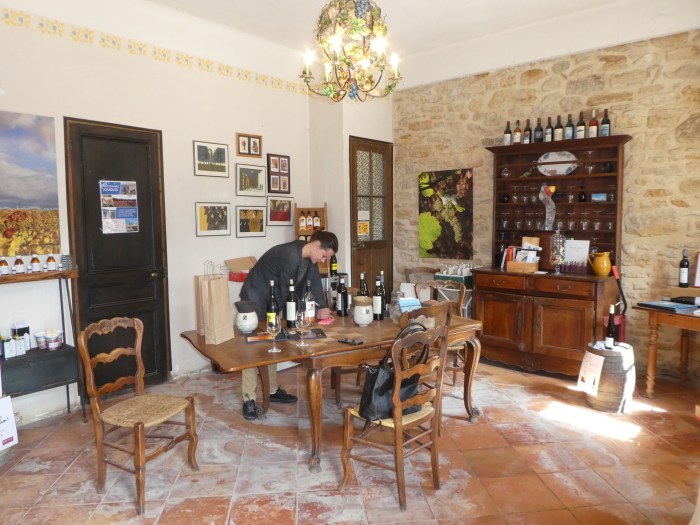
The very modest wine tasting room.
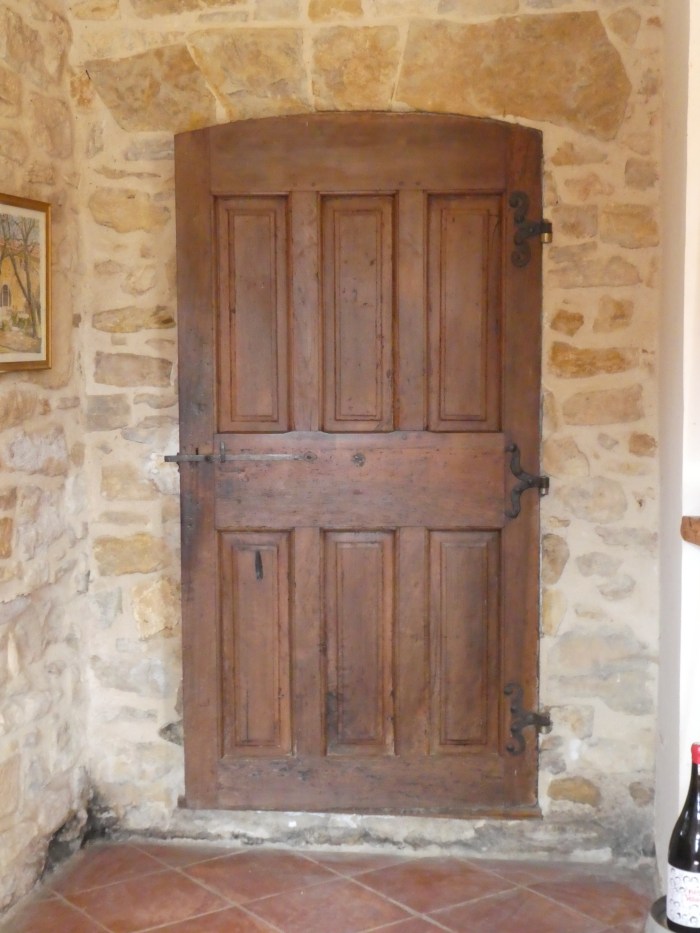
Great door in the wine tasting room. Gotta watch that first step!
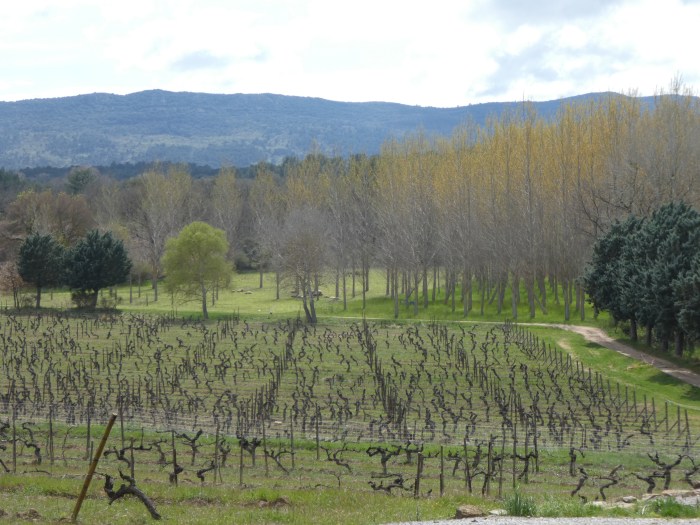
Looking from the complex out at one of the many vineyards. We walked down that road on the right and then turned left at the edge of the vineyard and walked up into the hills.
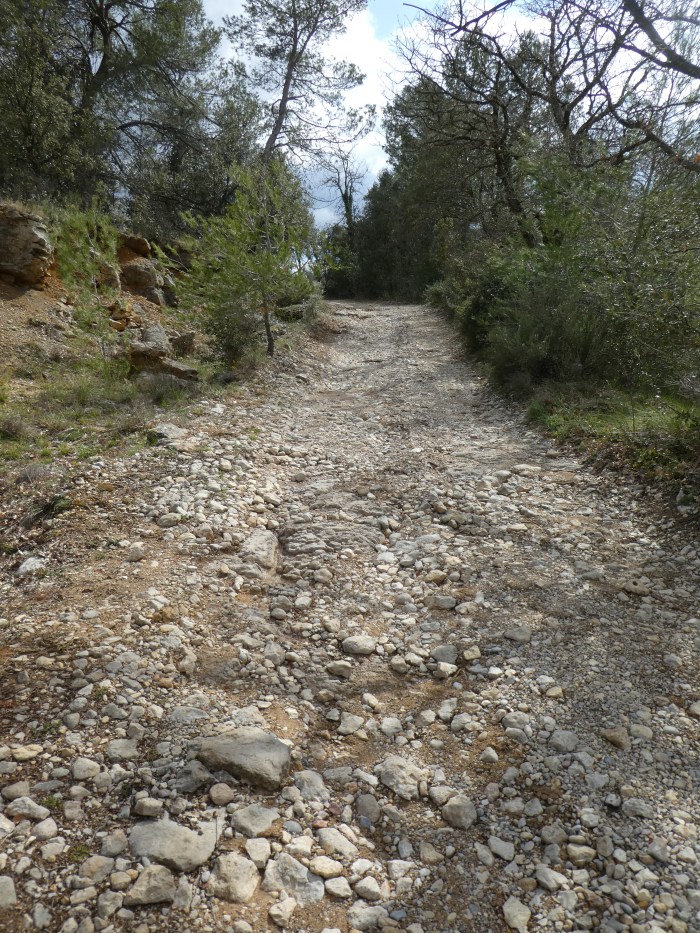
We took a long walk out among the vineyards on this road. It was beautiful out there.
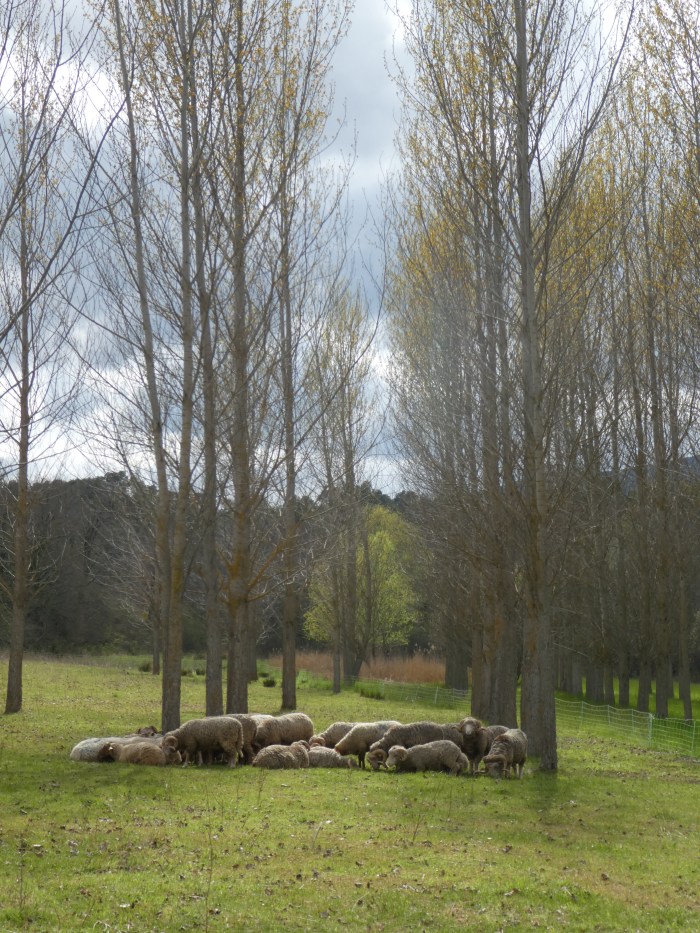
A photogenic flock of sheep among the trees. They keep the sheep because they use the manure in the vineyards.
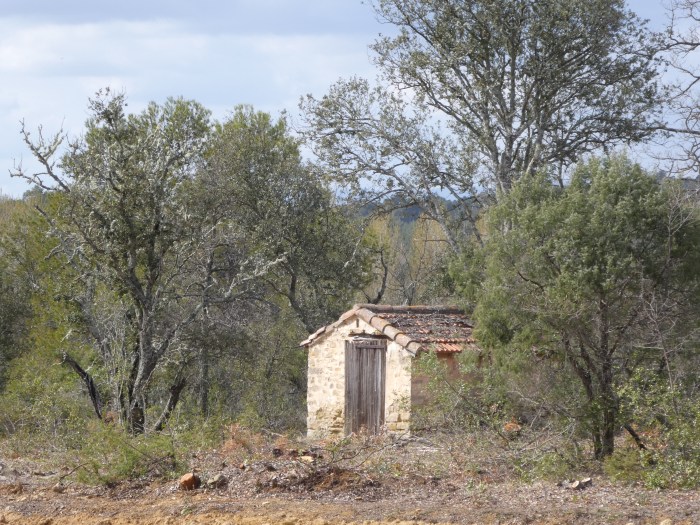
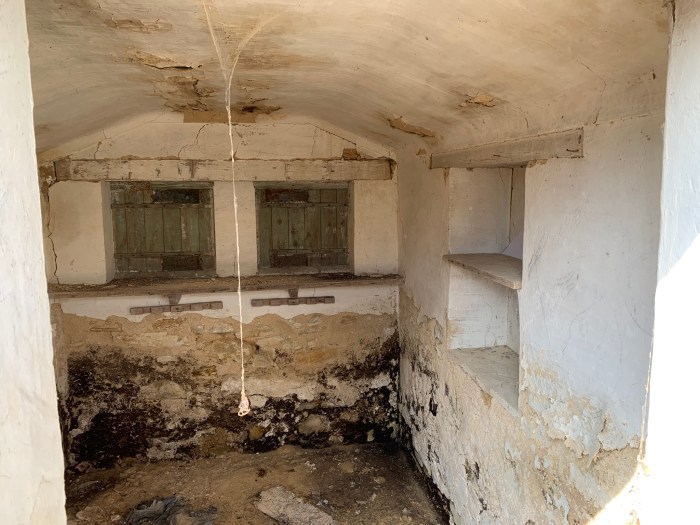
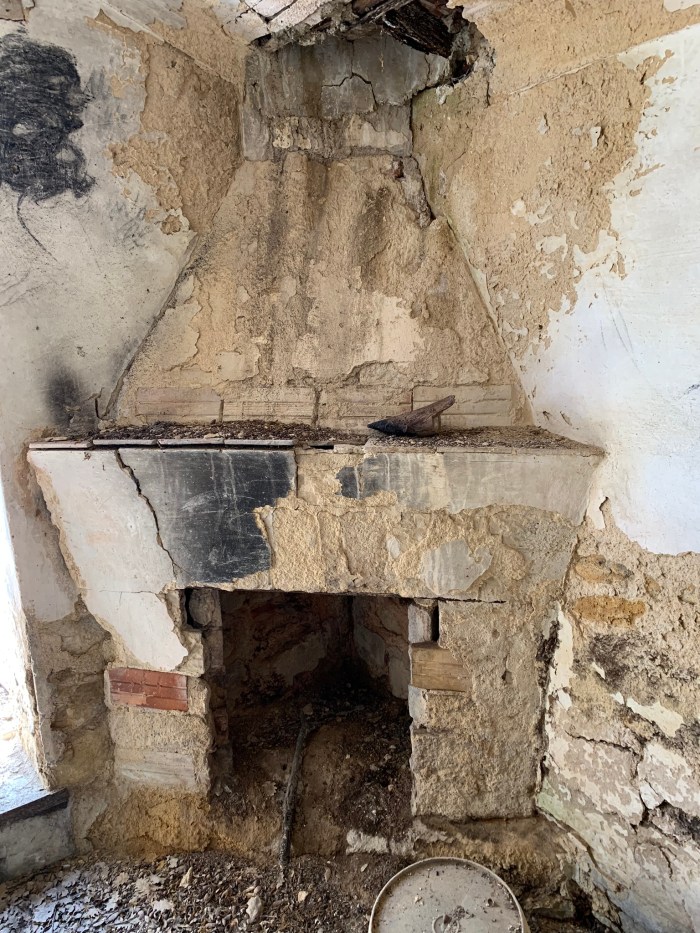
We’ve seen lots of these little abandoned buildings among the olive trees but we’ve never had a chance to see inside one. I think these are the buildings where workers take shelter in bad weather.
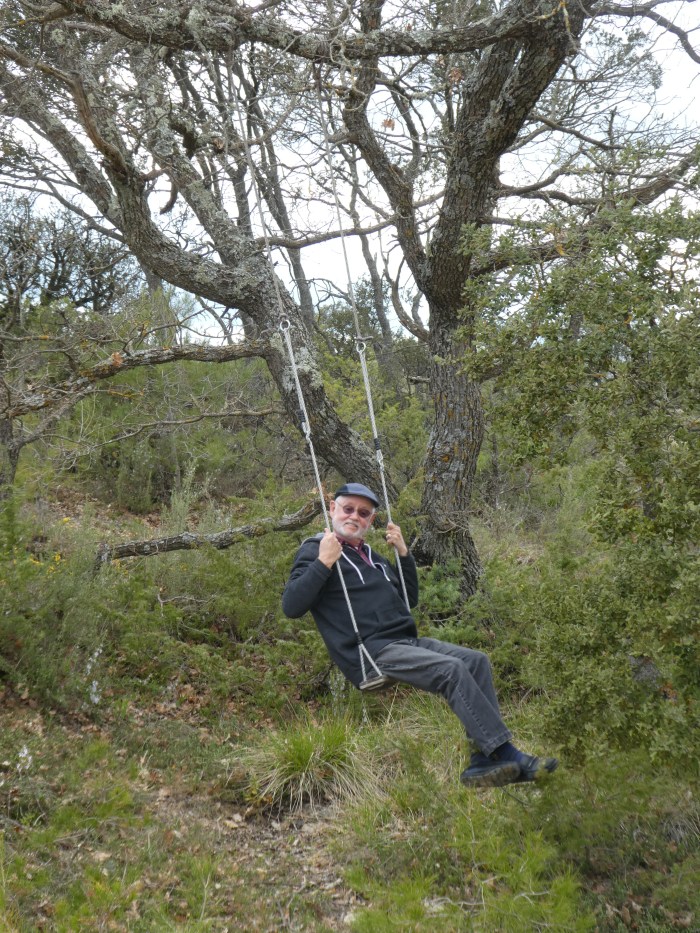
Walking on one of the roads through the vineyards, we came across this very serious swing.
The property has 3 male and 3 female peacocks. Works out nicely!
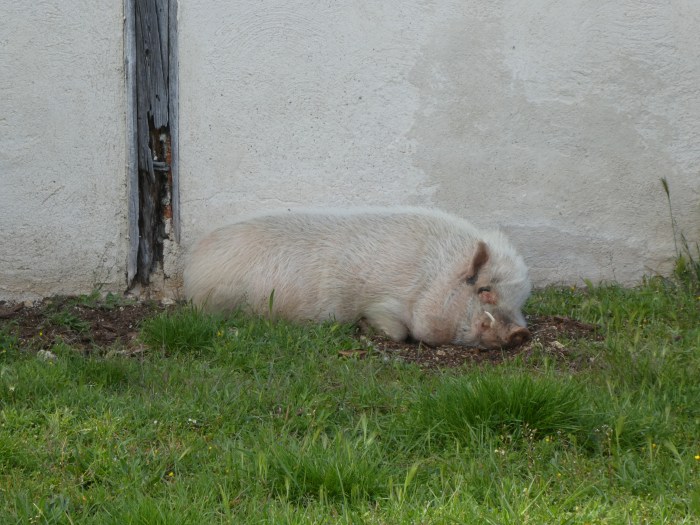
Adorable pig. Not real friendly.

Pont du Gard

In the 1st century AD, Romans built a 30-mile aqueduct that ran to Nimes, one of ancient Europe’s largest cities. While most of it ran below ground, at Pont du Gard the aqueduct spans a canyon via a massive bridge over the Gardon River, one of the most remarkable surviving Roman ruins anywhere. The aqueduct supported a small canal that dropped 1 inch for every 350 feet, supplying the city of Nimes with 9 million gallons of water per day.

The arches are twice the width of standard aqueducts and the main arch is 80 feet across (the width of the river). The bridge is about 160 feet high and was originally 1,200 feet long. Each stone weighs from 2-6 tons. The structure stands with no mortar except at the very top where the water flowed – taking full advantage of the innovative Roman arch made strong by gravity.

Today Pont Du Gard is a beautiful area where families can come to enjoy nature and the out of doors. There’s play equipment for children, hiking trails, canoes, swimming in the river, a museum and theater, a couple of restaurants and extensive gardens with walking paths.

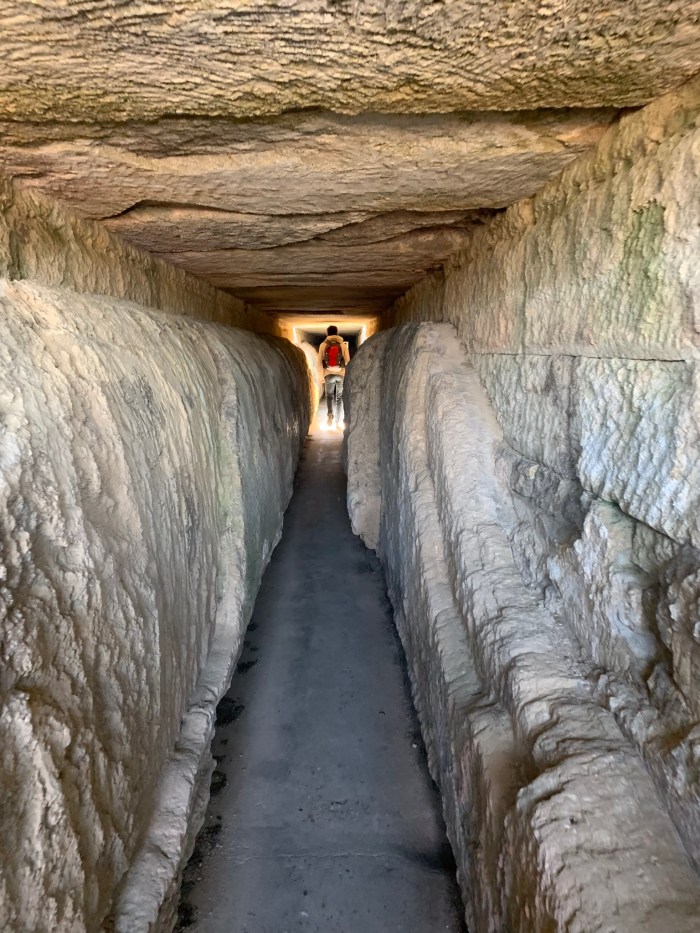
Chuck took the tour through the water channel at the top of the aqueduct. The tour went down the 4-foot wide, 6-foot tall chamber, dark except for occasional holes in the ceiling which allowed sunlight to enter. That tiny water channel was the whole reason that huge structure was there.

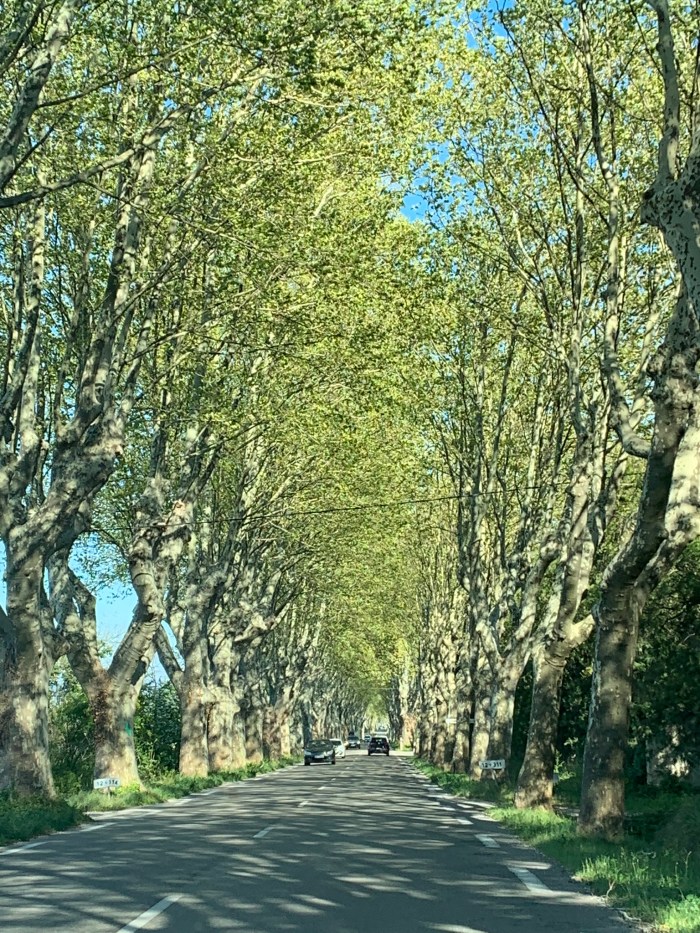
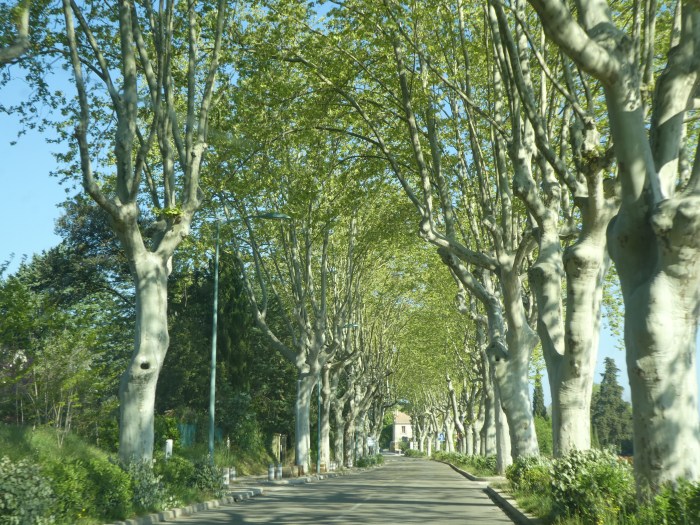
On the way there, we drove through tiny French villages, down ancient streets lined with plane trees. I love plane trees!
We’re not seeing fields of red poppies like I had hoped, but we have had a few sightings here and there. (Gather ye red poppies while ye may!)
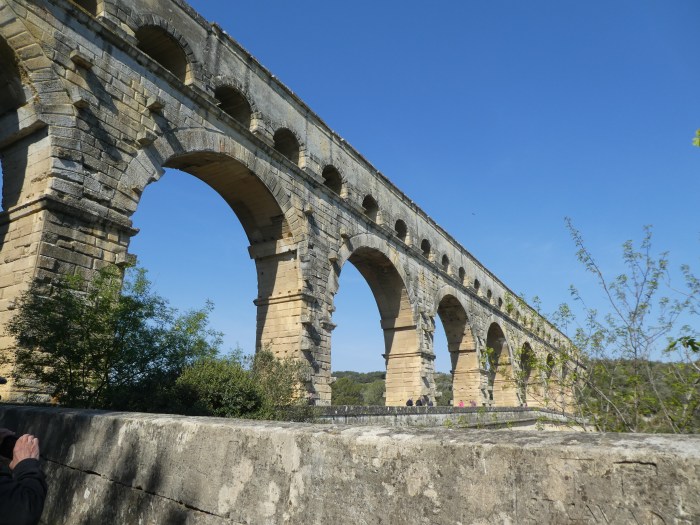
This is why we came: this amazing, ancient 3-level bridge holding a small viaduct on its top level. In this view, the bottom row of arches can’t be seen.
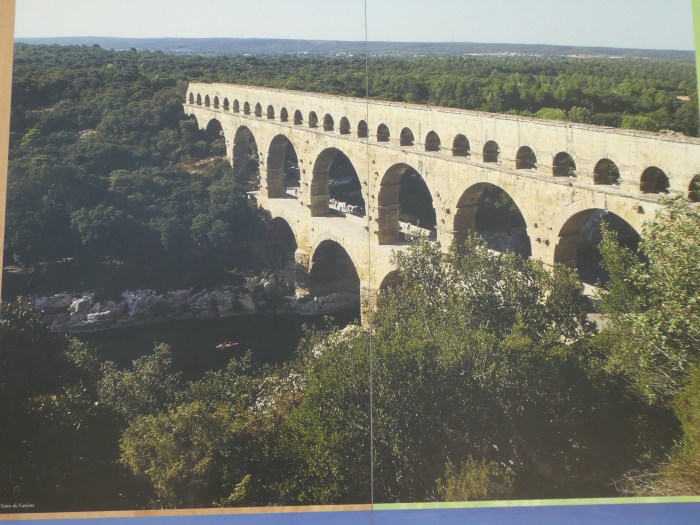
A museum photo gives a better aerial view of all 3 tiers of the bridge with the aqueduct above the row of smaller arches on the top tier.
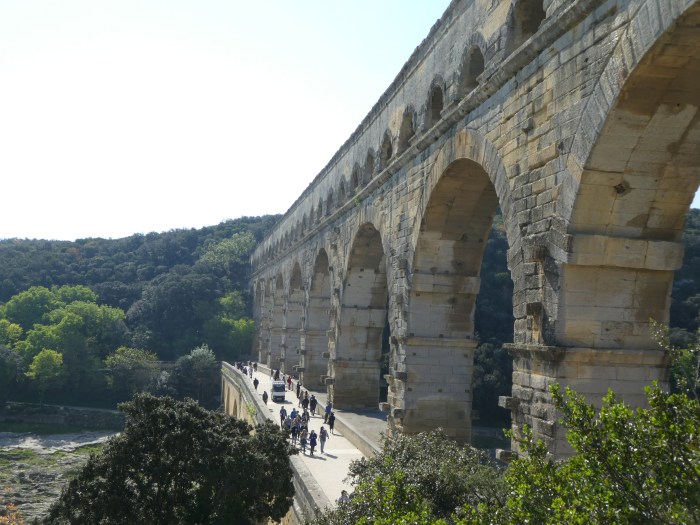
So photogenic from every angle. This view shows the walkway on the 2nd level where you can walk across the bridge and get those fabulous views up and down the river.
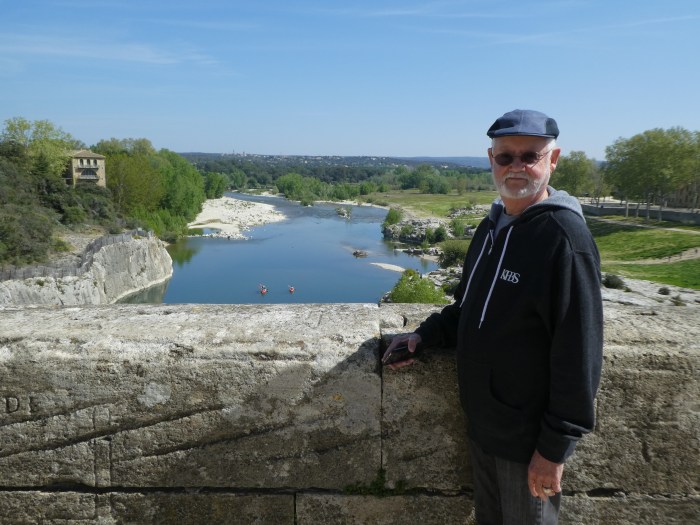
From the walkway on the bridge, Chuck admires the view down river.
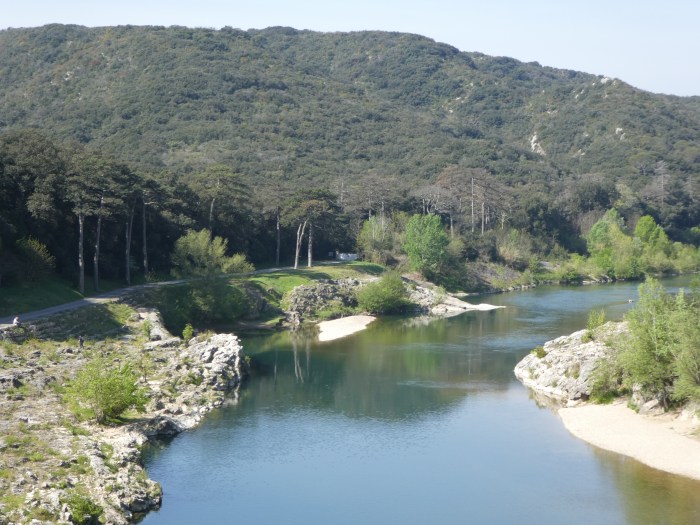
The view up-river.
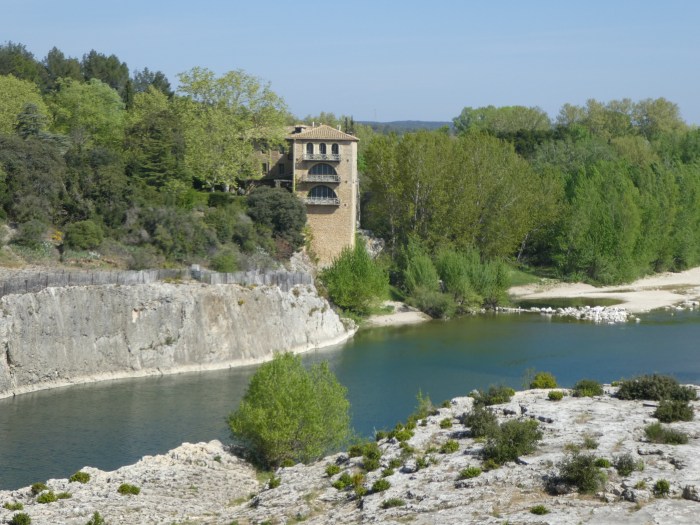
Another view downriver. See that 5-story building on the left side of the river? We haven’t been able to figure out what this building is. We walked by it along a path on the other side and that photo is next.
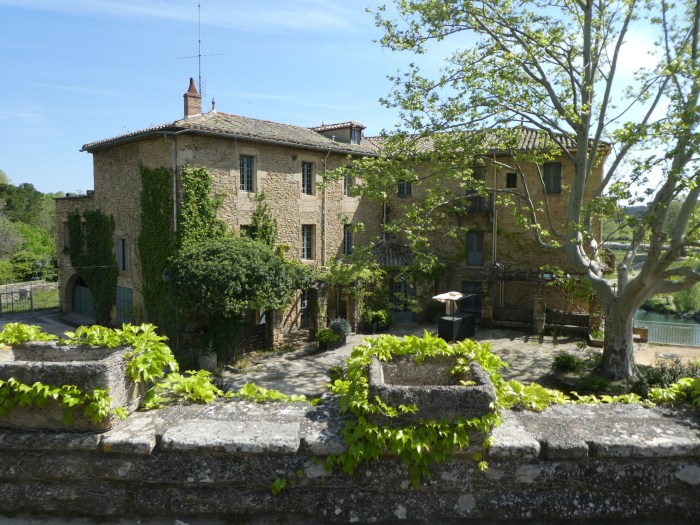
This is looking through the gate along the front side of that building with a very nice entrance. From here it looks like a fabulous 3-story house. But actually there are 5 stories showing on the river side with 5 levels of windows only along the river because it’s built on the side of a cliff. Maybe a shared use: the house is actually 3 stories and the 2 bottom levels are for some other use? Certainly has wonderful views of the river. Currently, it looks vacant.
Chuck’s tour showed the inside of the aqueduct where the water traveled through.
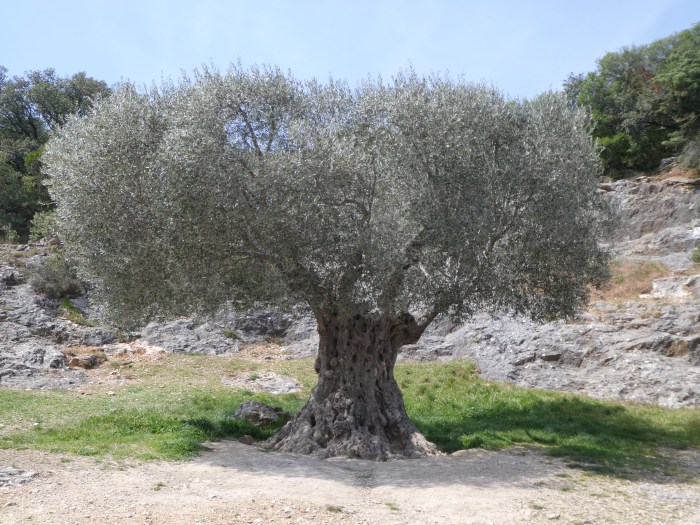
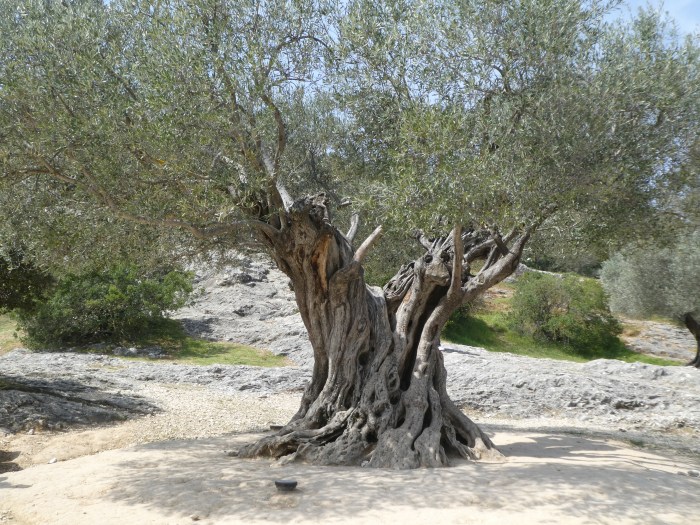
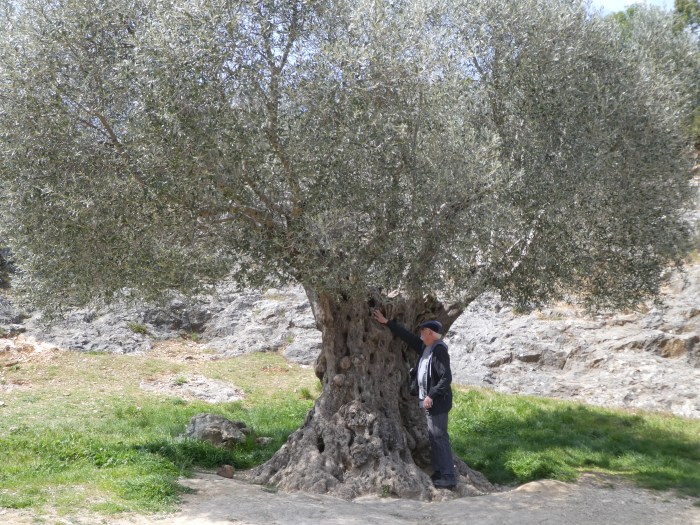
The area on both sides of the river was covered with walking paths and fabulous grounds. This olive tree, with a huge trunk full of mysterious holes, came here in the first century, assuming our French serves us well when reading the sign engraved on that rock to the left of the tree.
And this is an ancient grape vine. It was accompanied by several others in the visitor services center.
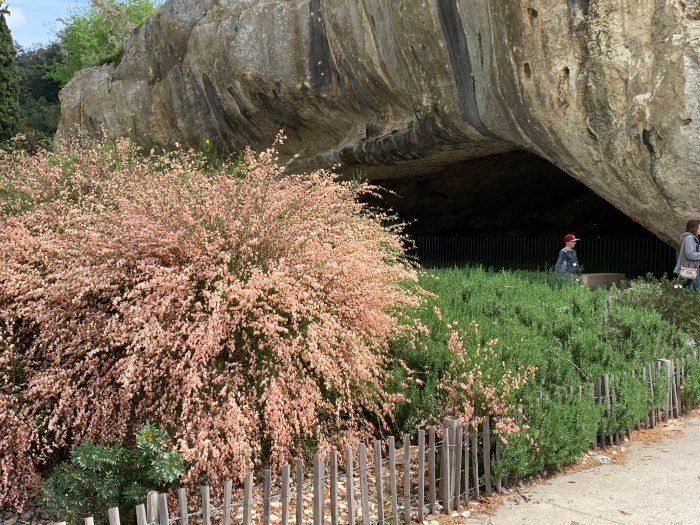
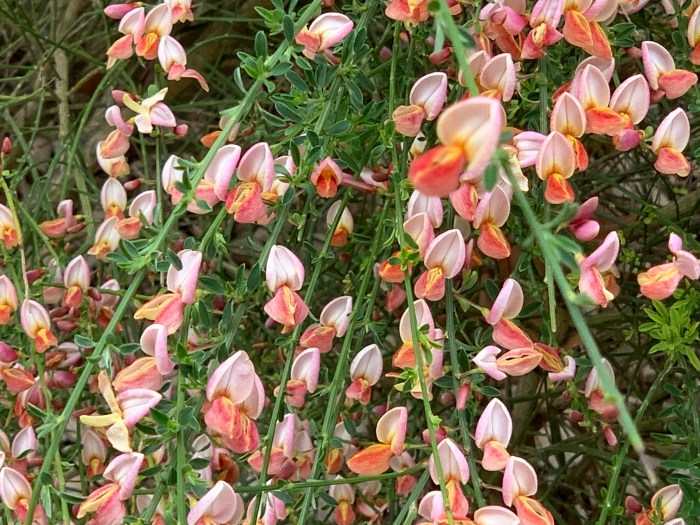
We noticed 2 of these interesting bushes by an outdoor restaurant. This is a new plant to us. That cave behind the bush is what the sign proclaimed to be a “prehistoric grotto.”
A close-up of the flowers on that bush in the photo above. Striking color combinations
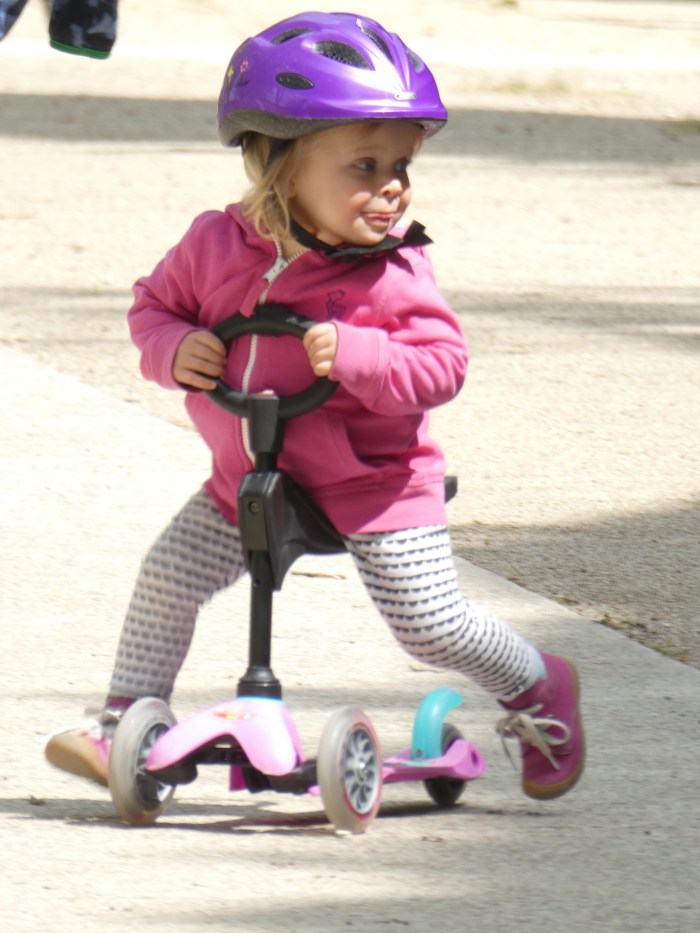
This little girl came flying down the hill from the bridge on her 3-wheel scooter with her mother trying her best to keep up. I think it’s all in the way you hold your tongue!

Vincent van Gogh & St-Remy’s Monastery

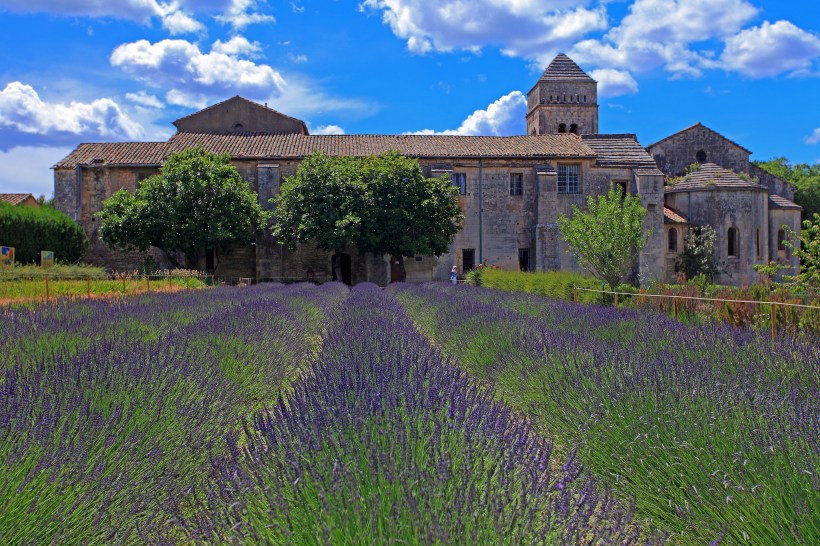
Remember the photo of St. Paul Monastery in St-Remy that I put in my very first post? It’s the iconic photo of the monastery with the lavender fields in front. After we went to the Carrieres de Lumiere show, we drove to nearby St-Remy-de-Provence to visit St. Paul Monastery and Hospital where Vincent van Gogh spent a year getting treatment near the end of his life. St. Paul Monastery and Hospital is still a working psychiatric hospital and van Gogh fans are able to see the monastery, chapel, cloisters, gardens, and a re-creation of the room where he lived in 1889 and 1990. The walkway down to the monastery and the gardens in the back are dotted with many large copies of his paintings. Amazingly, in his 53 weeks here he completed 143 paintings and more than 100 drawings. Van Gogh left St-Remy in the spring of 1890 to enter the care of another doctor whom he hoped could help stabilize his mental condition. In July of 1890 he shot himself in a nearby wheat field. He was 37. In those last 70 days of his life, he produced a painting a day.

The walkway down from the parking lot to the monastery was lined with the flowers that were the subjects of many of van Gogh’s paintings..
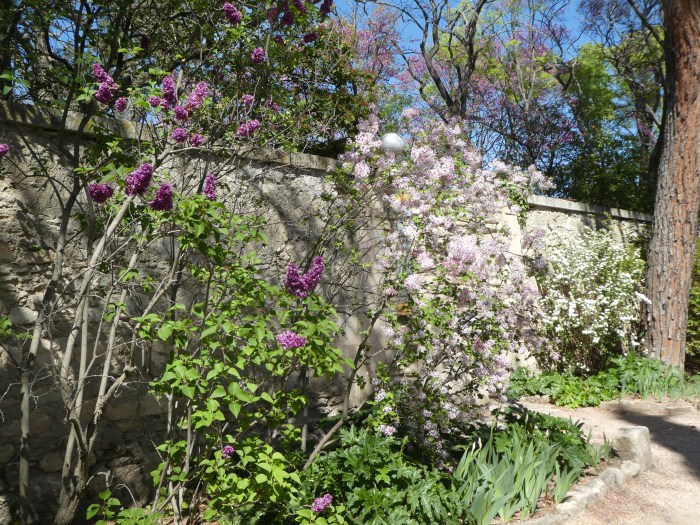
Purple and white lilacs were among the flowers that lined the walkways.
Reproducrtions of van Gogh’s paintings lined the walls of the walkways.
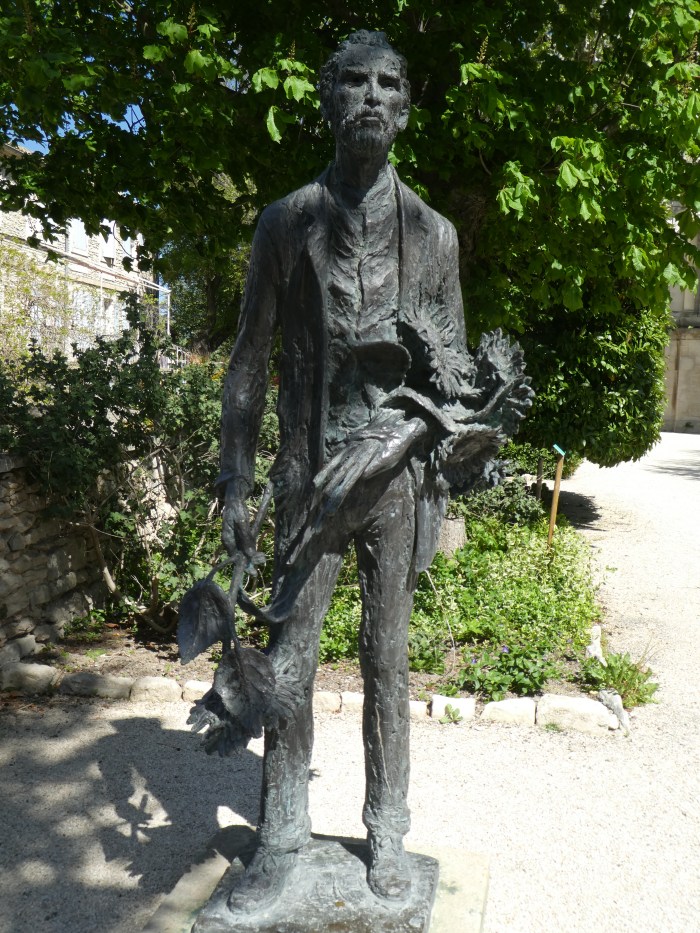
Also along the walkway is this sculpture of van Gogh carrying sunflowers.
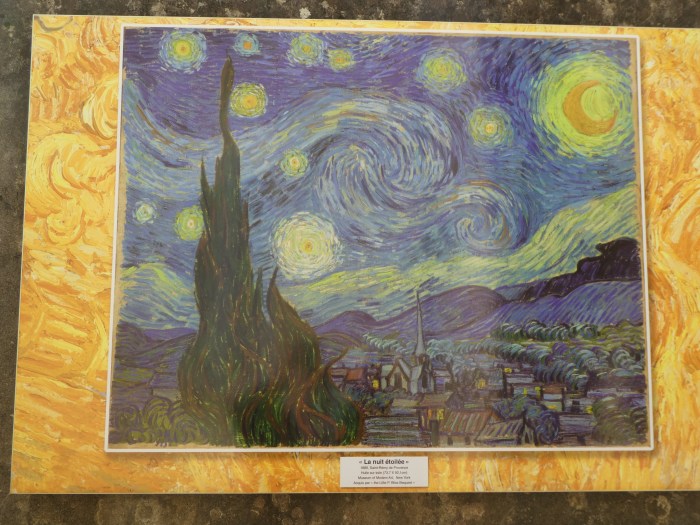
Van Gogh’s The Starry Night also hangs on a wall along the entrance.
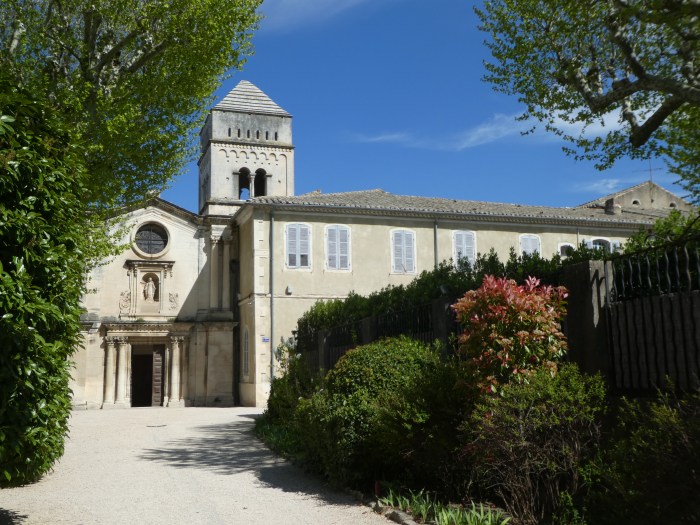
To the left is the chapel and on the right is the monastery.
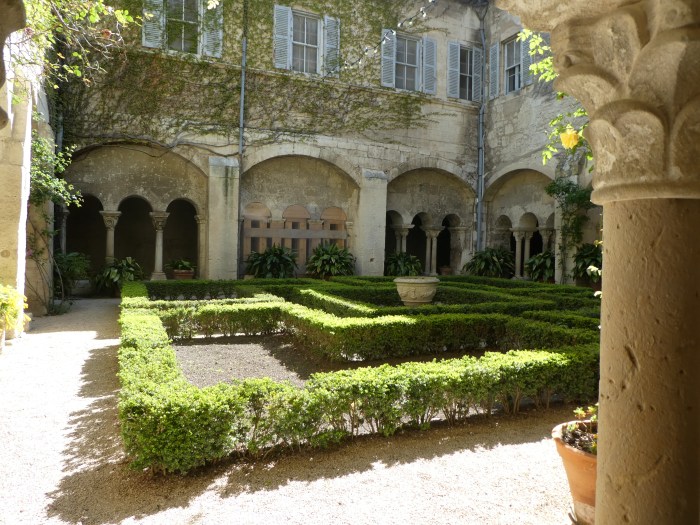
The cloisters in the center of the monastery.
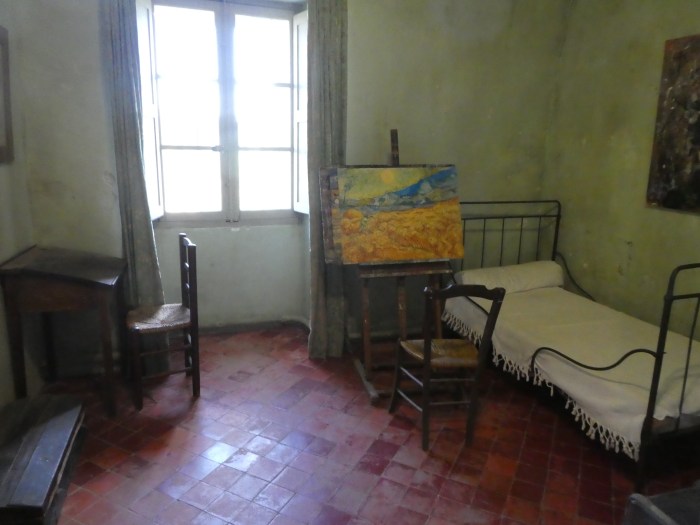
Van Gogh’s room was very basic: a bed, a chair, a desk, and his easel and painting supplies.
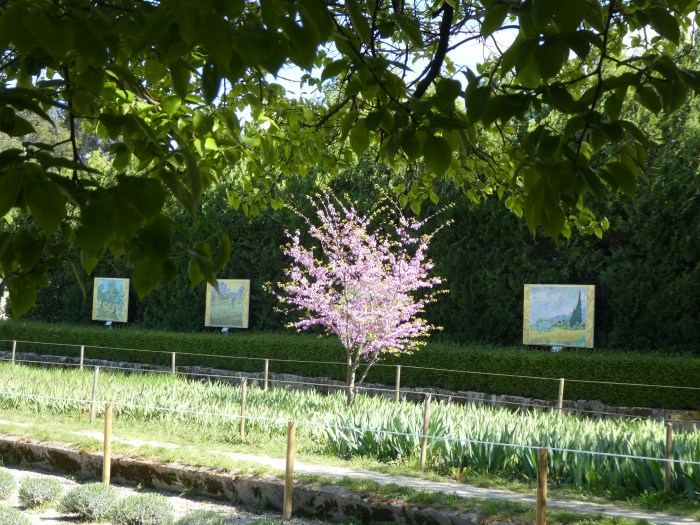
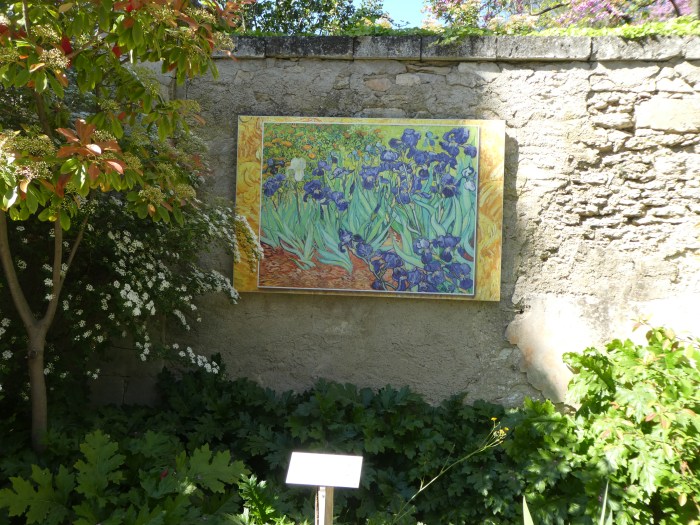
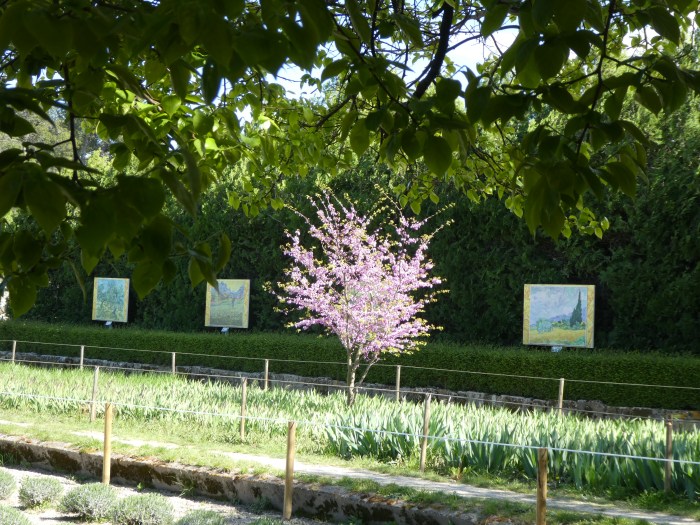
In the gardens behind the monastery, this pink tree stands out in a large bed of irises about to bloom. Note van Gogh’s paintings on the wall.
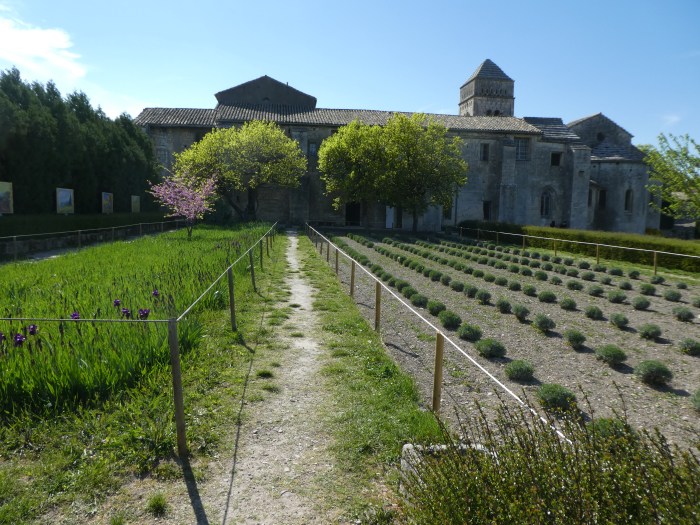
Probably most surprising to me were the lavender fields. In the photos I’ve seen, they look huge. But they’re not. On the right is the biggest plot and there are 2 much smaller plots nearby. It’s all in the perspective. Of course none of them are blooming yet.

Carrieres de Lumieres

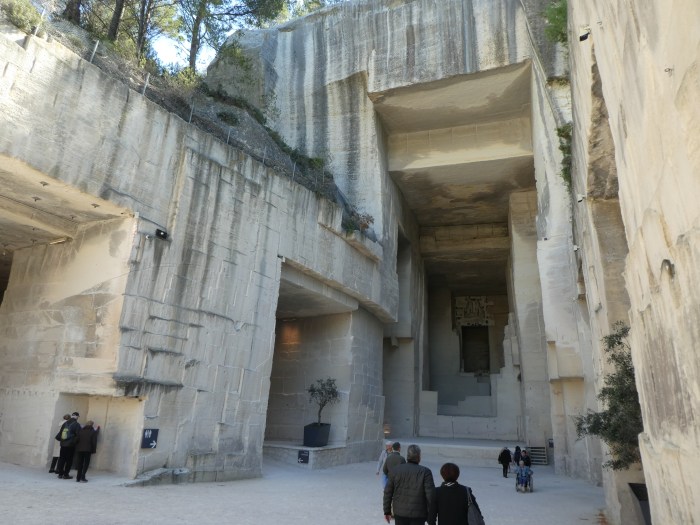
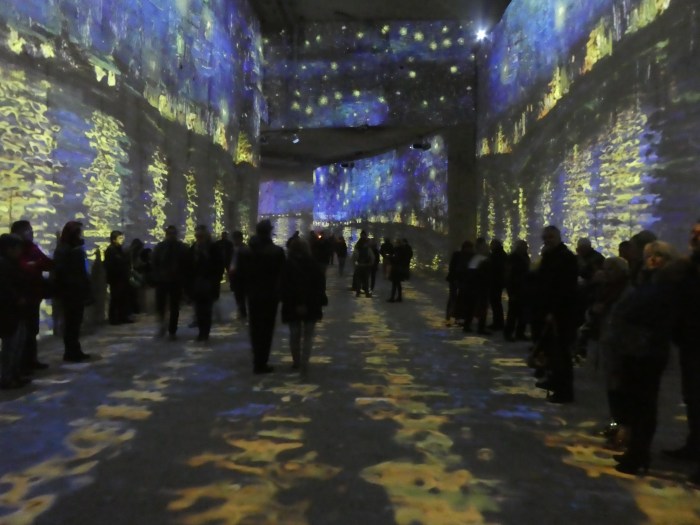
We made the 45 mile journey from Aix to Les Baux where Carrieres de Lumieres is located. We went early so we would be there when it opened which turned out to be a good move because parking there is an issue and the place gets more crowded inside as the day progresses. It’s in an old quarry just outside the village and the venue is most unusual and interesting. And cold.

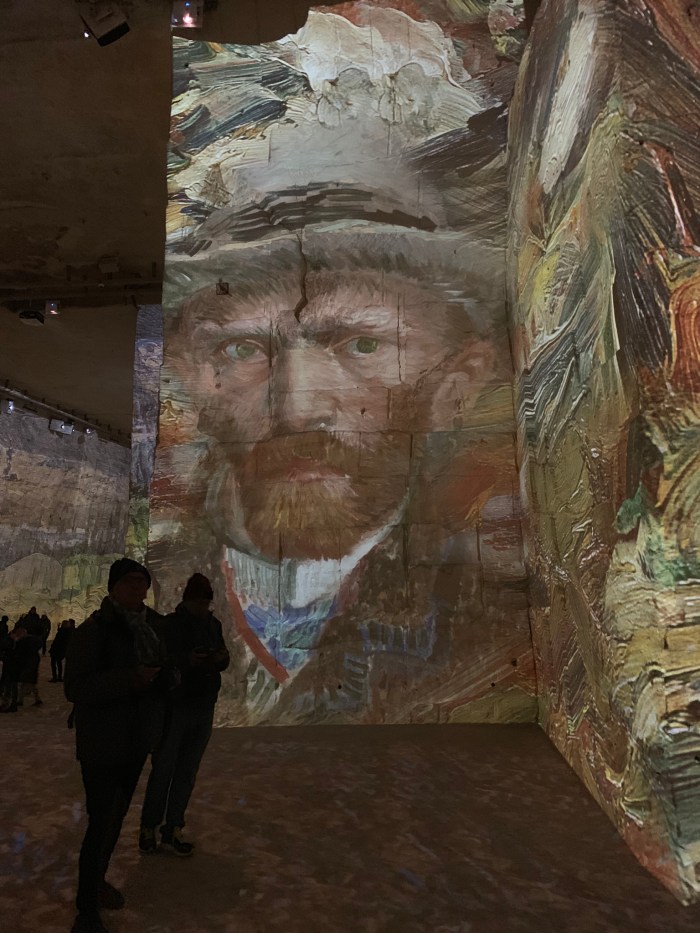
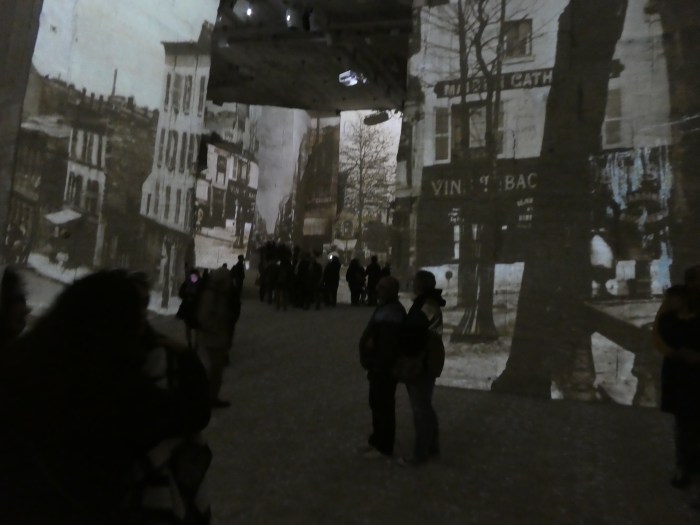
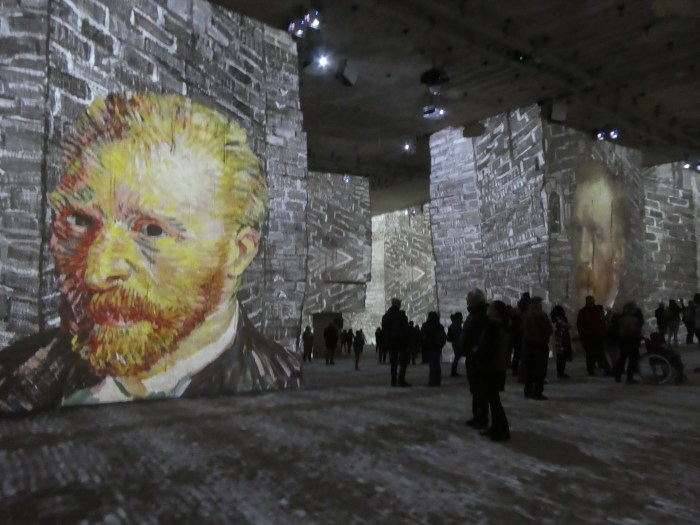
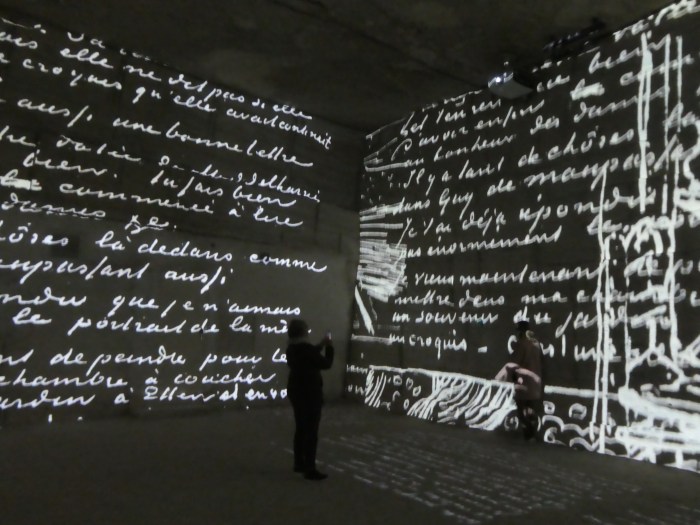
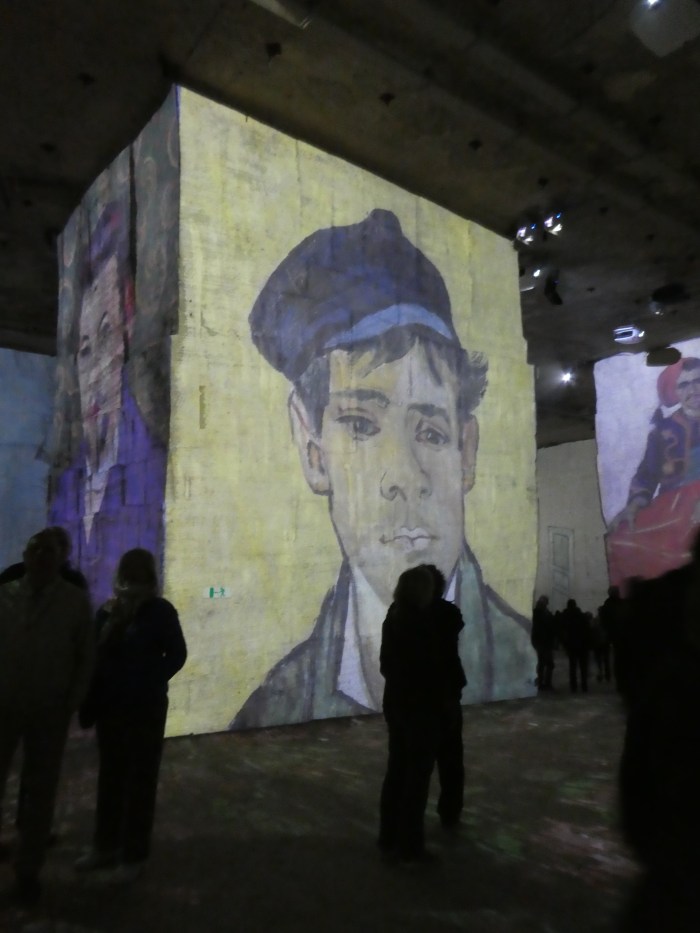
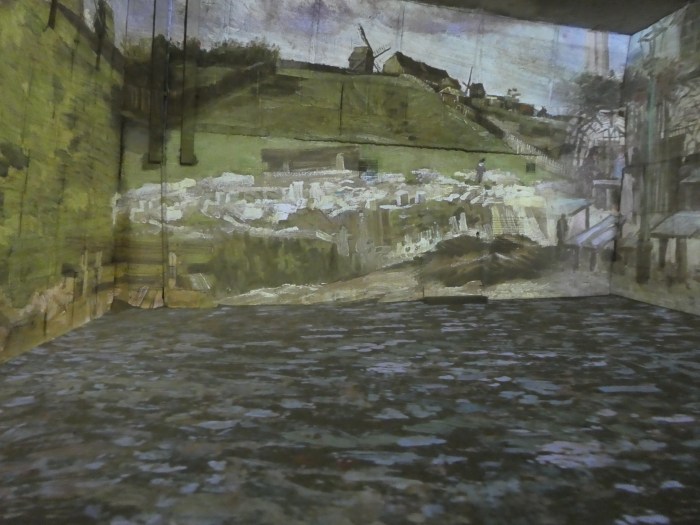
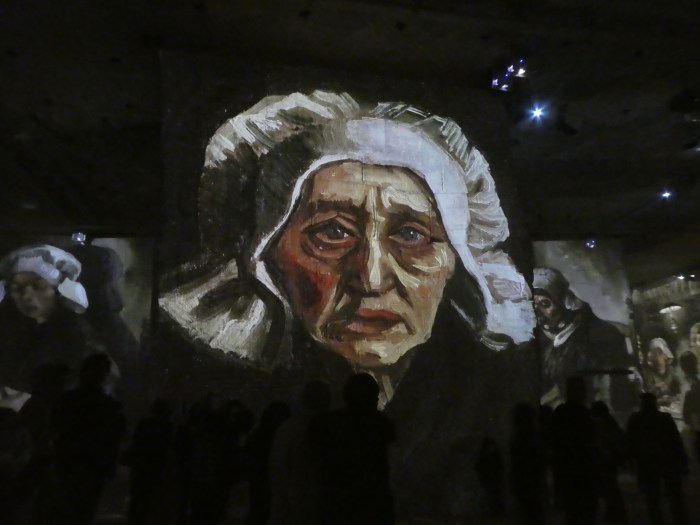
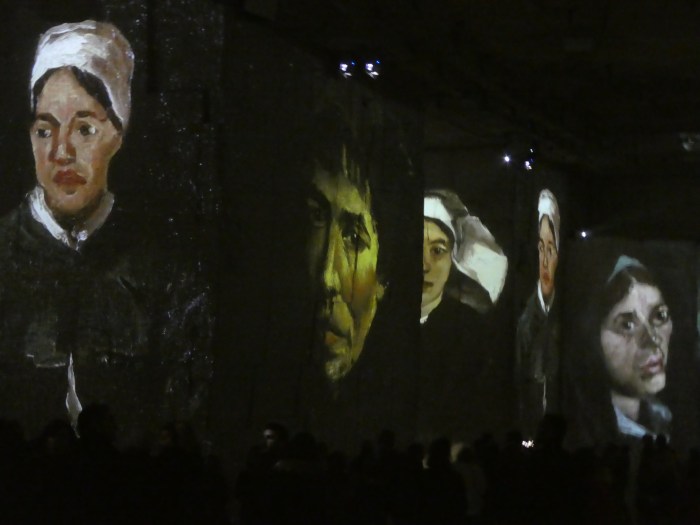
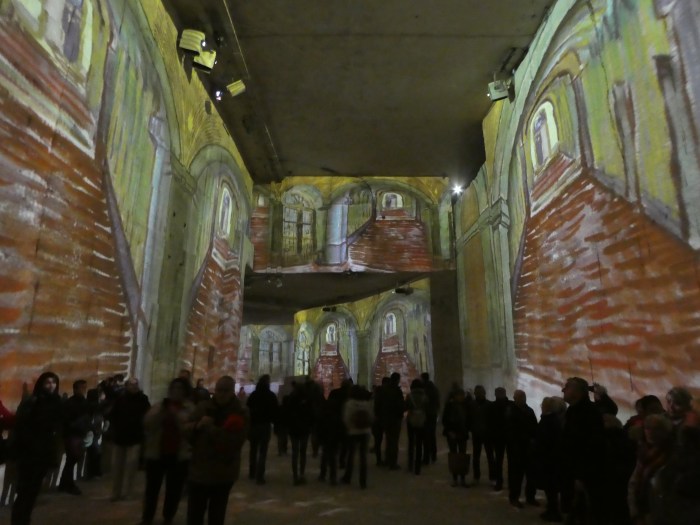
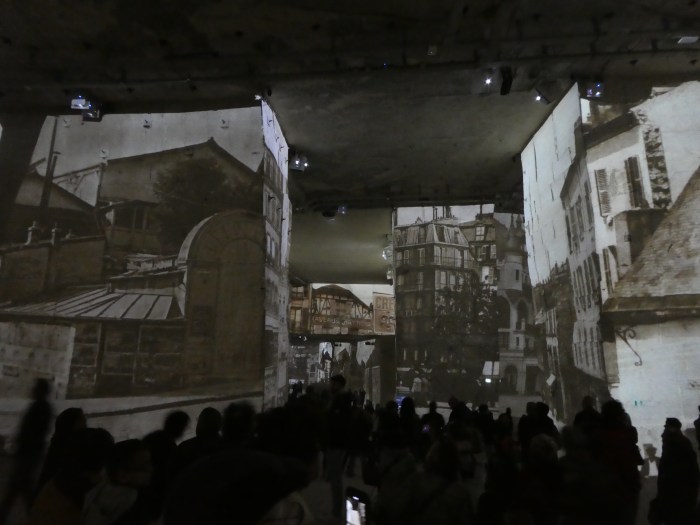
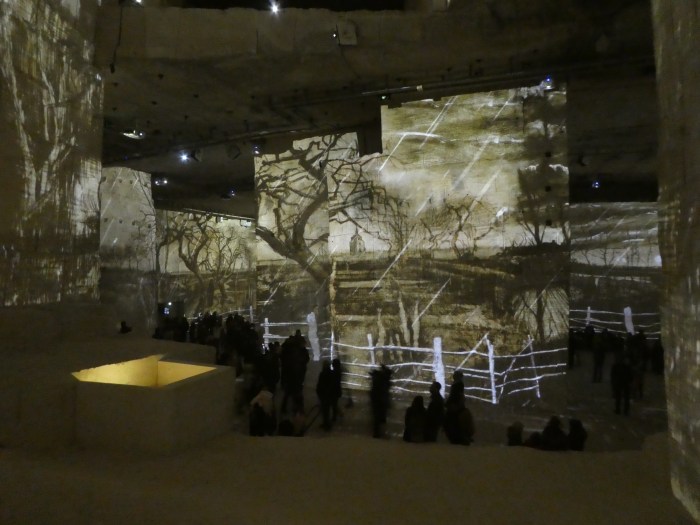
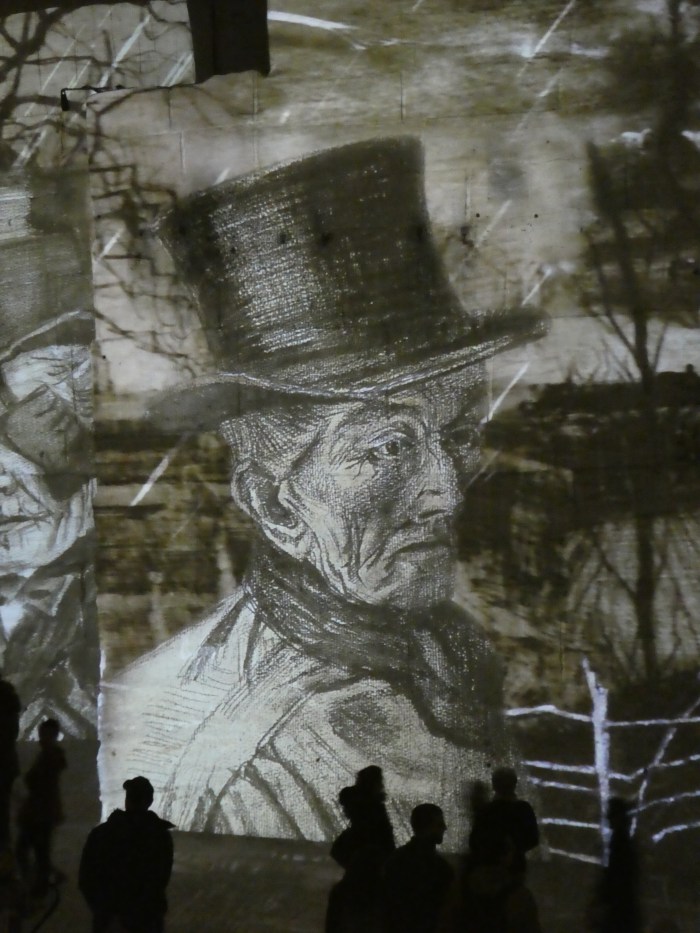
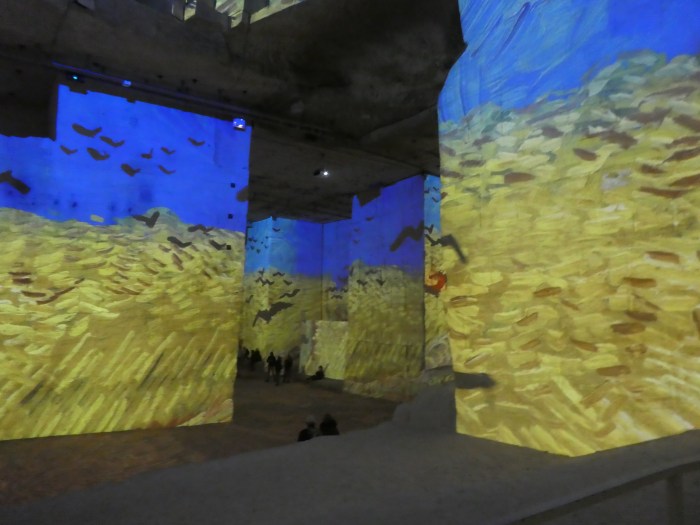
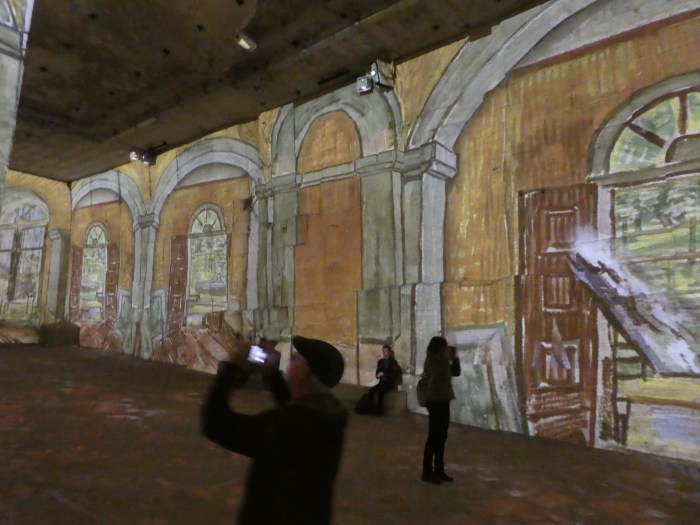
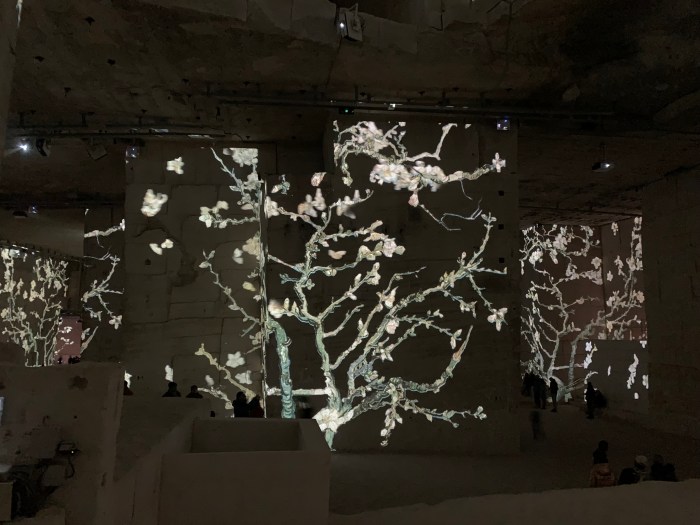
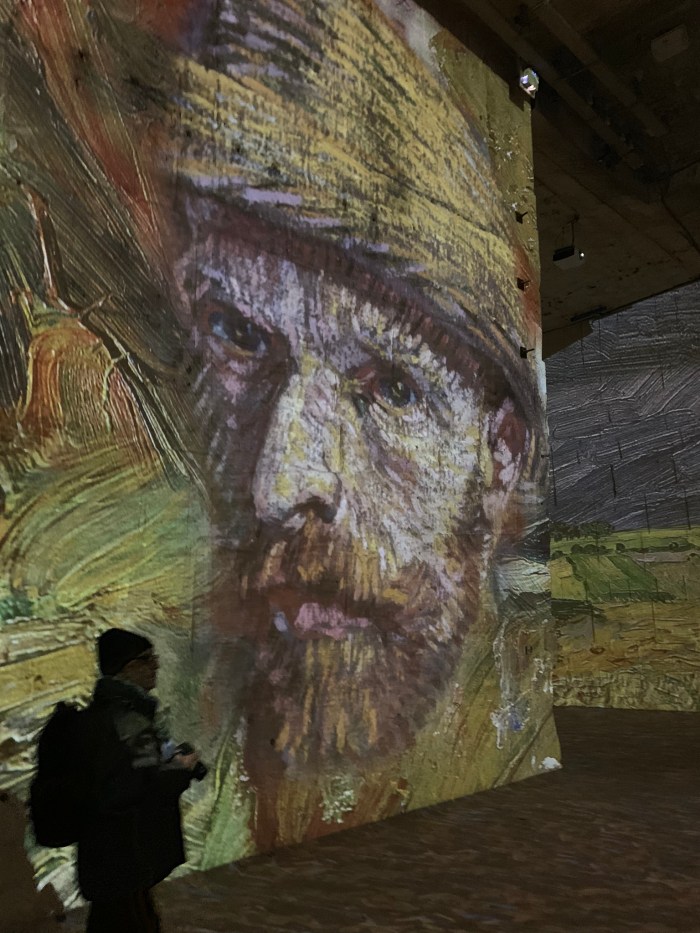
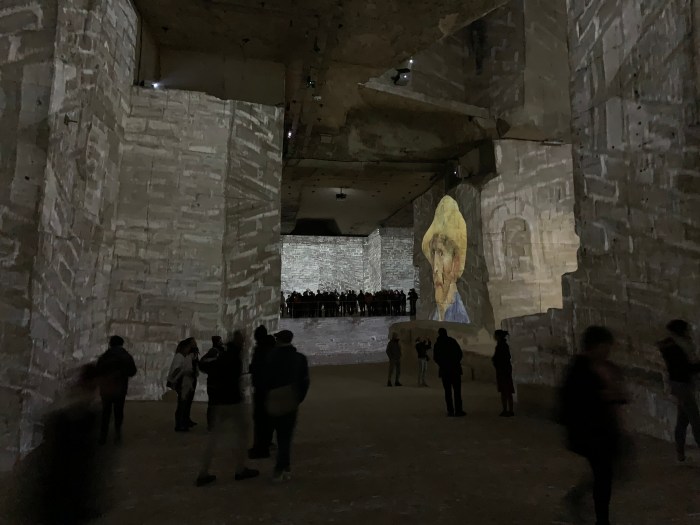
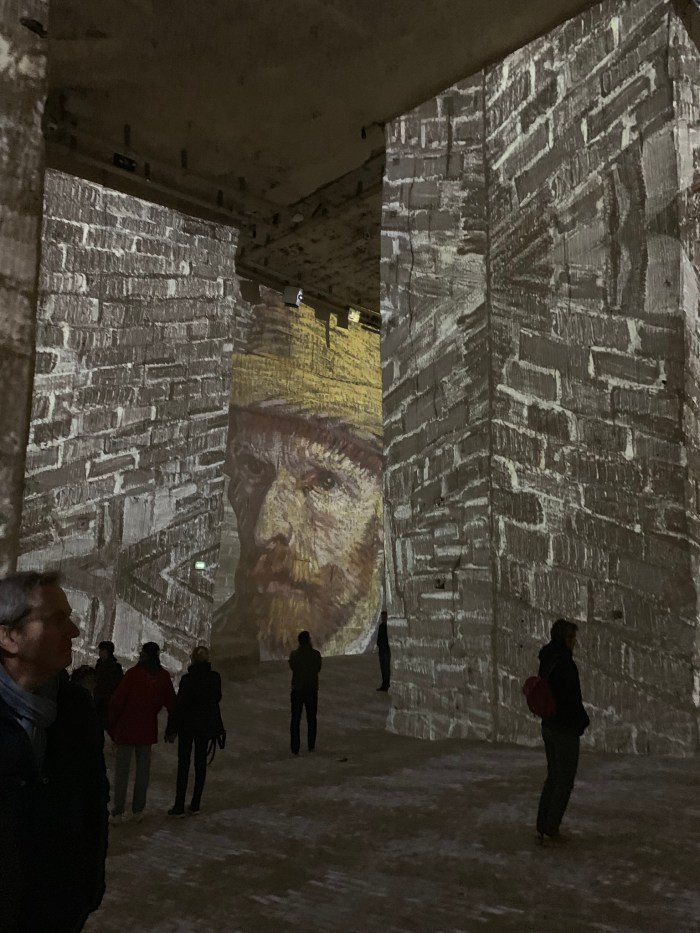
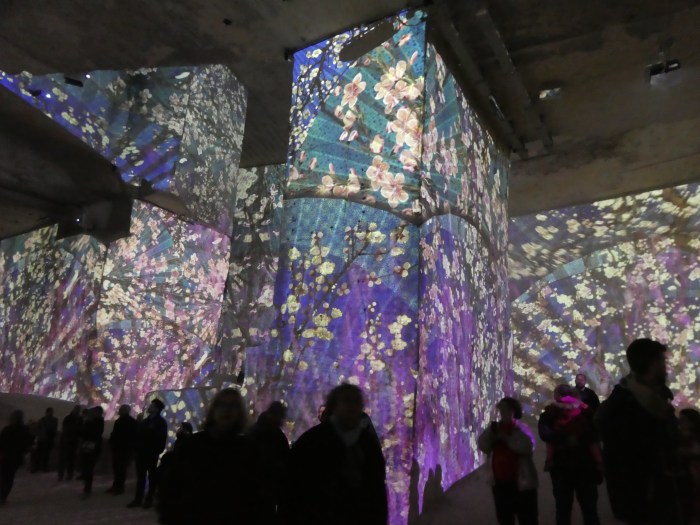
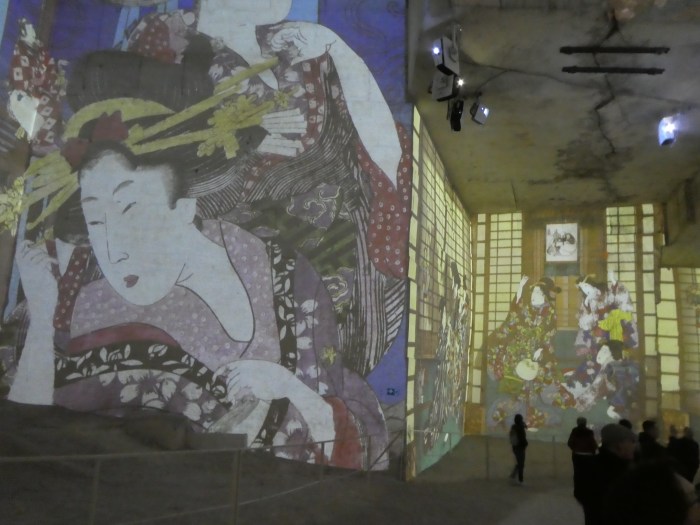
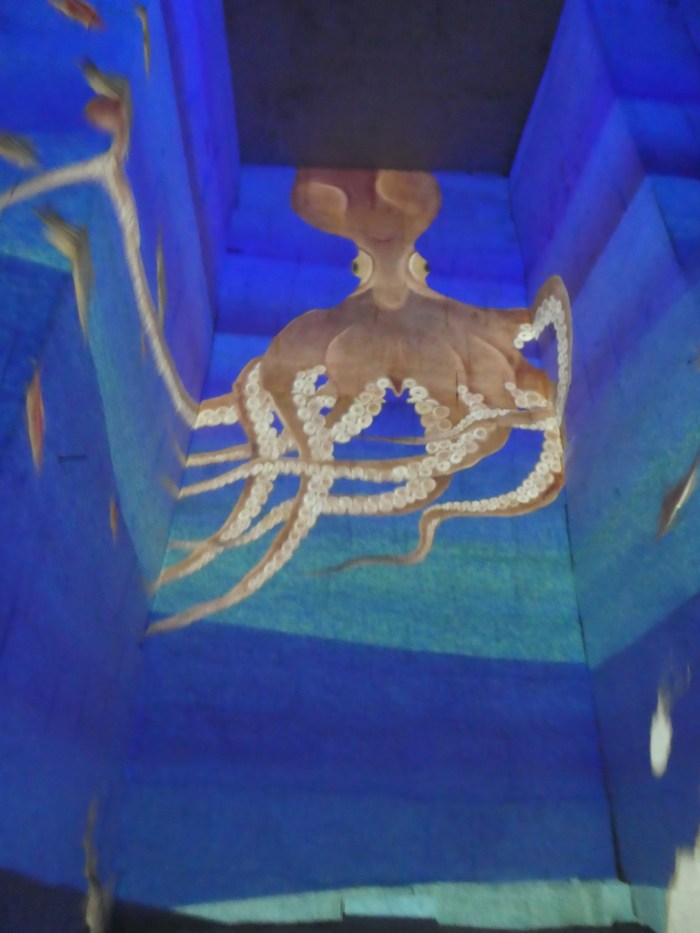
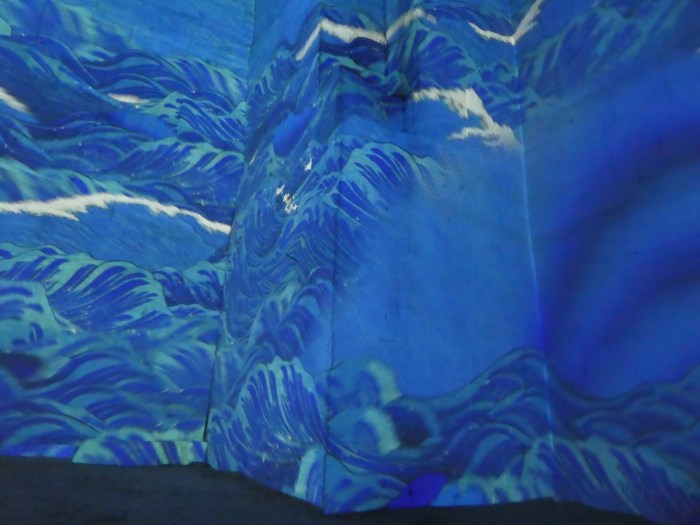
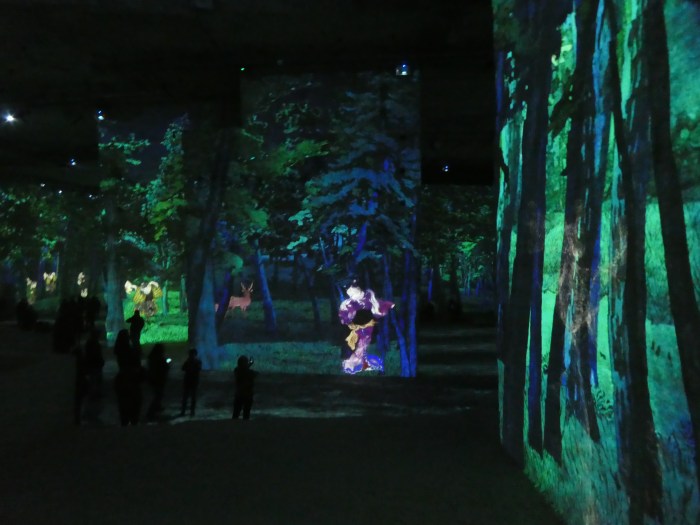
We saw our first art & music immersive show in Paris last year right after it opened. The Les Baux location in Provence has been open since 2013. It was interesting to compare the 2 venues. The Les Baux location is larger than the one in Paris, more nooks and crannies. On the other hand, it feels like there is more projection on the floor and ceiling in the Paris location. But they both have incomparable video and music. The show that just opened here is Van Gogh, Starry Night, accompanied by a shorter presentation called Dreamed Japan. My camera has been giving me fits and Chuck took mostly videos which I can’t use, so our photos do even less justice than they normally would when trying to capture something that is so impressive because of its movement into a still format.

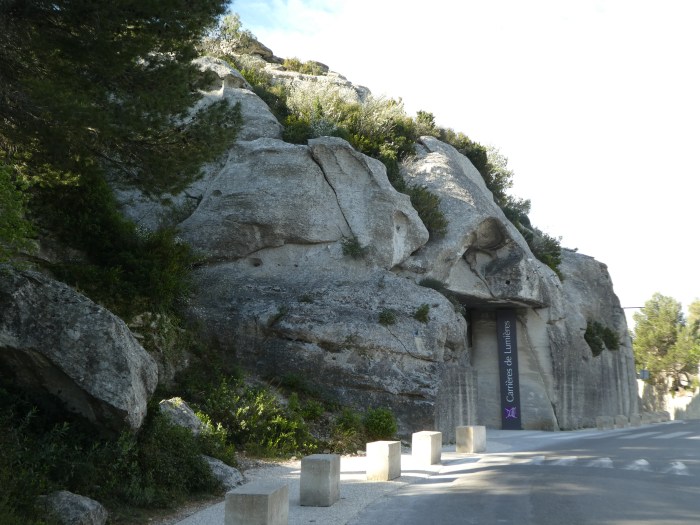
This is the very modest entrance. Very discrete.

There’s another opening a little down the street but it’s not actually an exit because there’s a wall between here and the street. It just gives patrons access from the projection area to the restrooms, café, and a small movie theater. But it’s a very impressive area.

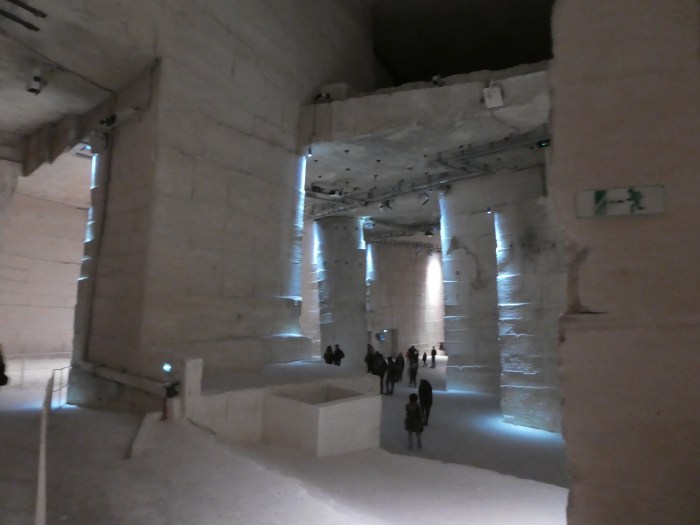
There’s a 2-minute break between each of the shows and this is how it looks when there’s no projection going on. Both shows together last 40 minutes and you can stay as long as you like.

Van Gogh, Starry Night

Dreamed Japan


We Found the Markets!

We decided today would be market day. Aix has markets every day of the week and we found 3 markets today: a produce market + some miscellaneous, a flower market and a clothing market. Each one was in a different city square.

It’s easy to find the markets. Just park in the garage and follow the people with the empty shopping bags.
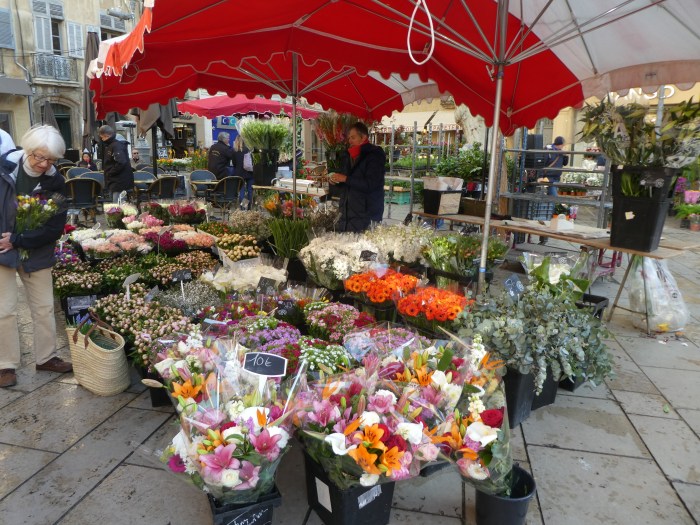
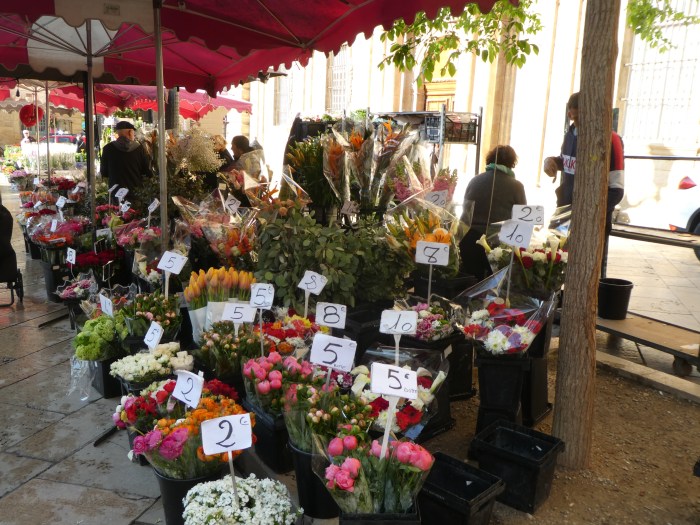
This is the flower market. The flowers are gorgeous and very reasonably priced.
More flowers. I think the pink ones in front are peonies.
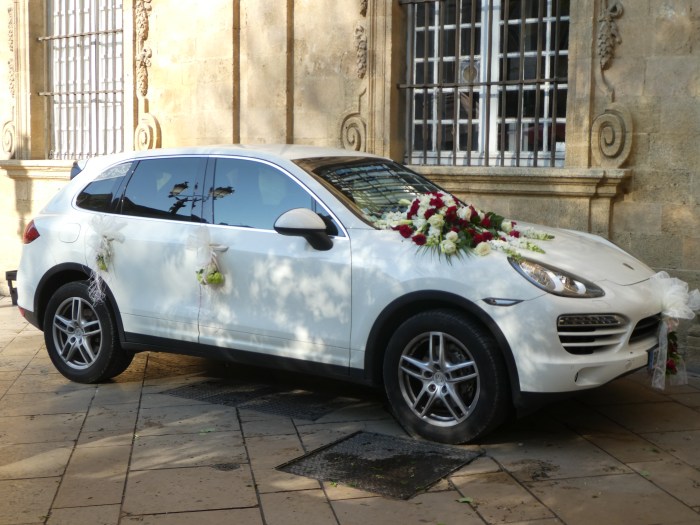
A man was there to “dress” this car for a wedding. Cars must have special arrangements to get into this pedestrian area.
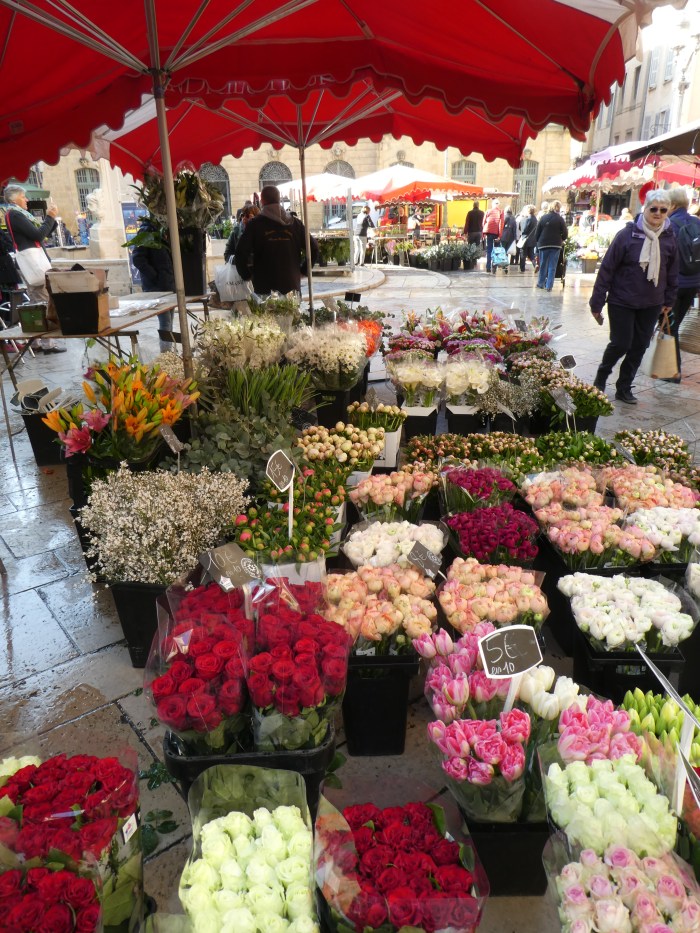
More flowers. These are mostly roses in the front.
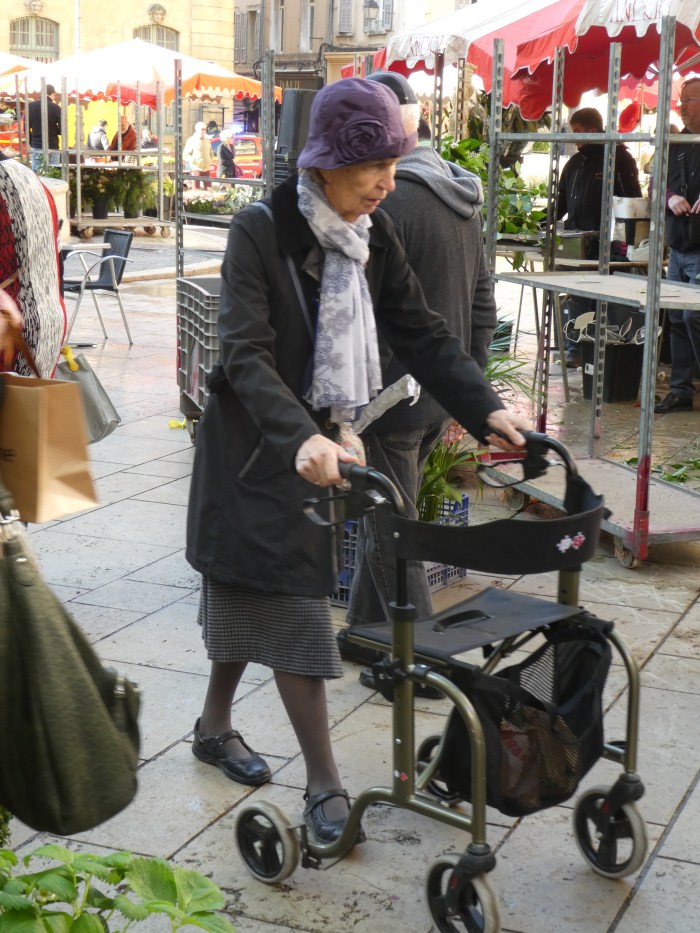
I love this older lady with her purple hat and her Mary Janes shopping for flowers. So French!
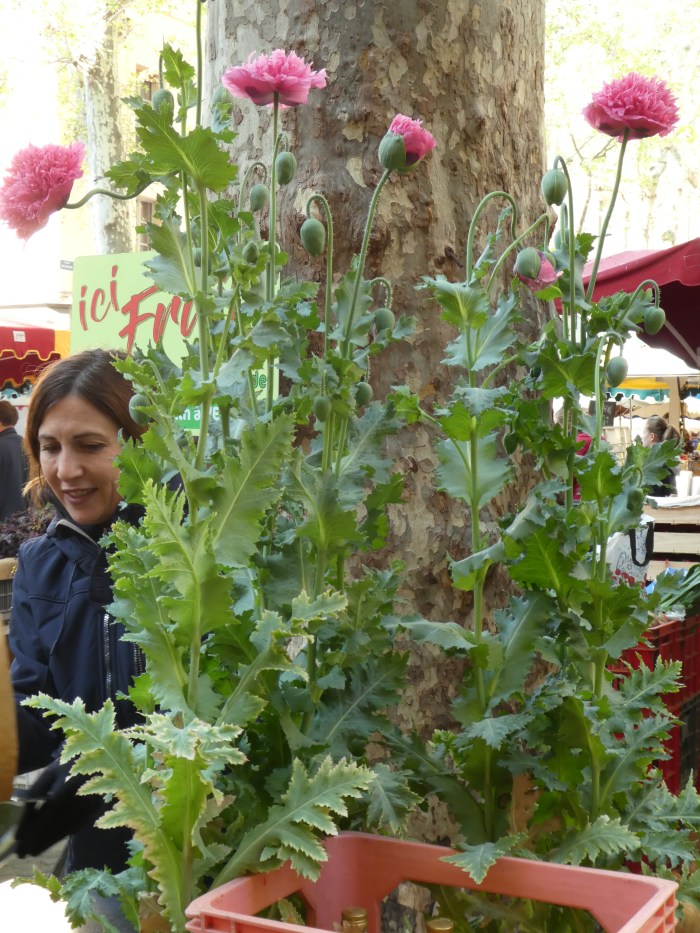
The poppies are supposed to be blooming but so far these are the only ones we’ve seen.
On to the produce market in the next square down the street.
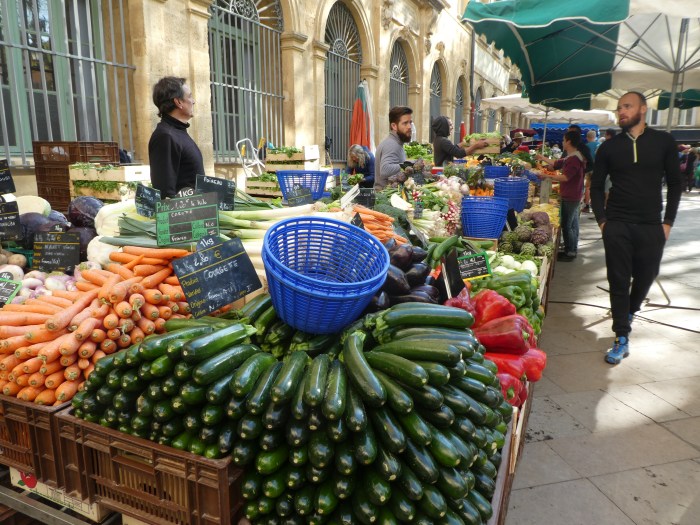
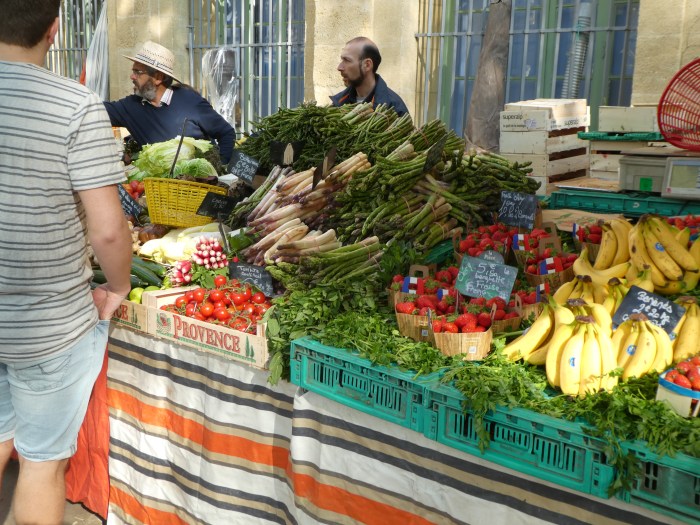
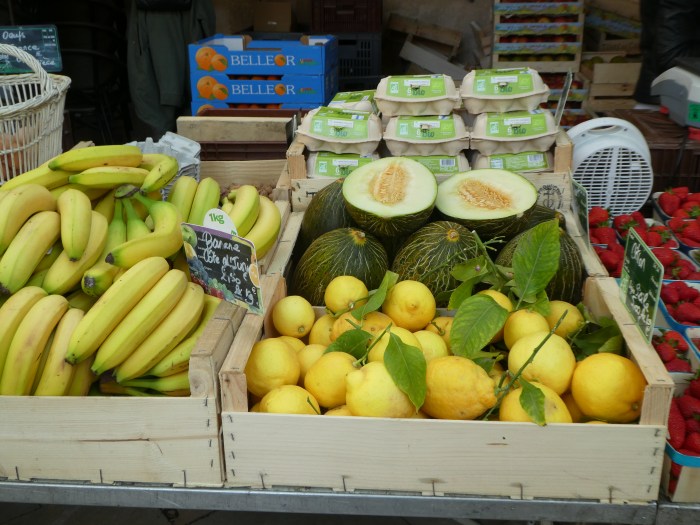
Lots of beautiful produce. Local white and green asparagus are very plentiful right now.
Huge lemons, nice bananas for about $1.25/lb, a kind of melon I’ve never seen before and eggs by the half dozen. Lots of strawberries too.
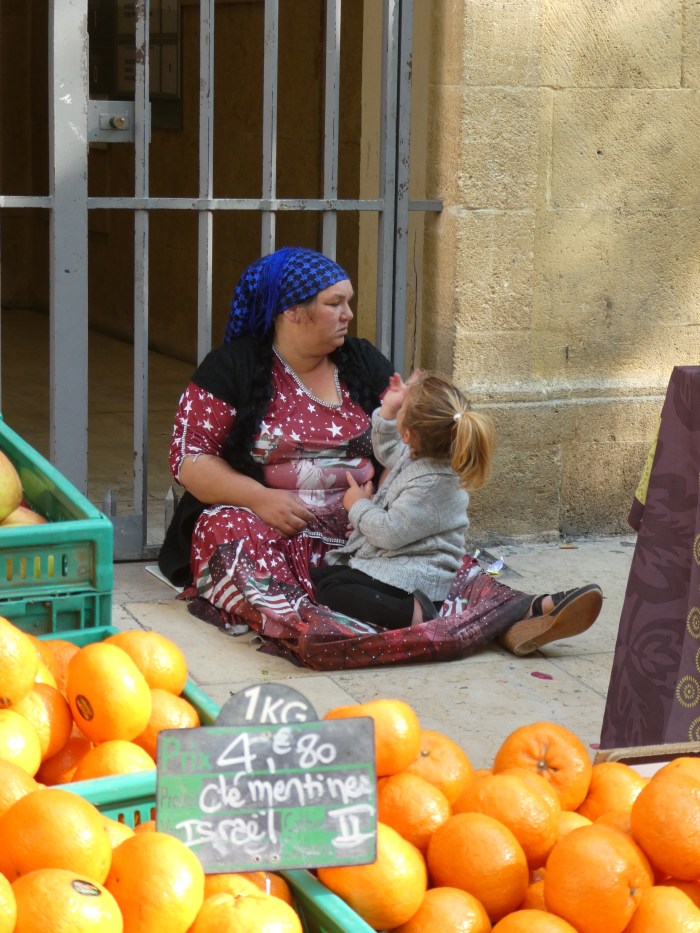
This woman and her daughter are passing the time until it’s time to pack up and go home again. In front are tangerines that come from Israel for about $2.45/lb. I got some in the produce market near our house the other night and I think they’re the sweetist I’ve ever tasted.
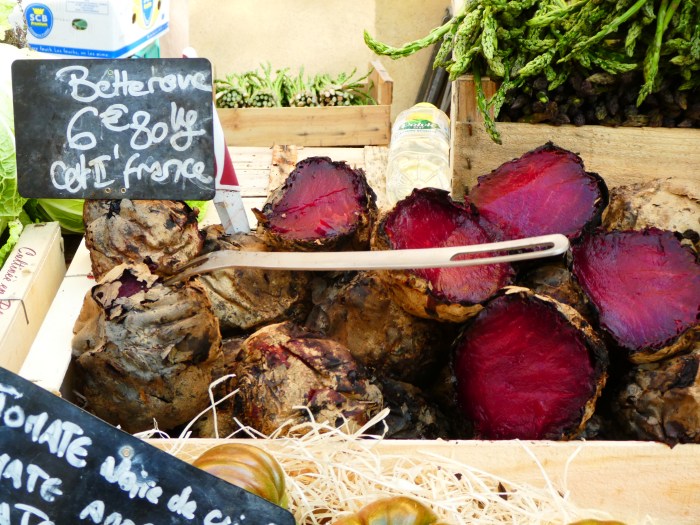
I’ve never seen beets like this before. Or this BIG before.
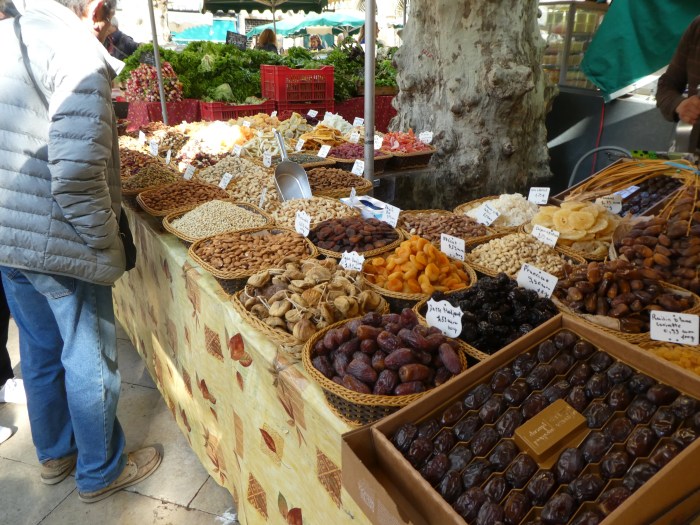
This stand sold nuts, several varieties of dates and other dried fruits. I got a couple of kinds of dates and they’re very good.
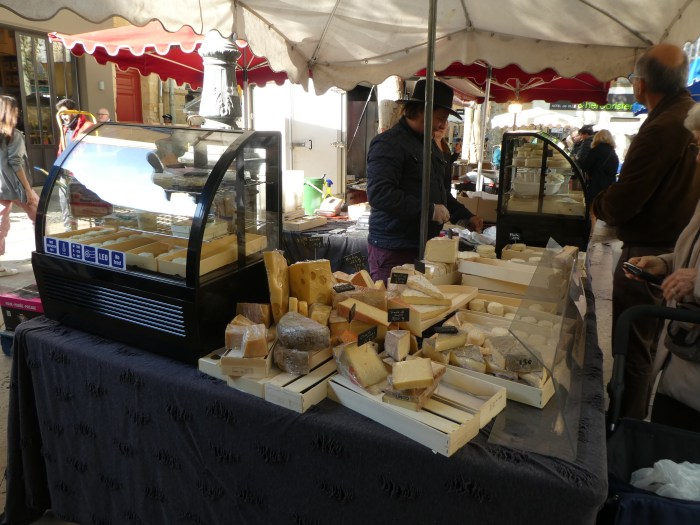
Several booths had cheeses that look so good.
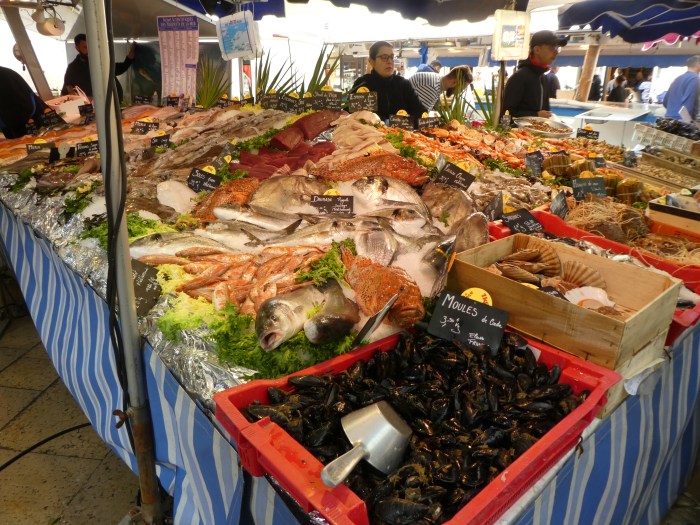
Down at one end was a huge seafood area made up of several big tables. They had everything!
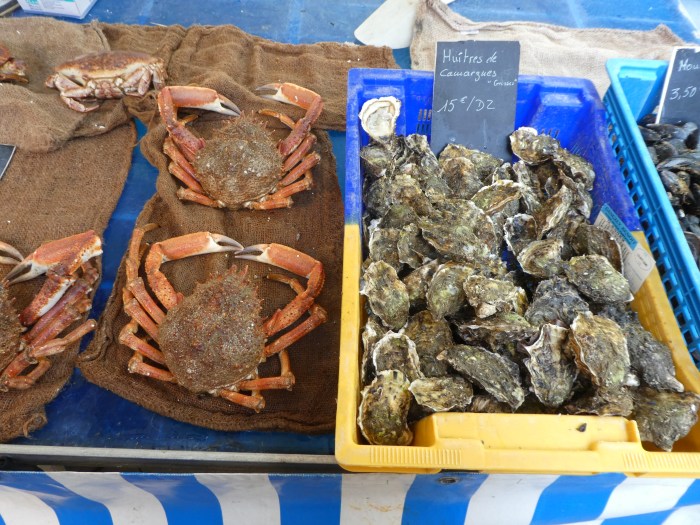
Fresh crabs and oysters.
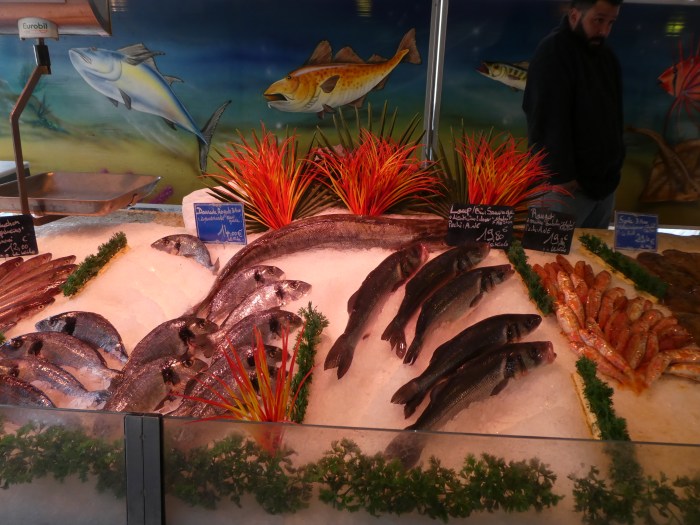
Love how artistically this seafood was displayed.
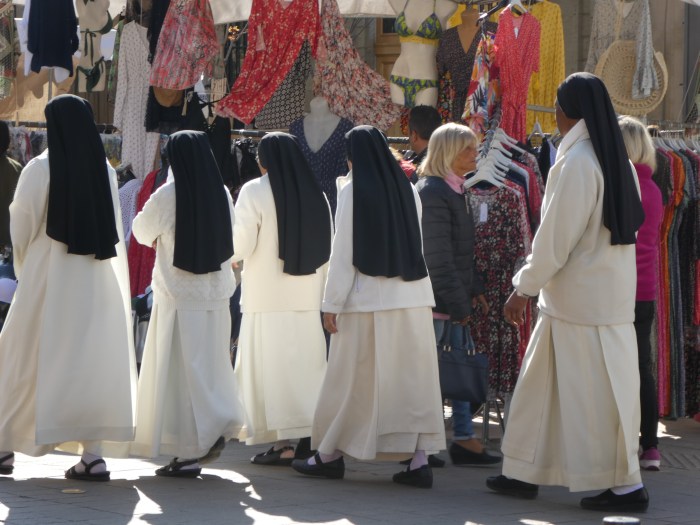
Then we moved on to the next square down which contained the clothing market. They also sold fabrics and those gorgeous yellow and blue French linens we’re all so familiar with. We were amused by these 5 nuns out having a good time looking at the women’s clothing.
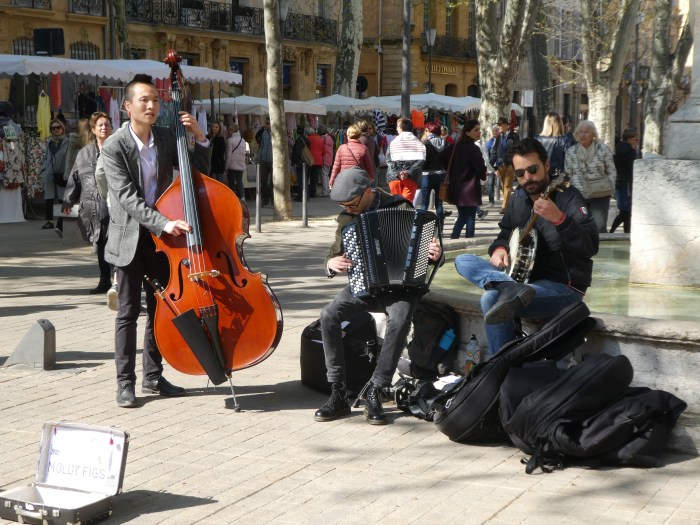
According to their sign, these 3 guys were known as the Moldy Figs, featuring classic and traditional jazz. They were very entertaining and you could tell they were having a good time doing it.
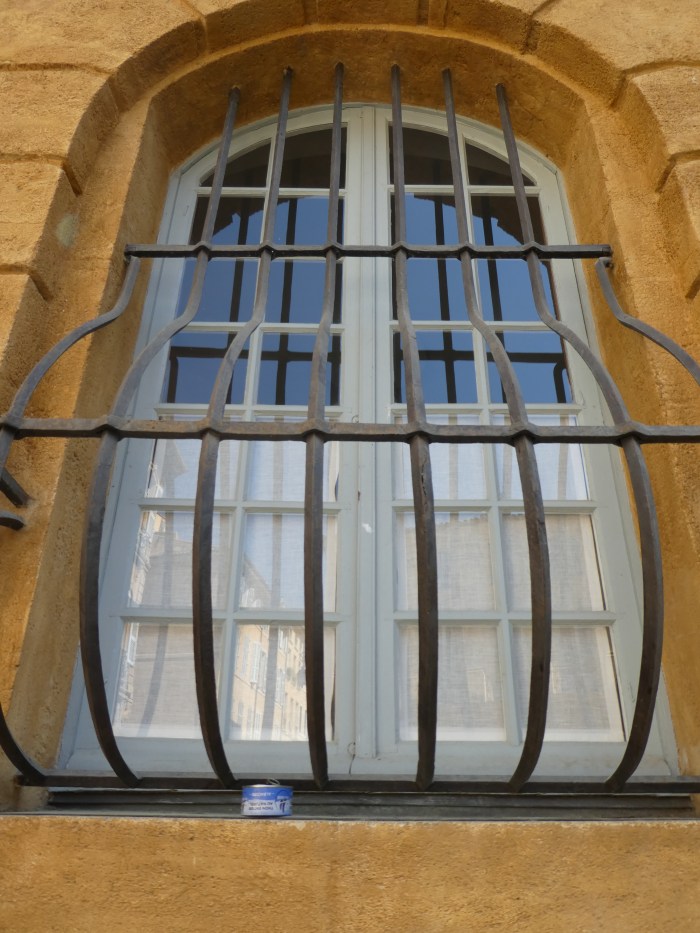
After we finished in the markets, we went on another of Rick Steves’ walks. We passed by this 2nd story window where we spotted a tuna can on the ledge. Since there’s no real balcony here, I wonder how their feline friends access this tuna.
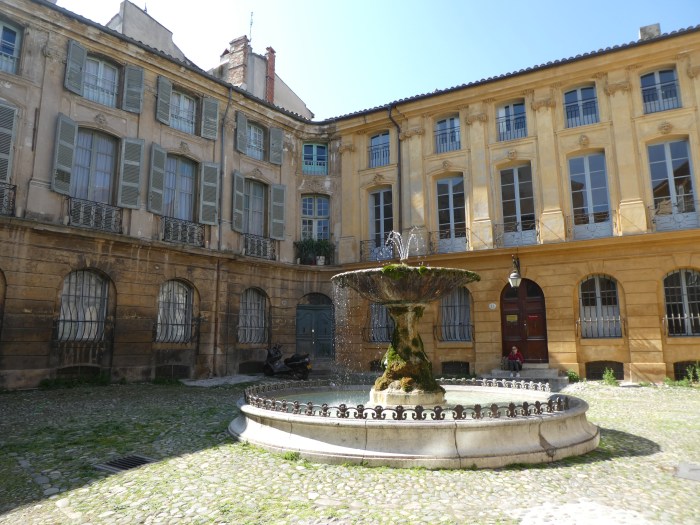
Next we stopped at Place d’Albertas. The restoration was designed by the man who lived across the street because he didn’t like looking at the ugly buildings across the street from him. Unfortunately only 2 of the 3 property owners agreed to fund the work so you can see the building on the left still looks run down. (And fountain alert!)
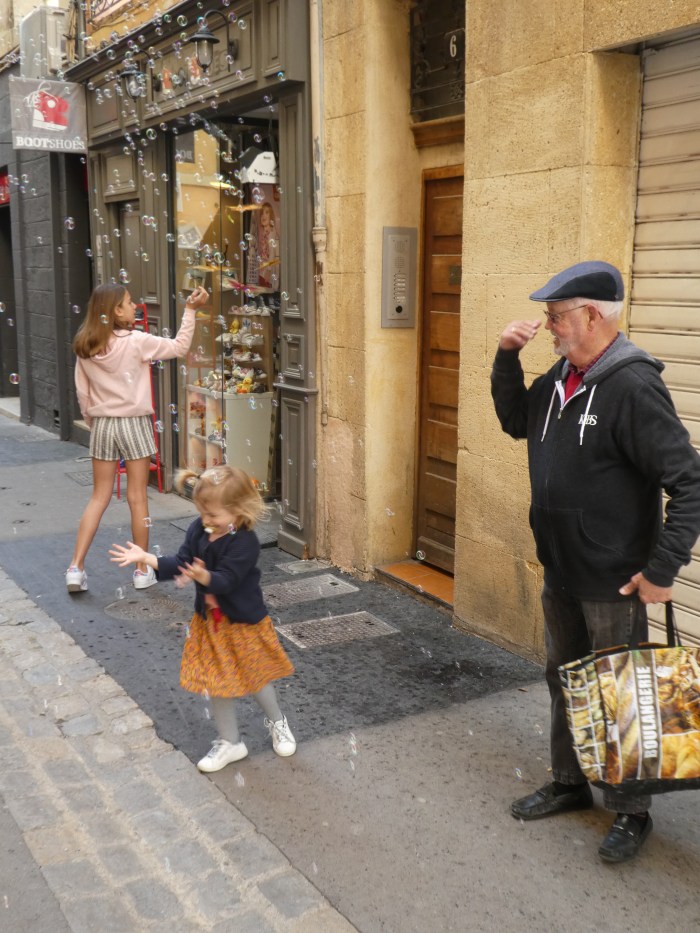
Chuck and the girls had fun with the bubbles coming from the bubble machine above his head.
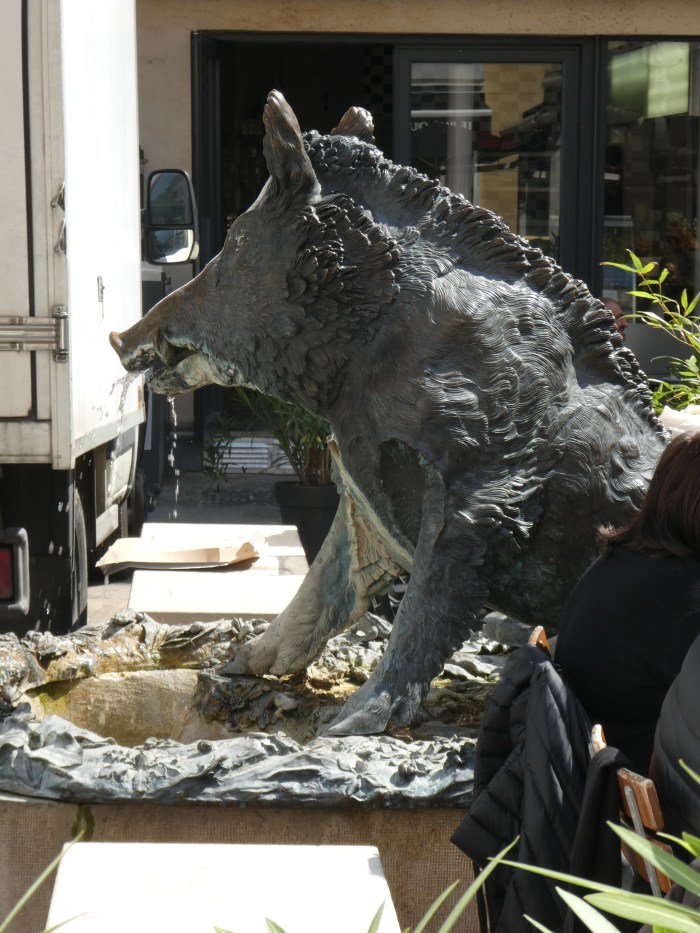
This boar fountain was at the little restaurant in the square where we had lunch. The drool coming out of his mouth is a fountain. Gross!
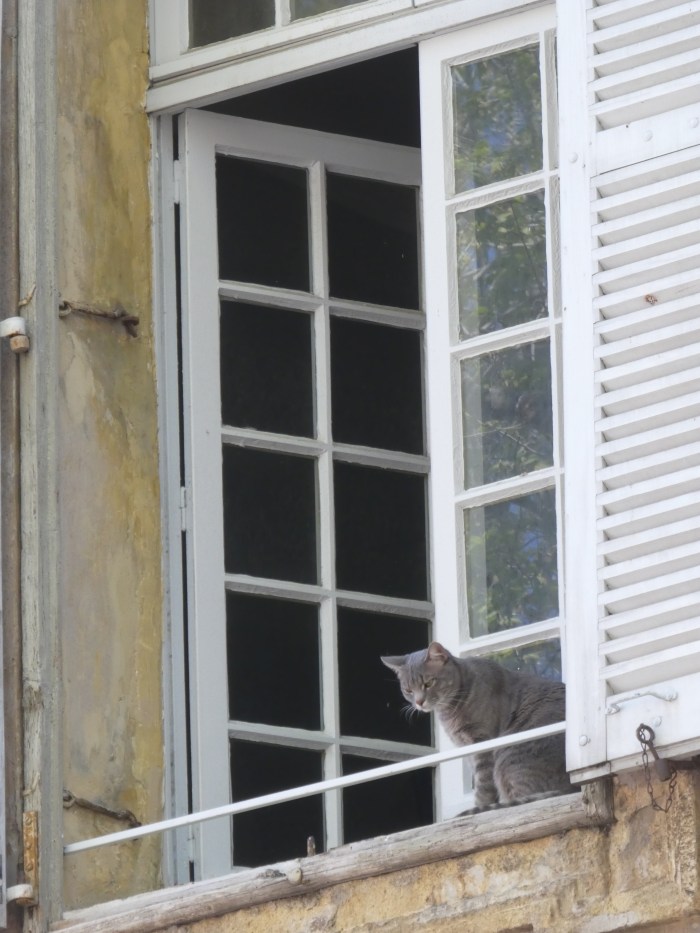
While we ate, this cat kept watch over diners from it’s second floor window.
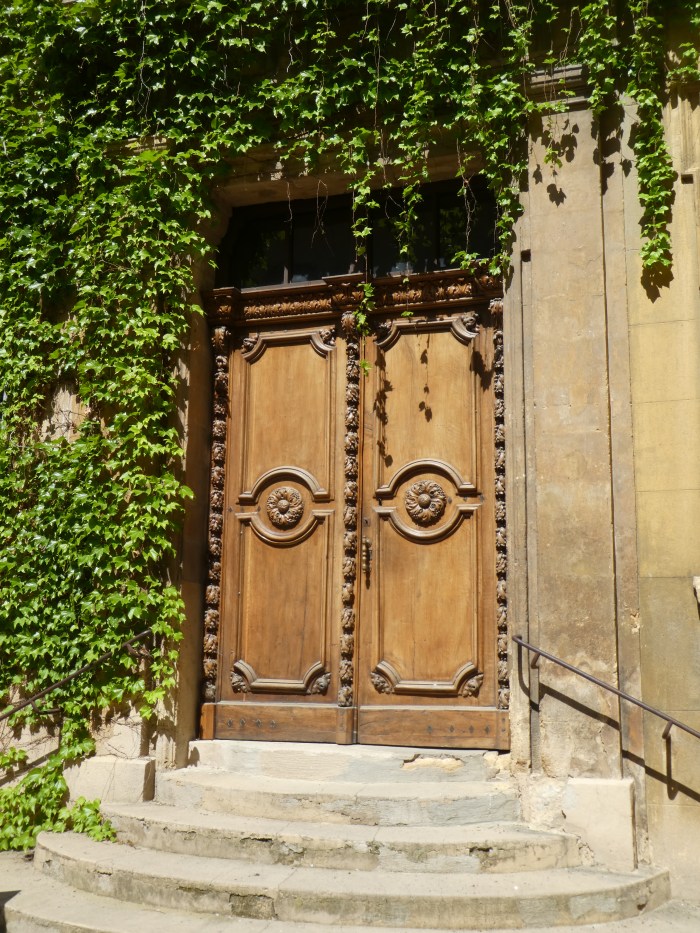
Loved the doors with the vines hanging over.
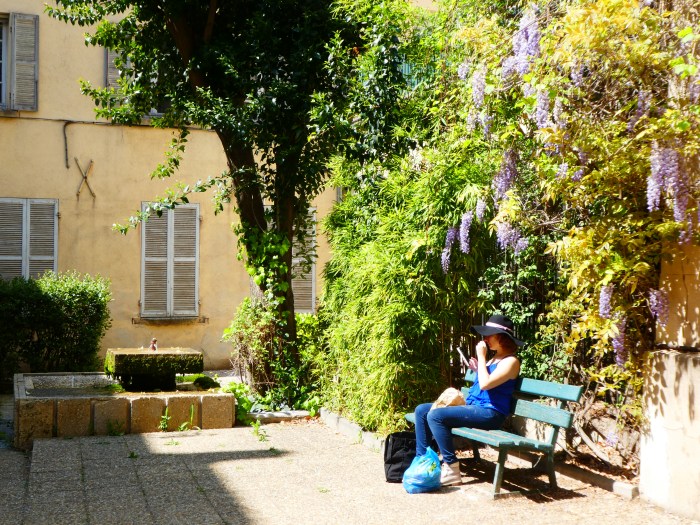
Not on the tour but we stepped into this tiny square with it’s wisteria and fountain.
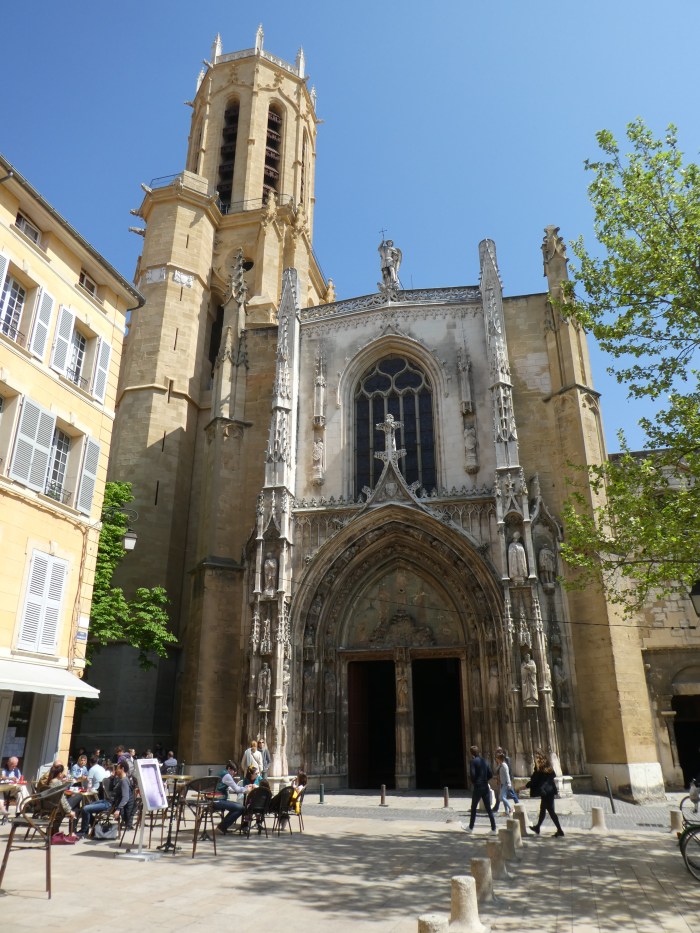
And finally we went into the Cathedral of the Holy Savior. All nestled in among other buildings, it’s huge! Over the centuries, different changes and additions have been made.
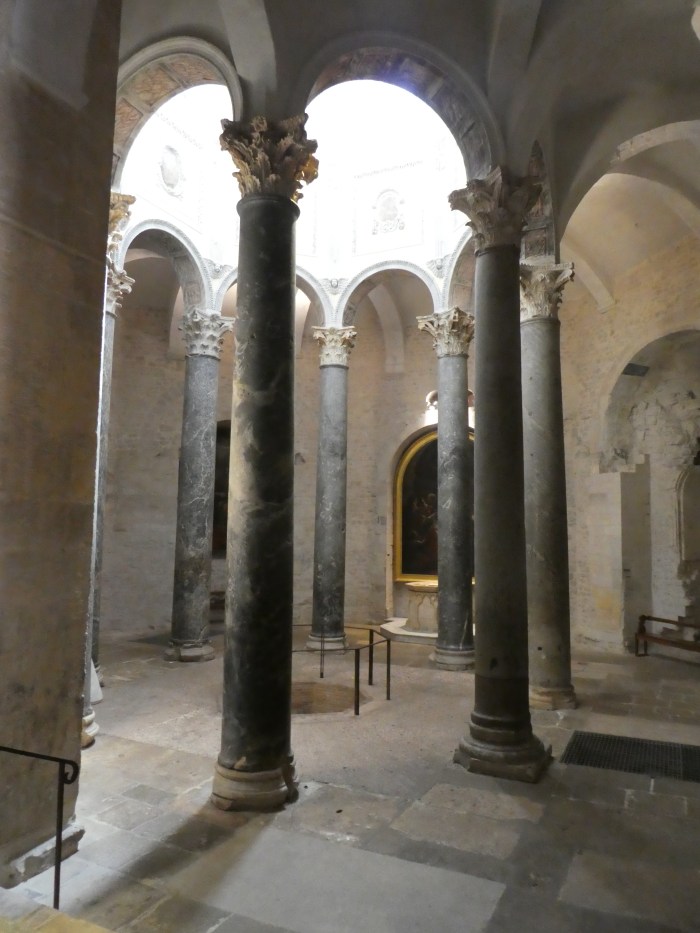
The 4th century baptistry is to the right of the front entrance. The church is a combination of 3 types of architecture: Romanesque, Gothic and Baroque. The baptistry was in the Romanesque section.
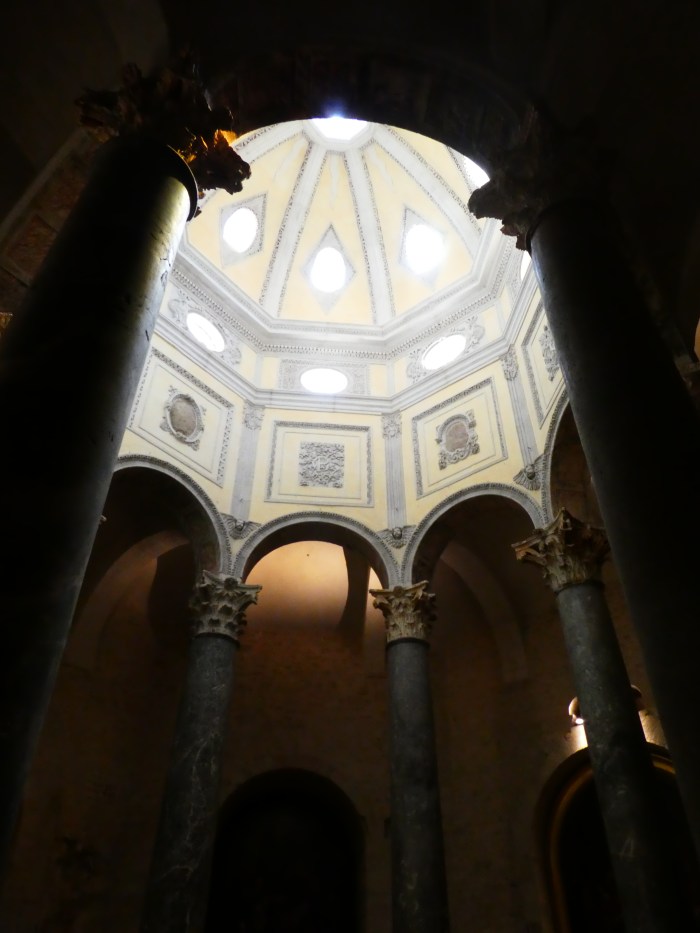
The Renaissance cupola in the baptistry.
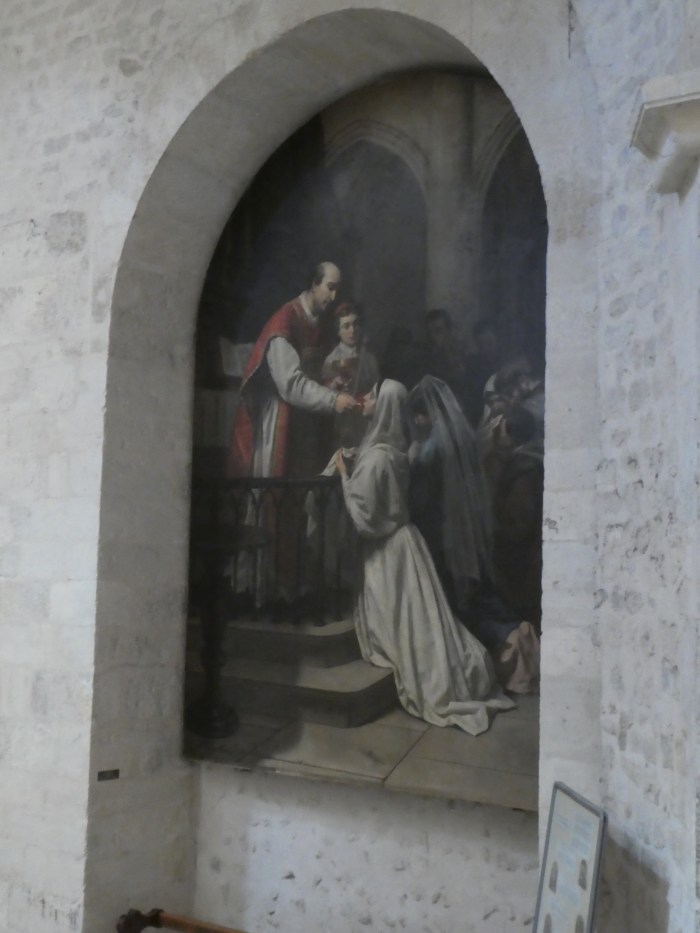
Beautiful huge painting on the walls of the baptistry.
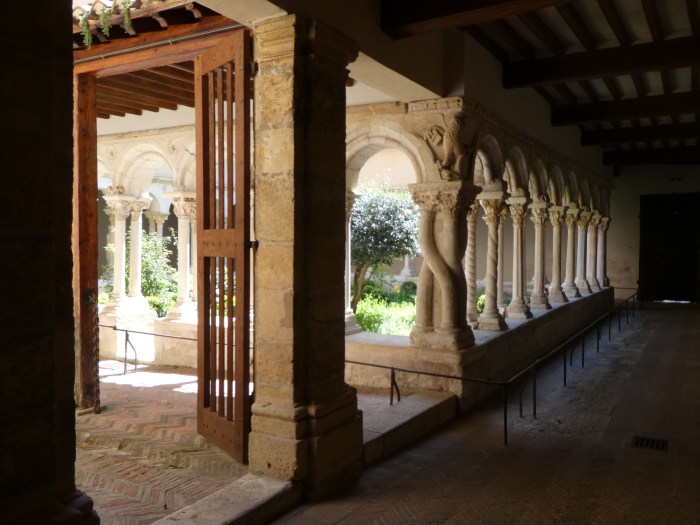
We got only a peak at the cloisters through a locked gate.
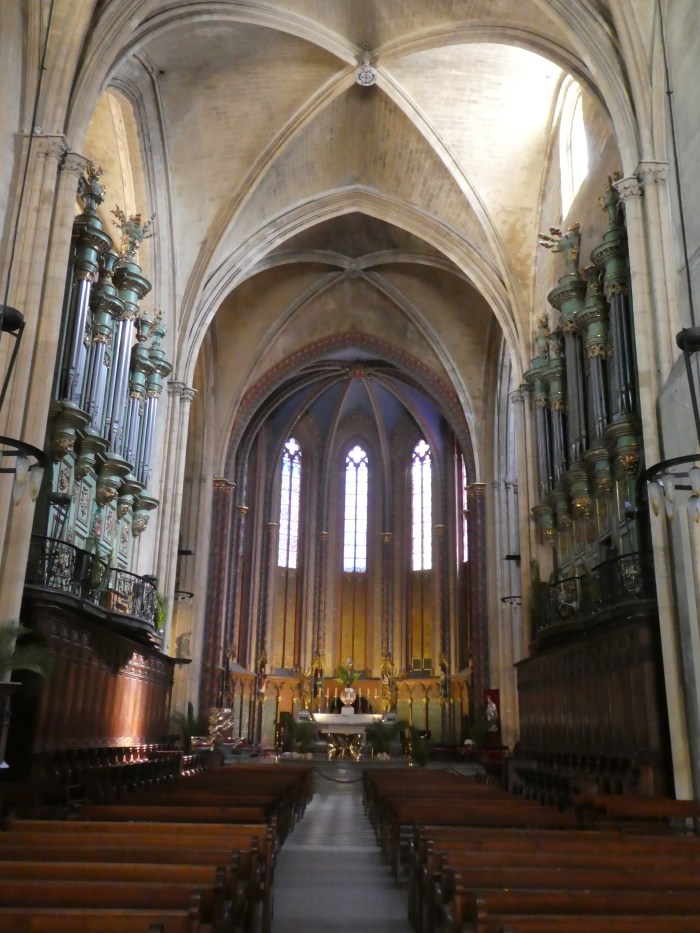
About half way down the nave of the cathedral. Notice the green organ pipes on either side.
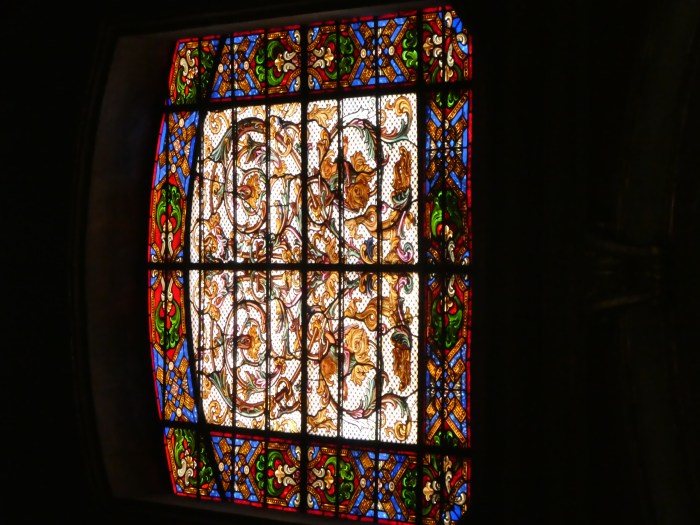
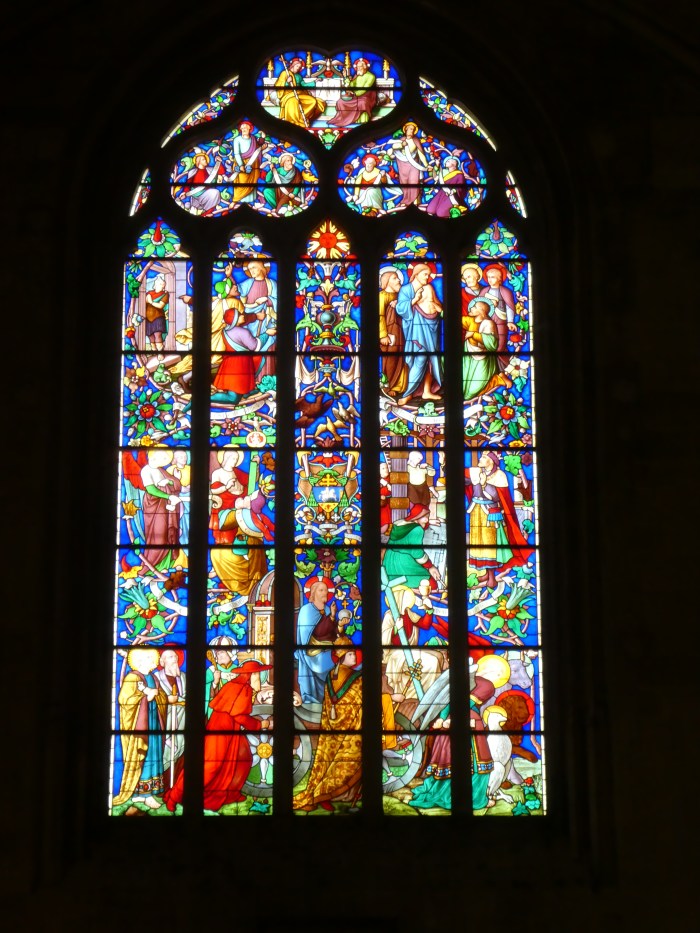
Beautiful irregularly-shaped stained glass window.
You know how I love those stained glass windows!

Exploring the Camargue

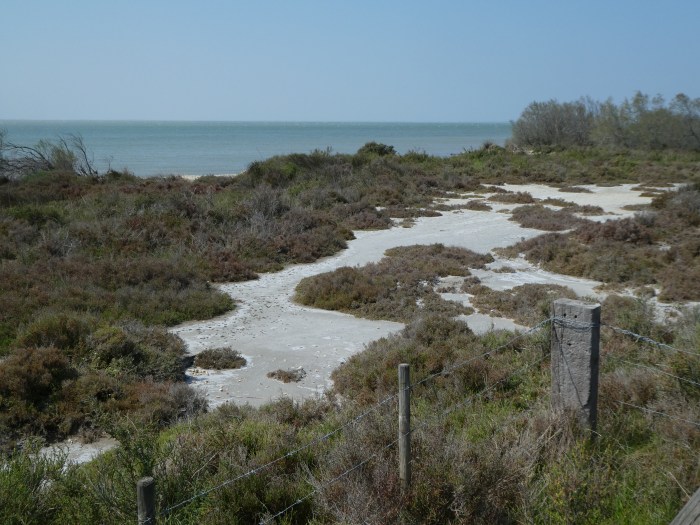
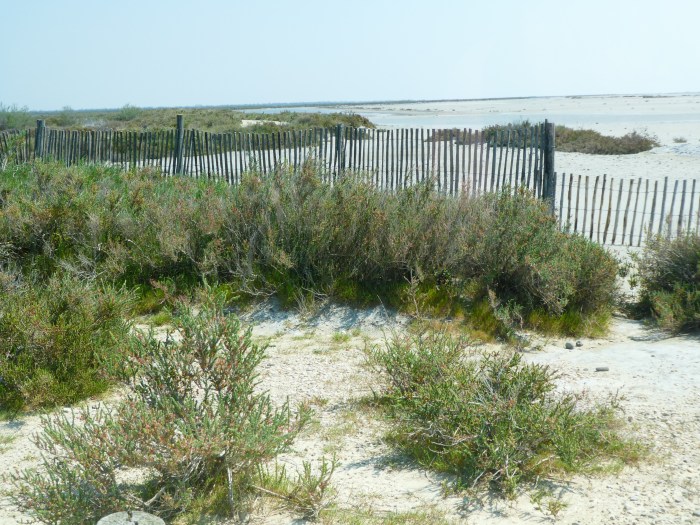
The Camargue National Nature Reserve occupies 32,500 acres of ponds, lagoons and salt plains in the vast delta of the Rhone River, one of Europe’s most important wetlands. This marshy area exists where the Rhone splits into two branches, just before it flows into the Mediterranean. The entire Camargue area is approximately 360 square miles. The Camargue National Nature Reserve is a protected wild area where, among others, pink flamingos, wild bulls and the famous white horses wander freely through lagoons and tall grasses. It’s also home to salt and rice production. While there are a few gravel roads and some structured bicycle and horse riding trails, there are few walking trails – the area is truly designed to protect the environment and it inhabitants from, among other things, humans. The area is fenced along the roads so views are only what you can see from the narrow gravel roads. Tall, tall grasses line the road and the area has an other-worldly feel to it. Our goal was to see the pink flamingos, wild bulls and white Camargue horses. We knew we weren’t likely to get to see the white horses in the water because cars are not allowed to go to most of the area where they do that, but we hoped we would be able to at least spot some in the tall grasses. We first stopped at the Camargue Museum to pick up a local map and visit their folk museum which described the natural features and cultural traditions of the Camargue.

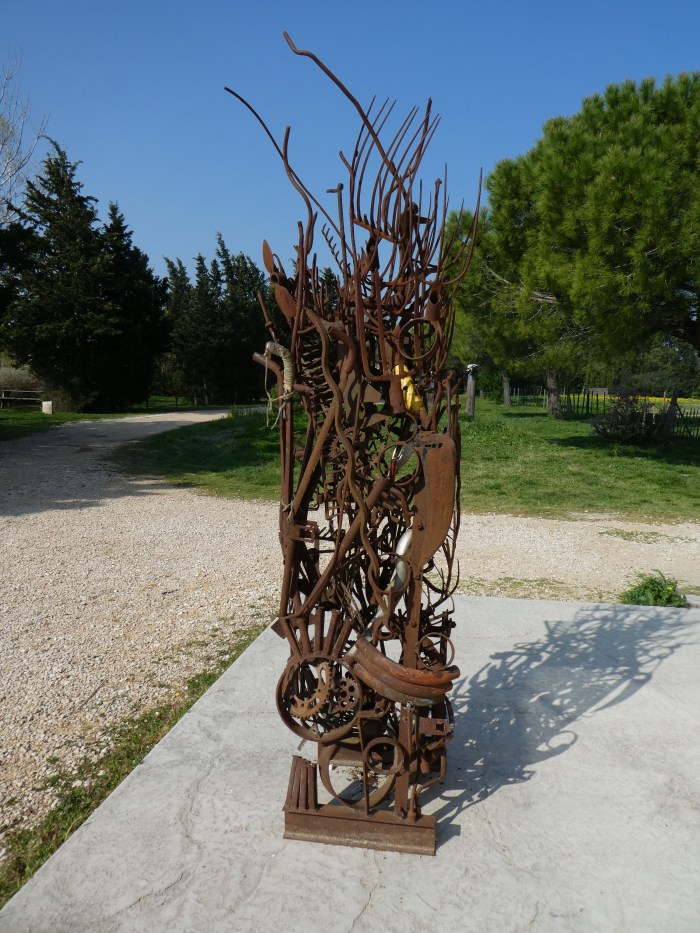
Outside of the museum was this sculpture of a collection of rusted tools.
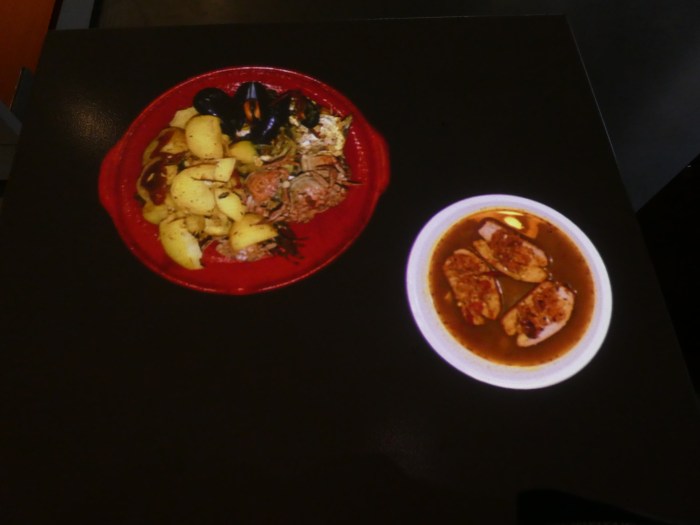
This is another one of those cases where fascination with technology wins out over subject matter. These are typical dishes eaten in the area in historical times. But there aren’t actually any plates of food on this black acrylic table. It’s done with projection. The only hint was that these dishes would disapper and others would appear.
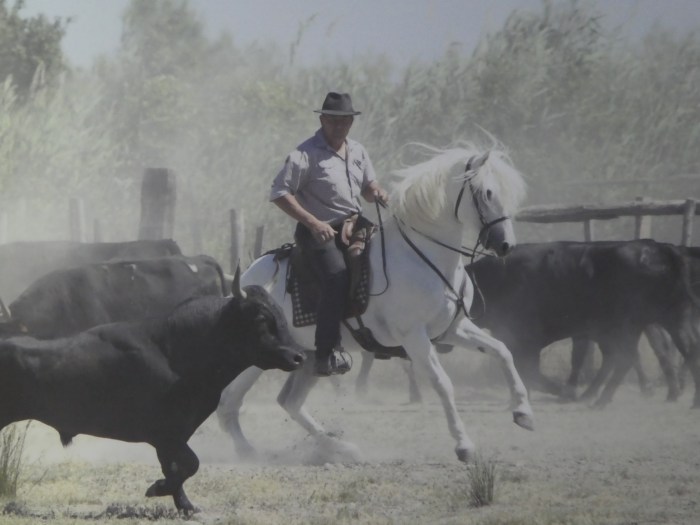
It was really a great museum. They had very large photographs like this one of a bull being herded by a gardian (cowboy).
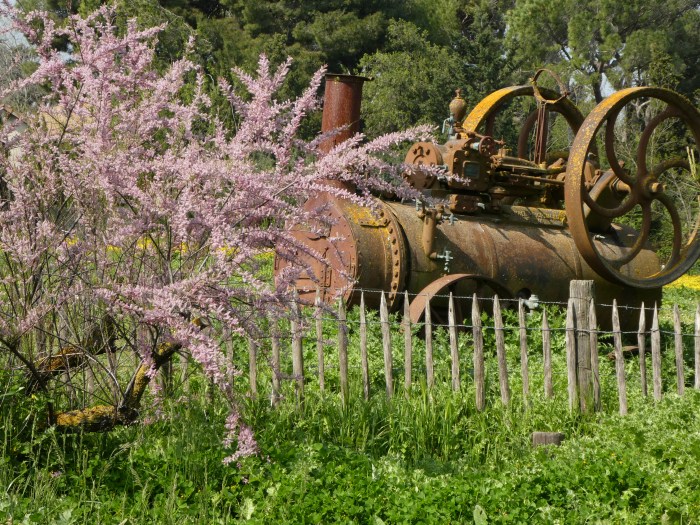
On the way out of the museum, we passed by this smoke tree (at least that’s the name I’ve always known them by) with this antique piece of equipment.
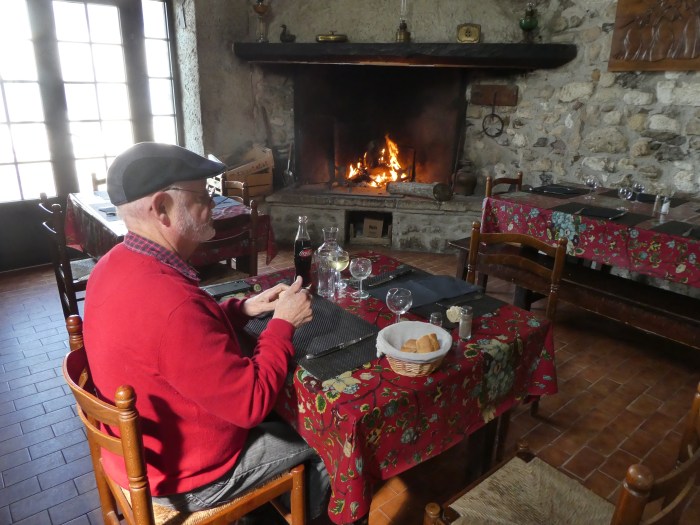
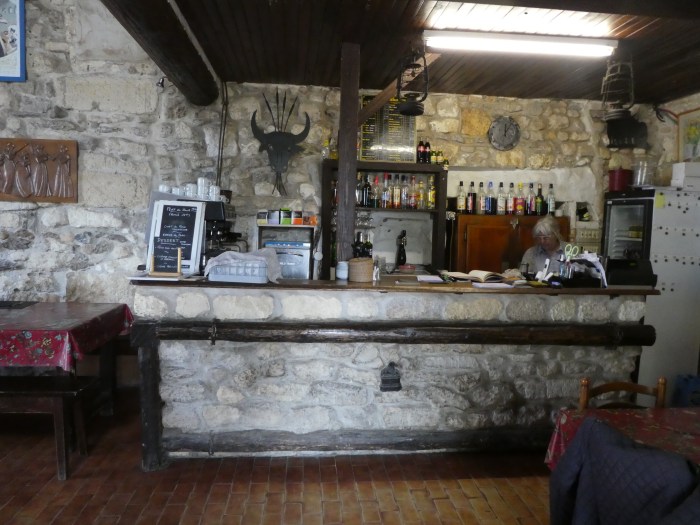
We found a little place to stop for lunch before we got into the serious part of the park. It was a converted old chapel and it had this fabulous fireplace in the corner.
Our waitress (the only waitress) spoke not one word of English, which is unusual, so it was an interesting lunch. Eventually other people came in too. One family came in with 2 small children who sang Itsy Bitsy Spider in French. It was adorable.
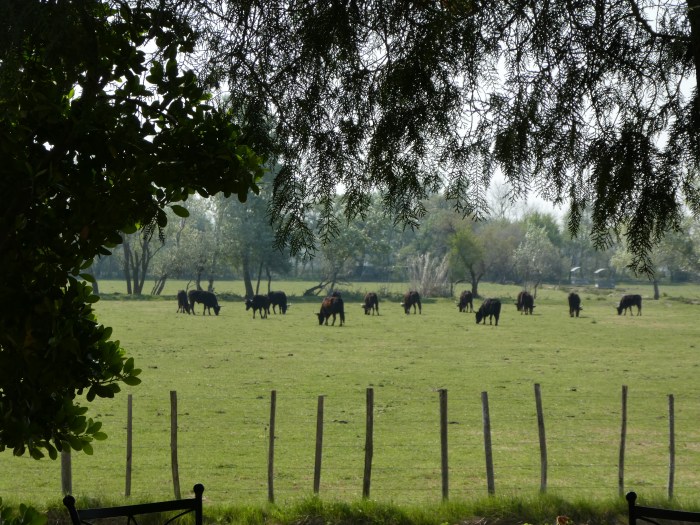
So we had our list of the 3 things we wanted to see: flamingos. bulls, and the white horses. The first one we checked off was the bulls.
Then it got more and more marshy.
And more sandy, lagoon areas. It was beautiful.
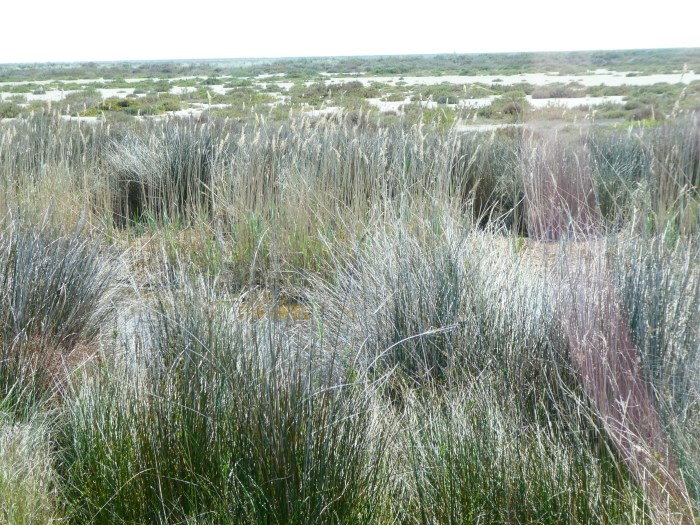
And lots of marsh grasses.
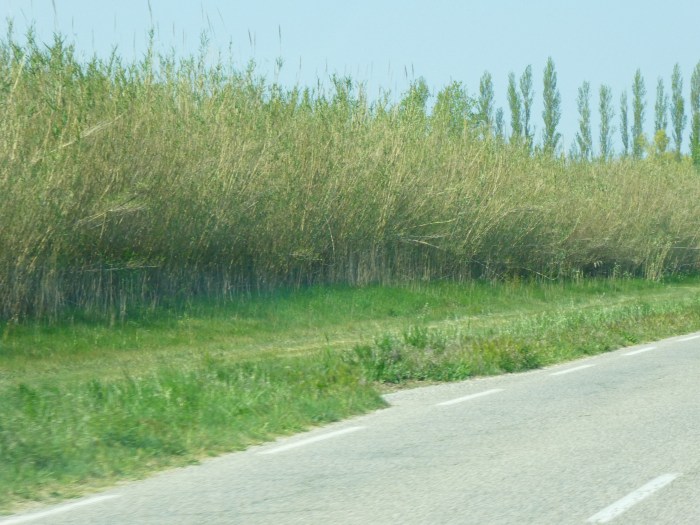
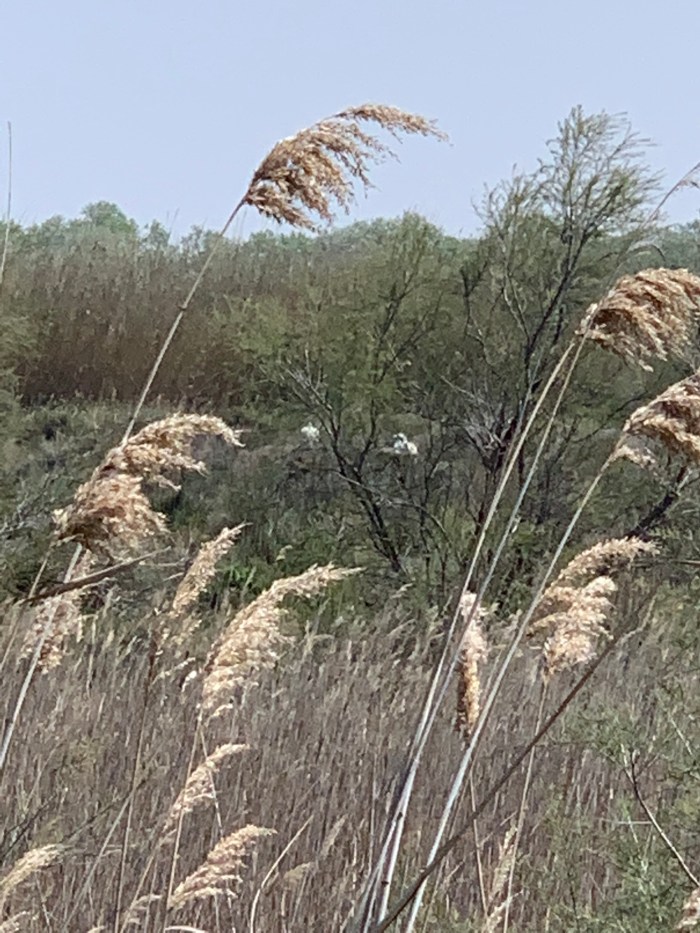
Lots of thick tall grasses along the road.
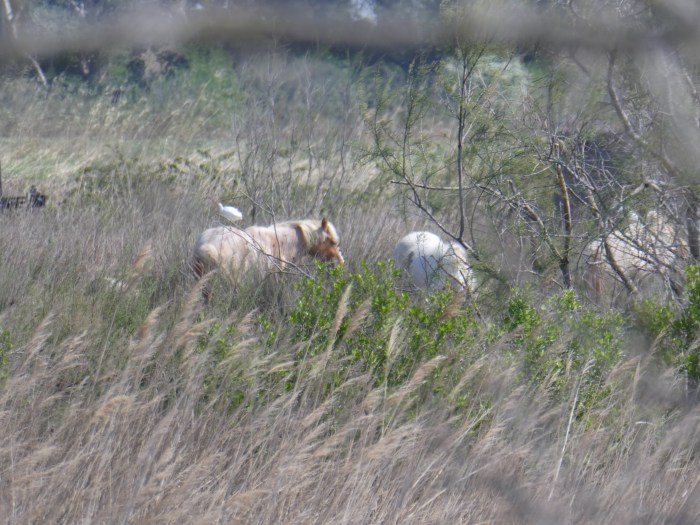
And there were lots and lots of these tall graceful grasses. Wait a minute . . . are those the white horses?
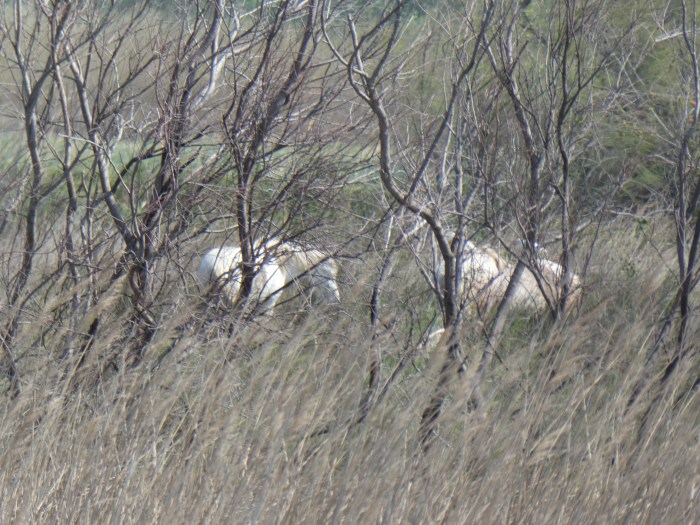
Yes! They’re too far away and too obscured with shrubs and grasses to be good photos. They’re just proof that we saw the elusive equines.
More proof.
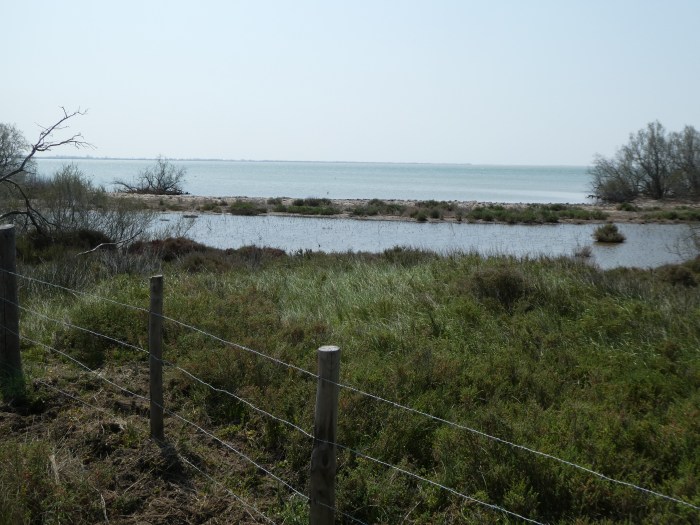
More of the terrain. The big body of water in the background is one of the lagoons.
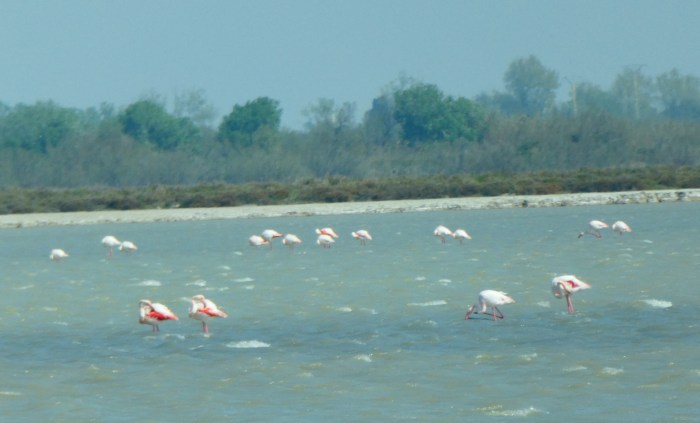
And when we came to one of the big lagoons, we saw the flamingos. Well, not ALL of the flamingos. Apparently 13,000 pairs of flamingos come through annually and produce 5,000 offspring. Don’t know if the rest of them have gone already or if they’re in another lagoon. Was interesting that there appear to be white caps on the water yet the water is so shallow they are all able to stand on the bottom. May be because of the Mistral (see below). Again not a good photo because they’re so far away, just proof we saw them..
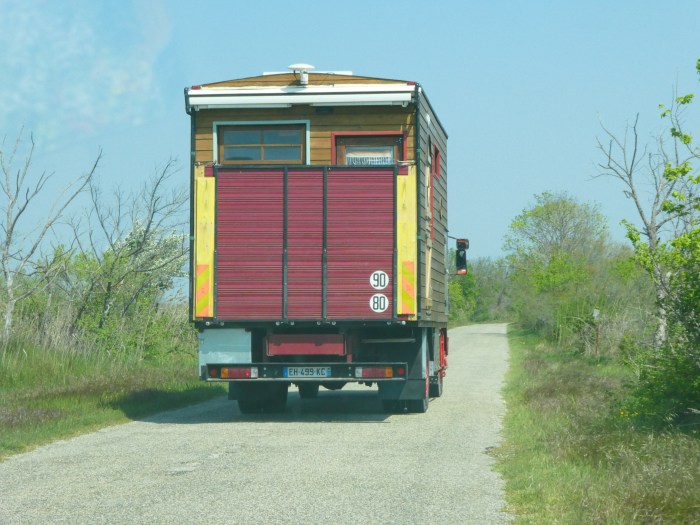
We know there are Gypsies living in the area and we came upon this hand-made, heavy duty, brightly painted caravan pulled by a serious cab. The first time we saw them, the home was parked and the brightly-dressed family was bustling about outside and later on we saw it on the road.

The Rhone River Valley and Camargue are subject to winds called the Mistral.
The Mistral is a strong, cold, northwesterly wind that blows from southern France. It can reach speeds of more than 56 mph, particularly in the Rhône Valley. Its average speed during the day can reach about 31 mph, calming noticeably at night. The mistral is usually accompanied by clear, fresh weather, and it plays an important role in creating the climate of Provence.

The Mistral joined us on our trip to the Camargue. We’re not used to dealing with winds like that and it’s exhausting. If you opened both car doors at the same time, it would create a wind tunnel that would completely clear out the front seat. Just getting out of the car was a challenge.

And here are a few photos from our trip back at the end of the day.

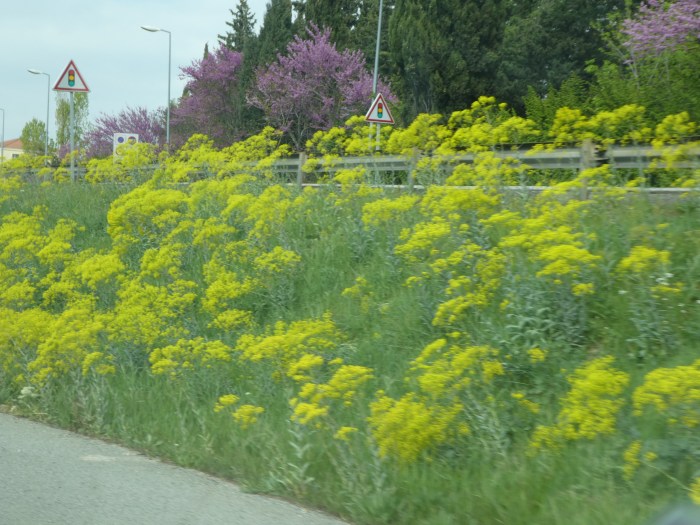
These yellow flowers grow in the median of the freeways and they’re so pretty. They may be mustard/canola, I’m not sure.
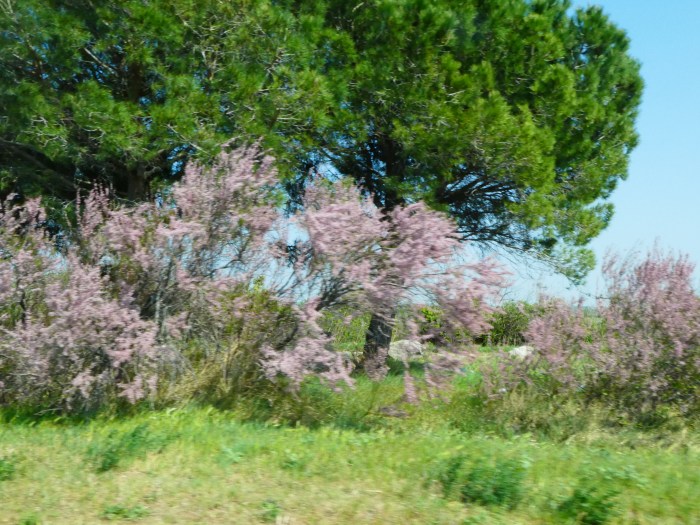
More of those “smoke” trees. They’re everywhere and so delicate and pretty.
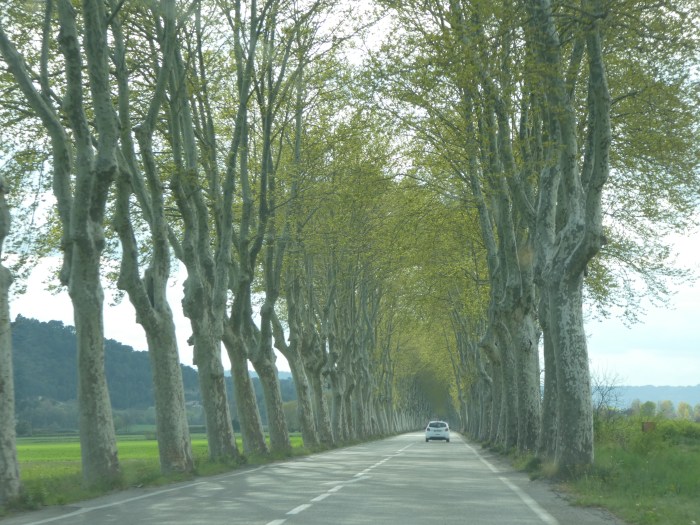
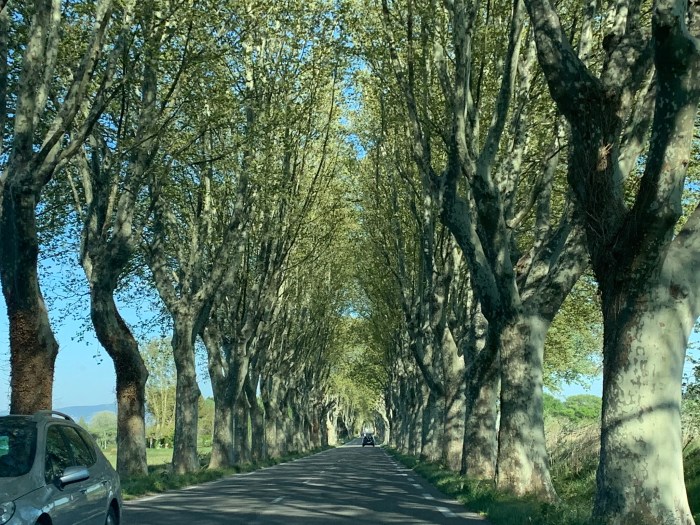
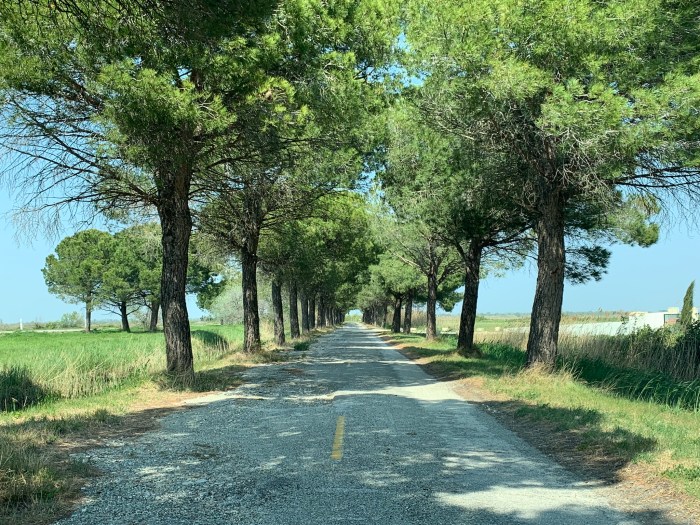
Love those roads lined by trees. I believe these are plane trees.
Another tree-lined road.

Around Aluring Avignon

(First a note to readers. If you’re a follower and you usually view the blog on your cell phone because that’s where you saw the email notice, you have 2 options. You can read the blog post in the email, or you can click on the name of the post in the email and it will take you to the blog. If you do it that 2nd way, the photos are bigger. Of course the very best way to view the blog is on a PC. Just sayin’.)

We loved Avignon. After our tour of the Palace of the Popes, we took a couple of walking tours ending at the bridge to nowhere, St. Benezet Bridge.

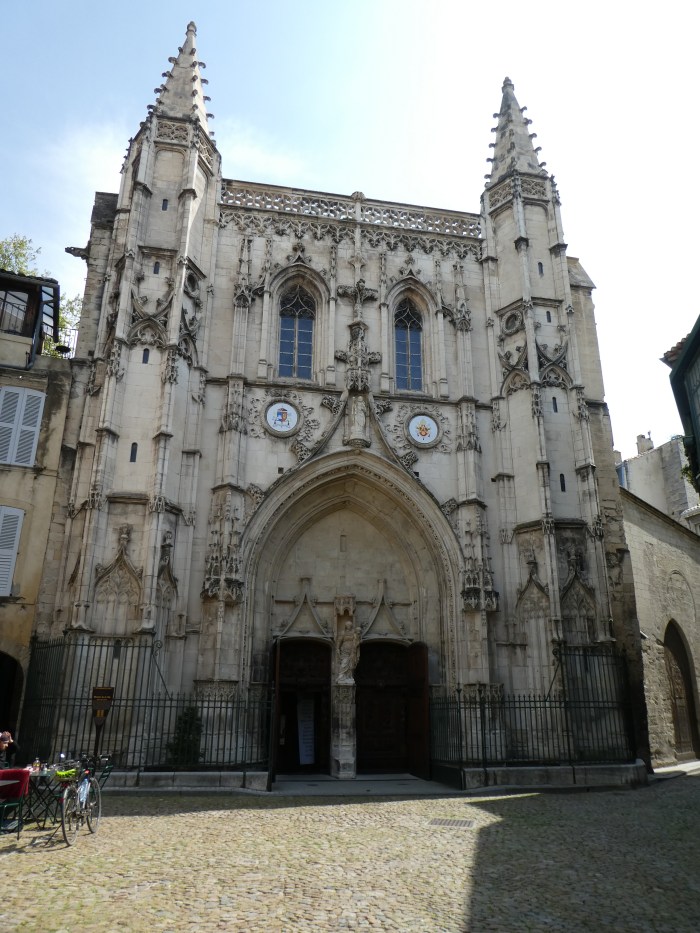
The Church of St. Pierre, built in the Gothic style, was built in 1358.
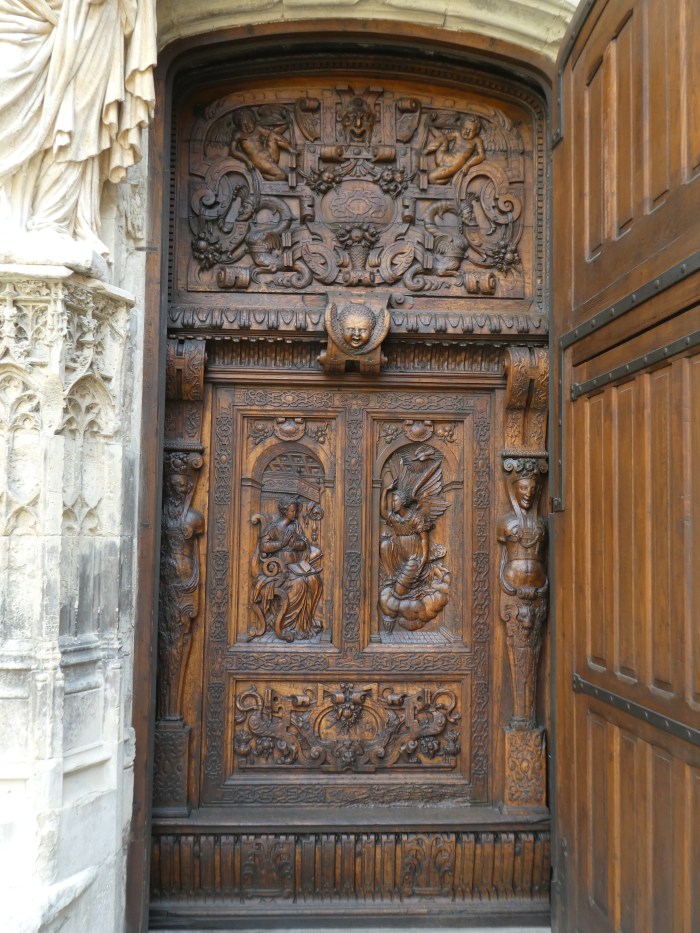
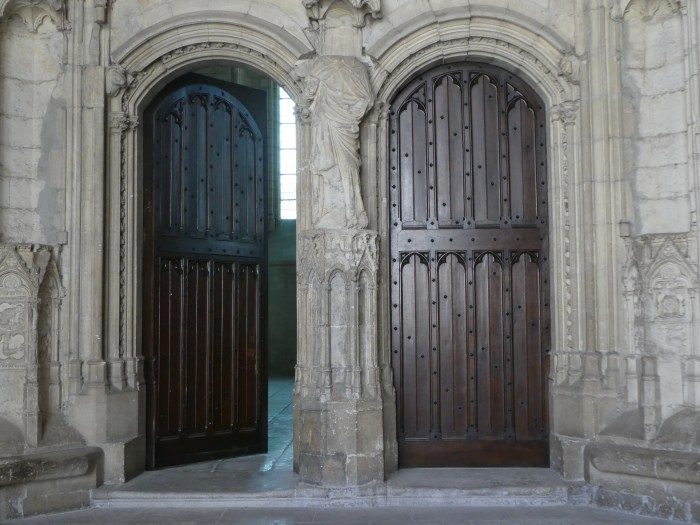
The original walnut doors were carved in 1551 and they were amazing.
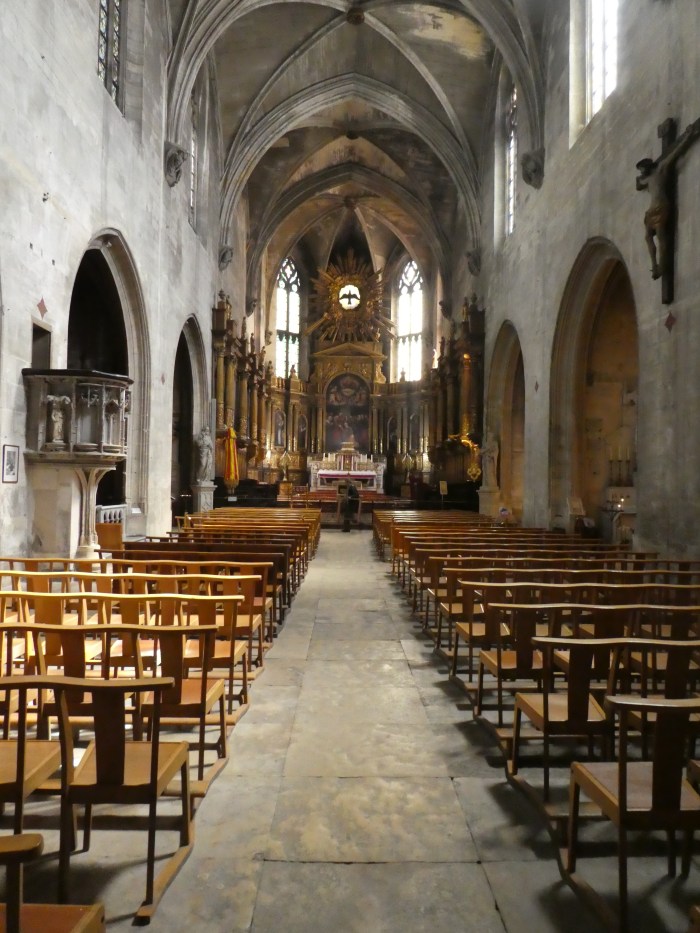
The inside of St. Pierre is beautiful especially given its age.
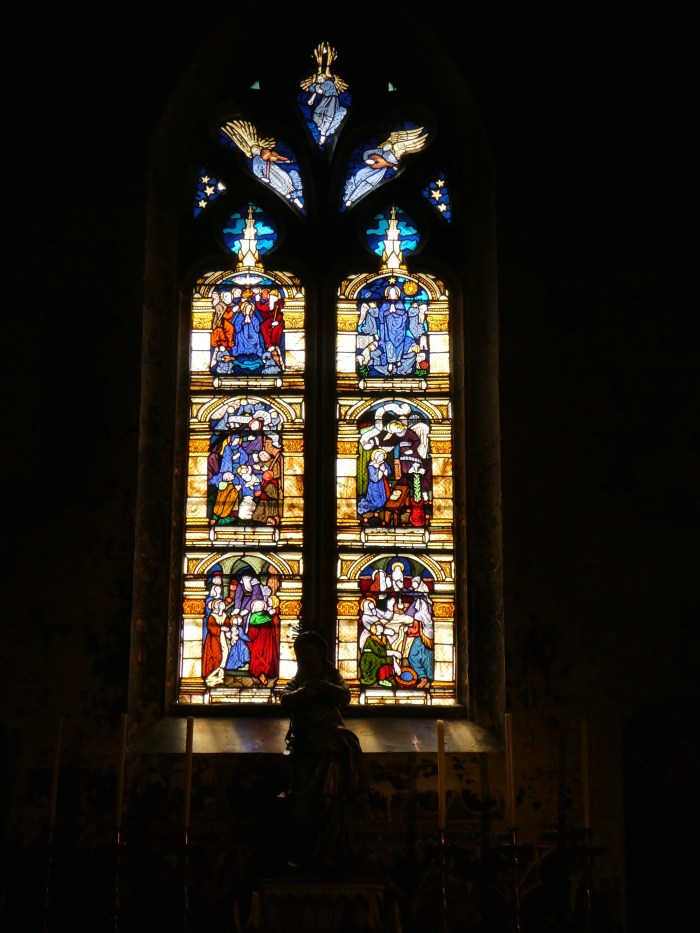
It didn’t have many stained glass windows, but the ones it did have were beautifully designed and very richly colored.
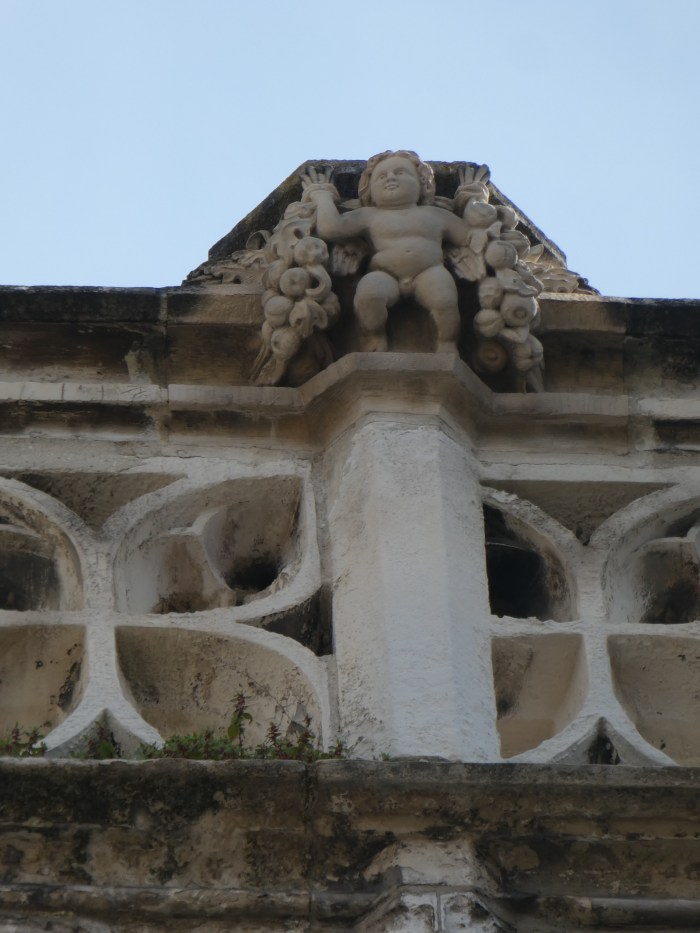
Amazingly, high on the top of the church’s front is a tiny statue of the pagan god Bacchus with oodles of grapes. No one seems to know why he’s there.
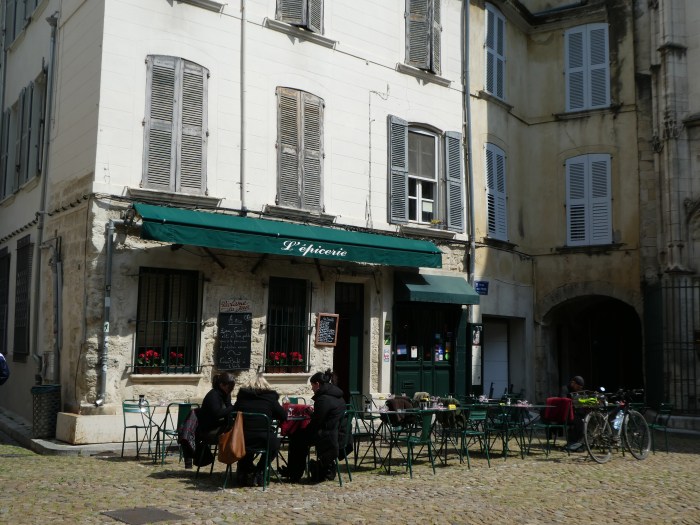
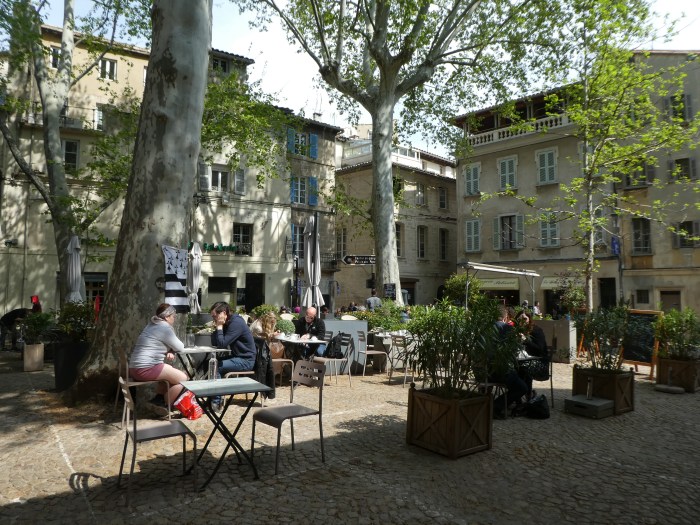
The church is on St. Pierre’s Square and it’s one of those typical, adorable French squares we all love.
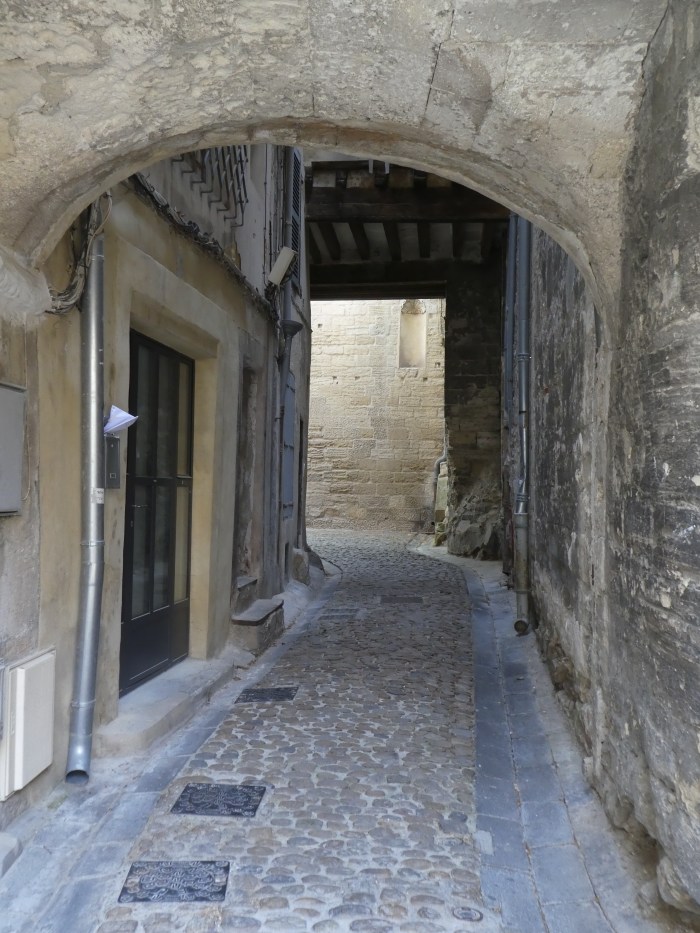
We went through this darling tunnel which used to be an alley until they decided to cover it..
And then we came to another square called Place des Chataignes. Don’t you just want to sit down with a good book and a glass of wine and while away the afternoon?
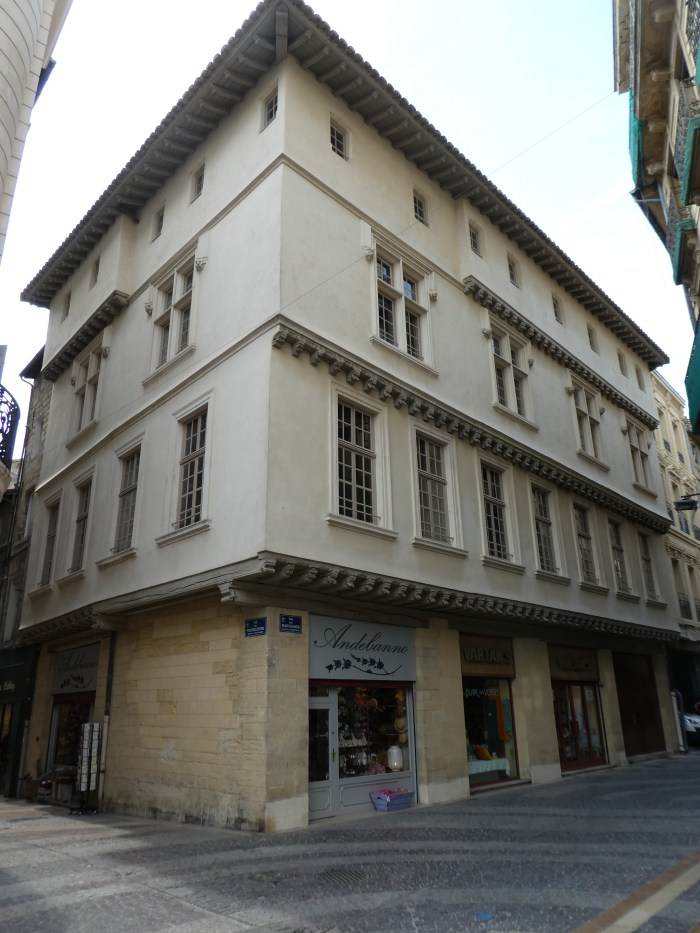
You can tell this is a 15th century building by its original beamed eaves. Notice how the building widens as it gets higher. In medieval times, taxes were based on ground-floor footage, Everything above was tax free.
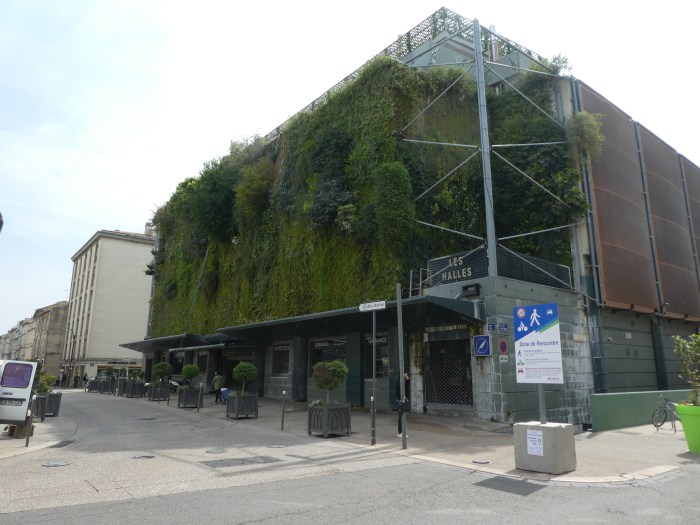
This fabulous green hydroponic wall adorns the front of the town’s market.
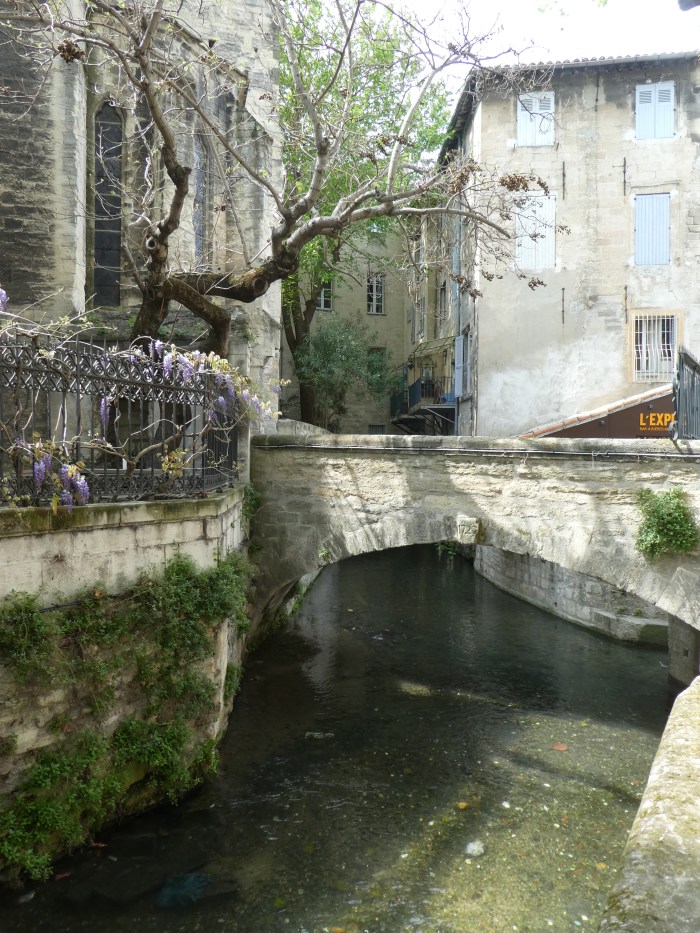
We loved this pedestrian street with it’s canals that were built off of a branch of the Sorgue River.
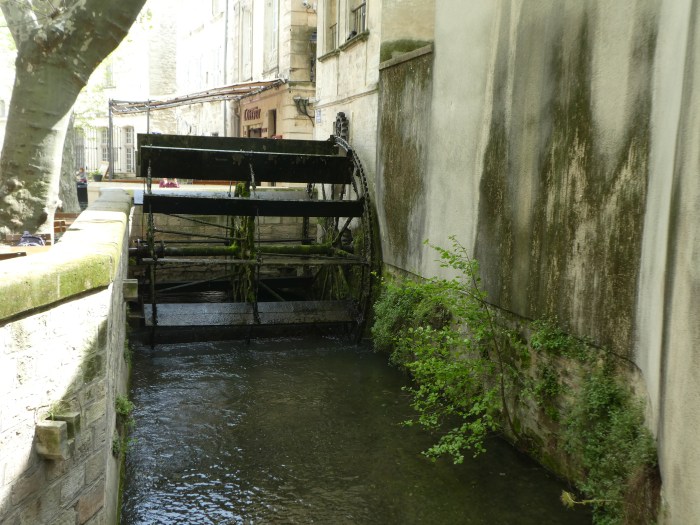
This old waterwheel was in the canal. It is one of 23 such waterwheels in the 1800’s that powered the town’s industries.
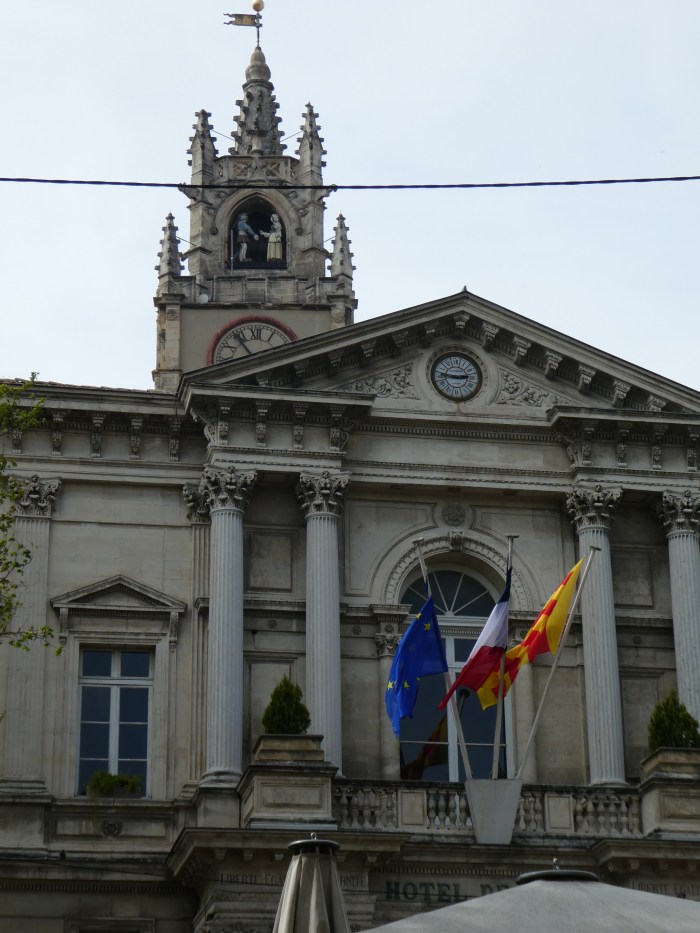
The huge, beautiful city hall had its own square right in front. And behind it is a charming clock tower
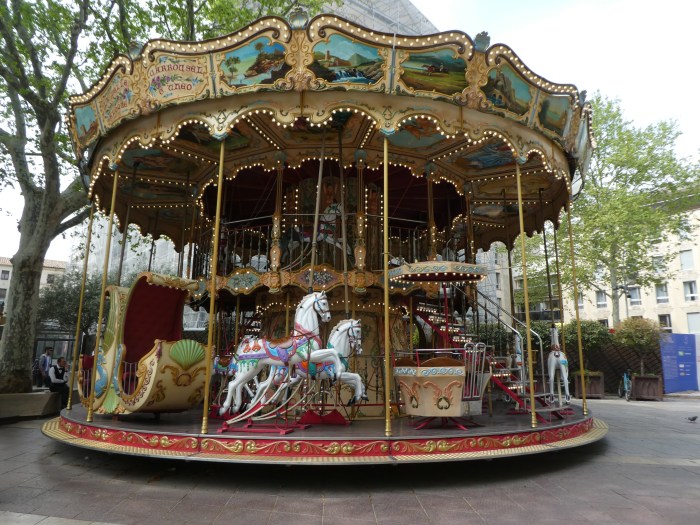
In the big square in front of city hall stood this beautiful old 2-tiered merry-go-round.
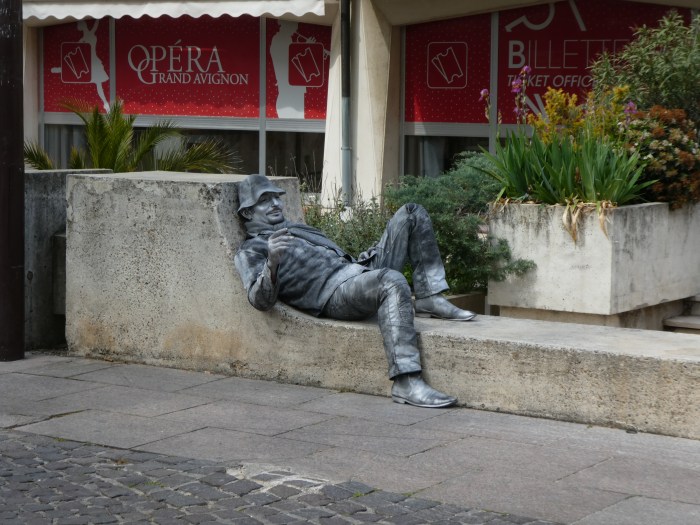
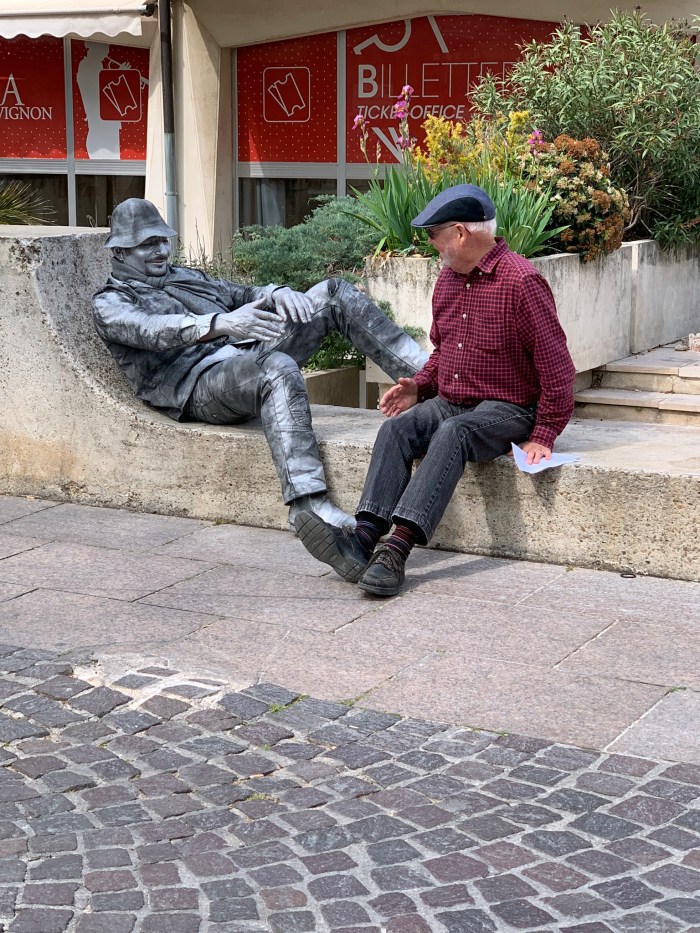
Nearby the merry-go-round we came across this really clever sculpture. Chuck said “Oh, let me sit next to him and you can take my picture.”
But when Chuck put his hand on the statue’s knee, he realized the knee wasn’t a statue and then the man smiled, leaned forward and shook Chuck’s hand. We were both stunned, and in hysterics – it was the best mime we’ve ever seen.
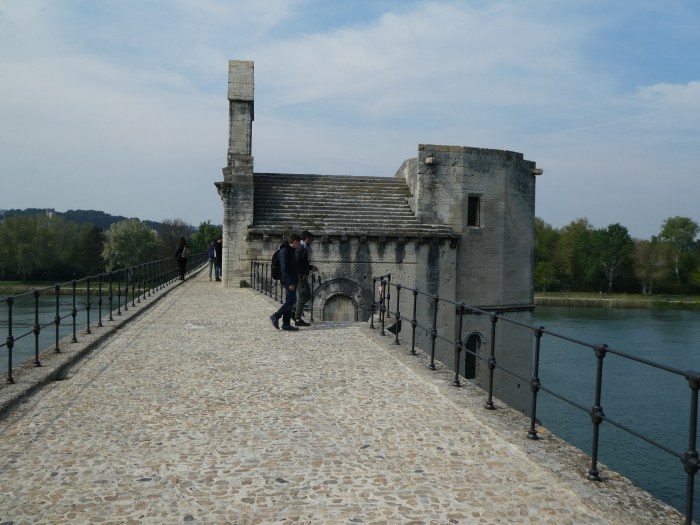
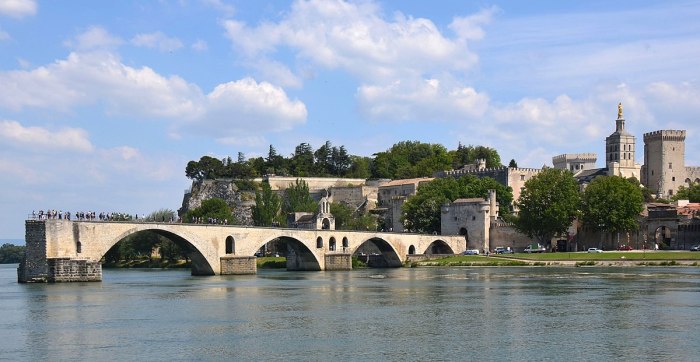
We walked out to the end of the St. Benezet Bridge. Built in the 1100’s, it was only one of 3 bridges that crossed the Rhone River in the middle ages. In 1668 it was knocked out by a disastrous icy flood and they decided not to rebuld it. For a century, Avignon had no bridge across the river. From this photo you can see the little chapel that was built on the bridge.
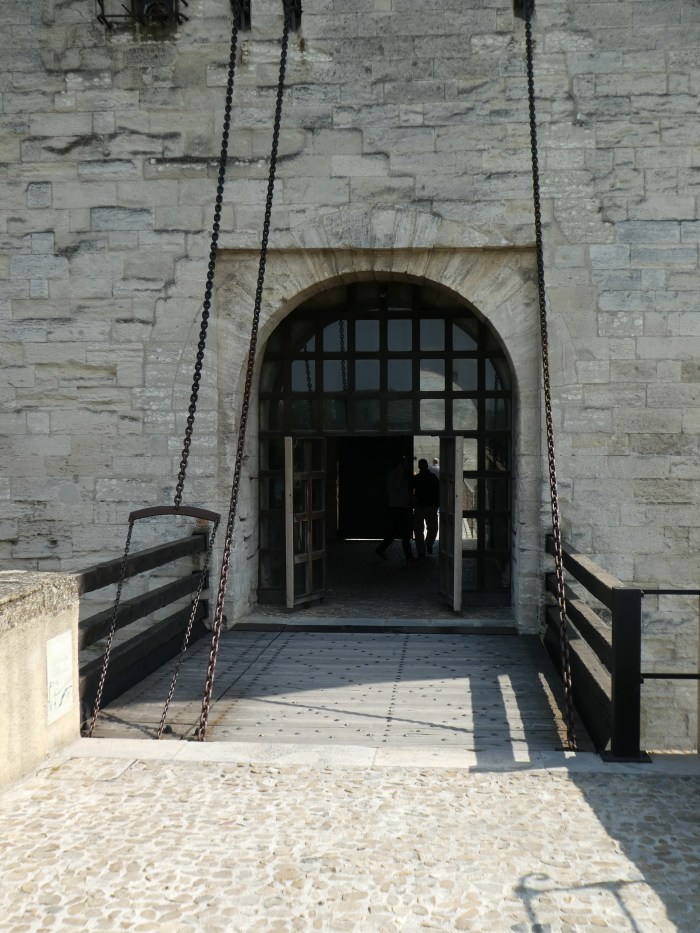
This is looking back at the end from the chapel. It even has a drawbridge to protect it from unwanted visitors. While only 4 arches survive today, the original bridge was 22 arches and 3,000 feet long. And because it extended from Vatican territory over to French territory, they both had a toll both on their end.
The St. Benezet Bridge is the Pont d’Avignon made famous by the 15th century children’s song, “Sur le Pont d’Avignon.” (Photo courtesy of Wikipedia.)

Avignon’s Palace of the Popes

Today we drove to Avignon, a city of about 100,000 people that lies 56 miles northwest of Aix. The main reason we went to Avignon was to see the Palace of the Popes. For nearly 100 years (1309-1403) Avignon was the capital of Christendom, home to seven popes. It started when a French pope was elected in 1309 and his holiness decided that dangerous Italy was no place for a pope. So he moved the whole operation to Avignon for a secure rule under a supportive French King and the popes resided there until 1403. Meanwhile Italians demanded a Roman pope, so from 1378 on there were twin popes – one in Rome and one in Avignon. We toured the Palace of the Popes and then we took a couple of Rick Steves’ walking tours.

The historian in the family liked the Palace of the Popes best while I much preferred the walking tours. This post will deal only with the Palace of the Popes and I’ll do a separate post on what we saw on the walking tours.

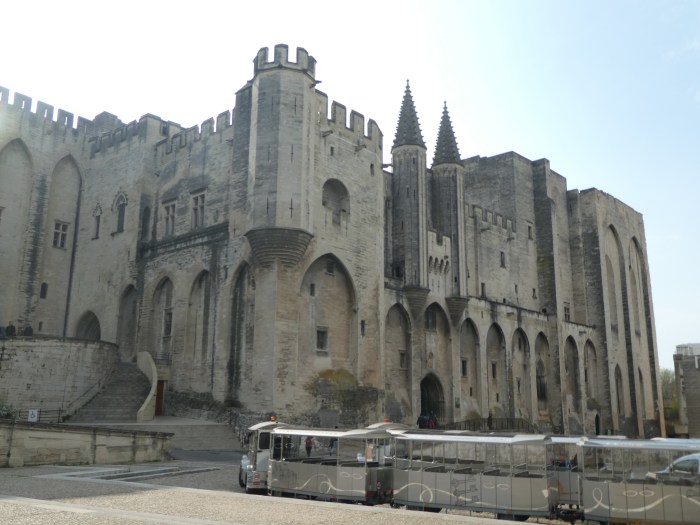
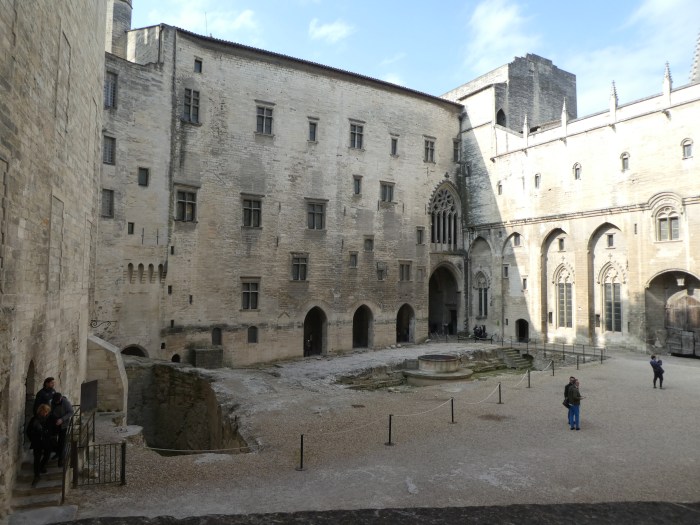
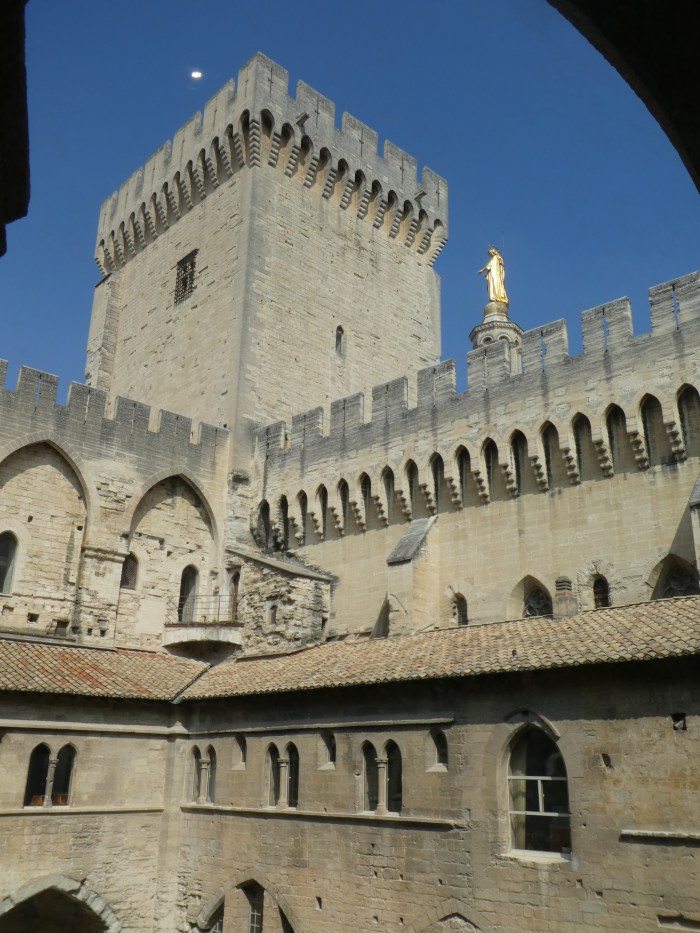
This is one side of the palace of the popes. It’s really massive. It was built in the 1300’s and looks it’s age.
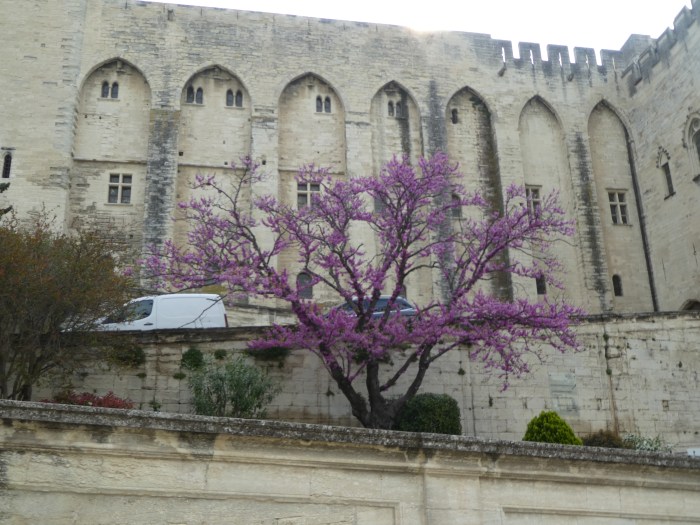
Here’s a side view of the palace. I love these purple trees that are blooming everywhere.
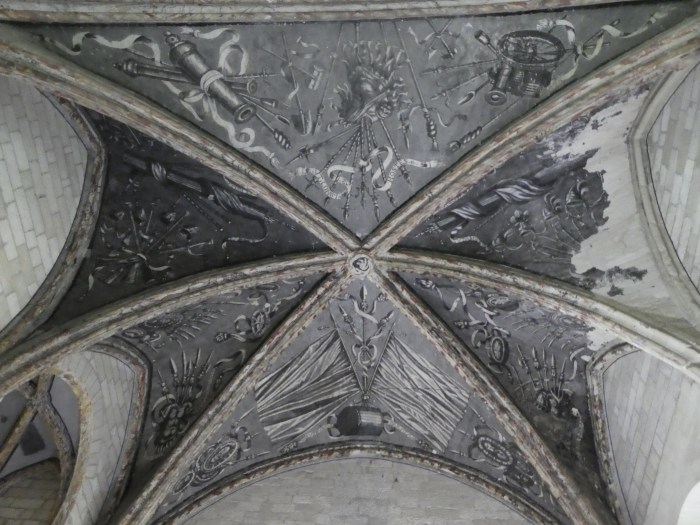
I don’t remember where this ceiling was in the palace but I was really struck by it’s detail.
This was the main inside courtyard, although there were also many smaller courtyards. Helps to show how big the place is.
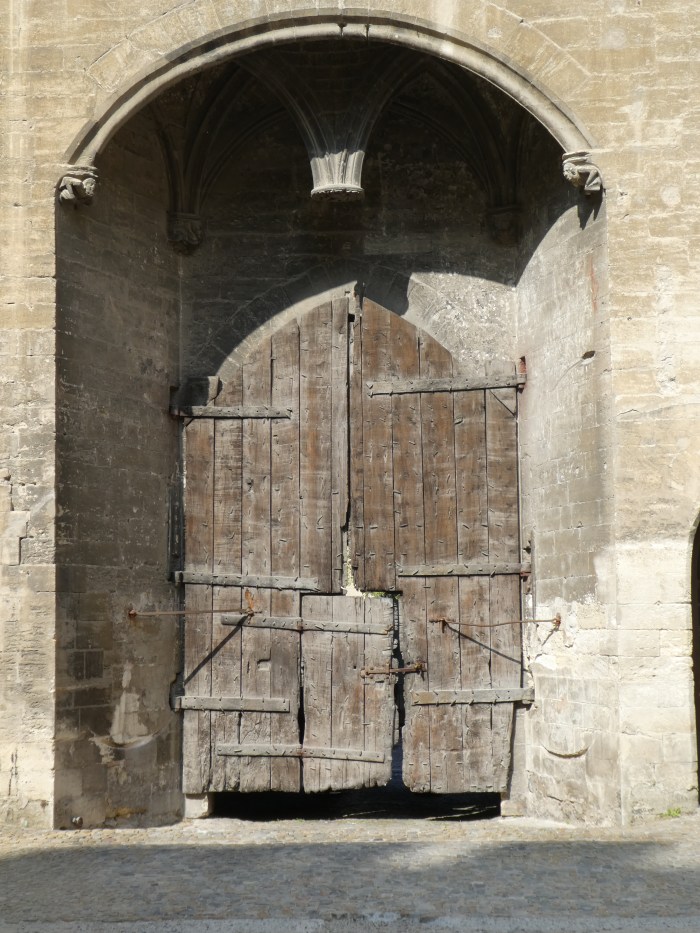
This interesting door was located in the inner courtyard.
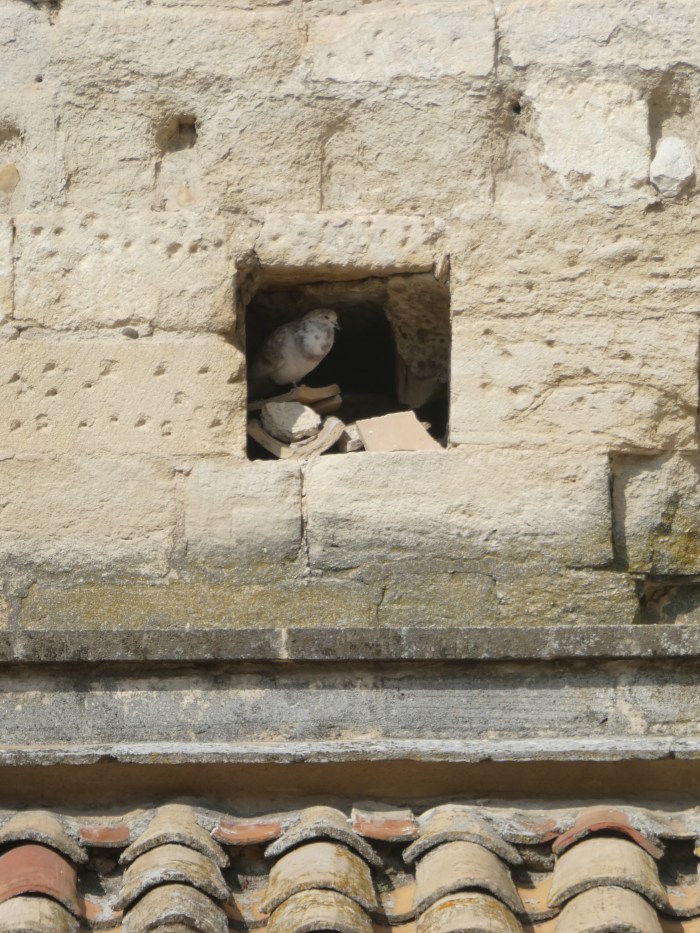
There were many holes in the outer walls in the courtyard and most of them were home to pigeons.
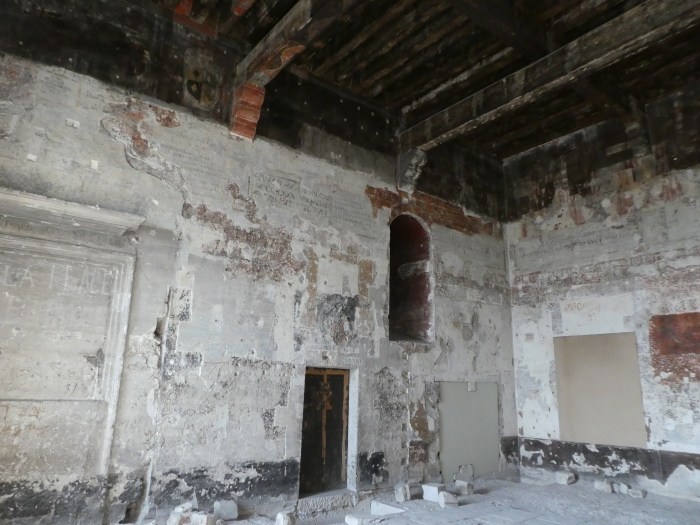
Parts of the palace are in very bad condition. Originally, when the building became vacant, they wanted to tear it down but couldn’t afford to. In the meantime, it has housed soldiers in the war and served many other purposes.
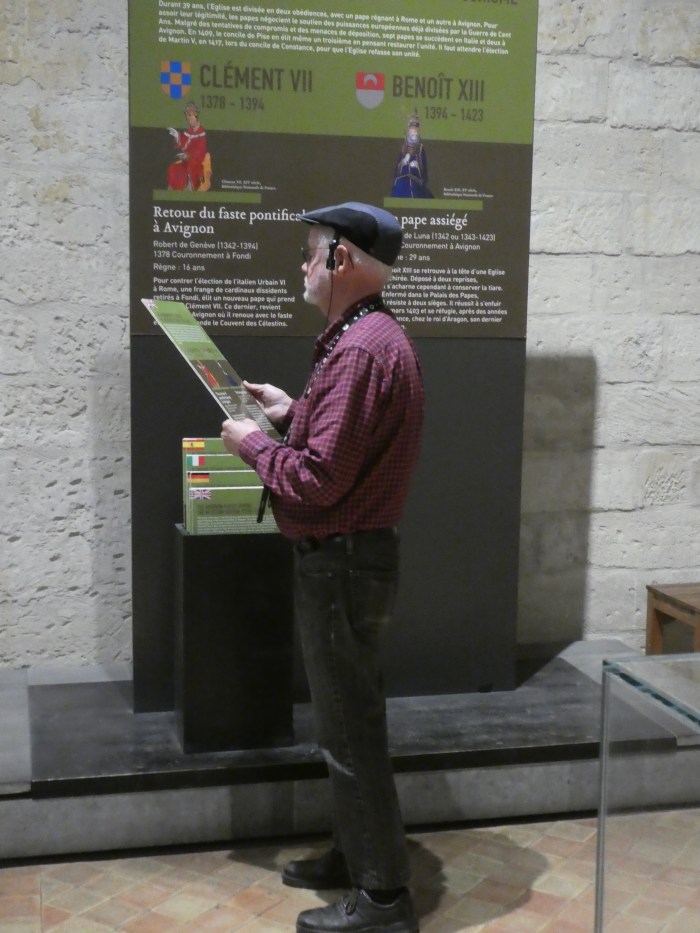
Big boards in French explained the room you were in and in a pocket in the front were smaller versions of the same board in other languages.
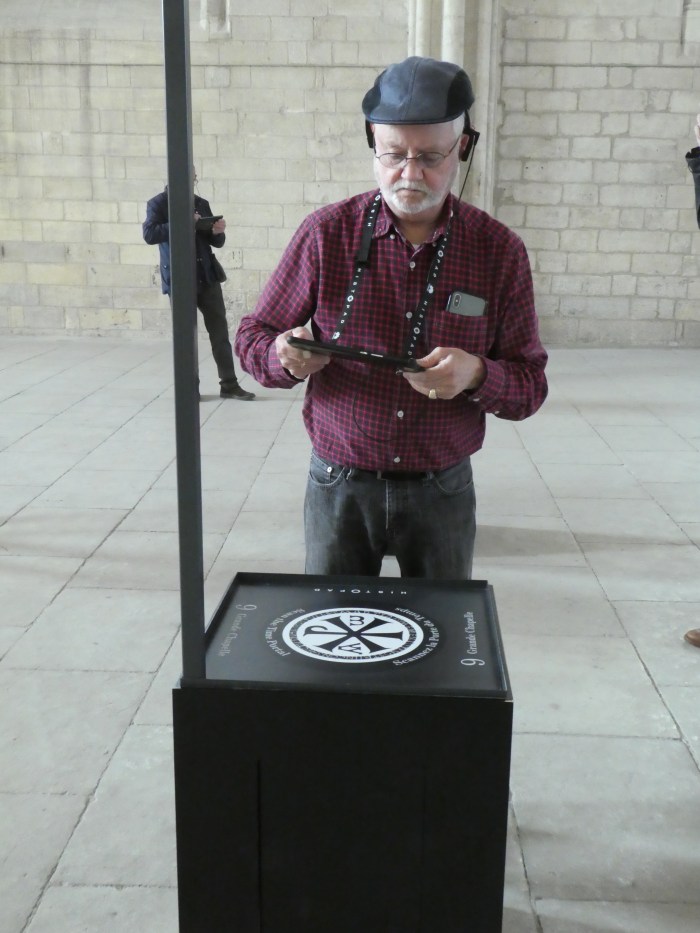
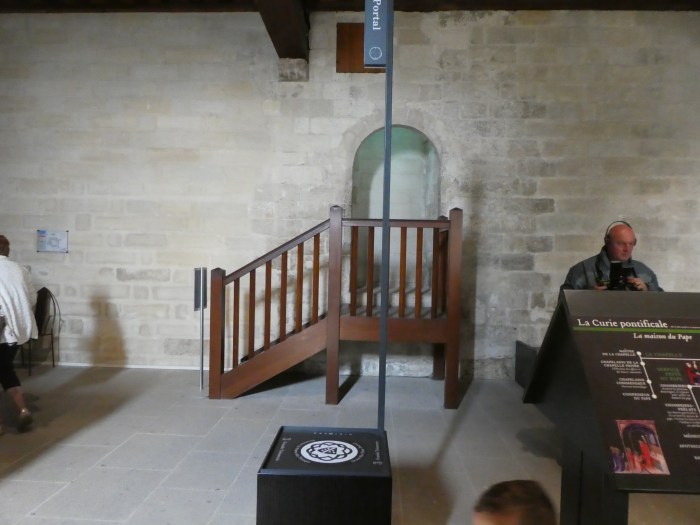
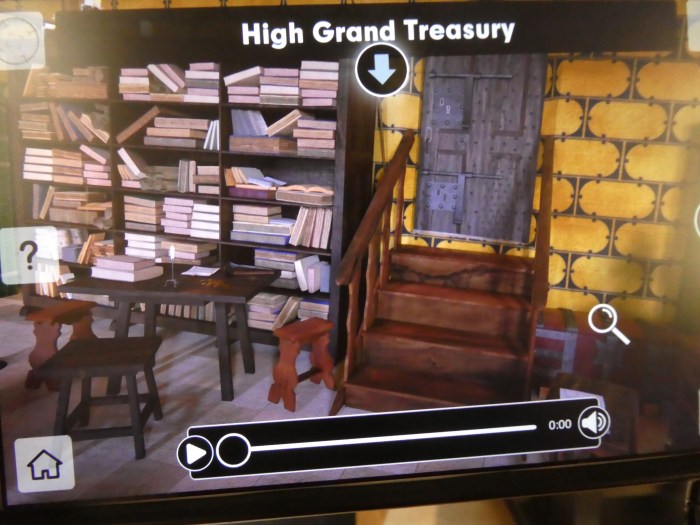
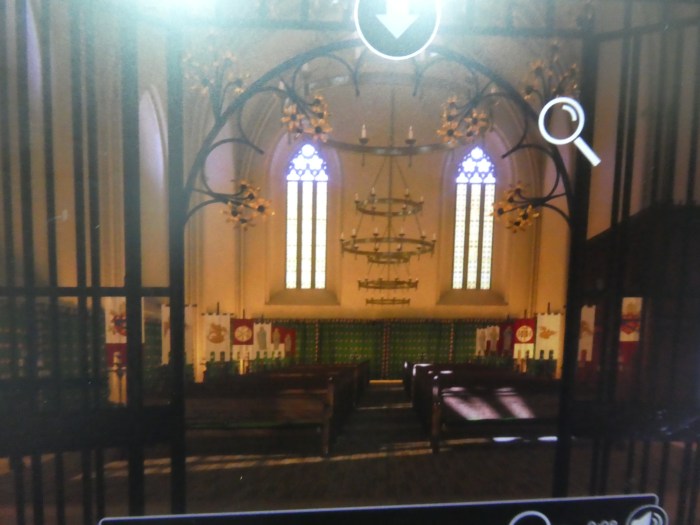
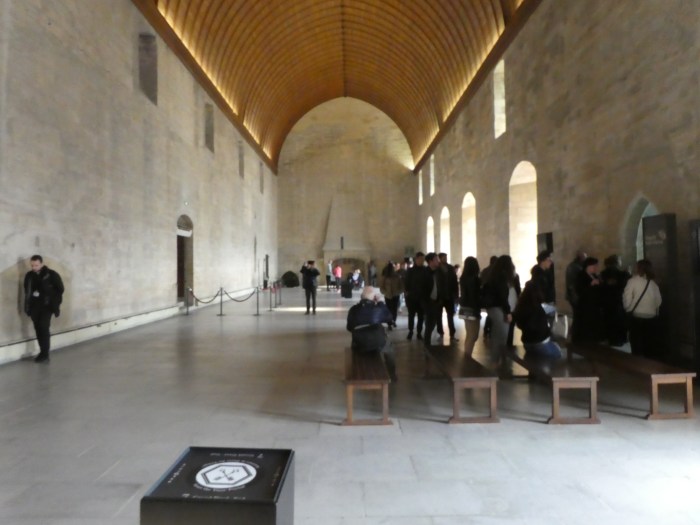
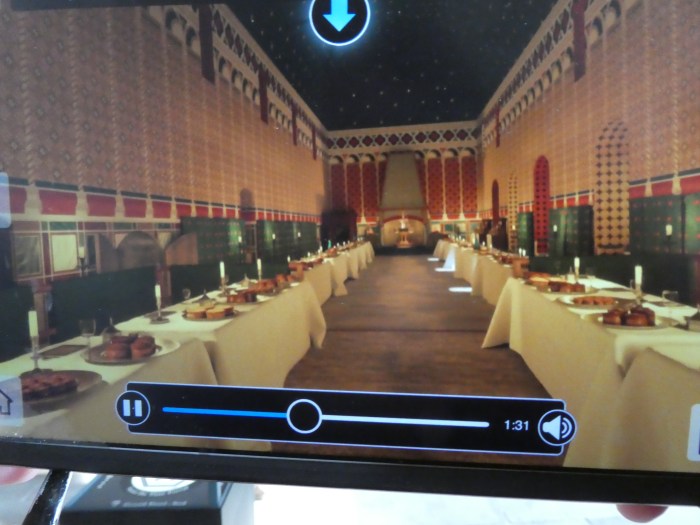
When we entered the palace, we were given computer tablets on long ribbons to wear around our necks. They also included headphones, of course. When you entered a room, you held your tablet over one of these circles that they called a teleporter to the past. Then the tablet showed you what this room looked like in the 1300’s. You could walk around the room, do a 360 and see the whole room and even zoom in if you wanted to. We’ve never seen technology like this used in a museum setting before. Below are a couple of photos where you’ll be able to see the 2 views for comparison.
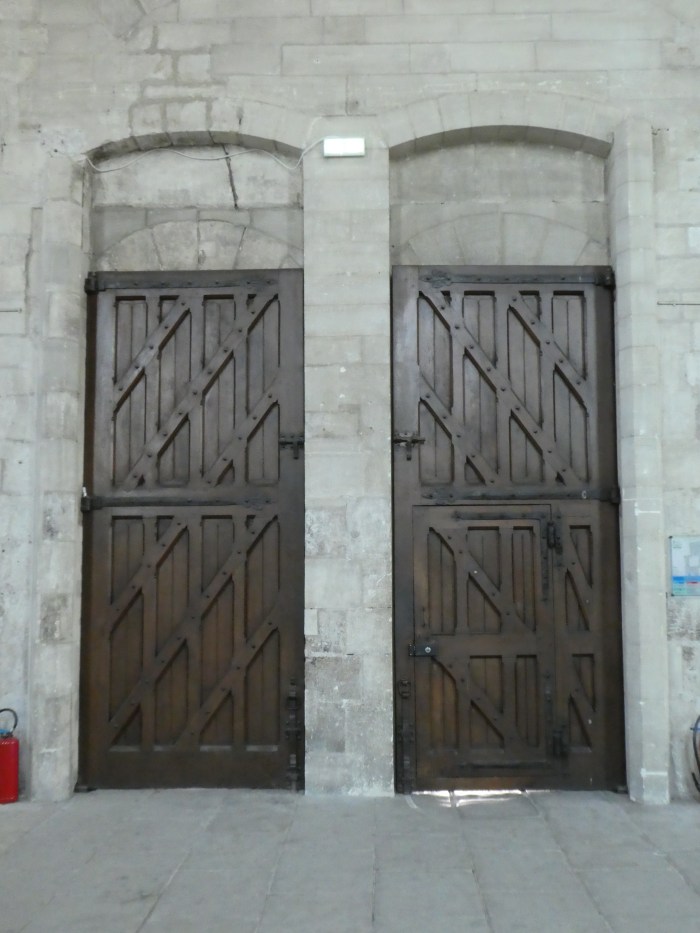
Another pair of great doors. The palace was filled with extraordinary doors.
More great doors.
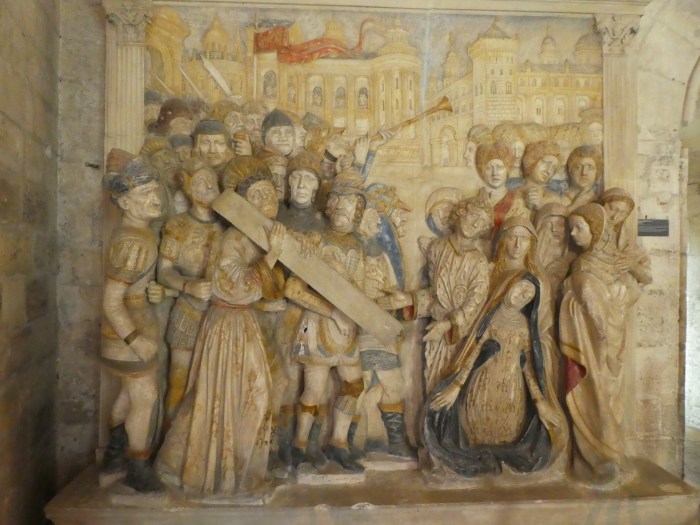
Amazing detail in this carving.
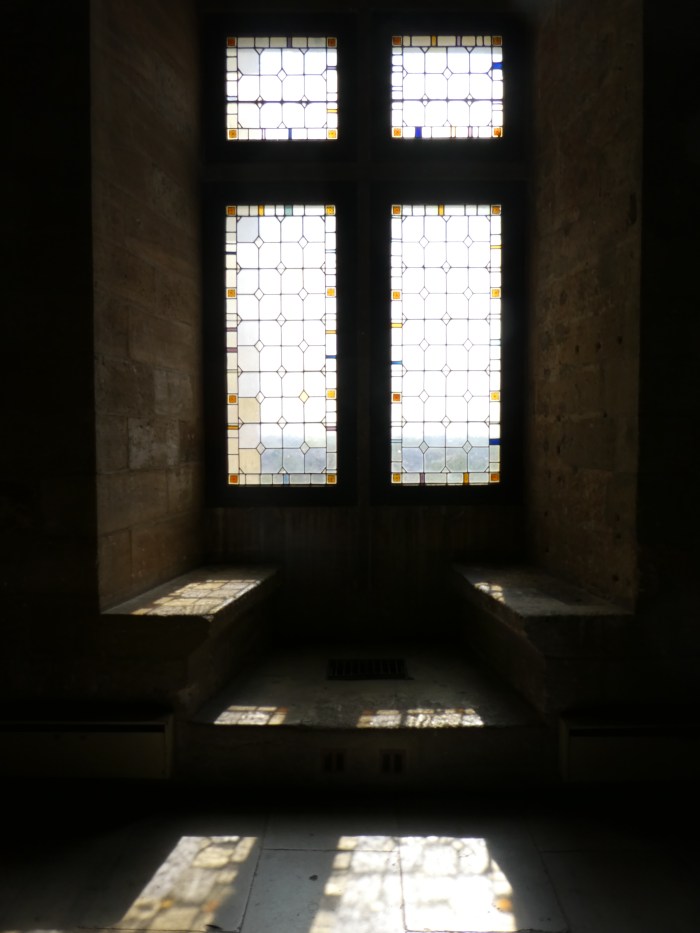
I liked the way the sunlight came in through the windows. And all of the windows had window seats like these.
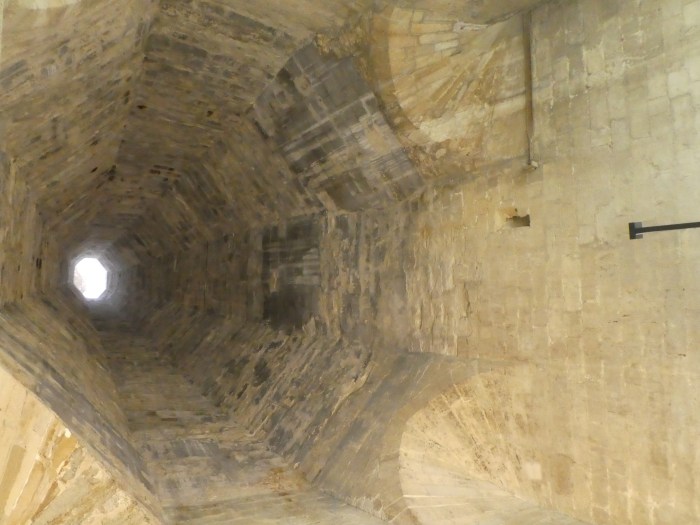
In the kitchen looking up through the chimney hole.
There were lots of openings in the palace which made for photogenic photographs.
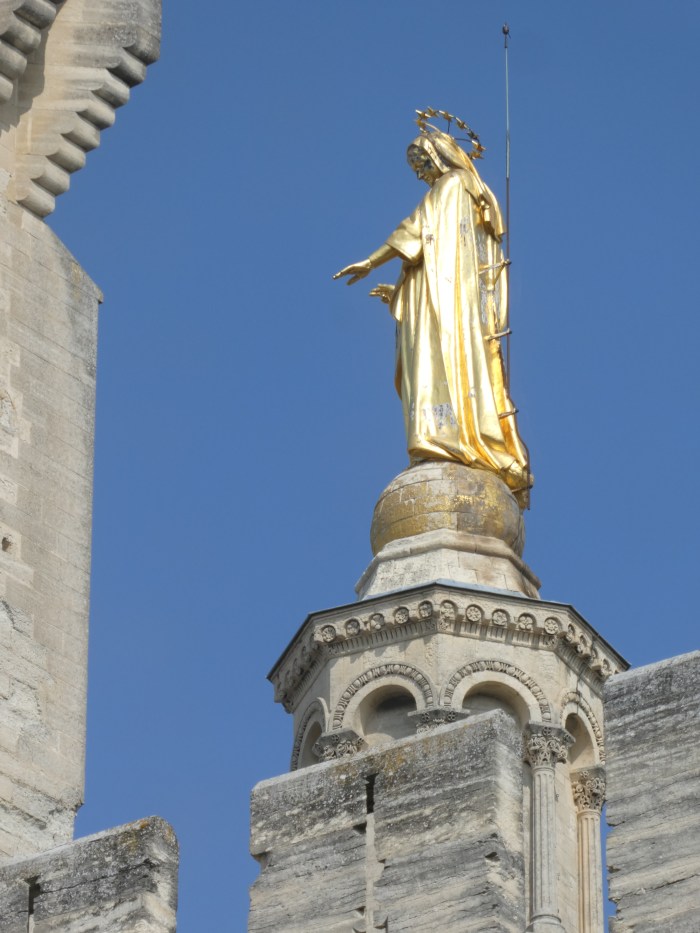
Here’s another photo through one of the openings, this one silhouetting the gilded statue at the top.
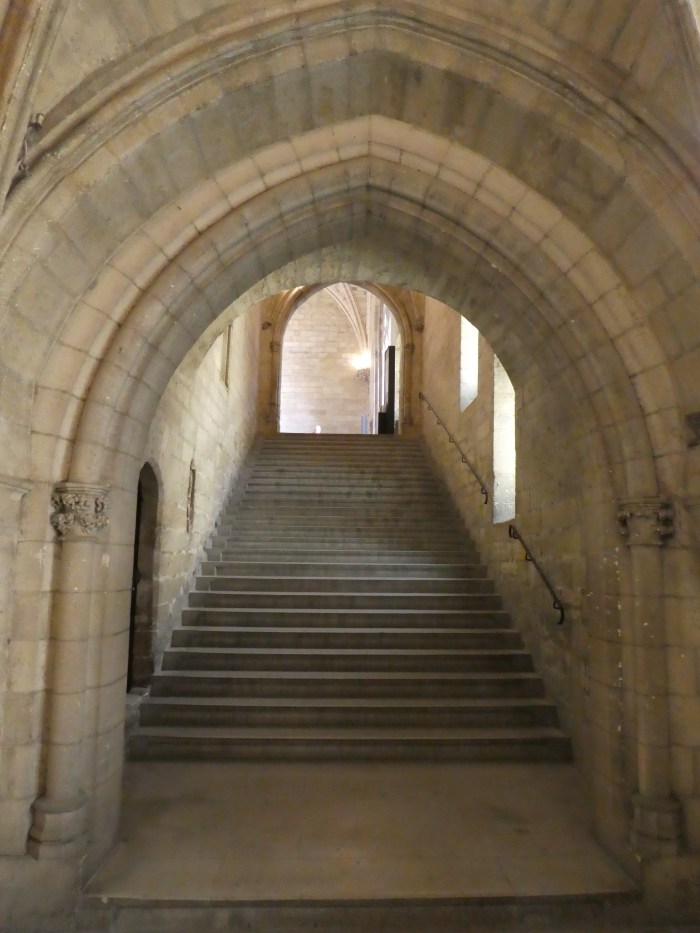
This beautiful staircase which went up and turned into another flight was unusual inthe 14th century.
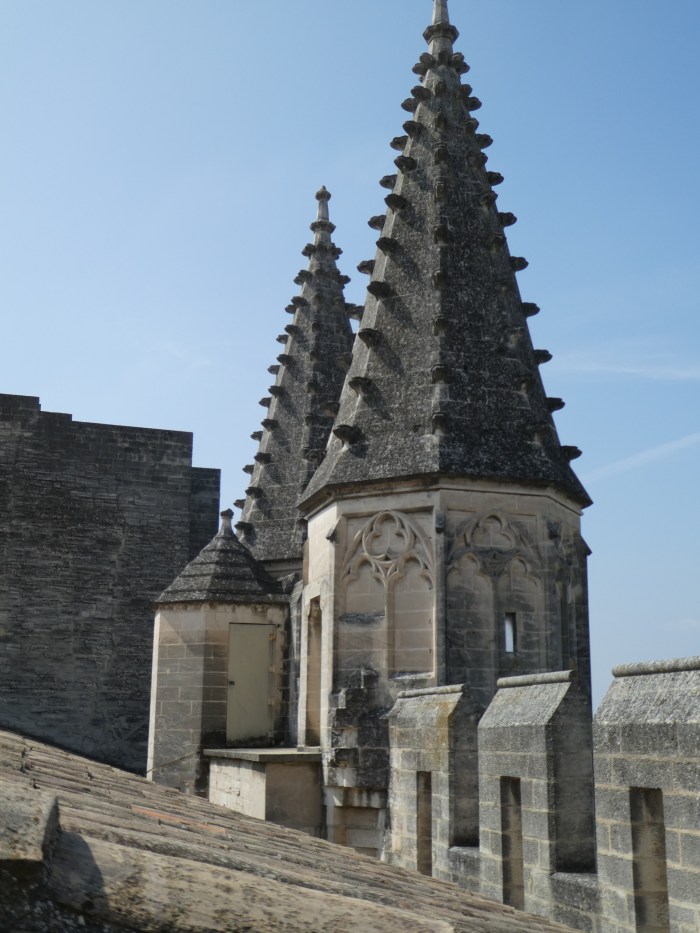
When we got way up to the top, the view was amazing. These 2 towers were especialy striking.
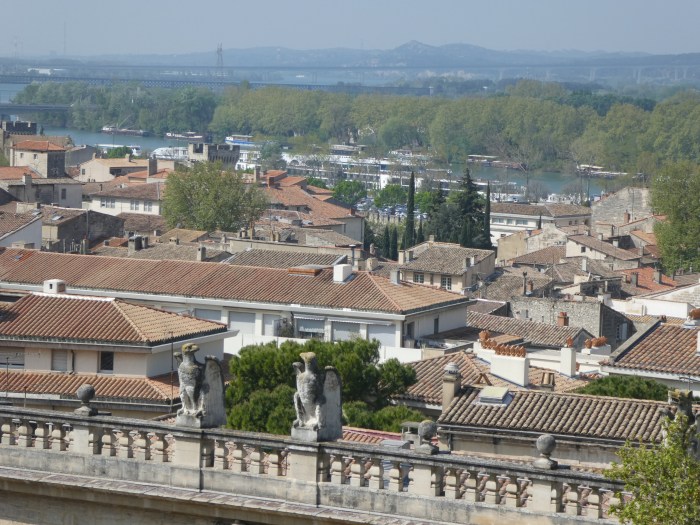
Surrounding area. The Rhone River runs around the city of Avignon.
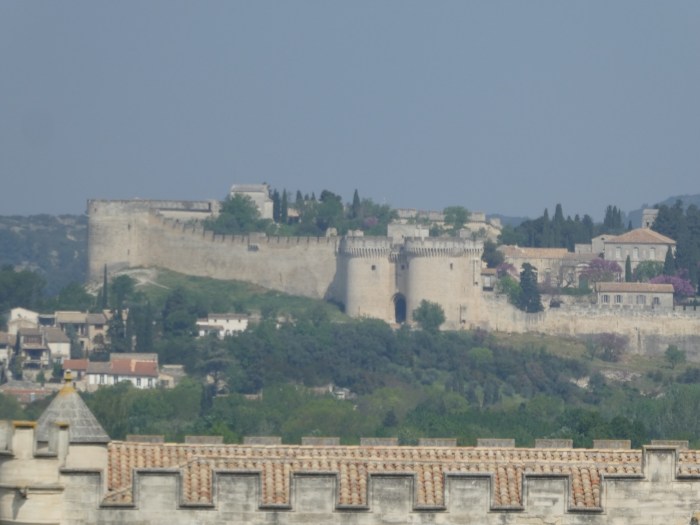
From here, another fortress can be seen in the distance.
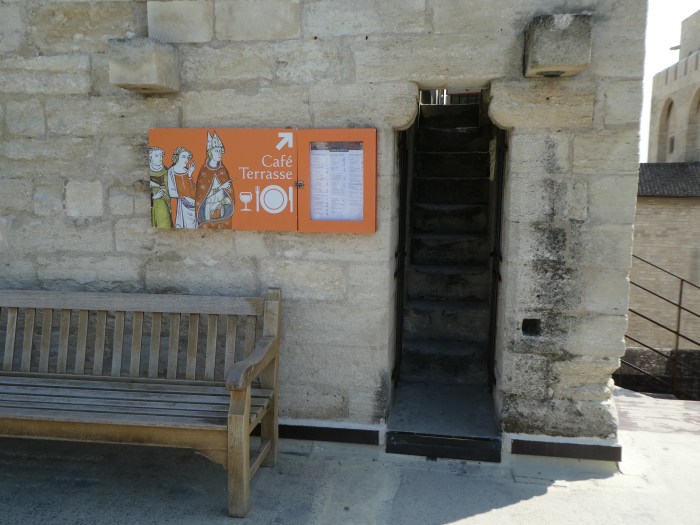
We went to a little cafe way up on top of the palace. The last little flight of stairs was so narrow and so steep that it couldn’t even have a hand rail. I don’t think OSHA would have approved.

Aix’s Cours Mirabeau

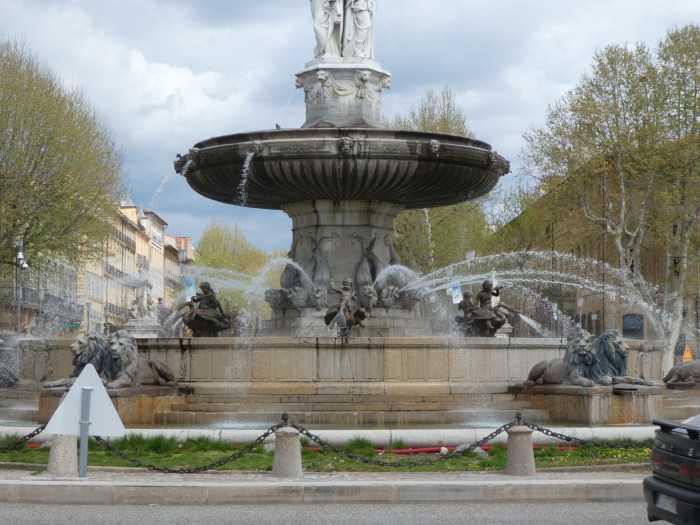
We spent the afternoon on Cours Mirabeau which is called the most beautiful street in Aix. It’s been one of the city’s focal points since the 12th century. It’s the main boulevard and the heart of the town. We started our walk at La Rontonde fountain.

Okay, imagine if the women at the top had heads. Which they do. La Rotonde is the most iconic of all of Aix’s fountains and the largest and most centrally located at one end of Cours Mirabeau. It’s a most impressive fountain.
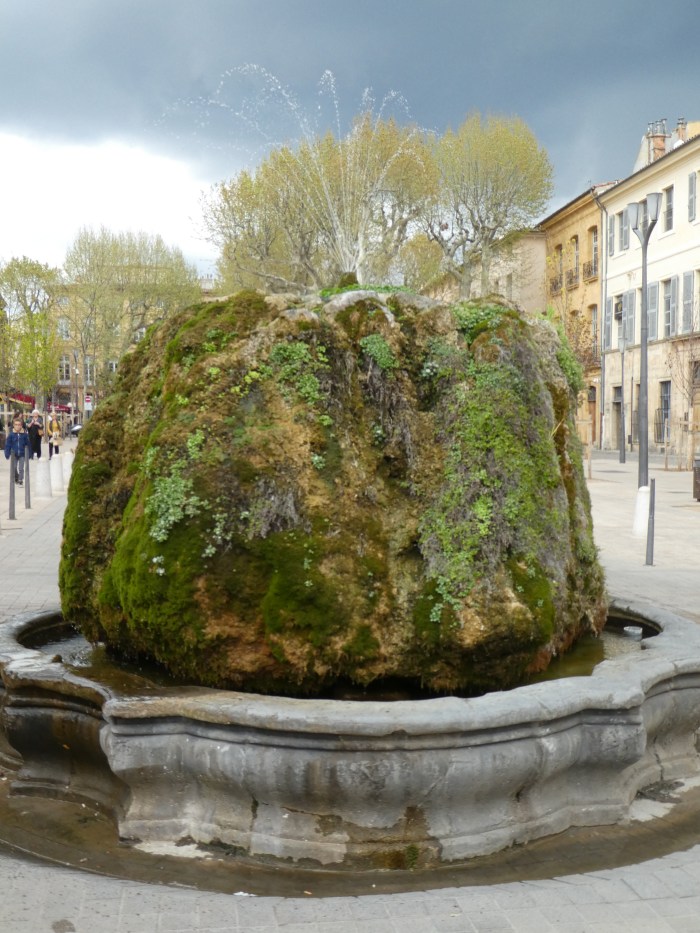
This mossy fountain is the Fontaine Moussue. The moss lends it a really nice texture. And we liked the little water spritzers at the top.
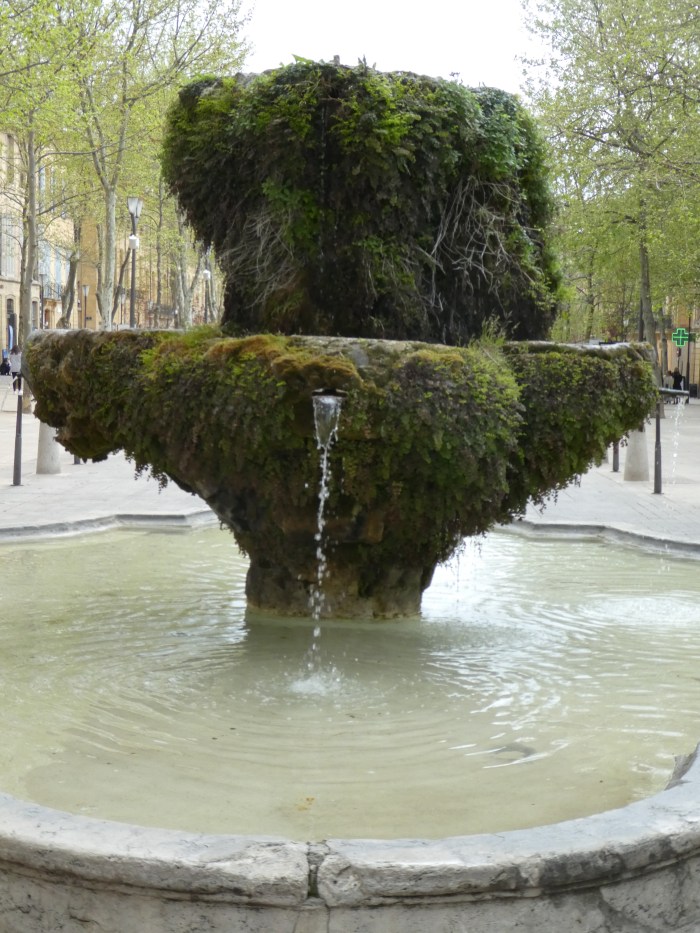
Is it technically still a fountain if no water is coming out? Well there’s water down below so I’m going to count it.
Okay let’s see here: 1,000 minus 4 today minus 2 on Monday leaves 994 fountains to go. Whew!
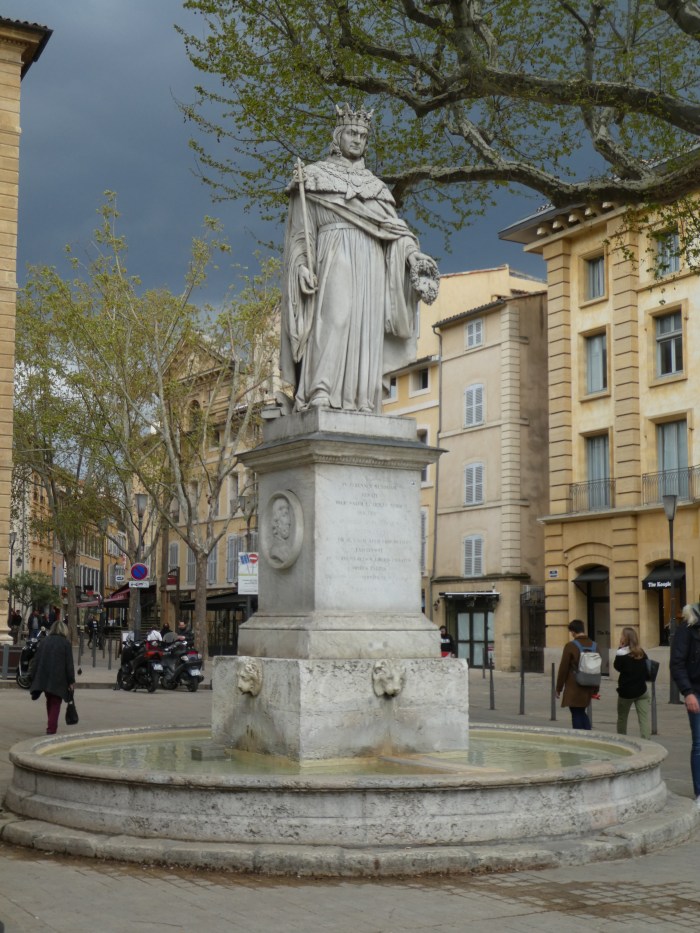
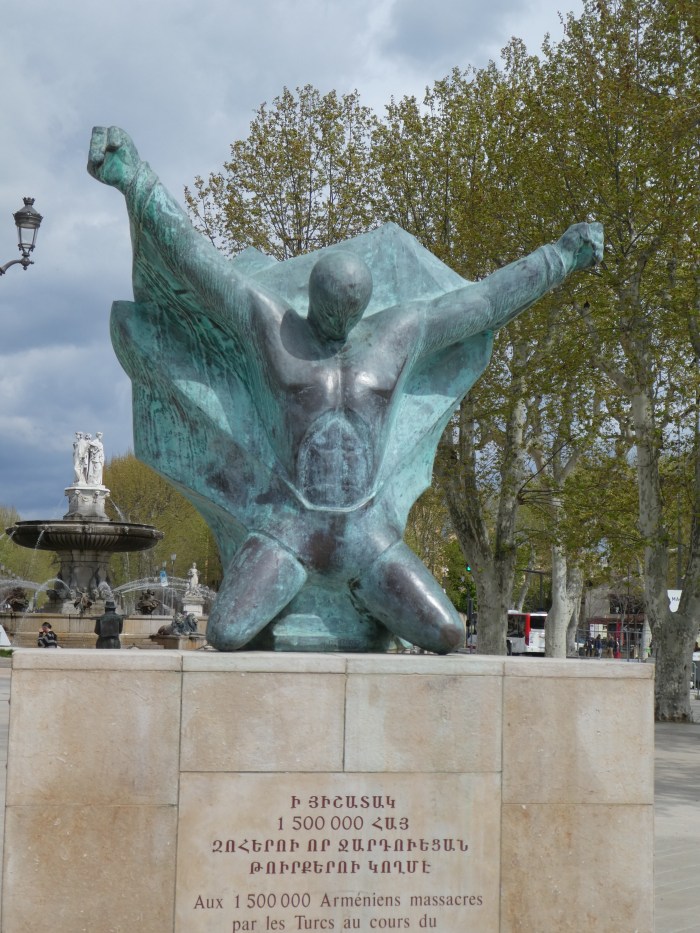
This statue is a memorial to 1.5 million victims of the Turkish Armenian massacure.
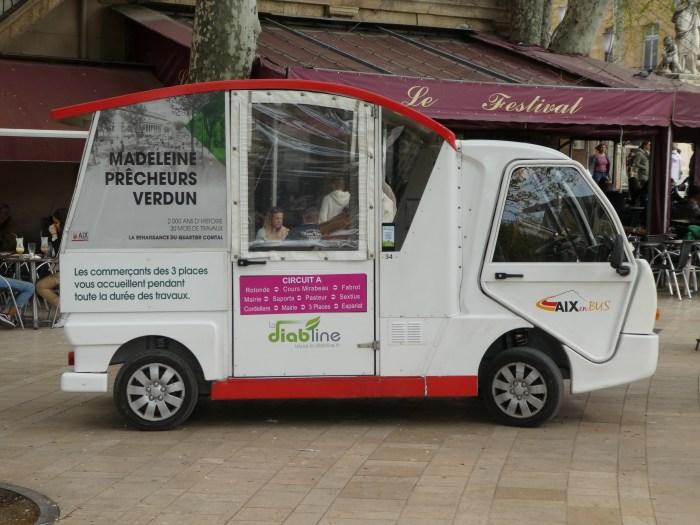
We took this little bus on a tour of the area and it was so much fun. It carried 6 passengers and I got to sit up front with the driver. It goes on the cars-free Cours Mirabeaui street and down little alleys and narrow streets. There are little posts in the middle of the street and she just zaps them with her transponder and away we go. And she stops just short of running over penestrians before ringing her little bell and then smiles and calls sweetly, “merci!” It wasn’t a tour bus but more like a little local bus. People flagged it down and got off and on. If she had space, she picked them up, if not she smiled, said a couple of sweet words in French (everything sounds sweet in French), and left them standing there for the next bus. It was hair-raising and heart-warming all at the same time.
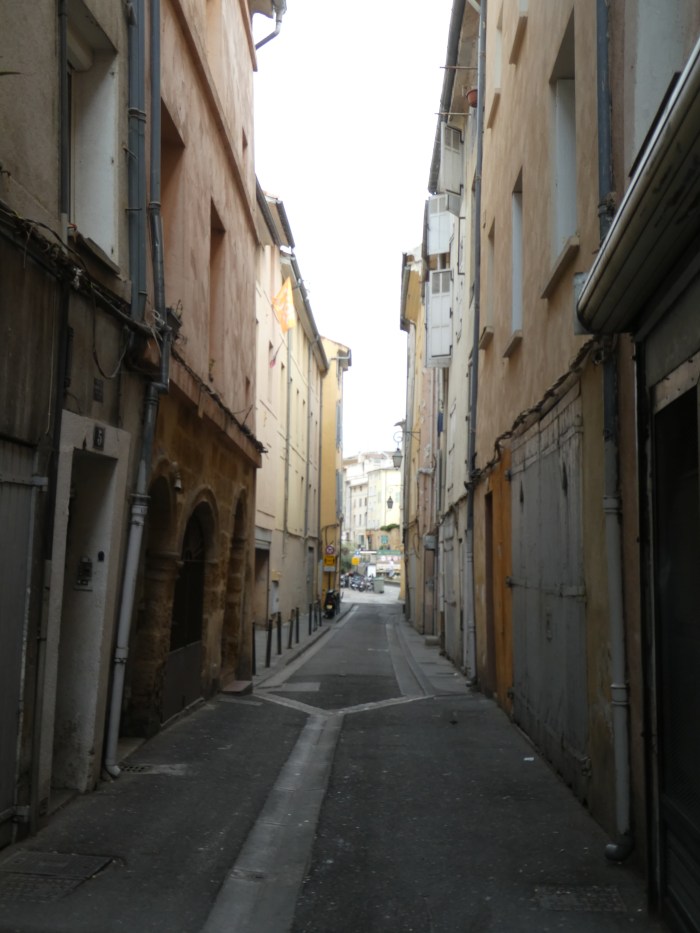
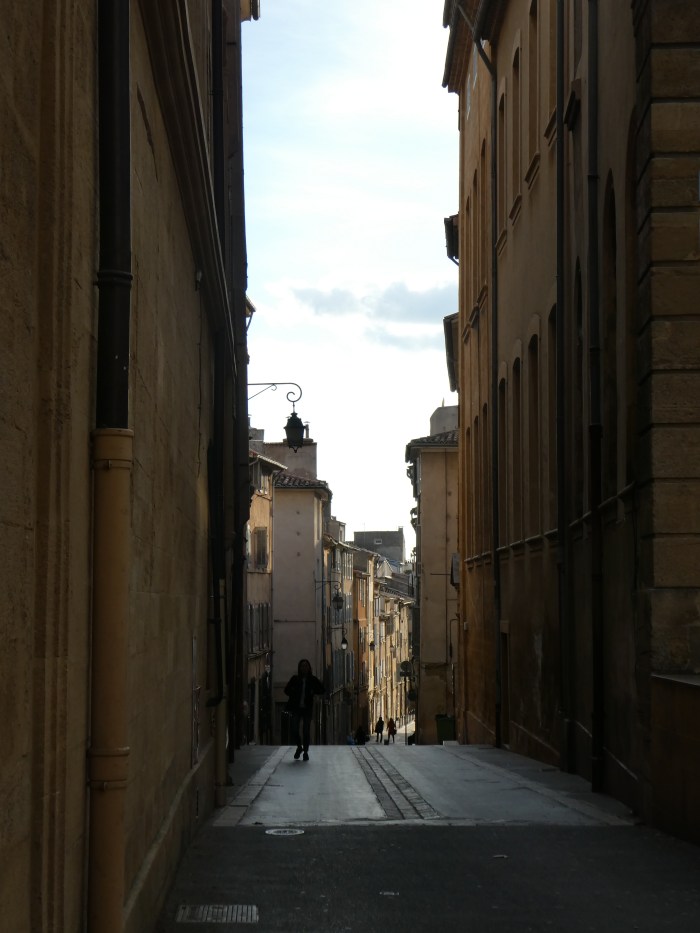
This is one of the many narrow little streets we went down in our little bus.
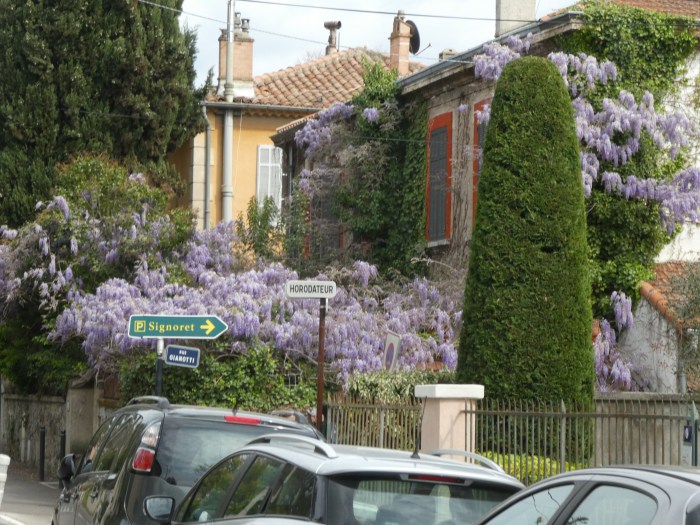
Among other things, the wisteria is blooming right now and it’s gorgeous. We passed this house in our little bus.
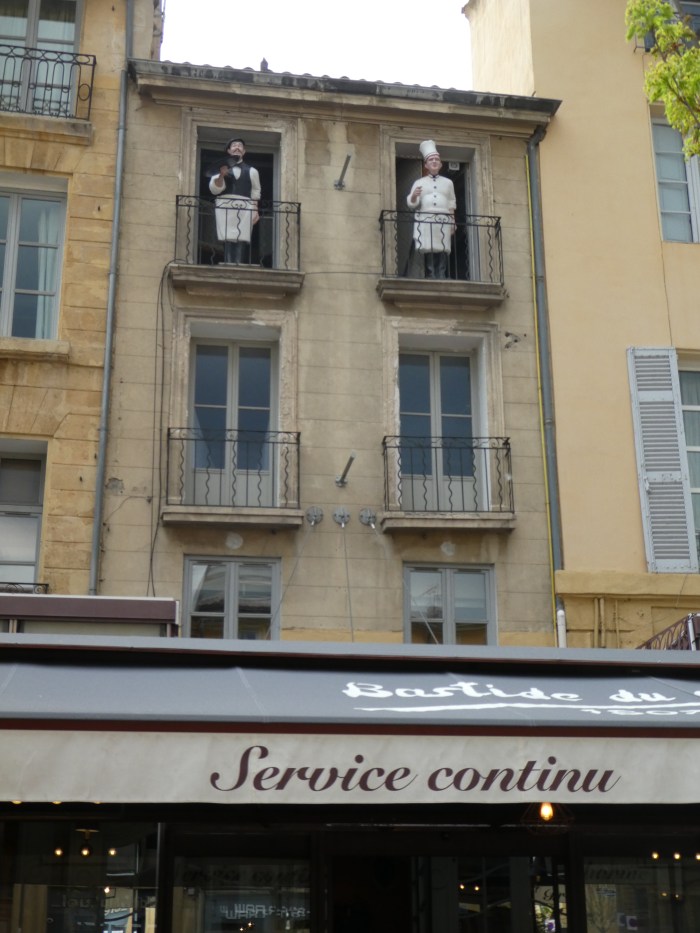
Love these little chefs standing in the upper balconies above a restaurant.
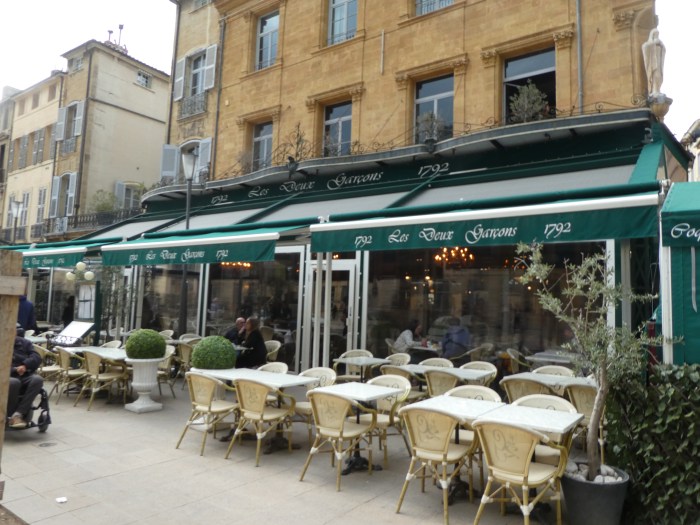
Les Deux Garcons, a popular brasserie, has been a prominent place for artists and intellectials like Paul Cezanne and Emile Zola since 1792.
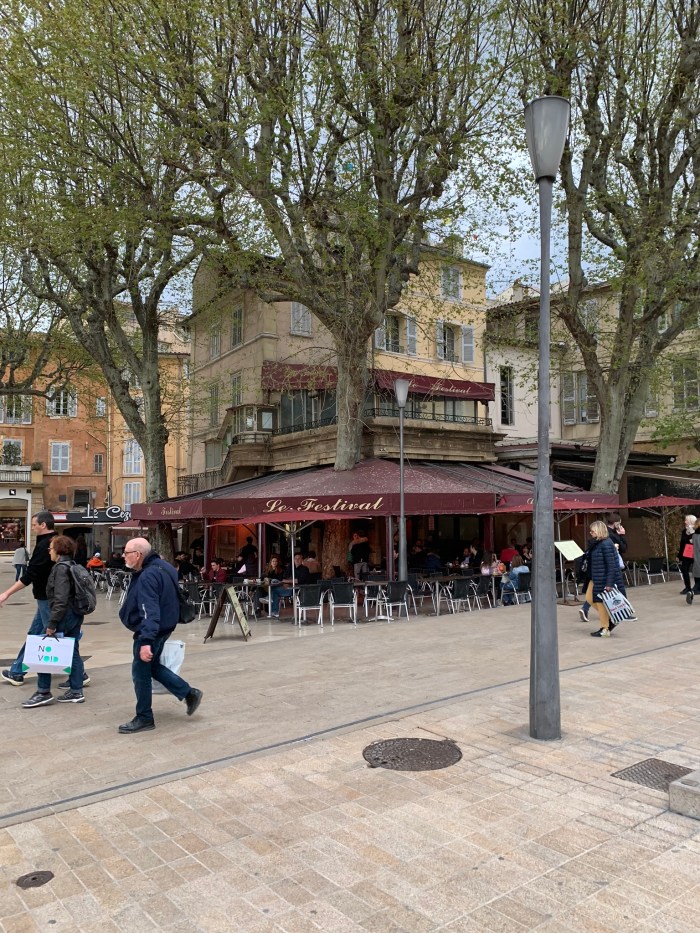
This fascinating restaurant has 3 large trees growing out of it’s patio!
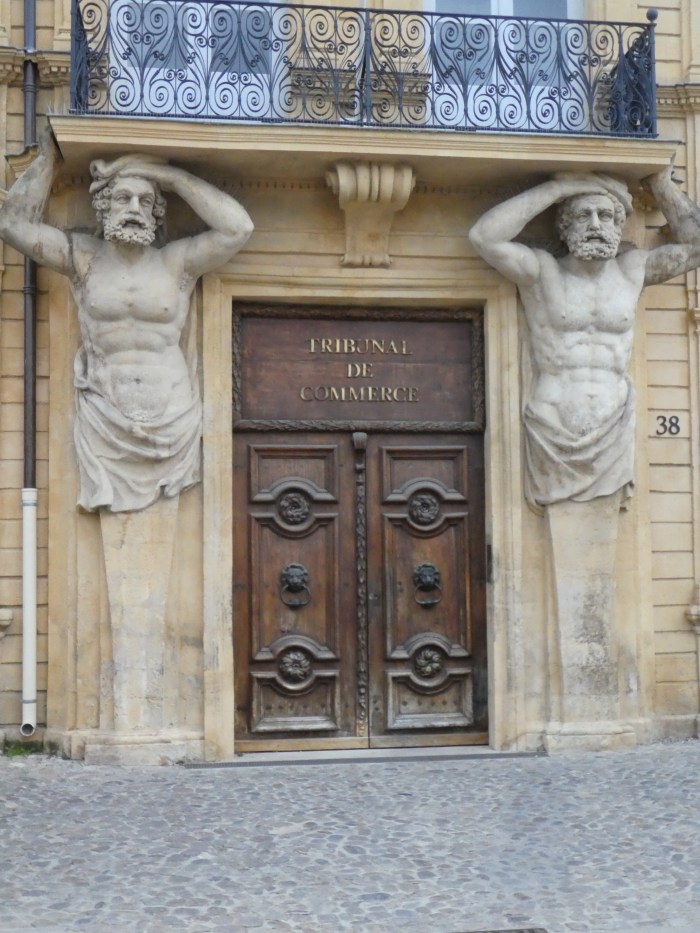
Now a few more “Doors for Denise.” Another one of those with unfinished statues and don’t they look really put out over it!
I thought the coins at the top were a nice touch.
Now how cool is this! Attractive and functional!
Interesting “wall dividers” to frame the borders of this cafe.
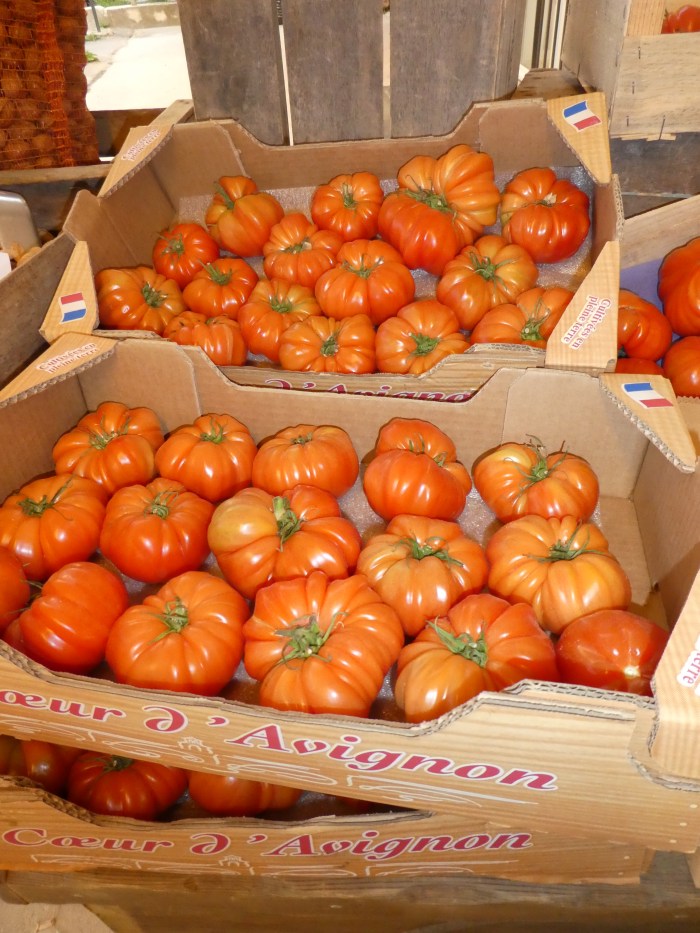
We stopped at a mostly-produce market close to the house we’re staying in and they had fascinating items, not the least of which were their ribbed tomatoes. I’ll get more pictures and prices soon but for now I noticed that avocadoes were inexpensive (1 Euro or $1.12 for small ripe ones and 2.2 Euros (about $2.50) for bigger ones, cheaper than at home. But their multi-colored rhubard was 9.8 Euros/kg ($10.88), which seemed a little high.

Chateau La Coste

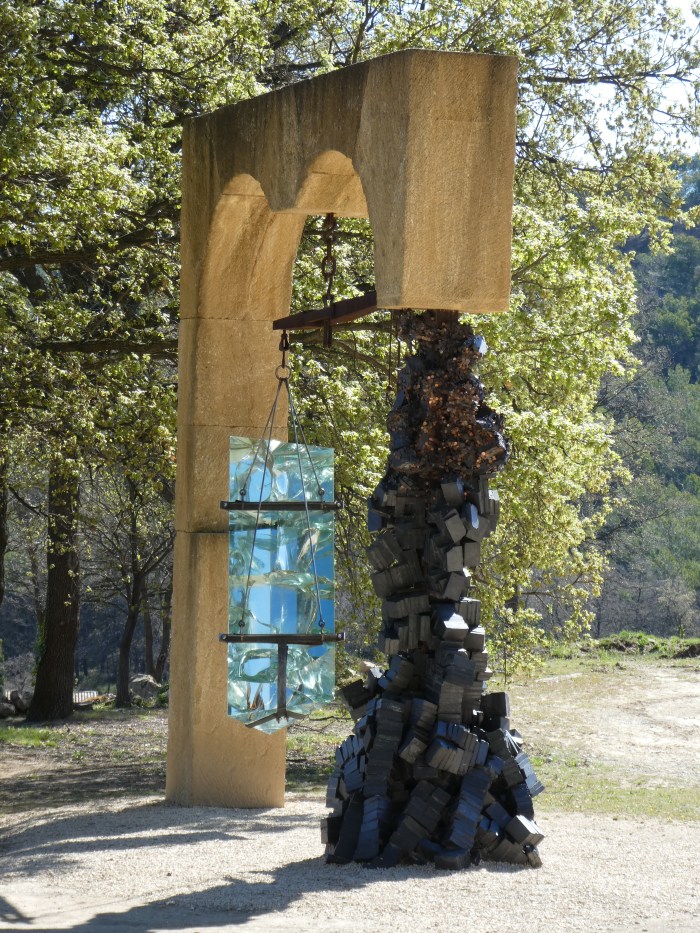
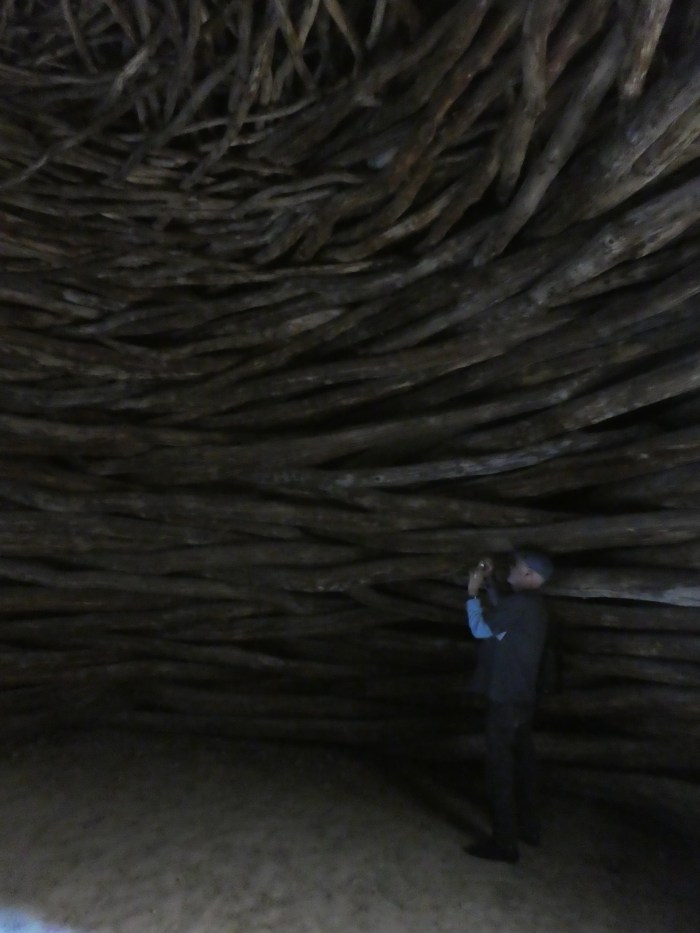
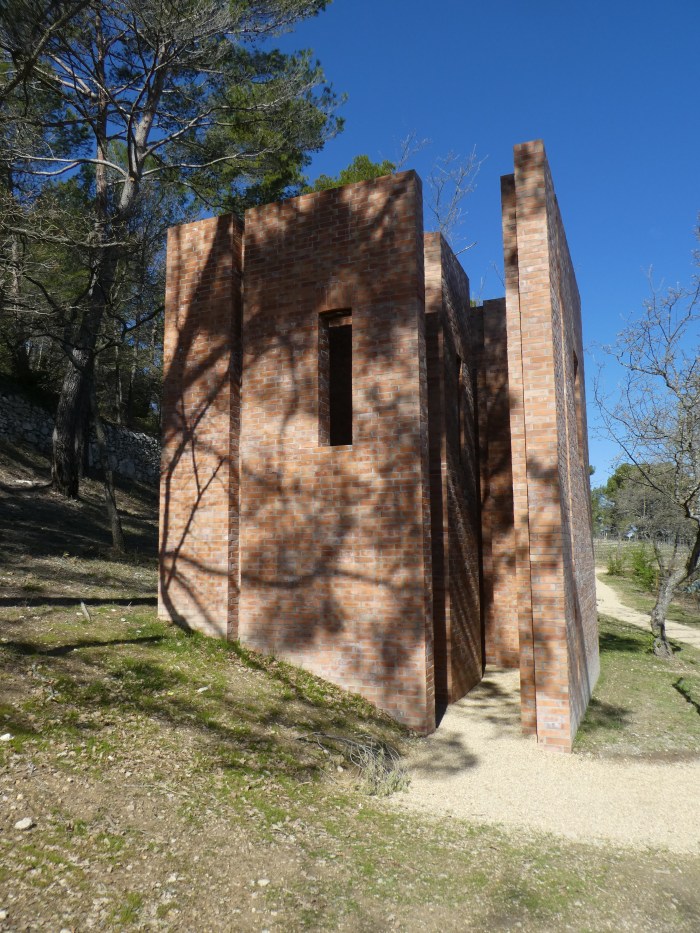
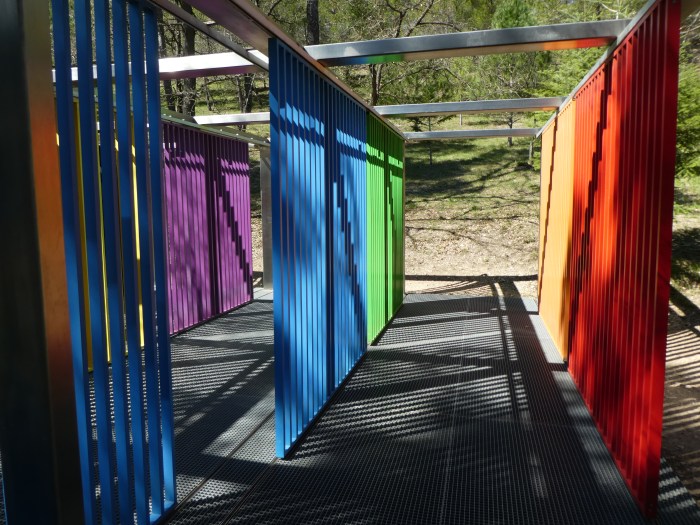
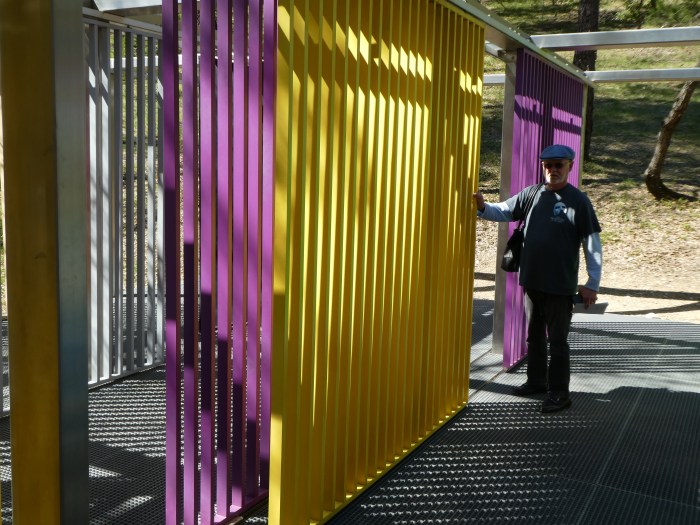
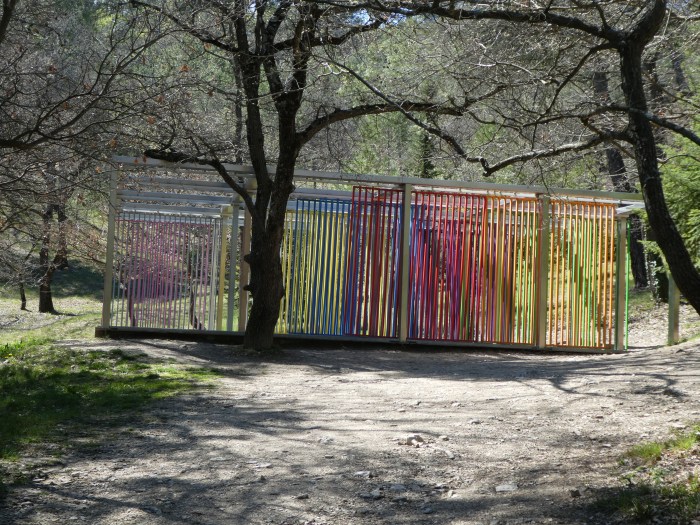
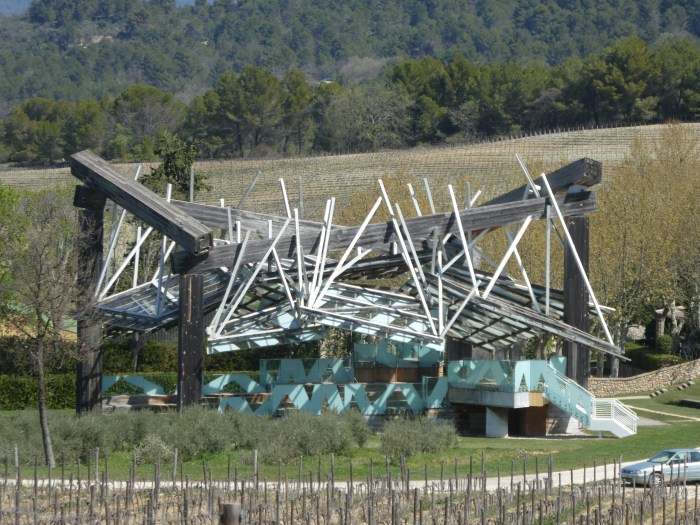
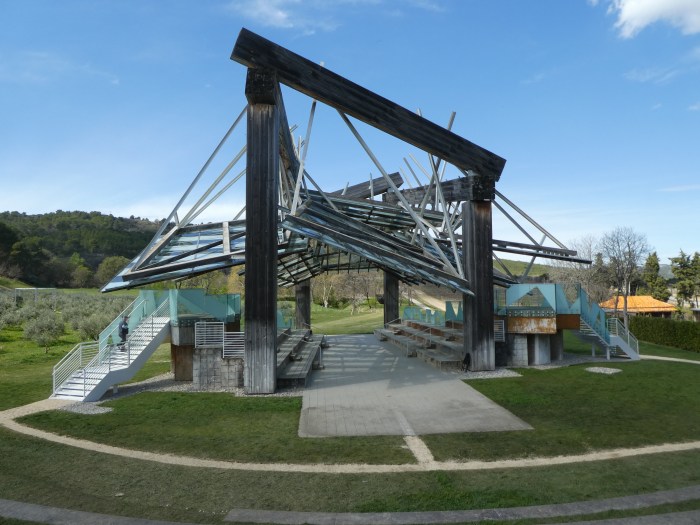
Today we took a drive out to Chateau La Coste. Our house exchange hosts had recommended it as a nice place to visit and referred to it as a huge park with large modern art pieces and several restaurants. So we really weren’t sure what we were going to find. But it was a pleasant drive out there through the beautiful spring countryside so we knew we couldn’t lose. Actually Chateau La Coste is 4,500 acres of mostly vineyards, plus winery tours and tasting, and a tiny collection of excellent restaurants and shops, and art. As they say it, “Chateau La Coste is a vineyard where art, architecture and land live in harmony. The artists invited to participate were encouraged to choose a place on the domaine and given the freedom to create something that would live there.” Currently there are 34 art & architecture installations throughout the 4,500 acres.. Along with your ticket, they give you a map and send you on your way. They should include an oxygen tank. The stone paths take you around many vineyards, groves of olive trees, and into wooded areas where most of the installations reside. It’s very hilly and eventually you reach the highest point and you can see forever. It’s breathtaking. Below are some of the installations we saw.

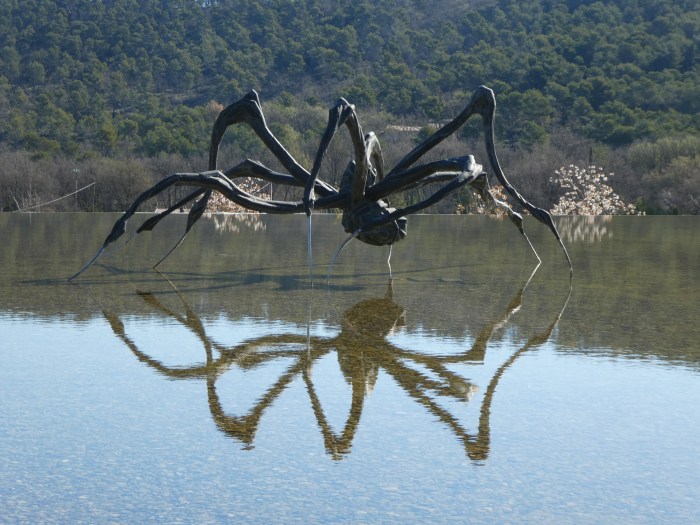
“Crouching Spider” The twisted muscles of its legs are meant to reflect the surrounding grapevines. The spider stood in the reflecting pool just outside of the entry building.
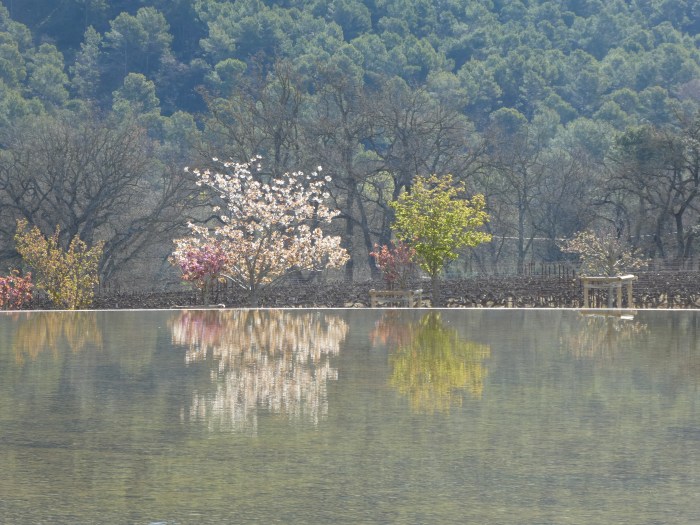
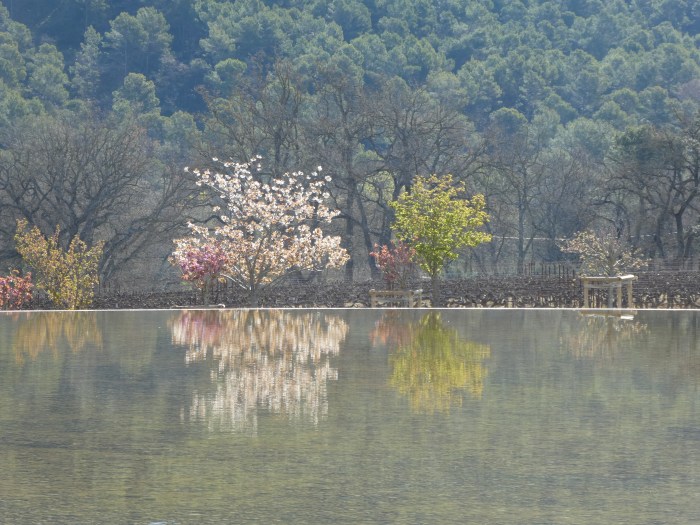
I love this picture of the flowering trees reflected in the reflecting pool.
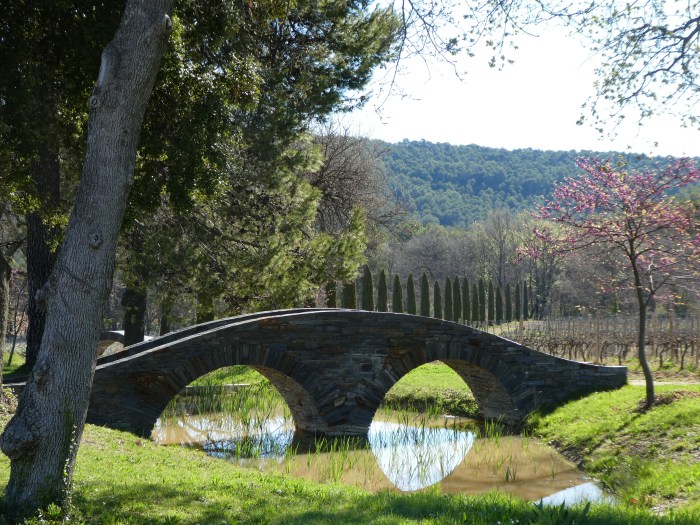
“Donegal” There are actually 2 bridges here and it’s only the force of gravity and of resistance that holds them together. They are made of slate from Ireland.
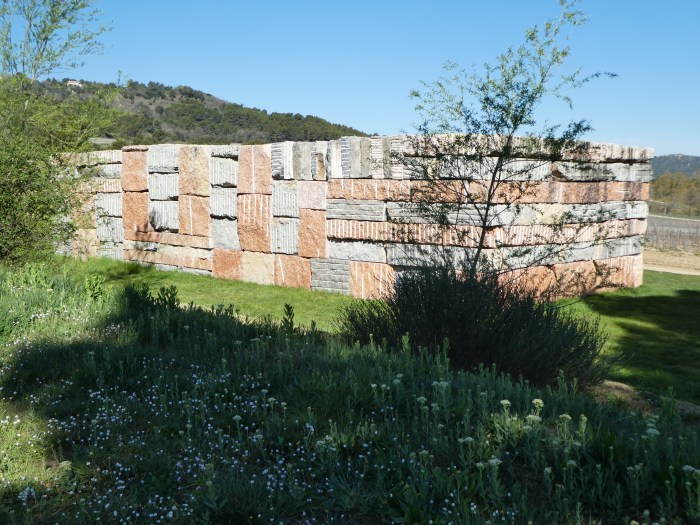
“Wall of Light Cubed” Made of more than 1,000 tons of grey, blue and red limestone from Portugal, these blocks were assembled, numbered, and dismantled and transported to this spot one by one.
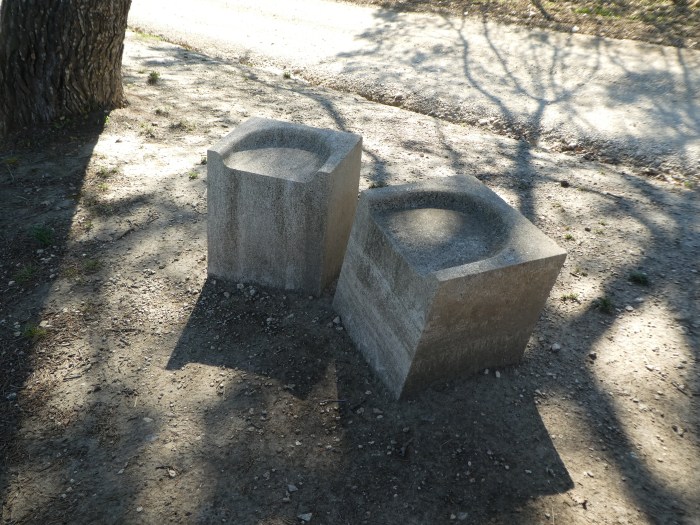
“Origami Benches” These benches offer the perfect spot to contemplate the surrounding countryside.
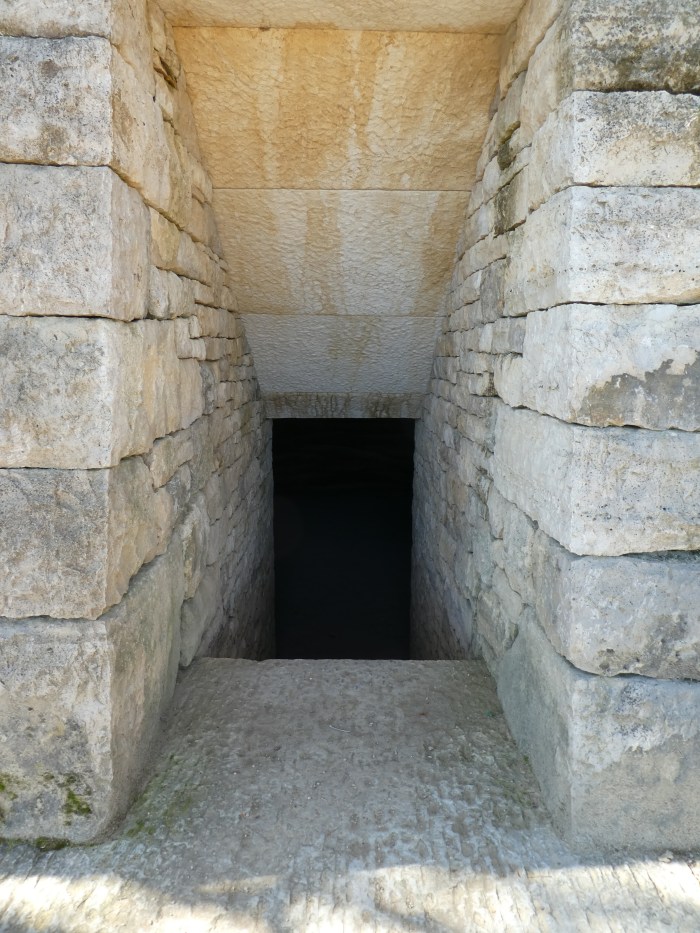
“Labyrinth” This funny little building is only one story even though it looks like 2. It has narrow little halls and, as expected, some of them are dead ends.
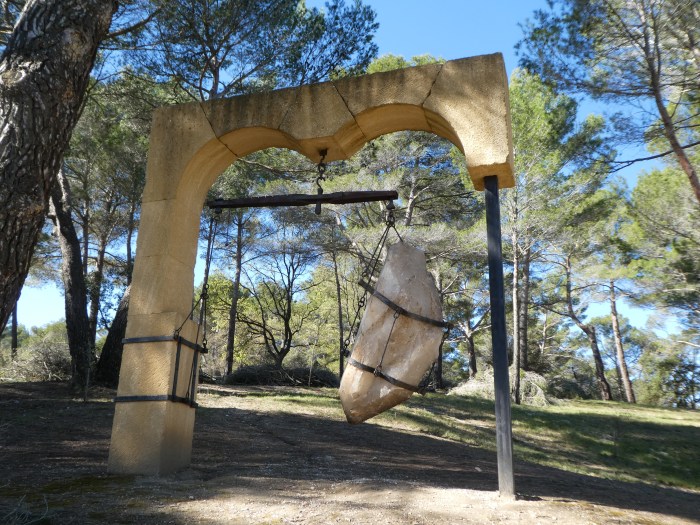
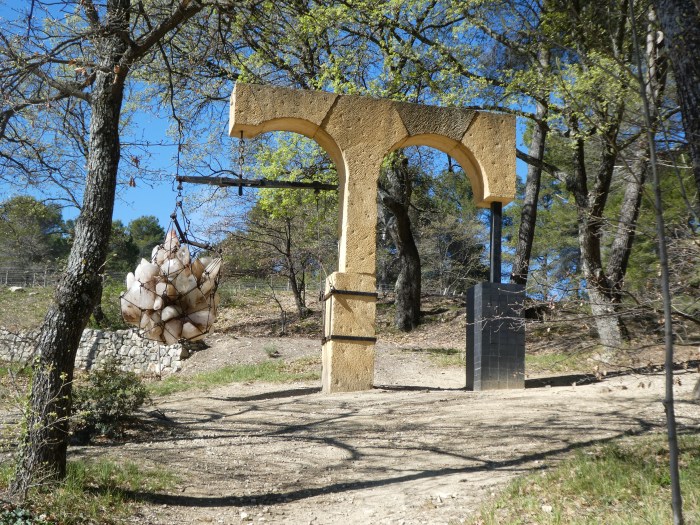
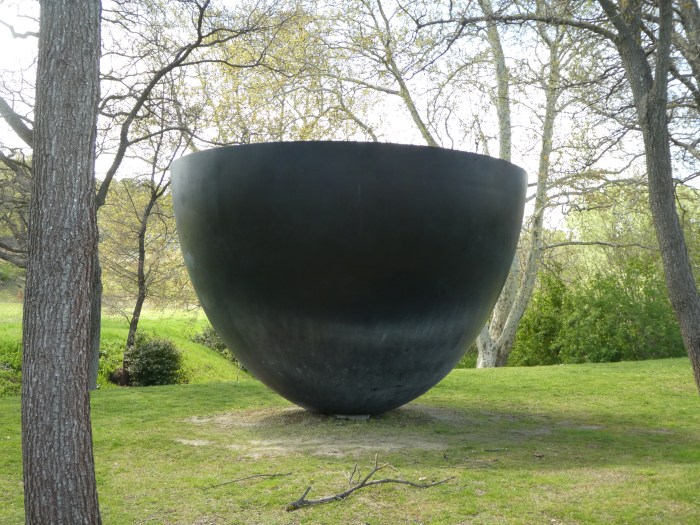
“Calix Meus Inebrians” A huge bronze chalice, very appropriate for a winery.
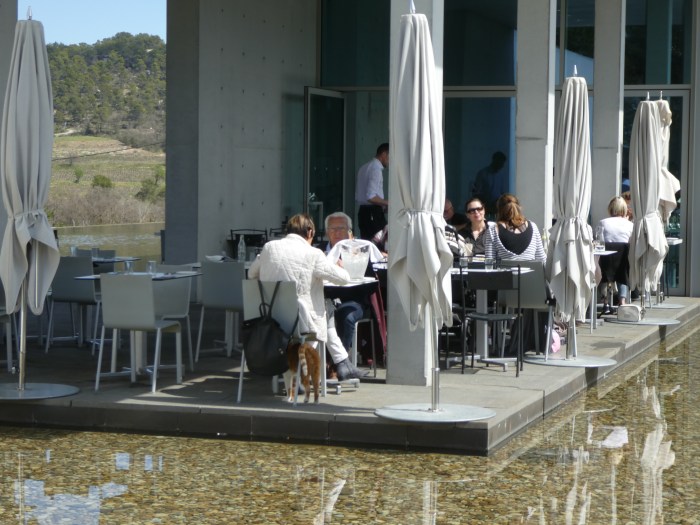
We ate lunch at this wonder cafe surrounded by a lovely reflecting pool filled with pebbles. And the food was delicious.
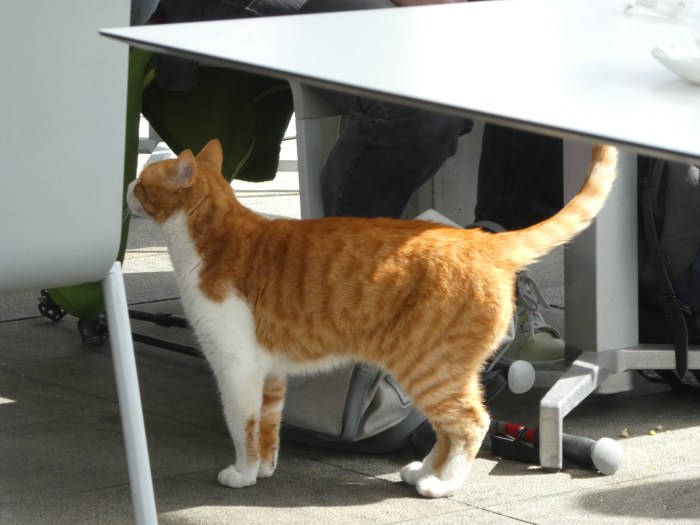
There was a resident cat that went from table to table discretely requesting nibbles. Chuck had ordered fish so Goldie Locks sidled right up to him.
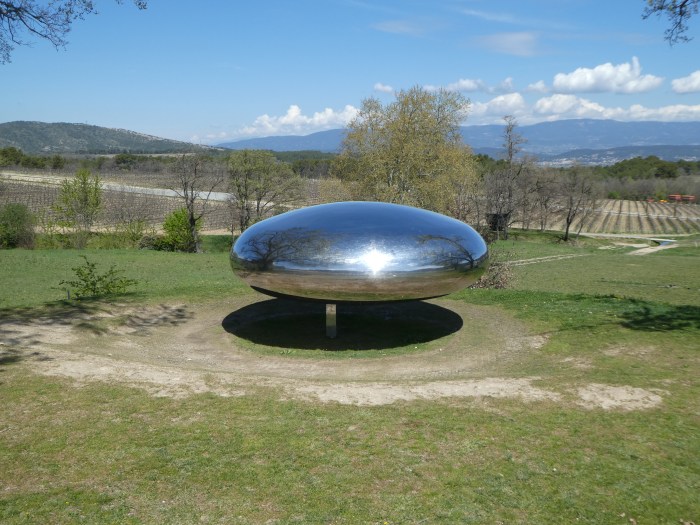
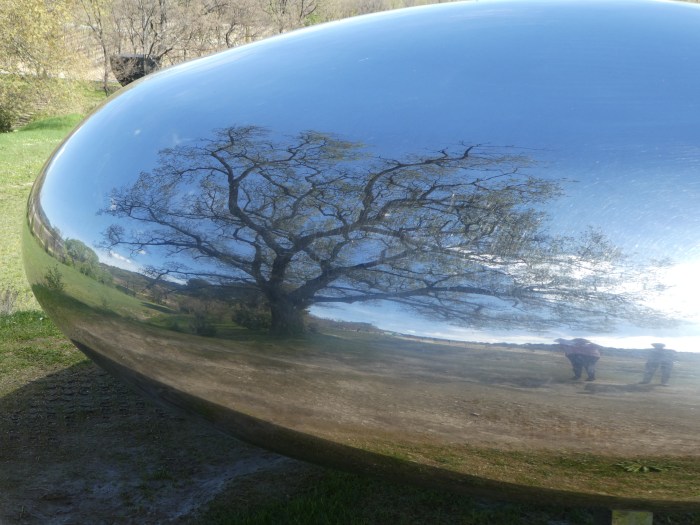
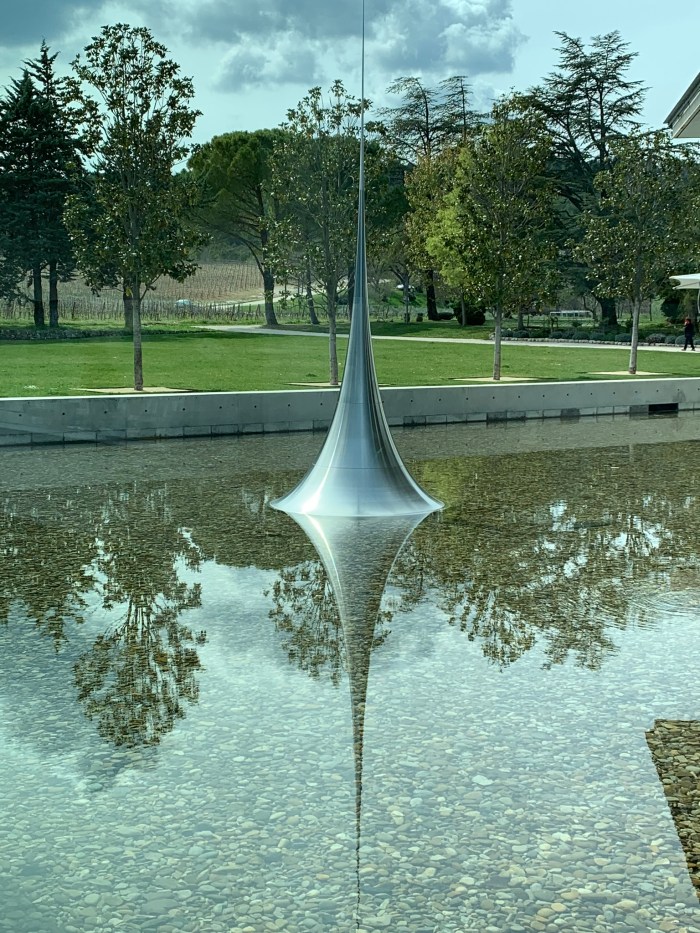
“Infinity” Subtitled “Mathematical Model 012 Surfce of Revolution With Constant Negative Curvature,” it refers to the mathematical formula of an exponential curve. I prefer to see it as a drop of water that has just fallen into a body of water.
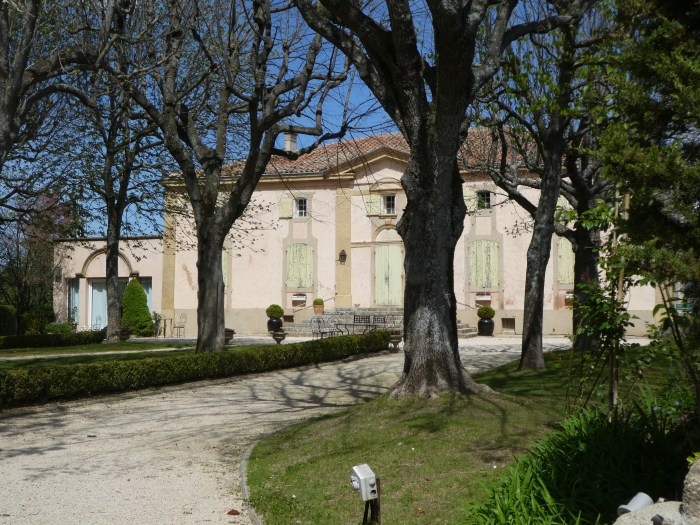
Obviously there’s a chateau here somewhere but nobody and nothing ever mentioned it. I think this is the house. It appears to be vacant and visitors aren’t allowed on the grounds. But there were attractive terraced gardens below the house.

Around Aix

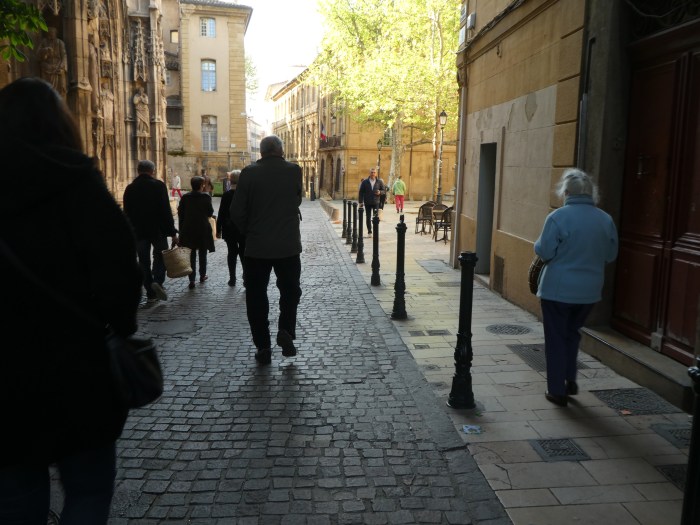
Well, we’ve gotten off to a slow start. We left Saturday at 1 pm and got here about 9 pm on Sunday night, dead tired. A really long trip. Today we had to do some necessaries: get groceries, put gas in the car, get some Euros at the ATM and try to get acquainted with the downtown area of Aix, not necessarily in that order. There are a million streets running every which way, some 1-way, some buses only, and they’re not especially well marked, at least not the way we expect. We use GPS whenever we have an actual address but she’s always saying unhelpful things like “turn SE” (who has any idea which direction is southeast) or “at the 3rd exit in the roundabout, turn onto exit 16a” (and then there’s no 16a sign to be seen in the roundabout). And parking is impossible. We looked forever for a parking space and never did find one. But we persevered, took a nap, and things looked better. Tonight we went back into the city centre and had dinner and did a little people watching, window drooling, and historic building viewing. And we found a public garage to park in. Like I said, a slow start but things are looking up. Here are just a few things we saw.

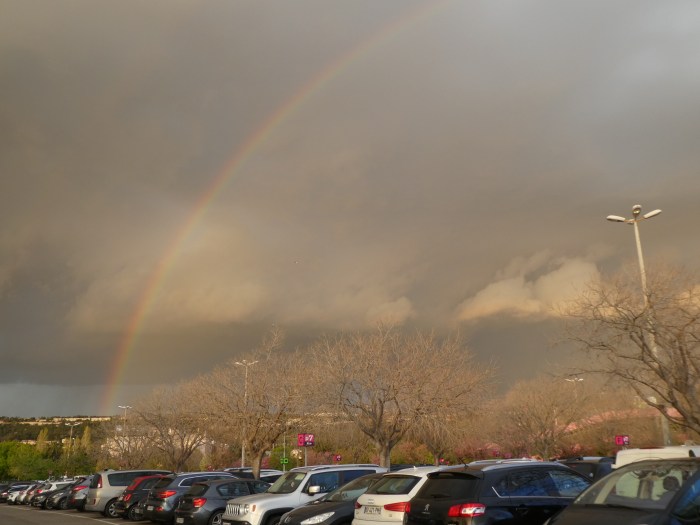
When we arrived in Marseilles and went out to the parking lot to find their car, we discovered the weather had suddenly changed. The sky was black, there were puffy, threatening clouds all around, and a huge rainbow spanned the sky. There was thunder and lightening. And then it started to rain. Chuck loved it! ALL of it!

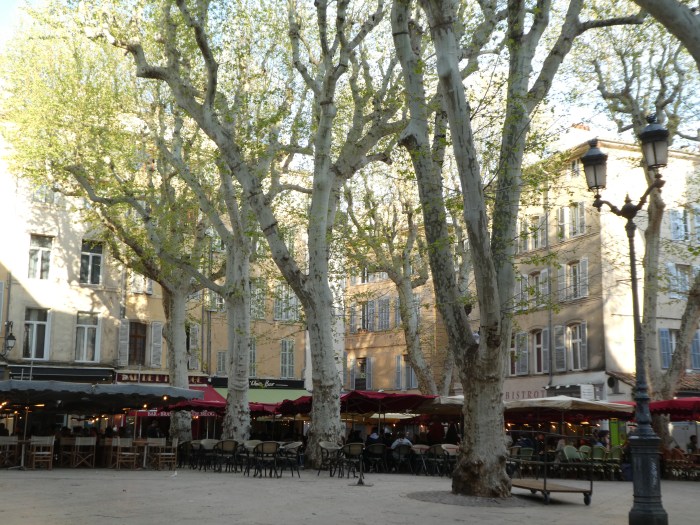
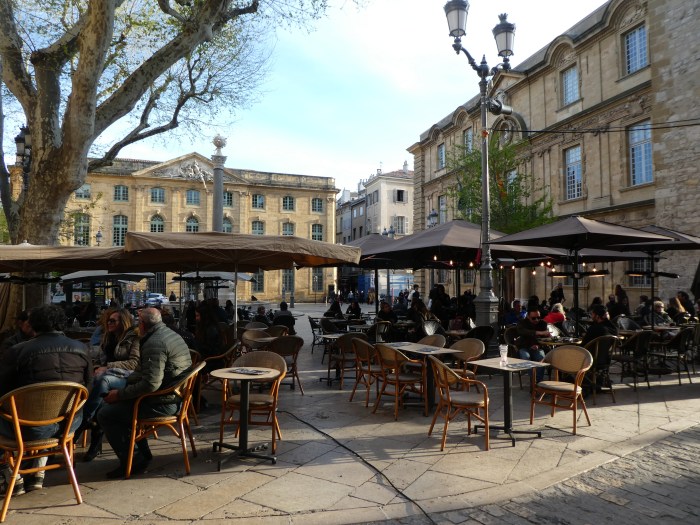
We came across several squares like this one with lots of outside cafe seating even though it’s quite chilly out. You can tell it’s a university town because young people occupy the majority of the seats at the outdoor cafes.
Another city square. I think these squares are also where the open are markets are held every day of the week here. I hear they are fabulous and we’ll be checking them out.

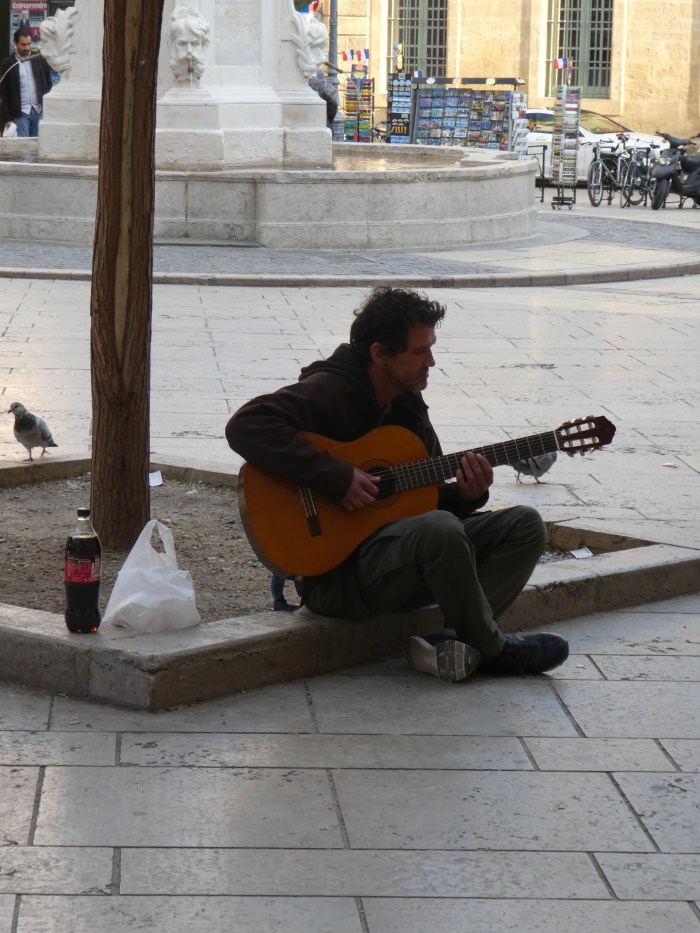
Entertainment is always a key element in the city squares.

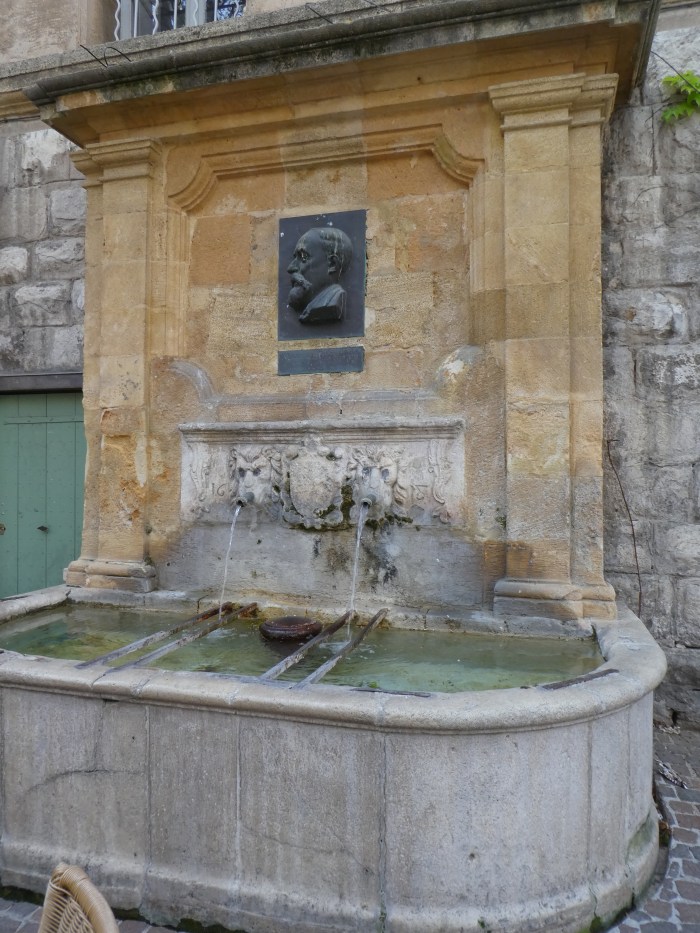
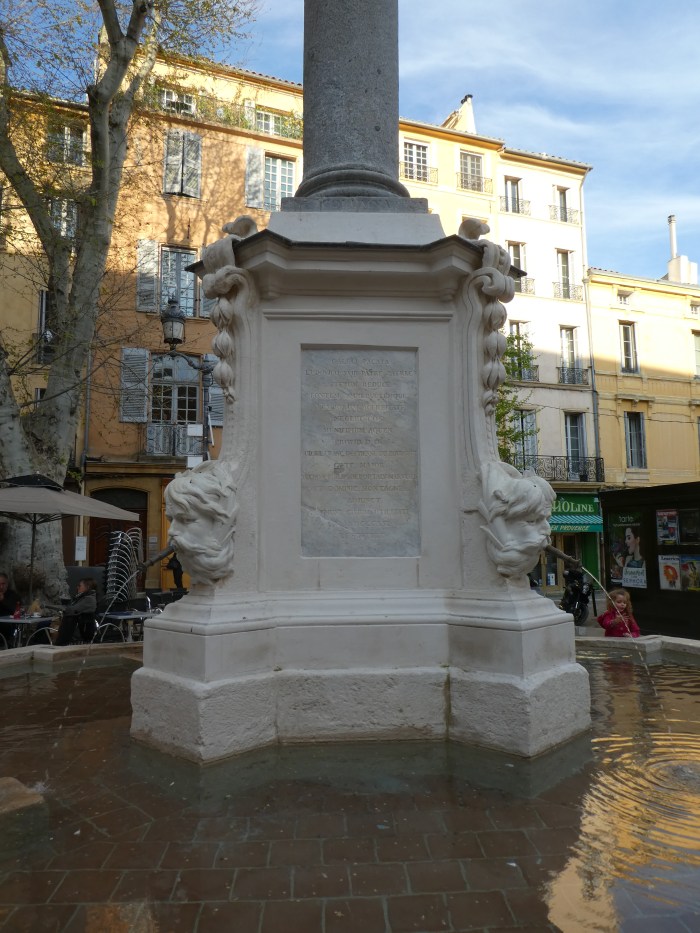
We saw our first 2 fountains. This is the first one.

And this is the second one. Just 998 to go.

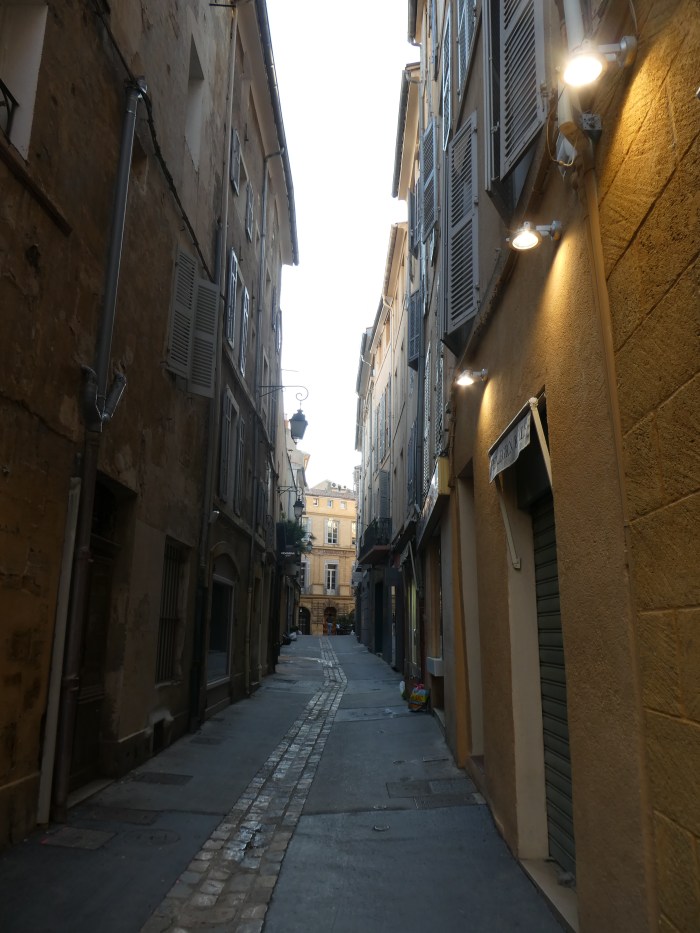
I love these narrow streets.
No cars here but you’ve got to watch out for those motorcycles. Even if they don’t run over you, they can take years off your life!

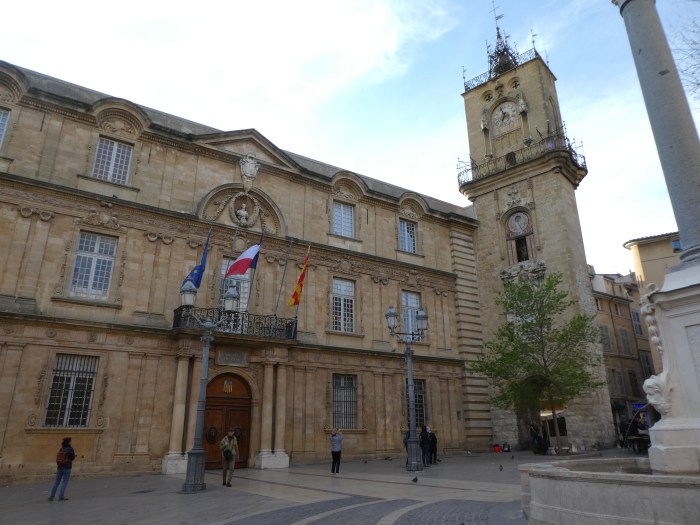
City Hall

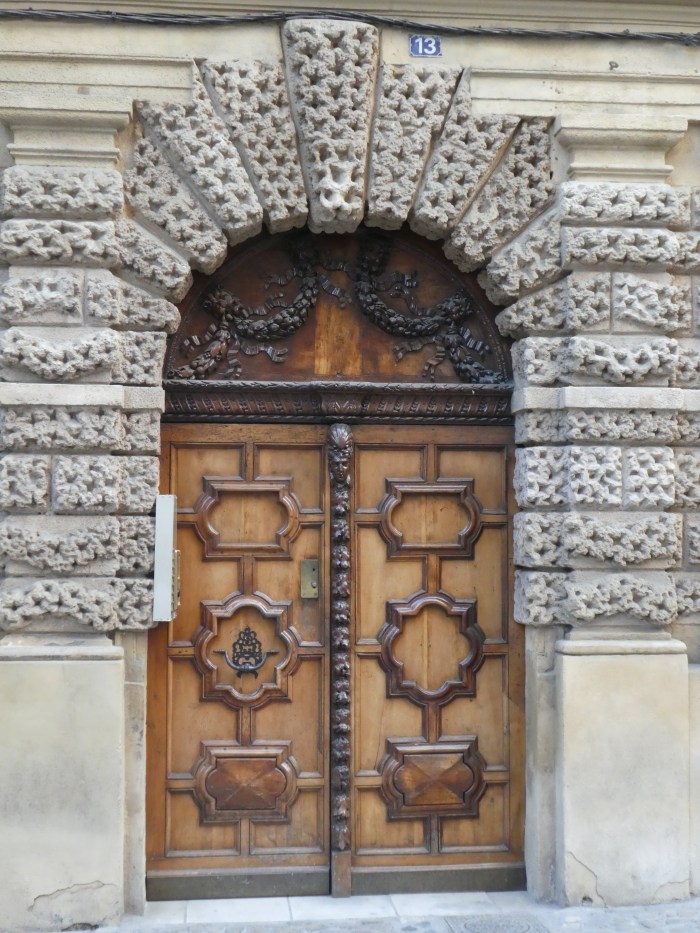
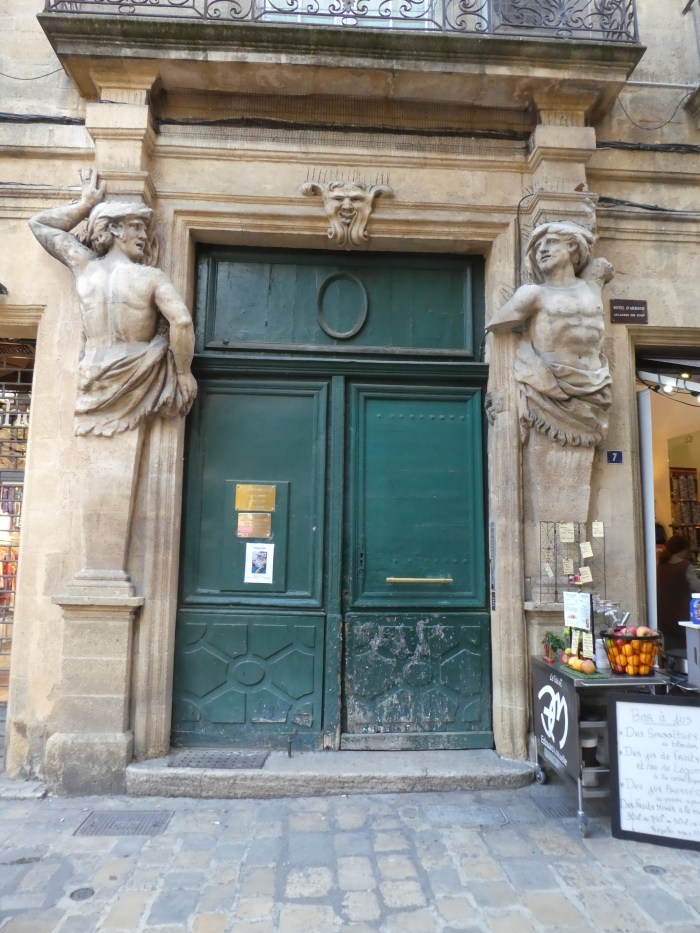
And a couple of interesting doors. They’re everywhere here.

I guess they ran out of time.

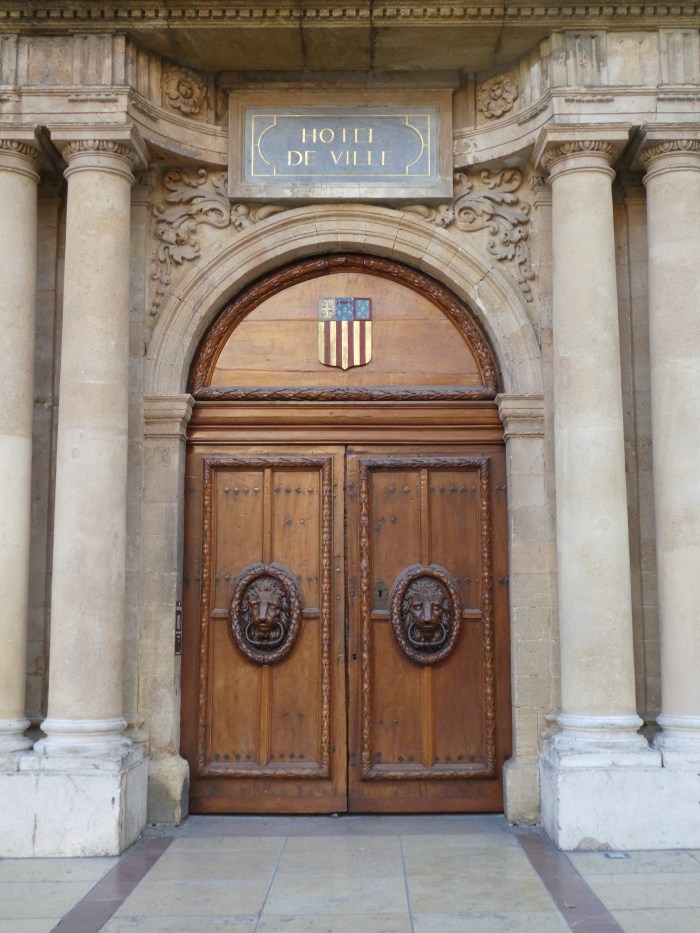
The door at Hotel de Ville (City Hall).

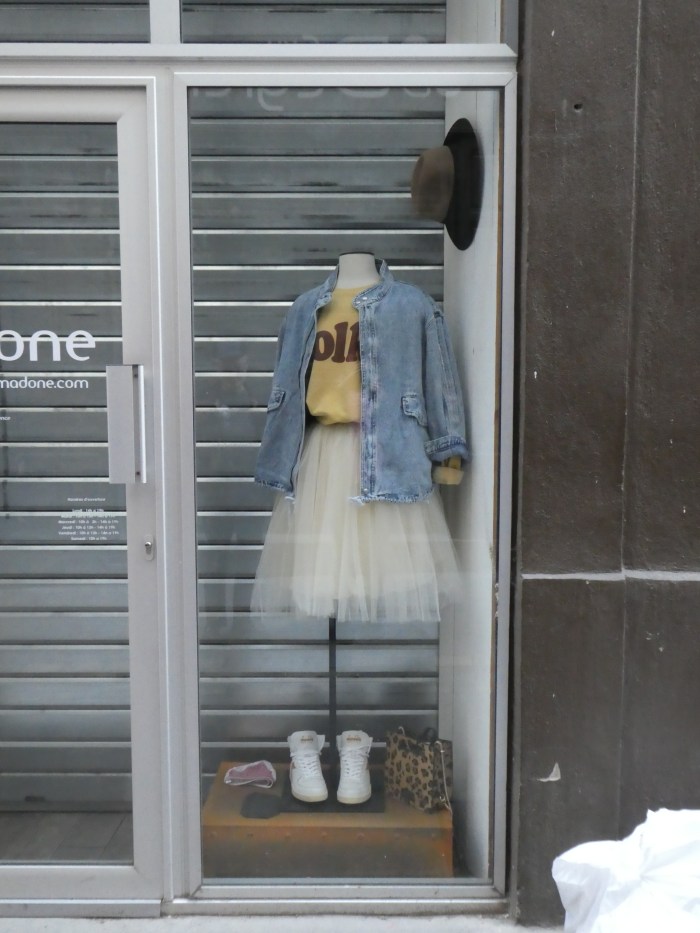
And now for a little window shopping. I don’t know what to say about this outfit.

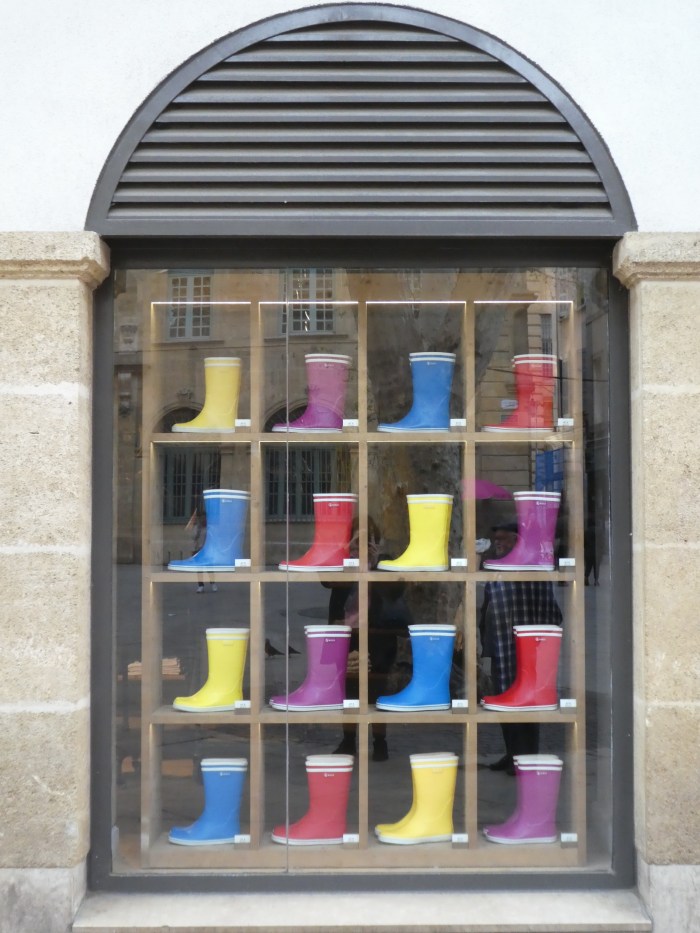
I guess the rainy season isn’t over yet.

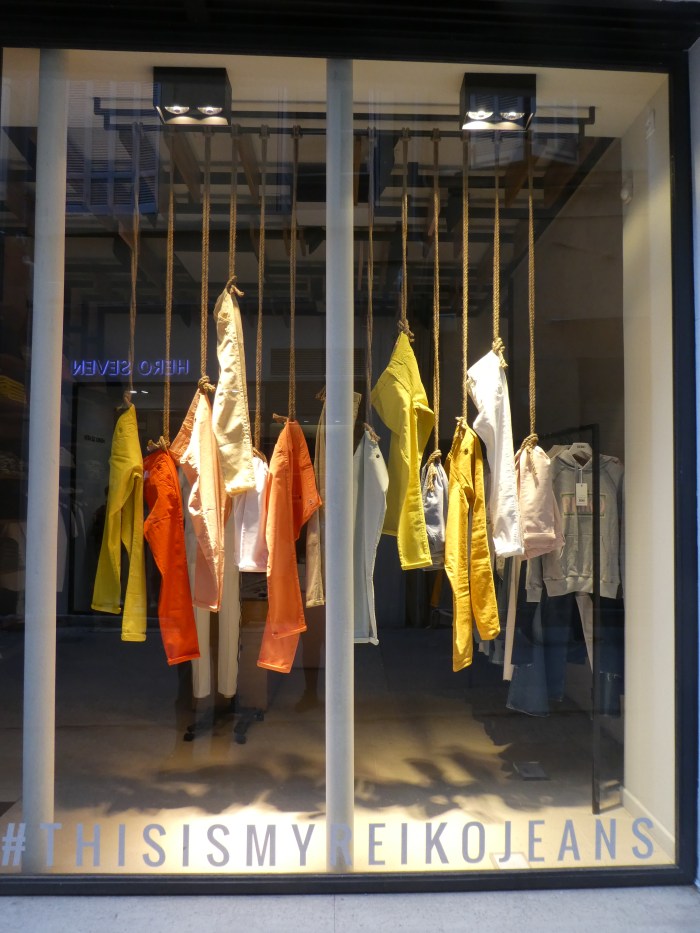
I hope they don’t pay this window dresser a lot of money.

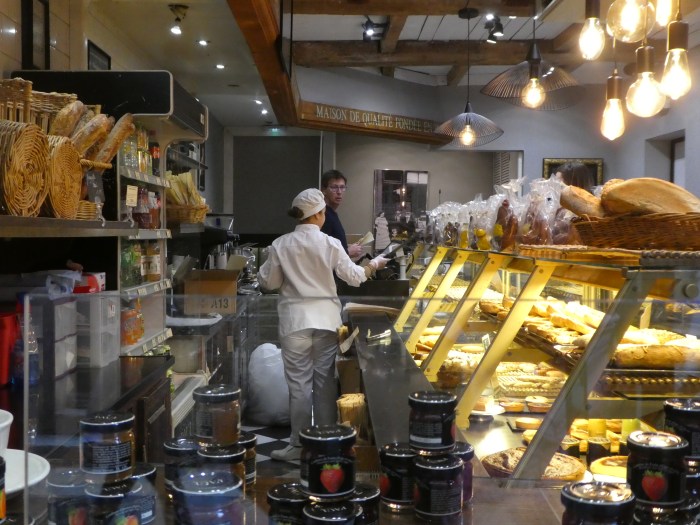
Oh yummy! We must come back to this one.

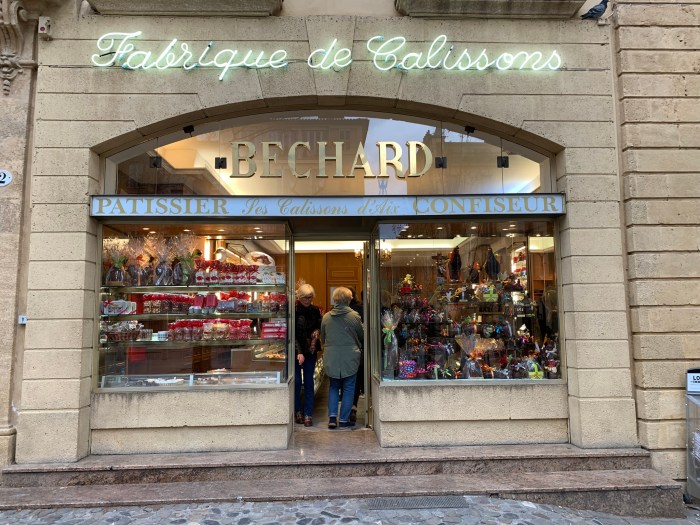
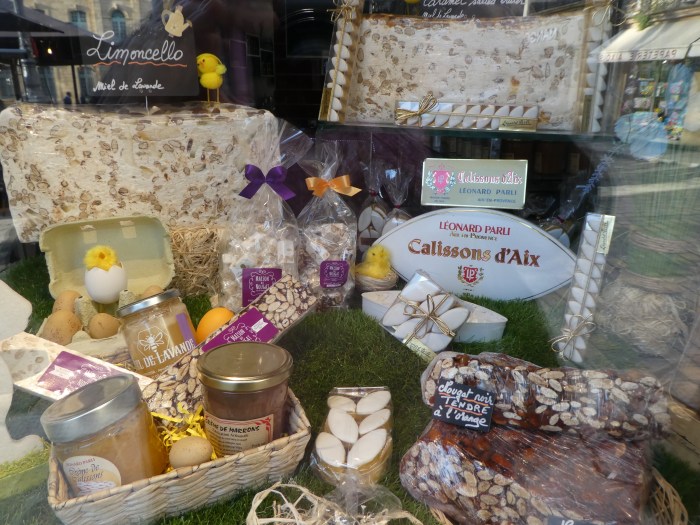
This pastry shop looked amazing!

The Journey Begins

We’re leaving on Saturday for a 2-week trip to Provence.  We’re really excited about this trip for several reasons.  

For starters, in spite of the number of times we’ve been to France, this is the first time we’ve been to the south of France, home to Marseilles and Nice and those gorgeous photos of the lavender fields just outside of the monastery at Saint-Remy. The bad news is that the lavender fields don’t bloom until June and July.  But I hear the poppy fields bloom in April and May so we have our fingers crossed.  

The Provence Lavender Fields

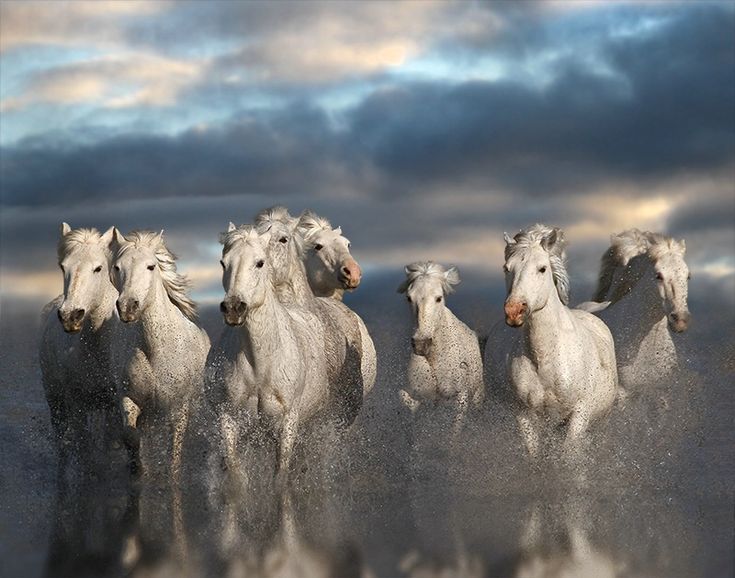
Then about an hour from where we’ll be staying is Camarque where the famous white horses of Carmarque can be seen galloping through the shallow waters of the wetlands. The Camargue has been a regional park and nature reserve since 1970. In addition to the horses, one of the oldest breeds in the world, the Camarque is known for Carmarque cattle and the black bulls of the Carmarque which have been raised by the cowboys of the region for centuries. The Camargue region also includes a large UNESCO-designated biosphere reserve, home to more than 400 species of birds. Each year, the region’s wetlands host thousands of migrating birds, most notably the more than 15,000 flamingos that pass through each spring and autumn.

The white horses at Camarque

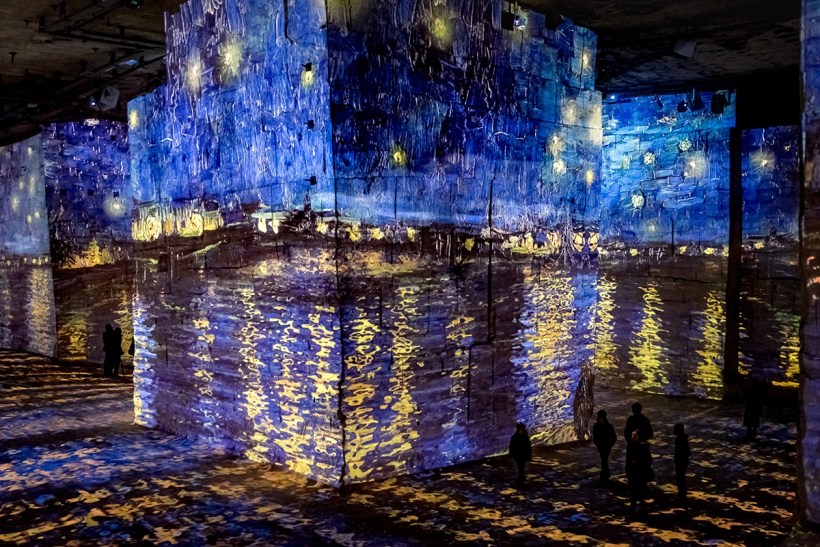
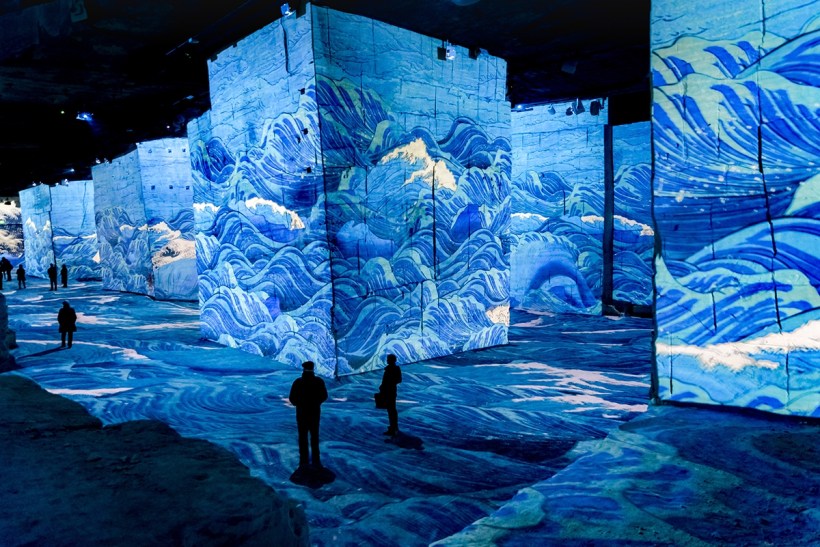
Provence is also the home to Carrieres de Lumieres. When we were in Paris last April, we went to the recently-opened Atelier des Lumieres, that amazing multi-media show projecting images of famous paintings set to music. You might remember it if you followed last year’s blog. Well Carrieres de Lumieres was their first venue, built in an old quarry in Provence. The this year’s show is Van Gogh, Starry Night, accompanied by Japan Dreamed. We have tickets. We are ecstatic.

Van Gogh exhibit at Carrieres de Lumieres
Japanese Dreamer exhibit

So check back in a couple of days to see if we’ve arrived and what we’re up to. And to make it even easier, enter your email address and you’ll be notified whenever something new is posted.

And then before you go, return to the top of this page and click on “Our House Exchange” (cell phones click on “menu” first) to read about how this exchange came about, and “Aix-en-Provence” will show you more about the little village we’re going to call home for 2 weeks. You can click on “Provence Journey” to get back to the main blog. Thanks for coming.