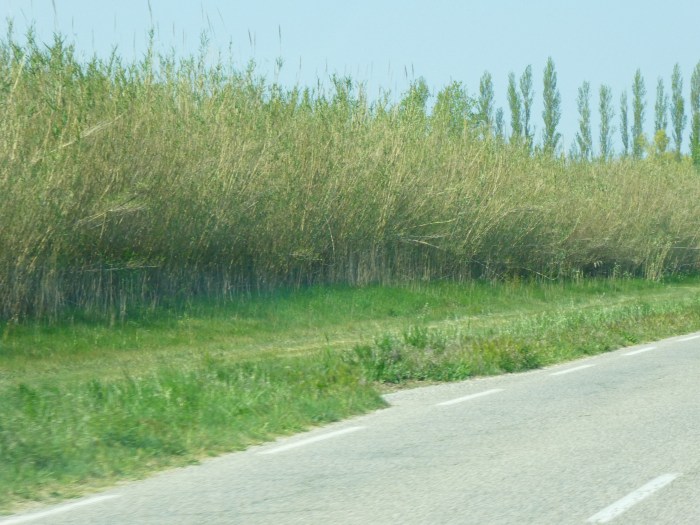
The Camargue National Nature Reserve occupies 32,500 acres of ponds, lagoons and salt plains in the vast delta of the Rhone River, one of Europe’s most important wetlands. This marshy area exists where the Rhone splits into two branches, just before it flows into the Mediterranean. The entire Camargue area is approximately 360 square miles. The Camargue National Nature Reserve is a protected wild area where, among others, pink flamingos, wild bulls and the famous white horses wander freely through lagoons and tall grasses. It’s also home to salt and rice production. While there are a few gravel roads and some structured bicycle and horse riding trails, there are few walking trails – the area is truly designed to protect the environment and it inhabitants from, among other things, humans. The area is fenced along the roads so views are only what you can see from the narrow gravel roads. Tall, tall grasses line the road and the area has an other-worldly feel to it. Our goal was to see the pink flamingos, wild bulls and white Camargue horses. We knew we weren’t likely to get to see the white horses in the water because cars are not allowed to go to most of the area where they do that, but we hoped we would be able to at least spot some in the tall grasses. We first stopped at the Camargue Museum to pick up a local map and visit their folk museum which described the natural features and cultural traditions of the Camargue.
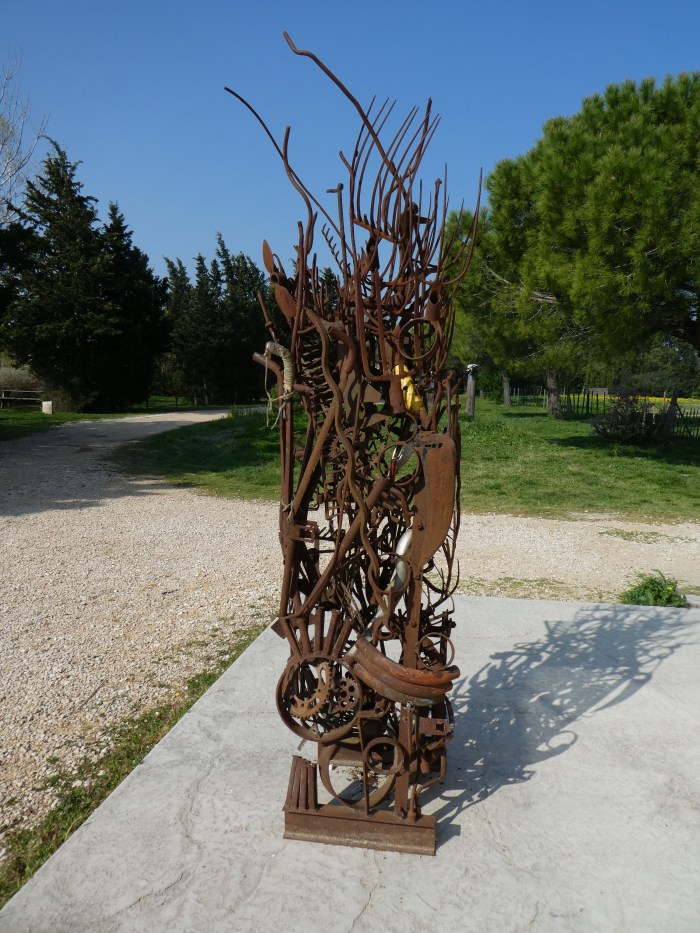
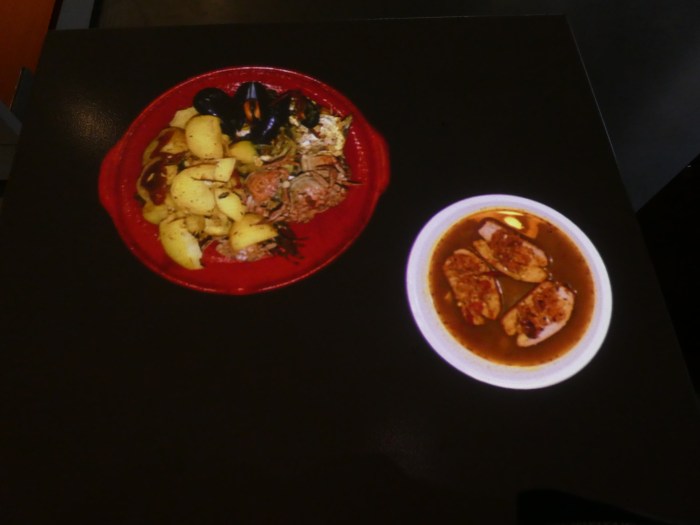
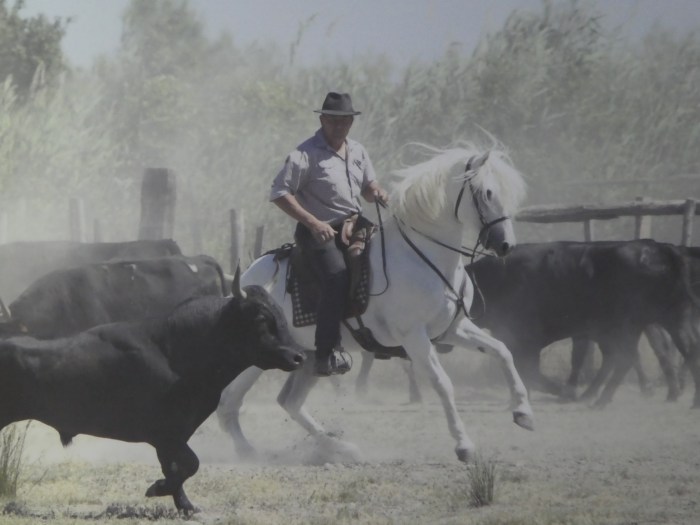
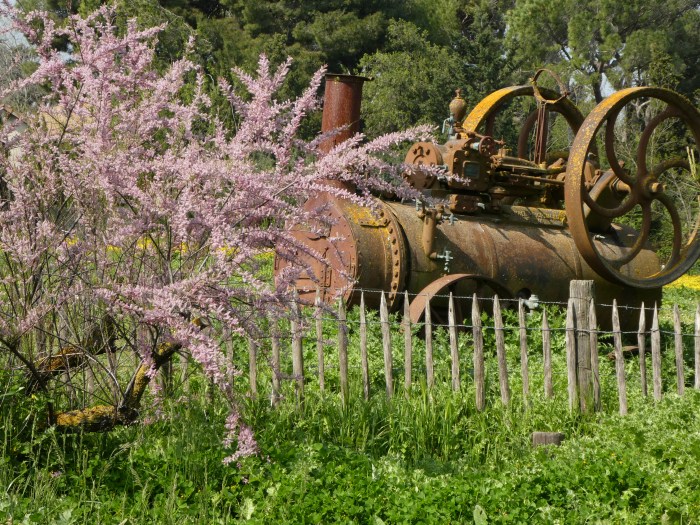
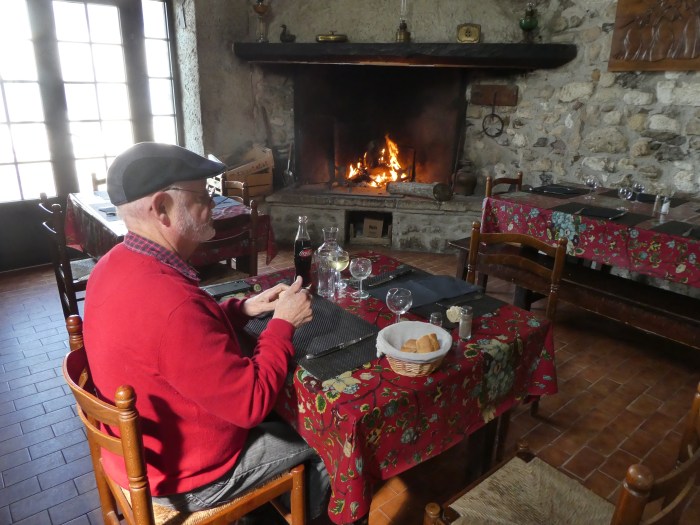
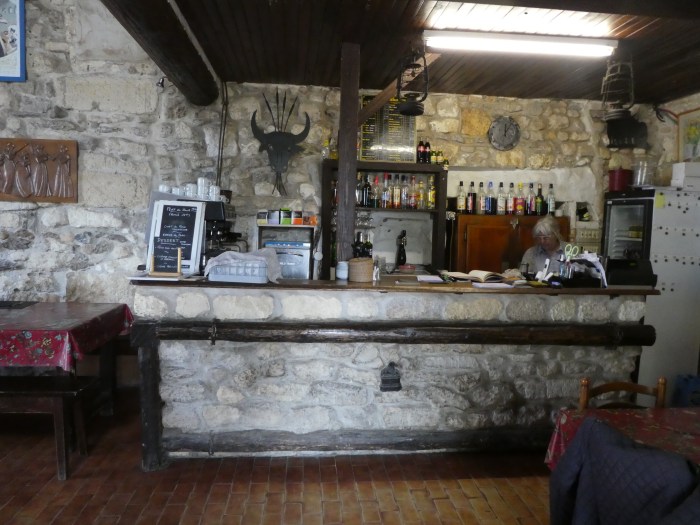
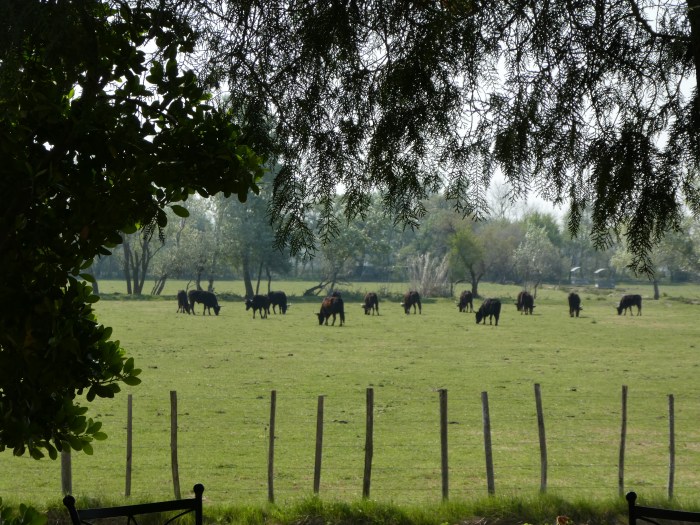
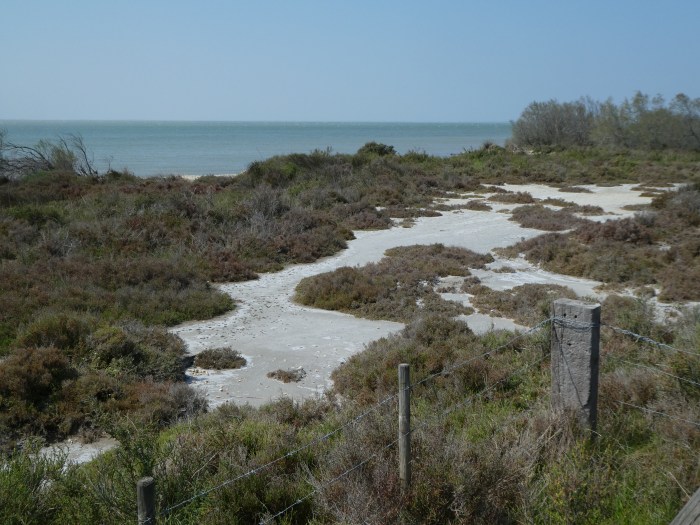
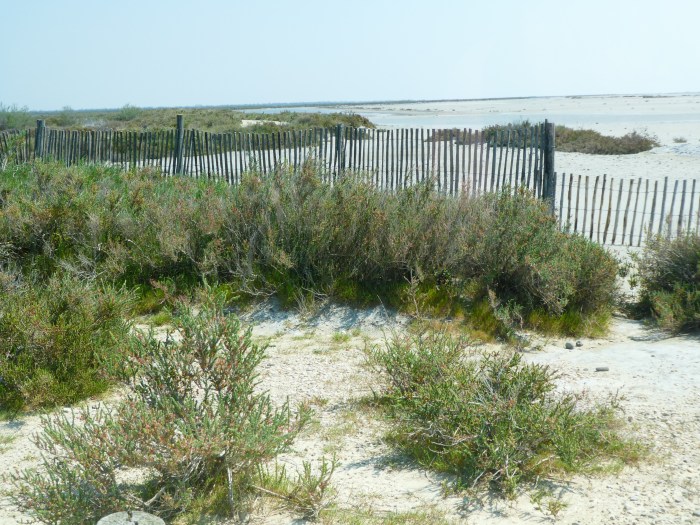
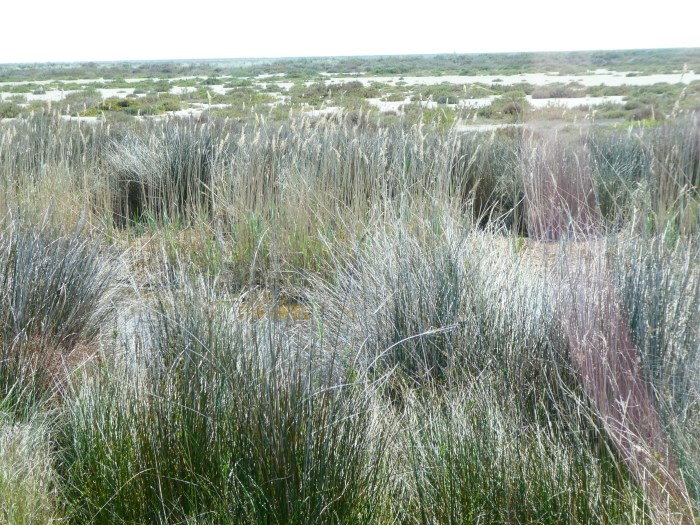
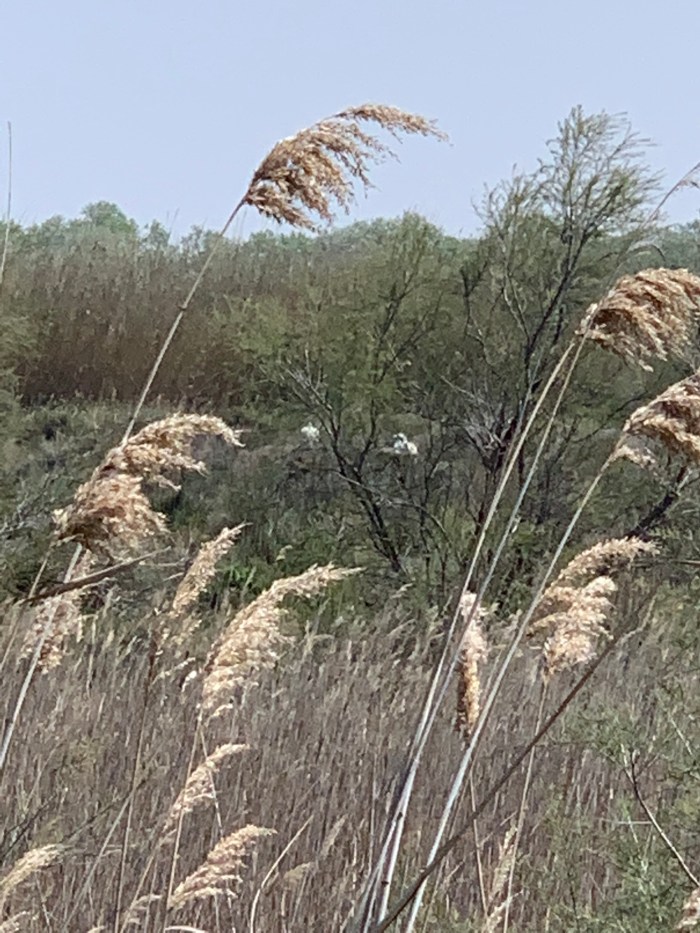
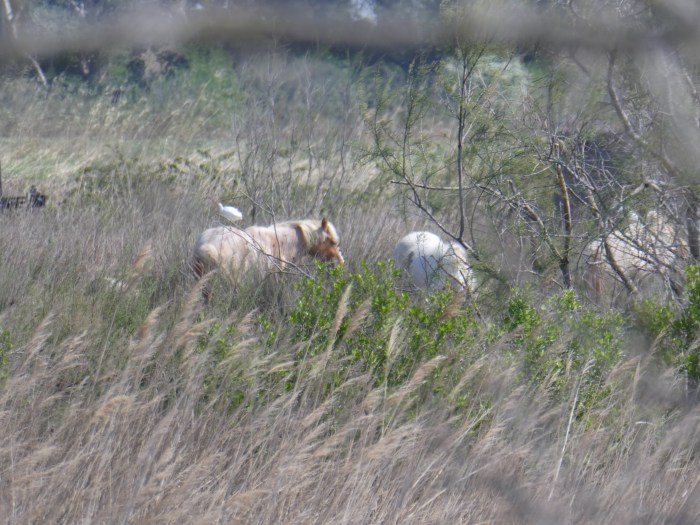
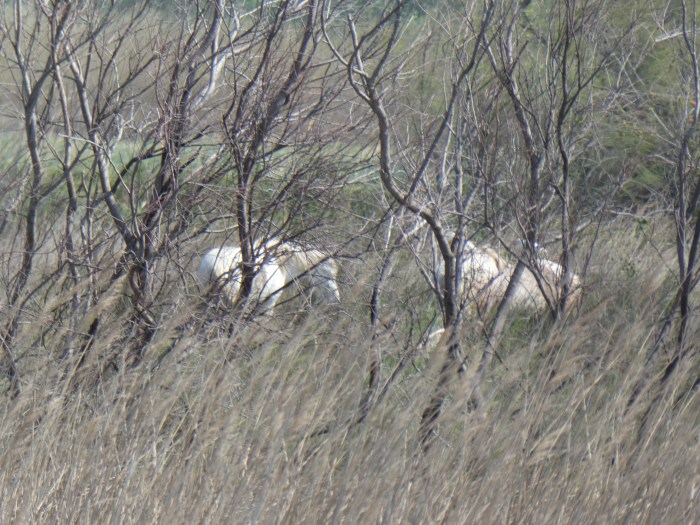
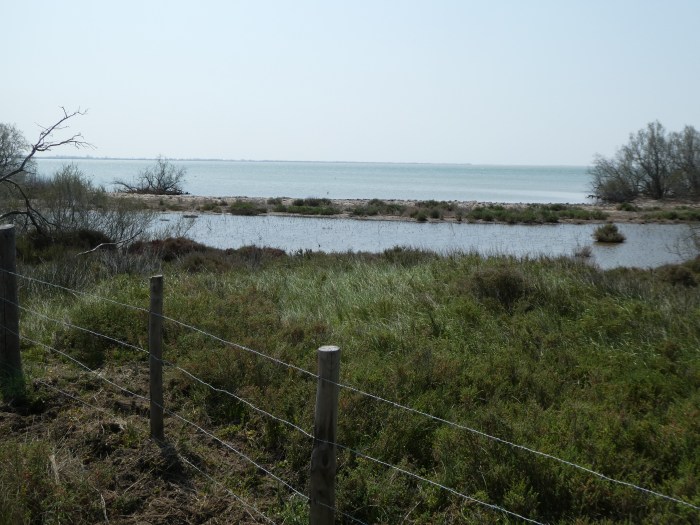
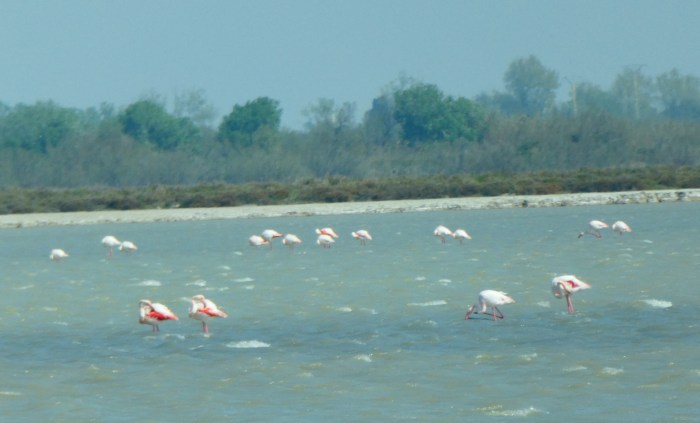
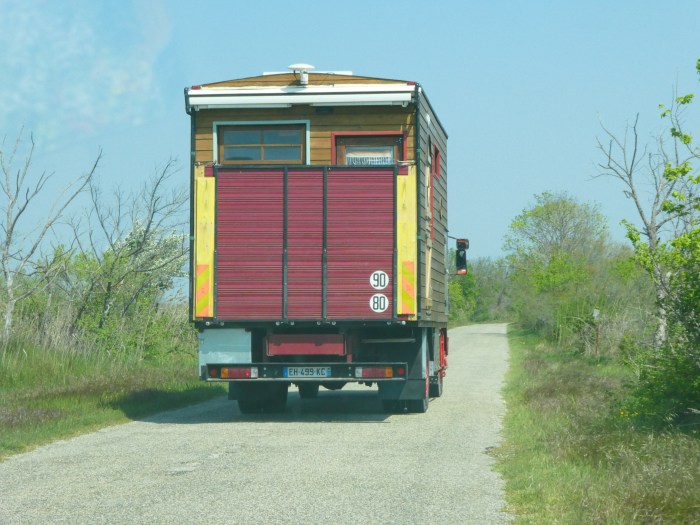
Outside of the museum was this sculpture of a collection of rusted tools.This is another one of those cases where fascination with technology wins out over subject matter. These are typical dishes eaten in the area in historical times. But there aren’t actually any plates of food on this black acrylic table. It’s done with projection. The only hint was that these dishes would disapper and others would appear.It was really a great museum. They had very large photographs like this one of a bull being herded by a gardian (cowboy). On the way out of the museum, we passed by this smoke tree (at least that’s the name I’ve always known them by) with this antique piece of equipment.We found a little place to stop for lunch before we got into the serious part of the park. It was a converted old chapel and it had this fabulous fireplace in the corner.Our waitress (the only waitress) spoke not one word of English, which is unusual, so it was an interesting lunch. Eventually other people came in too. One family came in with 2 small children who sang Itsy Bitsy Spider in French. It was adorable.So we had our list of the 3 things we wanted to see: flamingos. bulls, and the white horses. The first one we checked off was the bulls.Then it got more and more marshy.And more sandy, lagoon areas. It was beautiful.And lots of marsh grasses.Lots of thick tall grasses along the road.And there were lots and lots of these tall graceful grasses. Wait a minute . . . are those the white horses?Yes! They’re too far away and too obscured with shrubs and grasses to be good photos. They’re just proof that we saw the elusive equines.More proof.More of the terrain. The big body of water in the background is one of the lagoons.And when we came to one of the big lagoons, we saw the flamingos. Well, not ALL of the flamingos. Apparently 13,000 pairs of flamingos come through annually and produce 5,000 offspring. Don’t know if the rest of them have gone already or if they’re in another lagoon. Was interesting that there appear to be white caps on the water yet the water is so shallow they are all able to stand on the bottom. May be because of the Mistral (see below). Again not a good photo because they’re so far away, just proof we saw them..We know there are Gypsies living in the area and we came upon this hand-made, heavy duty, brightly painted caravan pulled by a serious cab. The first time we saw them, the home was parked and the brightly-dressed family was bustling about outside and later on we saw it on the road.
The Rhone River Valley and Camargue are subject to winds called the Mistral. The Mistral is a strong, cold, northwesterly wind that blows from southern France. It can reach speeds of more than 56 mph, particularly in the Rhône Valley. Its average speed during the day can reach about 31 mph, calming noticeably at night. The mistral is usually accompanied by clear, fresh weather, and it plays an important role in creating the climate of Provence.
The Mistral joined us on our trip to the Camargue. We’re not used to dealing with winds like that and it’s exhausting. If you opened both car doors at the same time, it would create a wind tunnel that would completely clear out the front seat. Just getting out of the car was a challenge.
And here are a few photos from our trip back at the end of the day.
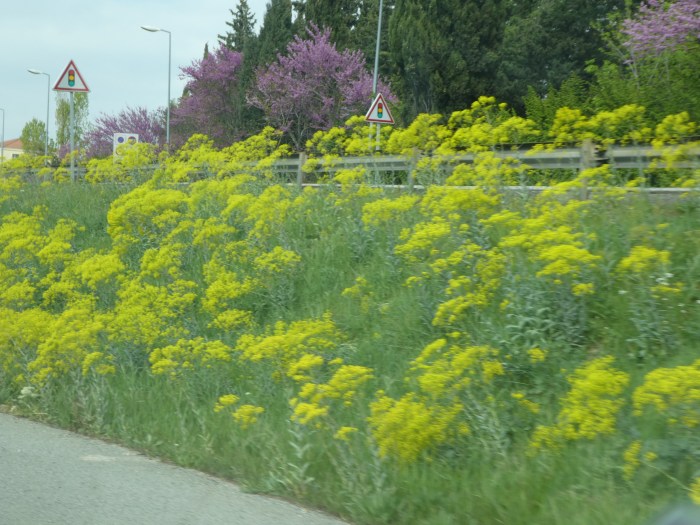
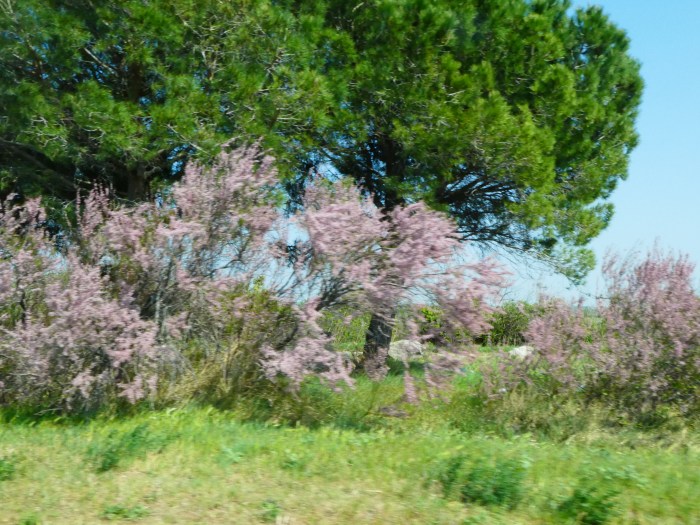
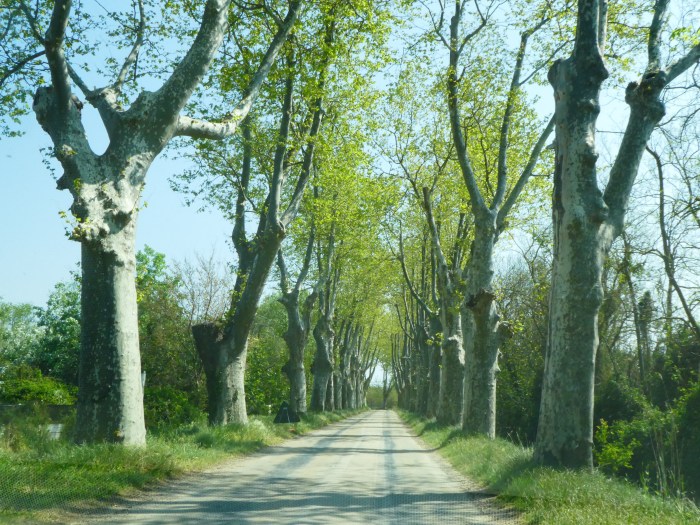
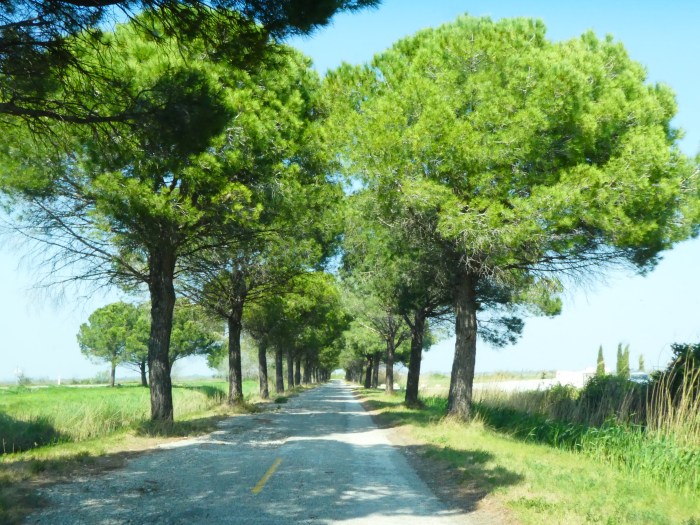
These yellow flowers grow in the median of the freeways and they’re so pretty. They may be mustard/canola, I’m not sure.More of those “smoke” trees. They’re everywhere and so delicate and pretty.Love those roads lined by trees. I believe these are plane trees.Another tree-lined road.

 Provence Journey
I am so happy to be joining you both on this fabulous trip! Thanks for letting me tag along. XO, Sara
LikeLike
The lagoons and the white horses were beautiful, and I thought the pictures were great. I liked the bulls and flamingos too.
LikeLike